
Cat respiratory infection symptoms can appear out of nowhere, just like when a friend texted me late one night. “Luna’s been sneezing all day. Her eyes look watery. Should I be worried?”
I’d been there before. That sinking feeling when you notice your cat isn’t acting right. The sneezing that sounds different. The runny nose that wasn’t there this morning. You tell yourself it’s probably nothing, but something in your gut says otherwise.
Here’s the thing.
Cat respiratory infections can go from mild to serious faster than most people realize. And the tricky part? The early signs often look like “just a little cold.” But cats don’t get colds the way we do. What looks like sneezing today could turn into labored breathing by tomorrow if you’re not paying attention.
I’m not a vet, but after years of living with cats and dealing with more than my fair share of respiratory scares, I’ve learned what to watch for. I’ve sat in enough emergency vet waiting rooms to know the difference between “let’s monitor this” and “we need to go NOW.”
In this guide, I’m walking you through the 7 warning signs of cat respiratory infections, when you should worry, and what you can actually do at home to help your cat feel better. You’ll also get a clear decision guide so you’re never second-guessing yourself at 2 AM.
Let’s get into it.
Quick note before we dive in: This article is based on personal experience and research from trusted veterinary sources like the ASPCA and AVMA. It’s meant to help you recognize symptoms and make informed decisions, but it’s not a substitute for professional veterinary care. If your cat shows severe symptoms like difficulty breathing or refuses food for more than 24 hours, contact your vet right away.
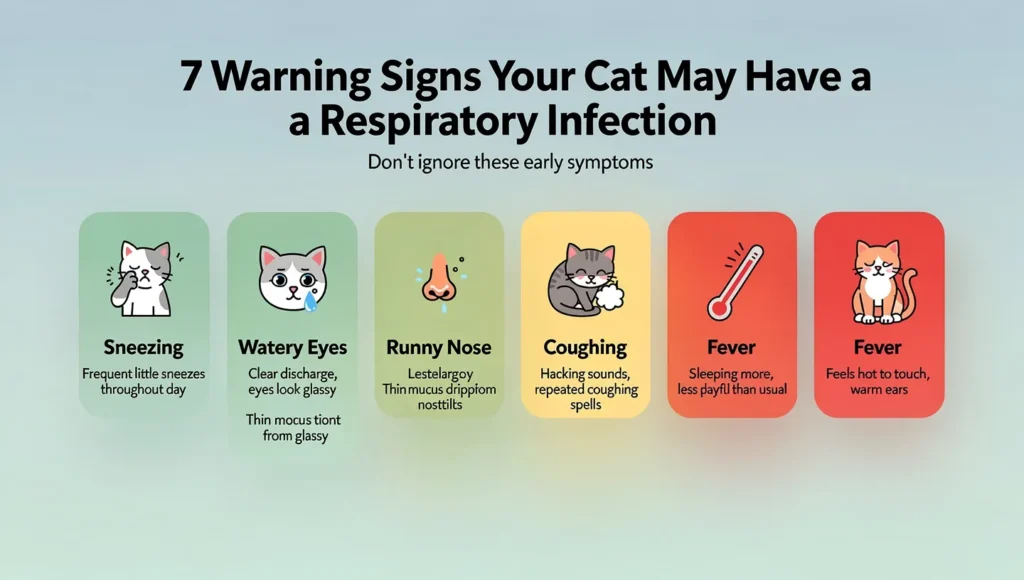
Table of Contents
- What Is a Cat Respiratory Infection? (The Simple Explanation)
- 7 Cat Respiratory Infection Symptoms You Should Never Ignore
- 1. Sneezing (More Than Just a Few Times)
- 2. Nasal Discharge (Clear vs. Colored — This Matters)
- 3. Eye Discharge or Watery Eyes
- 4. Coughing or Labored Breathing
- 5. Loss of Appetite
- 6. Lethargy or Hiding
- 7. Fever (How to Check at Home)
- How Can You Tell If a Cat Has a Respiratory Infection? (Quick Decision Guide)
- Cat Respiratory Infection Timeline: What to Expect
- What Causes Cat Respiratory Infections? (And How Indoor Cats Get Them)
- How Do Indoor Cats Get Respiratory Infections?
- Cat Respiratory Infection Treatment: Vet vs. Home Care
- What Your Vet Will Do
- Safe Home Remedies (What Actually Helps)
- Is Cat Respiratory Infection Contagious? (To Cats and Humans)
- Still Worried? Quick Answers to Common URI Concerns
- How long does a cat respiratory infection last?
- Can a cat recover from a respiratory infection without antibiotics?
- What’s the fastest way to cure a URI in cats?
- Over the counter medicine for cat respiratory infection?
- When should I worry about my cat’s respiratory infection?
- A Final Word of Advice for Your Cat’s Recovery
What Is a Cat Respiratory Infection? (The Simple Explanation)
A cat respiratory infection is basically what we’d call a “cat cold,” but it’s usually caused by viruses like Feline Herpesvirus (FHV-1) or Feline Calicivirus (FCV). These infections affect your cat’s nose, throat, sinuses, and sometimes their eyes.
Think of it like when you catch a cold from someone at work. Cats catch these infections the same way—through contact with other infected cats, shared food bowls, or even just breathing in droplets when an infected cat sneezes nearby. The virus can also spread through your hands or clothes if you’ve been around a sick cat.
Most respiratory infections in cats are viral, which means antibiotics won’t cure them (they only help if there’s a secondary bacterial infection). The good news? Most healthy adult cats recover on their own with supportive care. The bad news? Kittens, senior cats, or cats with weakened immune systems can get really sick, really fast.
The incubation period is usually 2 to 10 days. So if your cat was at the vet, a boarding facility, or around a new cat recently, that’s probably when they picked it up.
Now here’s what you actually need to watch for.
7 Cat Respiratory Infection Symptoms You Should Never Ignore
Not every symptom shows up at once. Some cats sneeze for days before anything else happens, while others show multiple cat respiratory infection symptoms in less than 24 hours. Here’s what to look for.
1. Sneezing (More Than Just a Few Times)
An occasional sneeze is normal. Dust, a tickle in the nose, whatever. Cats sneeze sometimes.
But if your cat is sneezing in rapid-fire bursts—like five or six sneezes in a row, multiple times a day—that’s a red flag.
The first time I saw this with my cat, I thought it was kind of funny. Until it kept happening. Every hour. Then every 30 minutes. That’s when I realized this wasn’t just a sneeze here and there. It was her body trying to clear something her system was fighting.
Respiratory infection sneezing is persistent. It doesn’t stop after one or two sneezes. And sometimes you’ll notice a little spray of mucus or saliva when they sneeze, which is another sign something’s brewing.
If your cat’s sneezing fits last more than a day, keep a close eye on them. If other symptoms start showing up—watery eyes, discharge, lethargy—it’s time to call your vet.
2. Nasal Discharge (Clear vs. Colored — This Matters)
A little clear discharge from the nose? That’s early-stage stuff. It might mean the infection is just starting, and the body is trying to flush things out.
But here’s where it gets serious.
If the discharge turns yellow or green, that usually means a secondary bacterial infection has set in. And that’s not something that resolves on its own. You’ll need antibiotics from your vet.
How do you check? Just look at your cat’s nose. If you see crusty buildup around the nostrils, or if they’re constantly pawing at their face, that’s a sign discharge is bothering them.
I learned this the hard way. My cat had clear discharge for two days, and I thought, “Okay, we’ll just monitor.” By day three, it was thick and greenish. The vet confirmed it—bacterial infection piggybacking on the virus. We caught it before it got worse, but I should’ve called sooner.
The amount matters too. A tiny bit of moisture? Probably fine. But if you’re wiping their nose multiple times a day and it’s about the size of a rice grain or bigger each time, don’t wait.
3. Eye Discharge or Watery Eyes
Watery eyes often show up alongside nasal symptoms because the infection can cause conjunctivitis—basically, inflammation of the tissue around the eyes.
You’ll notice your cat’s eyes look “wet” more than usual. Or maybe they’re squinting a lot, like the light bothers them. By morning, you might see crusty gunk in the corners of their eyes, sometimes sealing the eyelid partially shut.
This was one of the most obvious signs with my cat. Every morning, I’d find her with her eyes crusted over. I had to gently wipe them with a warm, damp cloth—soft pressure, no rubbing—just to help her open them comfortably.
If the discharge is clear, it’s usually just irritation from the virus. But if it’s thick, yellow, or green, or if the eyelids look swollen and red, that’s a sign of infection that needs treatment.
And honestly, if your cat’s eyes look painful—like they’re keeping them half-closed all day or avoiding light—don’t mess around. Get them checked. Eye infections can escalate quickly, and untreated cases can lead to ulcers or long-term damage.
4. Coughing or Labored Breathing
This is where things get serious.
A normal cough sounds like your cat is trying to hack up a hairball. A respiratory cough is different—raspy, repeated, and sometimes accompanied by a wheezing sound.
Emergency signs (call your vet immediately):
- Open-mouth breathing (cats almost never do this unless they’re in distress)
- Wheezing or gasping for air
- Blue or pale gums
- Chest heaving with each breath
Honestly, if you see labored breathing, don’t wait. This isn’t something you monitor at home. Get to the vet or an emergency clinic right away.
5. Loss of Appetite
When a cat’s nose is stuffed up, they can’t smell their food. And if they can’t smell it, they won’t eat it.
What to watch for:
- Skipping meals (anything beyond 24 hours is a concern)
- Sniffing food but walking away
- Acting hungry but not eating
Quick trick that helped me: Warm up wet food for 10-15 seconds in the microwave. The heat releases the aroma, which can tempt a congested cat to eat. You can also try strong-smelling options like tuna or chicken broth (low sodium, no onion or garlic).
If your cat refuses food for more than 24 hours, call your vet. Cats can develop serious liver issues (hepatic lipidosis) if they go too long without eating.
For more on this, check out our guide on what to do when your cat won’t eat.
6. Lethargy or Hiding
Sick cats instinctively hide. It’s a survival thing—they’re vulnerable, so they retreat to a safe spot.
Normal vs. concerning:
- Normal: Sleeping 12-16 hours a day
- Concerning: Sleeping 18+ hours, avoiding interaction, hiding in unusual places (closets, under beds, behind furniture)
The clearest sign for me? My cat stopped greeting me at the door. She’d always be there when I came home, but during her respiratory infection, she just stayed curled up in the corner of my bedroom. That’s when I knew something was really wrong.
If your cat’s personality changes—less playful, more withdrawn, avoiding favorite spots—don’t ignore it. For more on this behavior, read our article on why cats hide when they’re sick.
7. Fever (How to Check at Home)
Normal cat body temperature: 100.5°F–102.5°F
Signs of fever (without a thermometer):
- Warm ears (feel the inside of the ear flaps)
- Dry, hot nose
- Shivering or seeking warm spots more than usual
- Rapid breathing
I don’t recommend using a rectal thermometer at home unless you’re experienced. It’s stressful for the cat and risky if they squirm. If you suspect a fever based on the signs above, contact your vet for guidance.
How Can You Tell If a Cat Has a Respiratory Infection? (Quick Decision Guide)
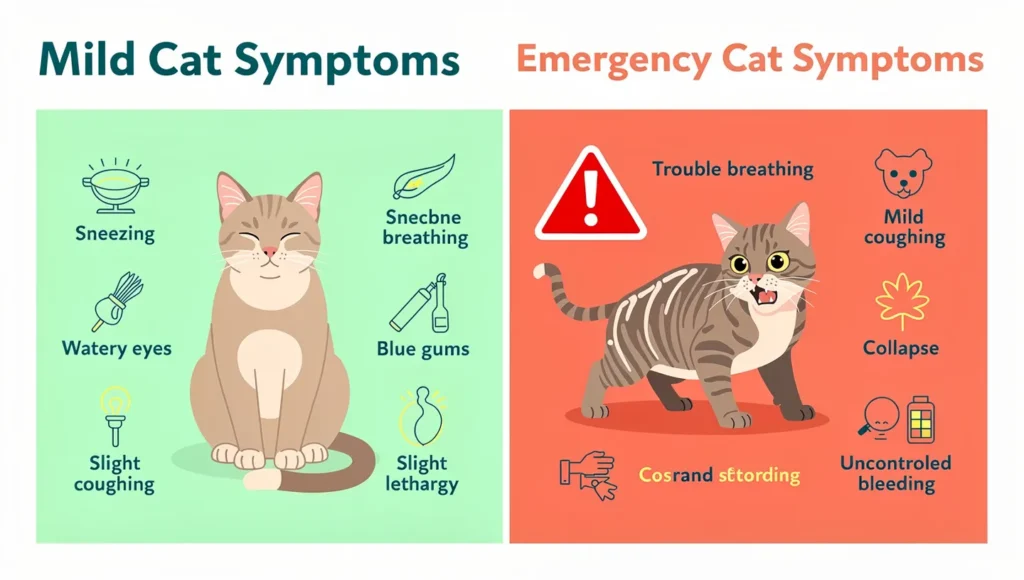
Here’s the question everyone asks: “Do I need to go to the vet, or can I wait?”
✅ Mild (Monitor at Home for 24-48 Hours):
- Occasional sneezing (not constant)
- Clear nasal discharge (minimal)
- Eating and drinking normally
- Still somewhat playful
⚠️ Moderate (Schedule Vet Visit Within 24 Hours):
- Frequent sneezing fits
- Yellow or green discharge
- Reduced appetite
- Less active than usual
- Eye discharge with crustiness
🚨 Emergency (Go to Vet NOW):
- Open-mouth breathing or gasping
- Refusing all food for 24+ hours
- Blue or pale gums
- Extreme weakness or collapse
- High fever with shivering
Trust your gut. If something feels off, it probably is. I’ve learned that waiting “just one more day” to see if it gets better is rarely the right call. When in doubt, call your vet.
Cat Respiratory Infection Timeline: What to Expect
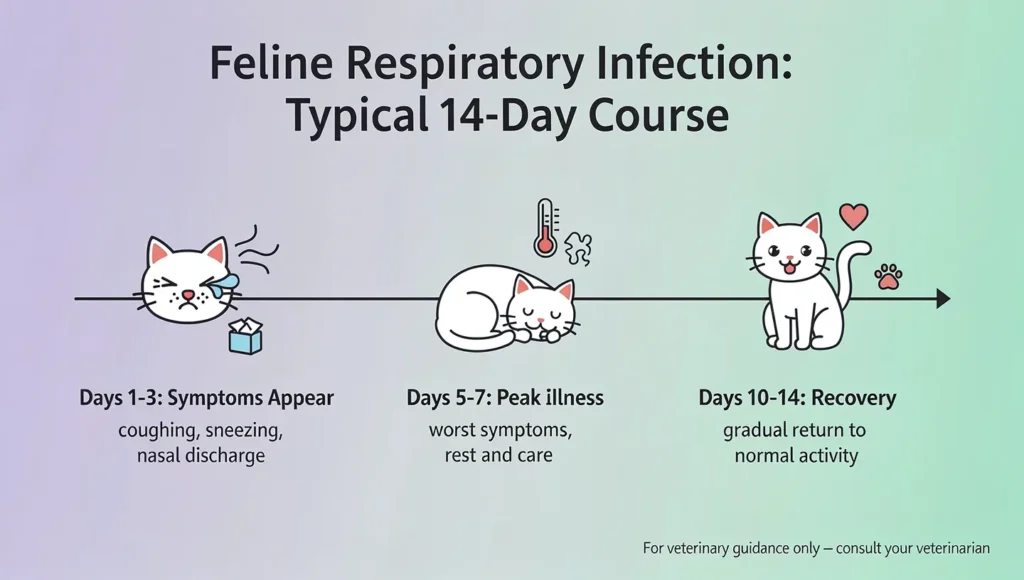
Most respiratory infections follow a predictable pattern. Here’s what recovery typically looks like:
| Day | What’s Happening | What to Do |
|---|---|---|
| Day 1–3 | First symptoms appear (sneezing, watery eyes, mild discharge) | Monitor closely, encourage hydration, keep environment stress-free |
| Day 3–5 | Symptoms peak (thicker discharge, possible fever, reduced appetite) | Vet visit if symptoms worsen or new signs appear |
| Day 7–10 | Improvement begins (less sneezing, appetite slowly returns, more energy) | Continue supportive care, ensure rest and hydration |
| Day 10–14 | Most cats recover fully (back to normal behavior and appetite) | Follow up with vet if symptoms linger |
Important notes:
- Kittens and senior cats may take longer to recover (up to 3 weeks)
- Some cats remain carriers of the virus even after symptoms disappear
From my experience, day 5 was the turning point. That’s when my cat finally started eating a little more and her eyes looked less crusty. But every cat is different.
What Causes Cat Respiratory Infections? (And How Indoor Cats Get Them)
About 90% of cat respiratory infections are caused by two viruses:
- Feline Herpesvirus (FHV-1) – the most common
- Feline Calicivirus (FCV) – also very common
How Do Indoor Cats Get Respiratory Infections?
Even indoor-only cats aren’t 100% protected. Here’s how it happens:
- Stress triggers: If your cat already carries the herpesvirus (many cats do), stress can reactivate it. Moving, new pets, vet visits, or changes in routine can all trigger an outbreak.
- Contact with new cats: Shelters, boarding facilities, or adopting a new cat can expose your indoor cat to viruses.
- You’re the carrier: If you’ve been around other cats (at a friend’s house, a shelter, a pet store), you can bring the virus home on your clothes or hands.
- Airborne exposure: If there’s an outdoor cat near your window and your cat has contact through the screen, transmission is possible.
The reality? Even the most careful cat owners can’t eliminate every risk. But knowing how it spreads helps you take precautions.
For more detailed information on feline viruses, the ASPCA’s guide to common cat diseases is an excellent resource.
Cat Respiratory Infection Treatment: Vet vs. Home Care
What Your Vet Will Do
Your vet will do a physical exam—checking your cat’s breathing, temperature, eyes, and nasal passages. In most cases, no lab test is needed.
Treatment options may include:
- Antibiotics (if secondary bacterial infection is present)
- Eye ointment or drops (for conjunctivitis)
- Nebulizer therapy (for severe congestion)
- Subcutaneous fluids (if dehydrated)
Typical cost: $80–$200 for the exam and treatment, depending on severity.
Safe Home Remedies (What Actually Helps)
⚠️ Important: These tips are supportive care only. They do NOT replace veterinary treatment.
What works:
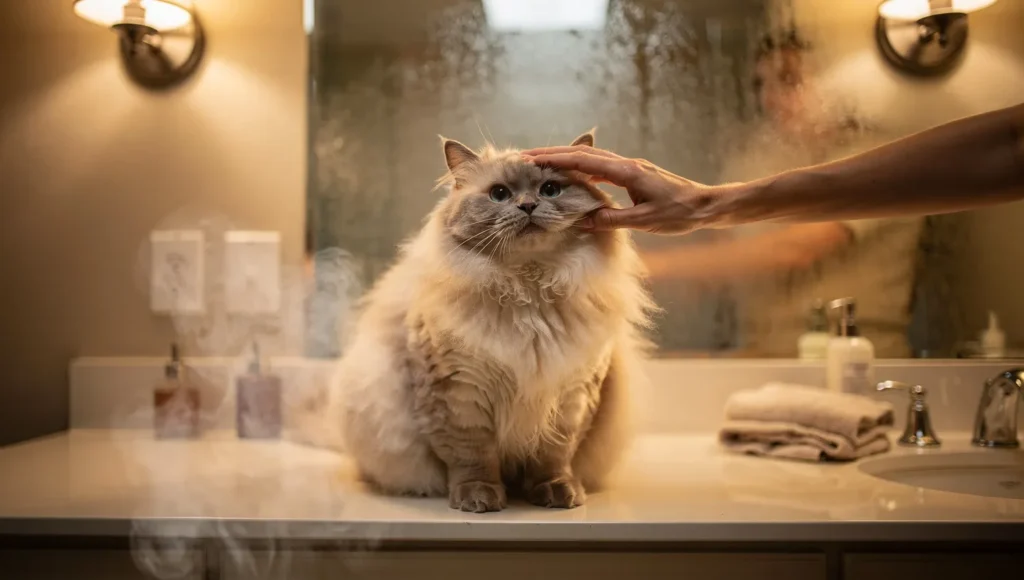
1. Steam therapy (the bathroom trick)
- Run a hot shower, close the bathroom door, and sit with your cat for 10 minutes
- The steam loosens mucus and makes breathing easier
- I tried this with my cat during her worst congestion, and it helped within hours
2. Hydration boost
- Switch to wet food only (it has more moisture)
- Add a little warm water to food to increase fluid intake
- Offer low-sodium chicken broth (no onion, no garlic)
For more hydration strategies, check out our complete guide to keeping your cat hydrated.
3. Keep eyes and nose clean
- Use a warm, damp cloth to gently wipe away discharge
- Don’t rub—just dab softly
- Do this 2-3 times a day to keep them comfortable
4. Isolated rest area
- Set up a quiet, warm spot away from other pets
- Reduce noise and stress
- Provide a cozy bed or blanket
What DOESN’T work (and can be dangerous):
- ❌ Human cold medicine (toxic to cats)
- ❌ Essential oils (can cause respiratory distress)
- ❌ Ignoring symptoms and hoping they’ll go away
Is Cat Respiratory Infection Contagious? (To Cats and Humans)
To Other Cats: YES ✅
Highly contagious. If you have multiple cats, isolate the sick one immediately.
Steps to prevent spread:
- Separate food and water bowls
- Use a different litter box
- Wash your hands after handling the sick cat
- Change clothes if moving between cats
Contagious period: 7–21 days (even after symptoms improve, your cat can still shed the virus)
When my cat got sick, I set up a “quarantine room” in my guest bedroom. It was inconvenient, but it kept my other cat safe.
To Humans: NO ❌
Feline respiratory viruses don’t transfer to humans. You can’t catch it from your cat, and your cat can’t catch your cold from you.
Exception: Bacterial infections (rare cases) can sometimes pose a minimal risk, but proper hygiene eliminates this concern.
Basic hygiene tips:
- Wash hands after handling your sick cat
- Avoid letting them lick your face
- Keep their eating area clean
Still Worried? Quick Answers to Common URI Concerns
How long does a cat respiratory infection last?
Most cases resolve in 7–14 days with proper care. Severe cases or infections in kittens and senior cats can take up to 3 weeks. Recovery depends on the cat’s immune system and whether they receive treatment.
Can a cat recover from a respiratory infection without antibiotics?
Yes, if it’s purely viral. Antibiotics only help if there’s a secondary bacterial infection. Many cats recover with supportive care alone—hydration, rest, and steam therapy. But always get a vet evaluation first to rule out complications.
What’s the fastest way to cure a URI in cats?
There’s no “instant cure” because it’s a virus. The best approach combines:
Vet-prescribed medication (if needed)
Steam therapy to ease congestion
Increased hydration
Plenty of rest in a quiet space
Most cats start improving by day 5-7.
Over the counter medicine for cat respiratory infection?
⚠️ None are safe. Never give your cat human cold medicine—it’s toxic. Some people use L-lysine supplements, but evidence is mixed. Always consult your vet before giving any supplement or medication.
When should I worry about my cat’s respiratory infection?
🚨 Go to the vet immediately if you see:
Open-mouth breathing or gasping
Refusal to eat for 24+ hours
Extreme lethargy or collapse
Blue or pale gums
If you’re unsure, err on the side of caution. A quick phone call to your vet can give you peace of mind. For more on recognizing illness early, read our guide on how to tell if your cat is sick.
A Final Word of Advice for Your Cat’s Recovery
Remember that friend who texted me about Luna? She took her to the vet the next morning. Turned out it was a mild case, and once she knew which cat respiratory infection symptoms to track, she felt much more in control. With a week of supportive care—steam sessions, extra hydration, and lots of rest—Luna bounced back completely.
Here’s what I want you to remember: respiratory infections in cats are common, and most cats recover fully with the right care. But early action matters. Don’t ignore the sneezing, the watery eyes, or the change in behavior. Trust your instincts, and when in doubt, call your vet.
Keep an eye on those symptoms, and remember—you know your cat better than anyone. If something feels off, it probably is.
💬 Have you dealt with a respiratory infection in your cat? What helped the most? Drop a comment below—I’d love to hear your experience. And if this guide helped you, please share it with other cat owners who might need it. The more we share what we’ve learned, the better we can take care of our feline friends.
Stay vigilant, stay informed, and give your cat an extra head scratch from me. 🐾