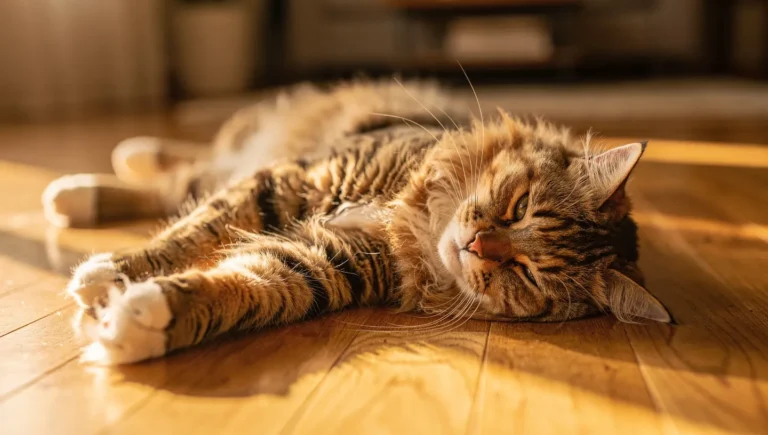

You walk in after a long day, ready for five minutes of peace, and there it is: your cat has redecorated the couch corner with fresh claw marks, or worse, is staring you dead in the eye while peeing on your favorite blanket.
Your first thought is probably “does my cat hate me?” It doesn’t. That confused, frustrated feeling you’re having right now? Your cat’s probably feeling something close to it too.
Cat stress and anxiety are more common than most owners realize, and they rarely look like what you’d expect. A cat that suddenly hides under the bed, stops eating, or starts grooming until bald patches appear isn’t being dramatic — it’s communicating in the only language it has.
Honestly, most owners don’t realize how many everyday changes can tip a cat into a stressed state: a rearranged couch, a new vacuum sound, even a scent that wasn’t there yesterday.
This article is based on research into trusted veterinary sources, not personal veterinary experience — it’s for general information and doesn’t replace advice from your own vet.
Stress isn’t just a mood problem, either. Left unmanaged, it can spill over into real physical issues, including urinary problems like feline idiopathic cystitis. This guide breaks down the real signs of stress in cats, what’s likely causing it, the difference between a bad afternoon and a chronic problem, and what actually helps — based on veterinary research and what real owners report, not guesswork.
Table of Contents
- What Is Cat Stress (and Why It’s So Easy to Miss)?
- 7 Signs Your Cat May Be Stressed or Anxious
- Acute vs. Chronic Stress: What’s the Difference?
- What Causes Stress in Cats?
- The Hidden Link Between Stress and Your Cat’s Health
- How to Help a Stressed Cat: Relief Strategies That Actually Work
- What to Do During an Emergency Stress Spike
- Actionable Strategies for Chronic or Ongoing Stress
- When to Call the Vet (or a Behaviorist)
- Quick Answers Owners Ask About Cat Stress
- Why is my cat stressed all of a sudden?
- Can cat stress cause a urine blockage?
- How long does cat stress last?
- Can cats recover from stress?
- Is scratching always a sign of stress?
- Reading the Quiet Language of a Worried Cat
What Is Cat Stress (and Why It’s So Easy to Miss)?
Cat stress is your cat’s physical and behavioral response to something it perceives as a threat or disruption — and because cats evolved to hide vulnerability, the signs are often subtle enough to miss for weeks.
Unlike dogs, cats don’t have a wide range of facial expressions to broadcast how they feel. A stressed cat might just seem “a little off” — quieter, more alert, maybe eating a bit less.
This is exactly why so many owners only notice a problem once it’s already become a pattern. Cats Protection notes that stress signs typically show up as a combination of changes across behavior, body language, and health — not just one obvious symptom.
Most people get this wrong: they wait for a dramatic sign, like hissing or an accident on the carpet, before considering stress as the cause. But by then, the stress has often been building for a while.
7 Signs Your Cat May Be Stressed or Anxious
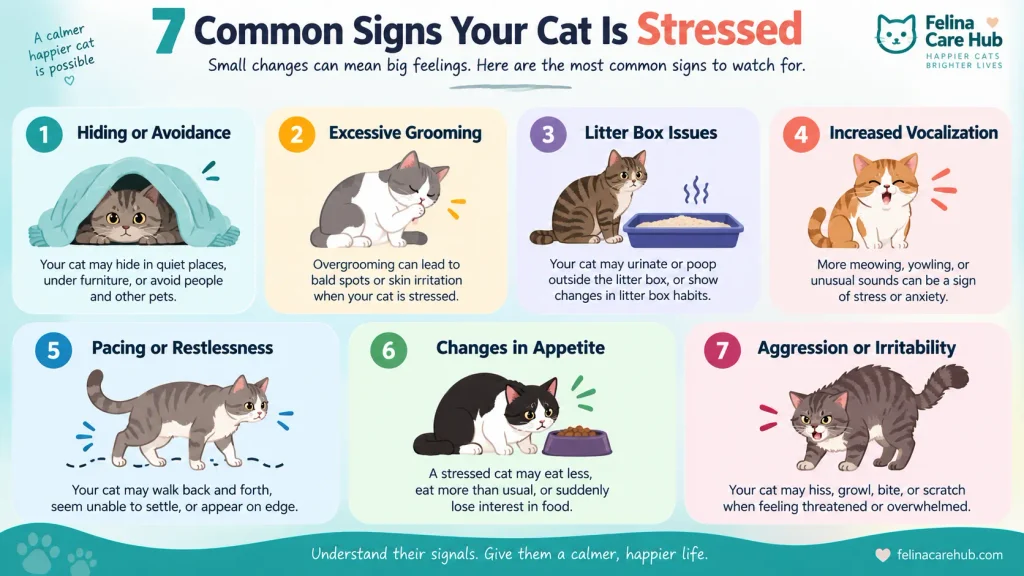
Here’s the thing — no single sign confirms stress on its own, since most of these can also point to a medical issue. What matters is the pattern, and whether it’s new for your cat.
| Stress Sign | What It Looks Like | What to Check First | Red Flag (When to Worry) |
|---|---|---|---|
| 1. Hiding or Avoidance | Seeking dark, isolated spots (under beds, inside closets) and avoiding family or pets. | Recent room layout, furniture, or routine changes. | Hiding dominates most of the day or the cat refuses to come out even for meals. |
| 2. Sudden Aggression | Hissing, swatting, or growling at familiar people or other household animals. | Recent rough handling, a new pet, or loud noises nearby. | Aggression escalates rapidly or happens with no identifiable trigger (could indicate pain). |
| 3. Changes in Appetite | Eating noticeably less, total food refusal, or overeating as a coping mechanism. | Food brand, bowl location, or feeding schedule changes. | Any appetite shift lasting > 24 hours, or total food refusal (requires an immediate vet call). |
| 4. Excessive Grooming | Compulsive, repetitive licking leading to bald patches, usually on the belly or legs. | Rule out fleas and parasites or allergies first. | Skin becomes red, raw, sore, or shows signs of infection. |
| 5. Litter Box Changes | Urinating or spraying outside the box, straining, or frequent visits. | Box cleanliness, placement, or new pet competition. | Urgent Emergency: Straining with little/no urine output (requires same-day vet care). |
| 6. Vocalization Changes | Excessive meowing/yowling, or a normally vocal cat suddenly going quiet. | Timing of crying and triggers (e.g., when left alone). | Crying paired with pacing, distress, or restlessness rather than attention-seeking. |
| 7. Pacing & Restlessness | Inability to settle, room-to-room wandering, dilated pupils, or tail flicking. | Household noise levels or sudden activity changes. | Restlessness continues for days without an obvious trigger. |
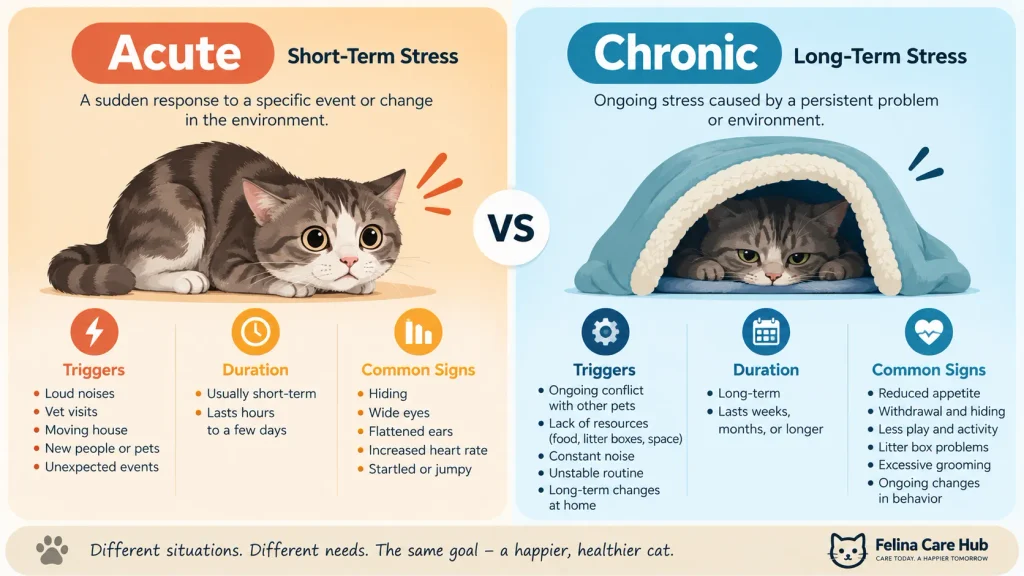
Acute vs. Chronic Stress: What’s the Difference?
Not all cat stress looks — or needs to be handled — the same way. International Cat Care draws a clear line between stress that hits suddenly and stress that builds over time, and knowing which one you’re dealing with changes what you should do next.
| Acute Stress | Chronic Stress | |
|---|---|---|
| Trigger | A sudden, unexpected event (loud noise, vet visit, unfamiliar animal) | An ongoing situation or unresolved conflict in the home |
| Common signs | Freezing, shaking, rapid breathing, dilated pupils, trying to flee | Hiding more often, over-grooming, appetite shifts, withdrawal |
| Typical duration | Minutes to a few hours | Weeks to months if the cause isn’t addressed |
| What to do | Remove the stressor, give the cat space, let it calm on its own terms | Identify and change the underlying trigger; involve a vet if signs persist |
Acute stress is usually easy to spot — a cat crouched low with flattened ears after the vacuum comes out isn’t hard to read. Chronic stress is the sneakier one.
It tends to show up as a shift in routine rather than a dramatic reaction, which is exactly why it gets missed or mistaken for “just getting older” or a personality change.
What Causes Stress in Cats?
Cats are territorial, routine-driven animals, so stress usually traces back to something that disrupted their sense of predictability or safety — even when that disruption seems minor to us.
- Moving to a new home. New smells, new layout, no established safe zones yet — this is consistently one of the top triggers owners report.
- A new baby or new pet. Any new presence in the home changes the resource balance and routine a cat had come to expect.
- Multi-cat household conflict. Competition over litter boxes, food, or preferred resting spots can create ongoing tension, even without visible fighting.
- Vet visits and handling. This one gets overlooked constantly, but it shows up again and again in real owner reports — the carrier, the car ride, and the exam table are frequently named as the single most stressful recurring event in a cat’s life, sometimes triggering effects that linger for days afterward.
- Routine or environmental changes. Rearranged furniture, construction noise, a new work schedule, or even a change in litter brand can be enough to unsettle a sensitive cat.
Owners consistently mention that pinpointing the exact cause takes a bit of detective work — walking back through what changed in the days or weeks before the behavior started is usually the fastest way to find it.
The Hidden Link Between Stress and Your Cat’s Health
Stress in cats isn’t just an emotional state — it can directly trigger physical illness, and the urinary system is where this connection shows up most often. This is one of the most important things owners tend to miss.
Chronic stress is closely linked to feline idiopathic cystitis (FIC), a painful bladder inflammation that isn’t caused by infection or crystals but appears to be triggered largely by stress hormones affecting the bladder lining. Signs overlap heavily with the litter box changes covered earlier — straining, frequent small urinations, blood in the urine, or urinating outside the box.
Here’s the part that makes this urgent rather than just informational: in male cats especially, stress-related urinary inflammation can progress to a full urethral blockage, which is a life-threatening emergency. A cat straining in the litter box with little or no urine coming out needs to see a vet the same day — this is not something to monitor at home overnight.
Based on the research, the safest approach is never to assume a behavior is “just stress” when it involves the litter box. Rule out a medical cause first, then work on the stress itself. For a broader rundown of illness indicators beyond urinary symptoms, this guide to spotting when a cat is sick is worth checking alongside this one.
How to Help a Stressed Cat: Relief Strategies That Actually Work
How you respond to cat stress depends entirely on whether you are dealing with a sudden, intense fear spike or an ongoing behavioral pattern that has developed over weeks. Addressing both situations requires a calm, deliberate strategy tailored to your cat’s immediate needs.
What to Do During an Emergency Stress Spike
If your cat is in a state of acute panic — crouching low, shaking, with flattened ears or dilated pupils — immediate de-escalation is your top priority. In these moments, standard comfort techniques like touching, picking them up, or offering food will usually backfire, as an overstimulated cat often interprets handling as an extra threat.
Instead, focus on controlling the environment. Dim the lights, eliminate loud noises, and close doors to isolate the trigger. Never force a panicked cat out of a hiding spot under furniture or inside a closet; removing their sense of cover only escalates fear. Simply place food and fresh water nearby where they can reach it later, and give them uninterrupted time to decompress on their own terms.
Most acute stress episodes settle within a few hours once the trigger is removed. However, if severe panic continues or is accompanied by labored breathing or drooling, contact your veterinarian immediately.
Actionable Strategies for Chronic or Ongoing Stress
Managing long-term anxiety requires creating a predictable, low-stress environment that rebuilds your cat’s confidence step by step:
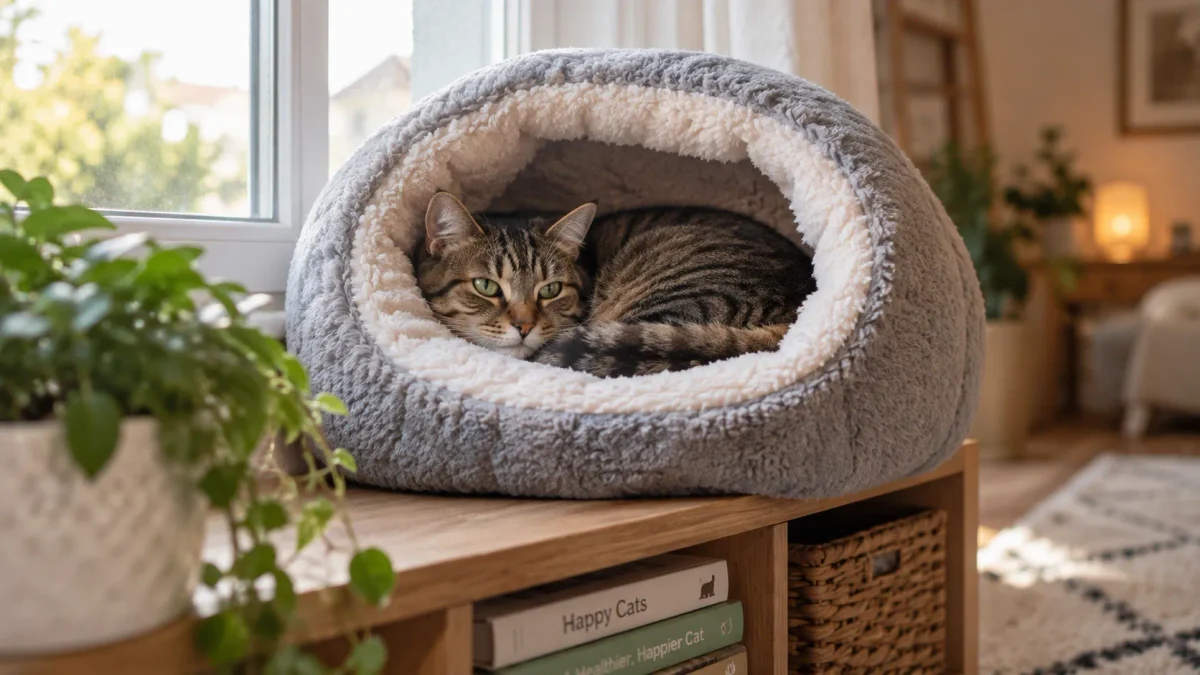
- Build a dedicated safe space: Set up a quiet room or an elevated covered bed away from high-traffic household areas, avoiding tight corners where a cat might feel trapped.
- Maintain strict daily predictability: Keeping feeding schedules, play sessions, and litter box cleaning consistent reduces daily uncertainty for an anxious cat.
- Provide vertical and mental enrichment: Tall climbing trees, scratching posts, and daily interactive play allow cats to channel nervous energy constructively and observe their surroundings from a safe height.
- Respect social boundaries: Avoid forcing interactions or affection. Allowing your cat to initiate contact at their own pace is the fastest way to rebuild mutual trust.
- Optimize resources in multi-cat homes: Prevent territory conflicts by providing multiple litter boxes, food stations, and resting spots across different areas. If you are introducing a new cat, following a structured cat introduction process minimizes tension, and understanding proper litter box placement ensures every cat feels secure.
For persistent anxiety, supportive tools like calming pheromone diffusers, elevated donut beds, or hunting-style interactive toys can offer helpful secondary relief alongside environmental adjustments.
When to Call the Vet (or a Behaviorist)
Most stress resolves with time and a few environmental changes, but some signs mean it’s time to get professional input rather than wait it out.
Call your vet if you notice:
- Straining in the litter box, especially with little or no urine produced
- Loss of appetite lasting more than 24 hours
- Vomiting or diarrhea alongside behavioral changes
- Self-injury from overgrooming (open sores, bleeding)
- Aggression that’s escalating or unpredictable
If your vet rules out a medical cause and the stress behavior continues, a certified feline behaviorist can help identify triggers you might be missing and build a tailored plan — something general advice, including this article, can’t fully replace. For anxiety that’s specifically tied to being left alone, this separation anxiety reset plan covers that situation in more depth.
Quick Answers Owners Ask About Cat Stress
Why is my cat stressed all of a sudden?
Sudden stress almost always traces back to a specific trigger — a loud noise, a new smell, an unfamiliar animal, or a recent vet visit. Walking back through the last day or two usually reveals the cause.
Can cat stress cause a urine blockage?
Yes. Chronic stress is strongly linked to feline idiopathic cystitis, and in male cats this inflammation can progress to a urethral blockage — a medical emergency that needs same-day veterinary care, not home monitoring.
How long does cat stress last?
It depends on the cause. Acute stress from a single event often settles within a few hours. Chronic stress tied to an ongoing situation can persist for weeks or months until the underlying trigger is addressed
Can cats recover from stress?
Yes, most cats recover fully once the stressor is identified and managed, though it can take patience — especially for chronic stress that’s built up over time
Is scratching always a sign of stress?
No. Scratching is a normal way cats mark territory and maintain their claws. It’s worth paying attention to when the location or frequency suddenly changes, since that shift — not scratching itself — is what can signal stress.
Reading the Quiet Language of a Worried Cat
Cats don’t get to explain themselves. No dramatic monologue, no “hey, I’ve had a rough week” — just a change in how they eat, hide, or use the litter box, and it’s on us to notice.
Once you rule out anything medical and start paying attention to what actually shifted in your cat’s world, most of this becomes solvable. Patience and a predictable routine do more than any single product ever will.
Has your cat been through a stress phase before? We’d love to hear what tipped you off and what actually worked — we read every comment and would genuinely love to hear from you. And if this helped make sense of your cat’s odd new habit, consider sharing it with another cat owner who might be going through the same thing right now.