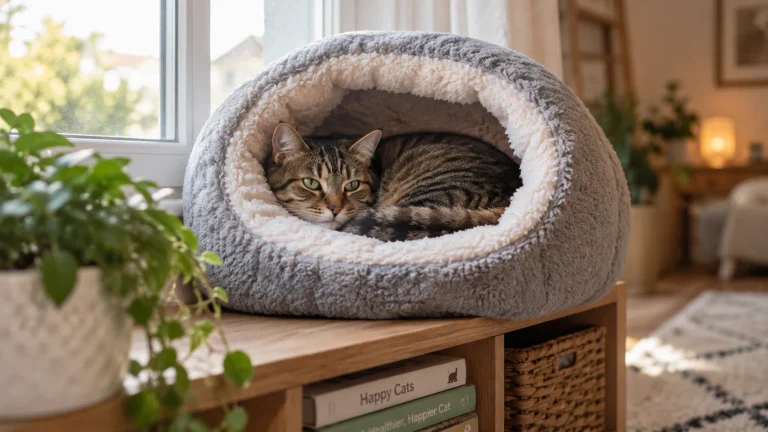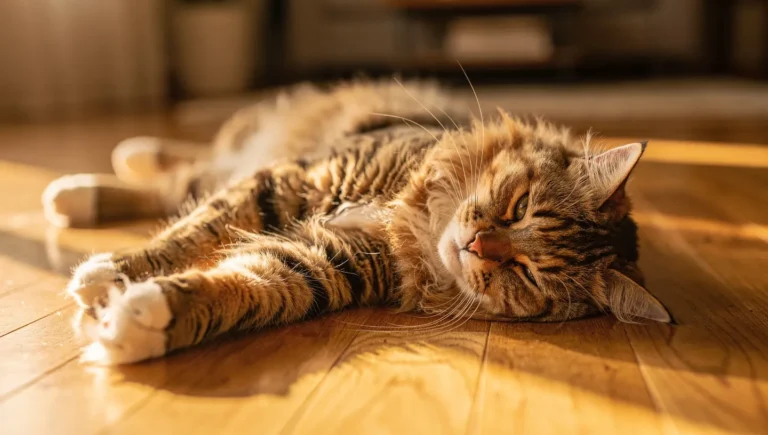


Your cat just flopped onto her back in front of you, stretched out, and looked at you with half-closed eyes. Is that a real sign of trust, or is she just tired?
If you’ve ever caught yourself wondering “does my cat trust me?” in a moment like that, little scenes like this one are usually your answer.
Here’s the short version: yes, your cat likely trusts you if she regularly shows you relaxed, vulnerable behaviors like exposing her belly, sleeping close to you, slow blinking at you, or letting you handle her without tensing up. None of these signs on their own proves anything, but together, they paint a pretty clear picture.

Table of Contents
- Does My Cat Trust Me? The Short Answer
- Why Trust Matters So Much to Cats (Quick Science Context)
- 10 Signs Your Cat Trusts You
- 1. She Shows You Her Belly
- 2. She Sleeps Near or On You
- 3. The Slow Blink (“Cat Kiss”)
- 4. She Goes “Boneless” When You Pick Her Up
- 5. She Lets You Groom Her
- 6. She Kneads You (“Making Biscuits”)
- 7. She Greets You at the Door or Follows You Around
- 8. She Brings You “Gifts”
- 9. She Turns Her Back to You While Resting
- 10. She “Talks” to You
- What Is the 3-3-3 Rule for Cats?
- How Long Does It Take for a Cat to Trust You?
- What If Your Cat Doesn’t Show These Signs Yet?
- FAQ: Does My Cat Trust Me?
- Do cats trust humans easily?
- Can a cat trust one person and not another?
- Does letting me pick her up always mean she trusts me?
- So, Does My Cat Trust Me? Here’s the Real Answer
Does My Cat Trust Me? The Short Answer
If your cat feels safe around you, she’ll show it through body language more than words. The clearest signals are physical: she relaxes her body near you, she doesn’t flinch when you touch her, and she chooses to be close to you even when she has other options.
Cats don’t fake this kind of body language. A tense, distrustful cat can’t force herself to go limp in your arms or fall asleep six inches from your face. So when you see these signs, they’re telling you something real about how your cat feels.
Why Trust Matters So Much to Cats (Quick Science Context)
Here’s the thing that makes cats different from, say, dogs: cats are both predator and prey in the wild. That dual identity shapes almost everything about how they act around you.
A prey animal that lets its guard down is taking a real risk. Exposing your belly, closing your eyes, or letting a much bigger creature pick you up off the ground isn’t something a cat does casually, because in the wild, those same behaviors could get her killed. When your cat does them in front of you, she’s essentially telling you that she doesn’t see you as a threat.
That’s why trust in cats tends to show up as an absence of tension rather than an obvious display of affection. She’s not wagging a tail or jumping up to greet you at the door the way a dog might (although some cats do plenty of that too). She’s showing you trust by simply not being on guard.
10 Signs Your Cat Trusts You
Most owners don’t realize how many small, everyday moments are actually trust signals. Here are ten of the clearest ones.
1. She Shows You Her Belly
A cat lying on her back with her belly exposed is one of the most talked-about trust signals, and for good reason. The belly covers a lot of vital organs, and cats are naturally protective of that area.
When your cat rolls over in front of you and stays there, relaxed, she’s showing you that she feels safe enough to expose her most vulnerable spot. That said, this isn’t usually an invitation for a belly rub. Many cats enjoy showing their belly far more than having it touched, and a hand reaching for that spot can turn a trusting moment into a swatted hand pretty fast. Reading the rest of her body language before you reach in matters here.
2. She Sleeps Near or On You
Sleep is when a cat is at her most defenseless. In the wild, a sleeping cat can’t watch for danger, which is exactly why cats tend to nap in spots that feel secure and enclosed.
If your cat regularly chooses to nap on your lap, curled against your side, or even sleeps close to your head at night, she’s telling you that your presence makes her feel safe enough to fully let her guard down. The closer she sleeps, the more relaxed she likely feels around you specifically.
3. The Slow Blink (“Cat Kiss”)
If your cat looks at you and slowly closes her eyes, then opens them again, that’s often called a “cat kiss.” Understanding what your cat’s eyes are telling you helps put this in context: researchers at the University of Sussex found that the slow blink functions as a form of positive communication between cats and people, working much like a smile, with cats showing more of this behavior toward humans who blink slowly at them first.
You can try slow blinking back at your cat the next time she does it. Many owners find their cat responds by blinking again or relaxing even further.

4. She Goes “Boneless” When You Pick Her Up
Some cats stiffen up the moment they’re lifted off the ground, claws slightly out, body tense, ready to jump free. Others go almost completely limp, letting their legs dangle and their weight rest fully in your arms.
That second reaction is a strong sign of trust. Being picked up removes a cat’s ability to control her own movement and escape route, which goes against a lot of her natural instincts. A cat that relaxes into it, rather than fighting it, is telling you she trusts you not to drop her or put her in danger. If your cat tenses, pulls her claws out, or tries to twist free every time, that’s worth respecting rather than pushing through.
5. She Lets You Groom Her
Cats are meticulous about grooming themselves, and they’re also selective about who else gets to help. When your cat lets you handle her, especially if you’ve built a calm routine around how to brush your cat without a fight, she’s allowing a level of physical closeness that isn’t automatic.
Grooming each other is something cats do with other cats they’re bonded to, so when your cat tolerates or even leans into being brushed by you, she’s extending some of that same social behavior in your direction. Watch for relaxed body language during grooming, like a still tail and soft eyes. Fast tail flicks or a sudden shift to stillness can mean she’s had enough for now, even if she trusts you plenty.
6. She Kneads You (“Making Biscuits”)
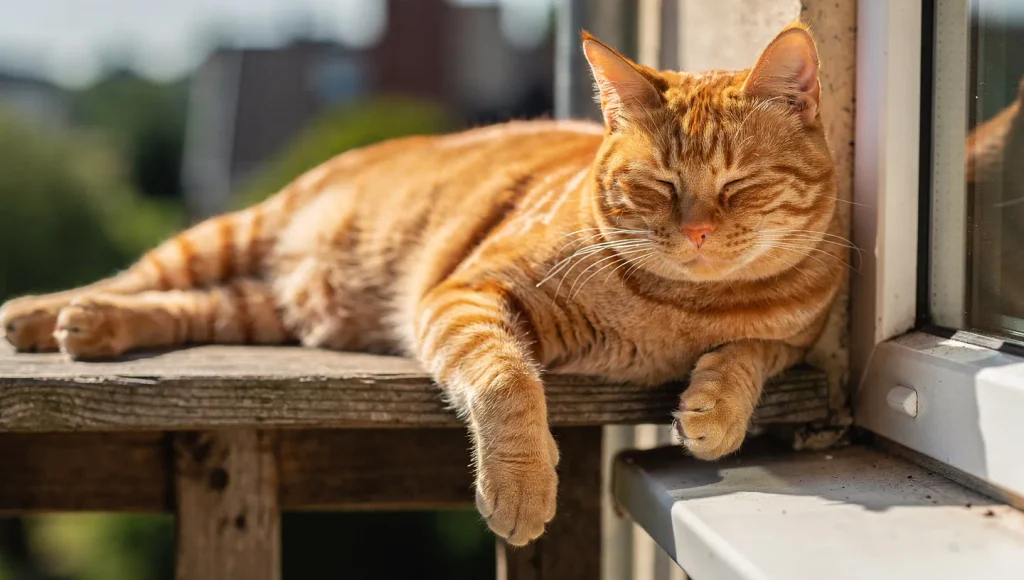
That rhythmic pushing motion with the front paws, famously known as making biscuits, goes all the way back to nursing in kittenhood, when kneading helped stimulate milk flow. Adult cats often keep the habit as a comfort behavior.
When your cat kneads you specifically, especially while purring or half-asleep, she’s associating you with that same sense of safety and comfort she felt as a kitten. It’s not subtle, and it’s one of the more literal “I feel good here” signals a cat can give.
7. She Greets You at the Door or Follows You Around
A cat trotting to the door when you get home, or trailing you from room to room, is doing more than just checking if you brought food. Following you around the house is a behavior tied to social bonding, and cats generally don’t dedicate that kind of attention to someone they’re wary of.
There’s a clear difference, though, between a cat who follows you out of relaxed trust and one dealing with separation anxiety. If the following comes with relaxed body language, occasional independence, and calm behavior when you do leave the room, it’s a trust signal rather than a stress response.
8. She Brings You “Gifts”
If you’ve ever found a toy or prey left carefully at your feet, congratulations: your cat just gave you a present. Understanding why cats bring gifts reveals this as an instinctive sharing of a prized “catch,” rooted in natural hunting behavior.
Sharing a catch with you is a cat’s way of including you in something she considers important. It’s not the most glamorous trust signal on this list, but it’s one of the most sincere.
9. She Turns Her Back to You While Resting
It might seem like the opposite of affection, but a cat who settles down with her back to you, especially somewhere close by, is showing a specific kind of confidence. She’s choosing not to keep you in her line of sight, which means she’s not watching you as a potential threat.
This ties back into the same body language patterns that show up across a cat’s whole posture, not just this one position. A relaxed tail, loose shoulders, and soft ears alongside this behavior all point the same direction: comfort, not indifference.
10. She “Talks” to You
Cats develop a lot of their vocal range specifically for communicating with humans, not with each other. Soft meows, little chirps, or trilling sounds directed at you, especially when you make eye contact or speak to her first, are a form of conversation she’s chosen to have with you.
A cat that stays silent and watchful around most people but “talks” to you regularly is showing a level of comfort that isn’t universal. It’s her version of picking up the phone.

What Is the 3-3-3 Rule for Cats?
The 3-3-3 adjustment rule is a rough timeline some cat owners and shelters use to set expectations when a cat comes into a new home: roughly 3 days to start decompressing and feeling less overwhelmed, 3 weeks to start settling into a routine, and 3 months to feel fully at home and show her real personality.
It’s a helpful guideline rather than a guarantee. Some cats build trust much faster than that, especially if they came from a stable, well-socialized background. Others, particularly rescues with a rough history, may need considerably longer. If your cat is still cautious past the three-month mark, that doesn’t mean something’s wrong. It just means she’s on her own schedule.
How Long Does It Take for a Cat to Trust You?
There’s no fixed number that applies to every cat. A confident, well-socialized cat might warm up to a new person within days, while a nervous or previously mistreated cat could take months to fully relax.
A few things tend to speed the process along: a predictable routine, letting the cat approach you rather than forcing interaction, low-pressure play sessions, and simply giving her time without pressure. In the early stages, sleeping close to you or seeking you out on her own terms are usually the first real signs that trust is building, even before she’s comfortable with things like being picked up.
What If Your Cat Doesn’t Show These Signs Yet?
Not every cat is naturally cuddly, and that’s not the same as not trusting you. Some cats are simply more independent or reserved by personality, the same way some people are. According to veterinary behavior sources like PetMD, affection and trust in cats can look very different from one individual to the next, and quieter signs like sitting in the same room or maintaining relaxed body language nearby still count.
If your cat seems consistently tense, hides most of the time, or avoids you even after weeks or months together, it’s worth having a conversation with a veterinarian. Occasionally, sudden distrust or avoidance can be linked to an underlying health issue rather than a behavioral one, and it’s better to rule that out than to assume it’s just personality.
FAQ: Does My Cat Trust Me?
Do cats trust humans easily?
Not usually right away. Trust tends to build gradually through repeated, low-pressure positive experiences rather than happening instantly, though some cats warm up faster than others depending on their personality and past experiences.
Can a cat trust one person and not another?
Yes, this is common. Cats often form a stronger bond with whoever spends the most calm, predictable time with them, which is why one household member is sometimes clearly the cat’s favorite.
Does letting me pick her up always mean she trusts me?
Mostly, but not on its own. Some cats tolerate being picked up without fully relaxing into it. Look at the whole picture, her body, tail, and ears included, rather than judging trust from one behavior alone.
So, Does My Cat Trust Me? Here’s the Real Answer
At the end of the day, trust with a cat isn’t one big dramatic moment. It’s built out of a hundred small, boring, everyday choices: the nap she takes near your feet, the slow blink across the room, the fact that she doesn’t bother watching the door when you walk out of it.
So if your cat’s been quietly doing a few of these things without you even noticing, go ahead and take the compliment. You’ve earned it.
And hey, if this saved you from anxiously Googling “does my cat hate me” at 2 a.m. for the tenth time, do a fellow cat parent a favor. Send this to that one friend who’s convinced their cat is secretly plotting against them, or drop it in your favorite cat Facebook group.
Somewhere out there, someone’s cat just turned its back on them dramatically, and they need to know that’s actually a compliment.