

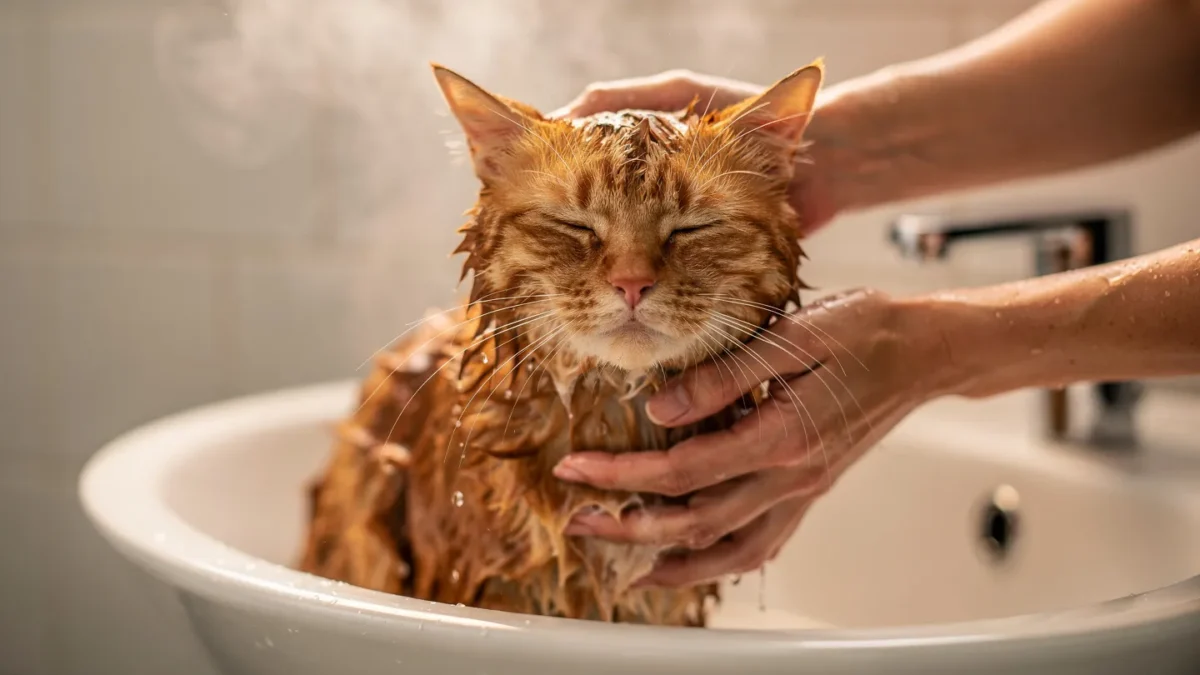
I still remember the first time I tried to bathe my cat, Miso.
It lasted about 45 seconds. There was water on the ceiling somehow, three scratch marks on my forearm, and Miso hiding under the bed for the rest of the day. I stood there soaking wet, thinking — never again.
But here’s the thing. A few months later, I had to try again. He’d gotten into something greasy in the garage, and there was no way around it. So I did my research, changed my whole approach… and it actually went fine. Not perfect — but fine.
That’s when I realized the problem was never Miso. It was my method.
If you’re in the same boat right now, and you’re wondering how to bathe a cat without stress, keep reading. I’m going to walk you through exactly what worked for me — and what most people get completely wrong.
Quick note: Everything in this article is based on personal experience and research from trusted sources. It’s for informational purposes only and isn’t a substitute for professional veterinary advice. When in doubt, always check with your vet.
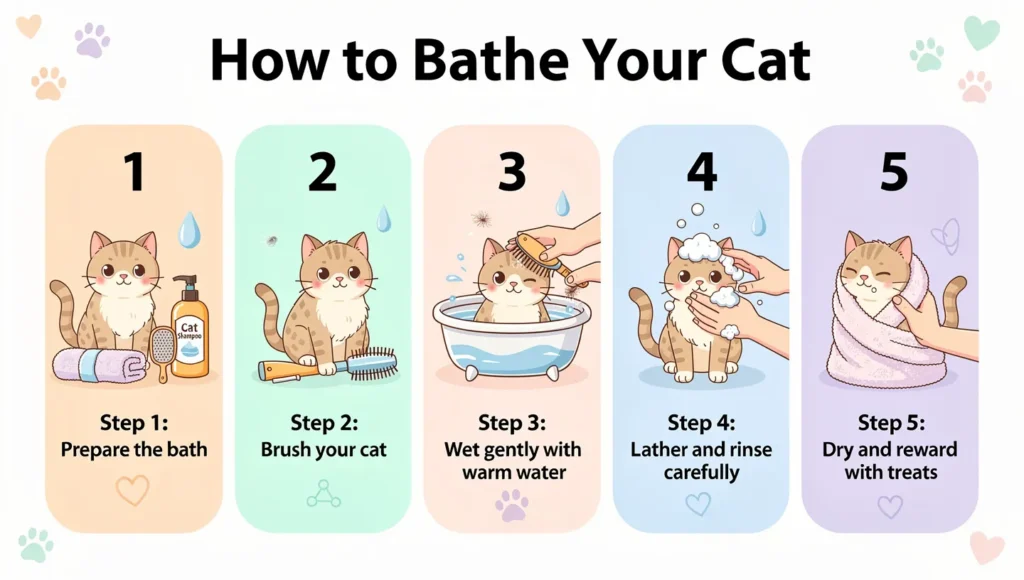
Table of Contents
- Do Cats Really Need Baths?
- Why Cats Hate Water (And Why That Matters)
- Before You Start: The Step Most People Skip
- Gather Your Supplies First
- Trim the Nails First
- Brush Out the Coat
- Burn Some Energy First
- Choose the Right Time
- Step-by-Step: How to Bathe a Cat the Right Way
- What If Your Cat Absolutely Hates Water?
- How to Avoid Getting Scratched
- How Often Should You Bathe a Cat?
- Common Mistakes That Make Cats Hate Baths Forever
- Can You Bathe a Cat Without Water?
- You Might Be Wondering
- What’s the easiest way to bathe a cat?
- Is it cruel to bathe cats?
- How do you bathe a cat that bites?
- How do you bathe a kitten?
- What Really Matters
Do Cats Really Need Baths?
Honestly? Most of the time — no.
Cats are incredible self-groomers. They spend a big chunk of their day cleaning themselves, and for the most part, they do a pretty solid job. This is actually one of the things I love about having cats — low-maintenance in the hygiene department.
But there are situations where a bath becomes necessary. And when those moments come, you want to be ready.
Here’s when bathing actually makes sense:
- They got into something toxic or sticky — grease, paint, chemicals. If they lick it off themselves, that’s a real problem. According to the ASPCA, exposure to certain household substances requires immediate bathing and veterinary attention.
- Heavy flea infestation — sometimes a flea bath is part of the treatment plan. (We have a full guide on flea prevention for cats if you need it.)
- Skin condition or vet recommendation — some cats need medicated baths.
- Long-haired cats with severe matting — though brushing should come first. Check out our guide on how to remove matted cat fur safely before you reach for the water.
- Senior or overweight cats who can’t groom themselves properly anymore.
Outside of these cases? Let your cat handle it. Bathing too often can strip the natural oils from their coat and actually cause more problems than it solves.
Bottom line: A bath is a last resort, not a routine.
Why Cats Hate Water (And Why That Matters)
Most people just assume cats hate water and leave it at that. But understanding why they hate it — that changes everything.
This is where things change.
When a cat gets wet, a few things happen at once that feel genuinely threatening to them:
They lose control. Cats are creatures of control. They groom on their own terms, move on their own terms, and rest on their own terms. Being held in water removes all of that instantly.
Their fur becomes heavy. A wet coat is uncomfortable and restricts movement. For an animal whose survival instinct is tied to being fast and agile, that’s deeply unsettling.
The sounds are overwhelming. Running water, splashing — it’s loud and unpredictable. Cats have extremely sensitive hearing, and what seems like background noise to us can feel like chaos to them.
Past experiences stick. If a cat had one bad bath, that memory doesn’t fade easily. They associate the whole experience with stress. This is why starting calm matters so much — especially with kittens.
Understanding cat body language during bath time can also help you read the signs before things escalate. A tucked tail, flattened ears, or wide pupils? That’s your signal to slow down.
Once I understood all this about Miso, I stopped fighting him — and started working with him. Big difference.
Before You Start: The Step Most People Skip
Most people get this wrong.
They fill up the tub, grab the cat, and hope for the best. Then they’re surprised when it turns into a disaster.
The prep phase is honestly more important than the bath itself. If you walk in unprepared, you’ve already lost.
Here’s everything you need to have ready before your cat is anywhere near water:
Gather Your Supplies First
Set everything up within arm’s reach — because once you have a wet cat in your hands, you can’t go looking for things.
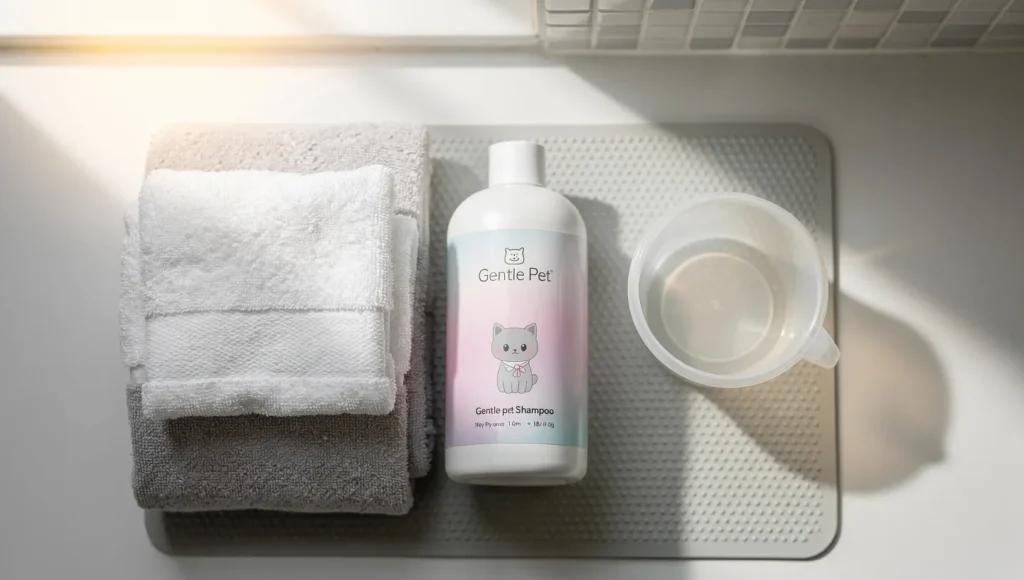
- Cat-specific shampoo — never use human shampoo or dish soap. The pH is wrong for their skin. Look for something gentle and fragrance-free. According to AVMA guidelines, always use products specifically formulated for cats.
- Two towels minimum — one for the initial dry-off, one for wrapping
- A plastic cup or pitcher for rinsing (more control than a showerhead)
- Non-slip mat for the sink or tub — this is huge. Slipping is one of the main things that panics cats
- Warm water ready — not hot, not cold. Think lukewarm. About the temperature of a comfortable bath for a baby.
Trim the Nails First
Do this at least a day before the bath — not right before. You want your cat calm, not already annoyed from a nail trim.
If you’re not sure how to do this safely, we have a full walkthrough on how to trim cat nails without stress.
Brush Out the Coat
Wet fur tangles fast. If there are any knots before the bath, they’ll be much worse after. A quick brush session also helps your cat relax and associate handling with something positive.
Our guide on how to brush your cat covers the right technique if you need it.
Burn Some Energy First
This one surprised me when I first heard it — but it works. Play with your cat for 10–15 minutes before the bath. A tired cat is a calmer cat. Chasing a wand toy around the room can make a real difference in how the bath goes.
Choose the Right Time
Don’t try to bathe a cat that’s already stressed, hungry, or hyper. Pick a calm moment — after a meal, during their usual relaxed period.
Personally, I always aim for late afternoon with Miso. That’s when he’s most mellow, and the whole thing goes about ten times smoother.
Step-by-Step: How to Bathe a Cat the Right Way
No drama, no rushing. Here’s exactly what works:
Step 1: Start slow
Start slow (this is the most important part when learning how to bathe a cat)
Step 2: Wet the body gradually
Use a cup — not a showerhead. Start from the back, work toward the neck. Keep the face completely dry. Always.
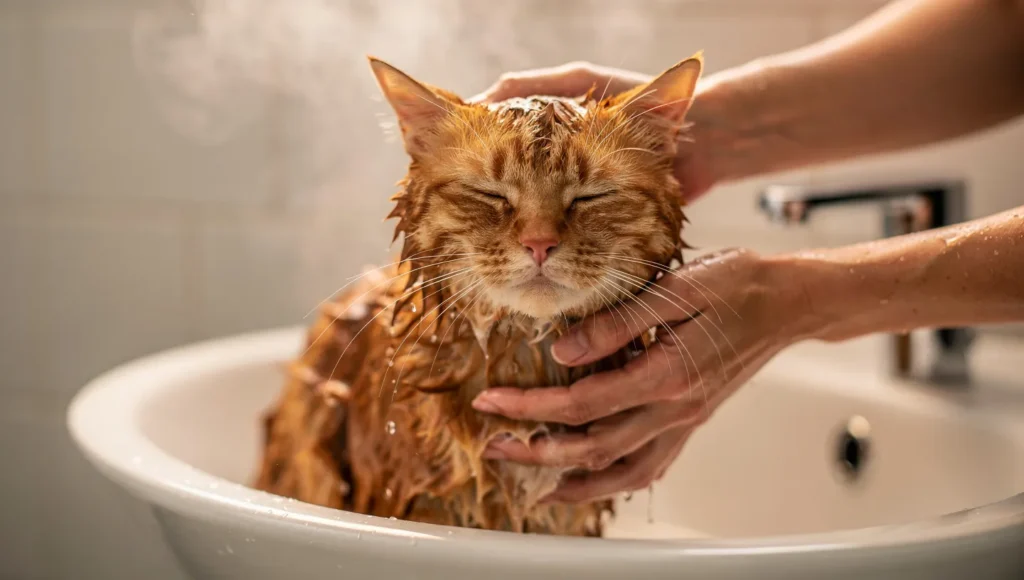
Step 3: Apply shampoo
A pea-sized amount worked into the coat gently. No scrubbing. Think massage, not washing dishes.
Step 4: Rinse thoroughly
This step matters more than people think. Leftover shampoo causes skin irritation. Rinse until the water runs completely clear.
Step 5: Dry immediately
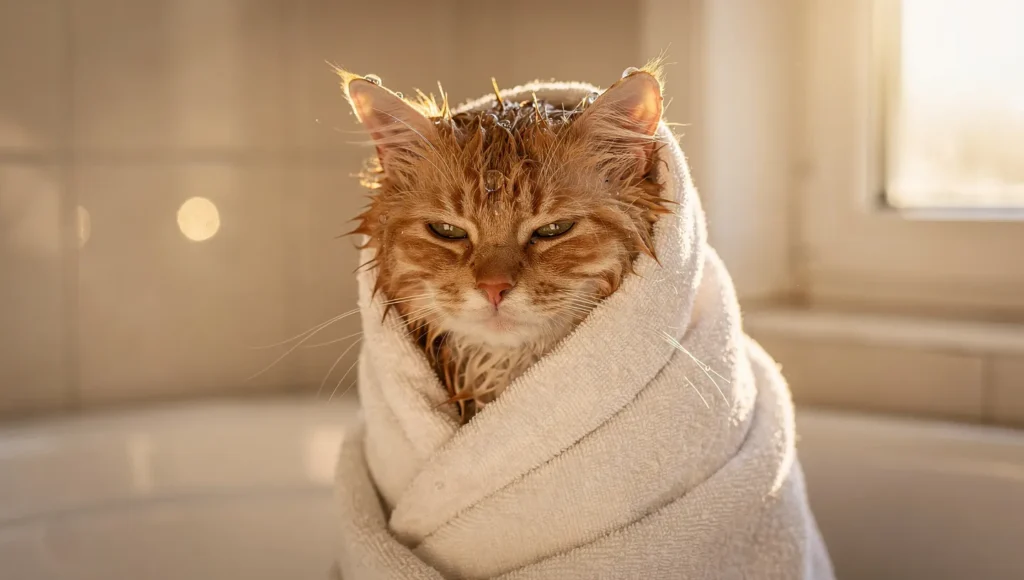
Wrap your cat in a towel right away. Keep them warm — a cold, wet cat is a stressed cat. Skip the blow dryer unless your cat is already used to it (and even then, use the lowest setting).
What If Your Cat Absolutely Hates Water?
Some cats just won’t tolerate it. If you’re trying to figure out how to bathe a cat that hates water, the key is to reduce fear — not force control. And honestly? That’s okay.
A few things that actually help:
- Use a cup instead of running water — the sound alone triggers panic
in a lot of cats - Work in a small space — a bathroom sink feels less overwhelming than
a full bathtub - Talk the entire time — low, calm voice. It sounds silly but it works.
I narrate the whole process with Miso and it genuinely keeps him calmer - Go slower than you think you need to — seriously, half the speed
If none of that works, waterless options exist. Dry shampoo and grooming wipes can handle light dirt and odor without any water at all. Not a permanent solution, but useful for cats that are truly water-averse.
How to Avoid Getting Scratched
Three simple rules: If you’re worried about how to bathe a cat without getting scratched, these rules make all the difference.
- Trim nails 24 hours before — never the same day
- Don’t restrain too tightly — a cat that feels trapped panics faster
- Stop the moment they hit their limit — a tense, growling cat is
telling you something. Listen.
Personally, I’ve learned that forcing it never ends well. A short, incomplete bath is better than a traumatic one that sets you back weeks.
How Often Should You Bathe a Cat?
For most indoor cats — rarely, if ever.
If bathing is genuinely needed (medical, flea treatment, coat condition), every 4–6 weeks is the general guideline. More than that strips the coat’s natural oils and can cause dry, irritated skin.
Long-haired breeds like Persians or Maine Coons may need it slightly more often due to coat maintenance. Hairless breeds like the Sphynx actually need weekly baths — their skin produces oils with no fur to absorb them.
Common Mistakes That Make Cats Hate Baths Forever
Most bad bath experiences come down to the same handful of errors:
- Water that’s too cold or too hot — lukewarm only, always
- Spraying water directly at the face — instant panic trigger
- Moving too fast — rushing communicates stress to your cat
- Raising your voice — even out of frustration, it makes everything worse
- Bathing too frequently — cats don’t need it, and overdoing it
creates unnecessary negative associations
According to PetMD, one of the most common grooming mistakes is skipping the post-bath warm-up — leaving a wet cat in a cool room is uncomfortable and stressful for them.
Can You Bathe a Cat Without Water?
Yes — and sometimes it’s the smarter choice.
Waterless cat shampoo works by absorbing oils and dirt. You massage it in, let it sit, then towel it off. Good for light cleaning between baths or for cats that are genuinely water-averse.
Grooming wipes are even simpler — quick wipe-down for surface dirt, especially useful around the face and paws where you’d never use water anyway.
Neither replaces a proper bath when one is truly needed, but for day-to-day maintenance? They’re underrated.
You Might Be Wondering
What’s the easiest way to bathe a cat?
The easiest way to bathe a cat is to prepare everything first, use lukewarm water, and move slowly — especially if you’re dealing with a cat that hates water.
Is it cruel to bathe cats?
Not when it’s done correctly and when there’s a real reason for it. Forcing unnecessary baths — that’s where it becomes a problem. Most cats don’t need regular bathing at all.
How do you bathe a cat that bites?
Don’t push through it. Stop, dry them off, and try again another day with more prep and a calmer environment. If biting is a consistent issue, understanding why cats bite can help you address the root cause first.
How do you bathe a kitten?
Extra gently, extra warm, and keep it very short. Kittens lose body heat fast — dry them immediately and keep them in a warm room afterward. Ourkitten care guide covers everything you need for those early months.
What Really Matters
Mastering how to bathe a cat takes patience, but it’s a great way to bond with your pet.
Once you understand why they react the way they do — and once you slow down enough to work with them instead of against them — the whole thing becomes manageable. Even Miso tolerates it now.
It takes a few tries. It takes patience. But the trust you build in the process? That’s worth more than a perfectly clean cat.
If your cat is showing signs of skin issues, excessive grooming, or coat problems that a bath alone won’t fix, it might be worth checking our guide on how to tell if your cat is sick — sometimes what looks like a grooming issue is actually something deeper.

Actually no matter if someone doesn’t understand then its up to other visitors that they will help, so
here it occurs.
That’s true, Maddison! Sharing experiences and helping one another can make learning easier for everyone. Thanks for sharing your thoughts!