
Cat food labels are often the only thing standing between your feline friend and a lifetime of optimal health. As a dedicated cat parent, you’ve likely stood in the pet food aisle, squinting at tiny text and wondering if “poultry meal” or “meat by-products” are actually the best nutritional choice for your furry companion. It can be overwhelming, but understanding these labels is the most powerful tool you have to ensure your cat thrives rather than just survives.
In this expert-led guide, we will strip away the marketing fluff and teach you how to analyze cat food labels like a professional nutritionist. By the end of this article, you will feel confident in choosing safe and healthy foods that support your cat’s unique biological needs, ensuring they stay active, happy, and vibrant for years to come.
⚡ Quick Summary: The 3-Second Label Check
- The First Five: The first five ingredients make up the majority of the food; at least three should be named animal proteins (e.g., Chicken, Salmon).
- The AAFCO Seal: Always look for the “Complete and Balanced” statement to ensure the food meets basic nutritional standards.
- Avoid Vague Terms: If the label says “Meat” or “Animal Fat” without naming the species, put it back on the shelf.
Note: The information provided here is for educational purposes only. For specific medical advice or a clinical diagnosis, we recommend consulting a certified veterinary professional.
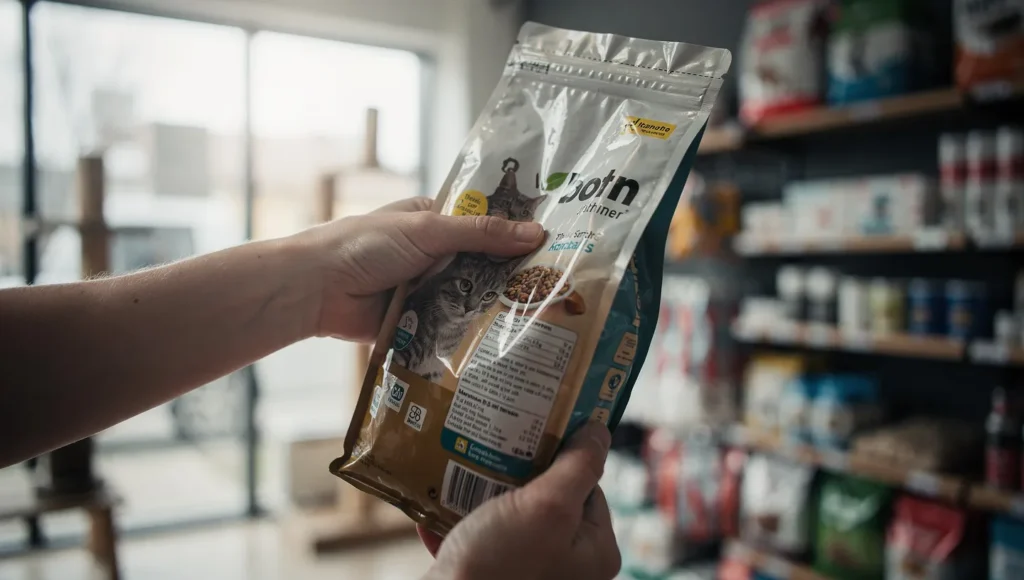
Table of Contents
- 🏷️ Understanding Cat Food Labels: More Than Just Marketing
- The 95% Rule: Pure and Simple
- The 25% Rule: Watch for “Dinner,” “Recipe,” or “Formula”
- The 3% Rule and the “Flavor” Trap
- 🧐 The Ingredients List: What Is Actually Inside the Bag?
- The Weight Game: Why “Real Chicken” Isn’t Always #1
- Naming Names: The Importance of Specificity
- 🧪 Decoding the Guaranteed Analysis Table
- The “Crude” Reality
- The Moisture Trap: Comparing Wet vs. Dry Food
- What to Look For in a Healthy Profile
- 🛡️ The Truth About By-products and Grains in Cat Food
- Are By-products Really “Trash”?
- Grains vs. Grain-Free: Finding the Right Balance
- 🚩 Red Flags to Avoid on Any Pet Food Labels
- Chemical Preservatives: The Silent Villains
- “Mystery” Ingredients and Vague Terms
- ✅ The AAFCO Statement: The Seal of Nutritional Adequacy
- Complete and Balanced vs. Intermittent Feeding
- Matching the Life Stage
- A Final Word on Being a Label-Savvy Cat Parent
🏷️ Understanding Cat Food Labels: More Than Just Marketing
Marketing teams spend millions of dollars designing packaging that makes you feel like you’re buying a five-star gourmet meal for your feline. However, the pretty pictures of fresh grilled salmon and garden vegetables are often just “window dressing.” To find the truth, you must look past the graphics and understand the legal naming rules that govern cat food labels.
The Association of American Feed Control Officials (AAFCO) has strict “Product Name Rules” that dictate exactly what a manufacturer can call their food based on the percentage of ingredients inside. Once you learn these rules, you’ll never look at a bag of kibble the same way again.
The 95% Rule: Pure and Simple
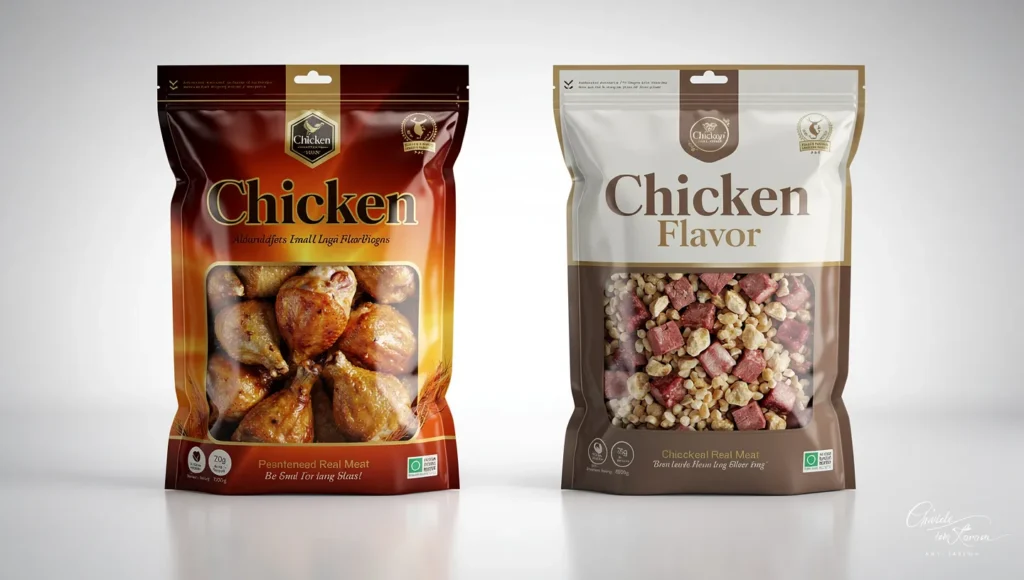
If a product is named “Beef for Cats” or “Chicken Cat Food,” it must contain at least 95% of that named ingredient (excluding water). These are generally the highest quality options on cat food labels because they are packed with animal protein. When you see a simple name, you are getting exactly what you paid for.
The 25% Rule: Watch for “Dinner,” “Recipe,” or “Formula”
This is where things get tricky. If the label includes words like “Dinner,” “Entrée,” “Recipe,” or “Formula” (e.g., “Chicken Dinner for Cats”), the named ingredient only needs to make up 25% of the product. The rest of that bag is likely filled with grains, starches, or other fillers that might not align with your cat’s nutritional needs.
The 3% Rule and the “Flavor” Trap
Ever seen a bag that says “Cat Food With Salmon”? That tiny word “with” means the food only needs to contain 3% salmon. Even worse is the “Flavor” designation. “Chicken Flavor Cat Food” is not required to have any actual chicken meat at all—only enough “flavoring” to be detected by the cat.
Expert Tip: Always prioritize labels where the animal protein stands alone in the title without descriptive “fluff” words. This ensures your cat gets the high-protein diet they evolved to eat.
| Product Name Example | Min. Content % | Quality Level |
|---|---|---|
| “Chicken Cat Food” | 95% | ⭐⭐⭐⭐⭐ (Excellent) |
| “Chicken Dinner / Recipe” | 25% | ⭐⭐⭐ (Average) |
| “With Chicken” | 3% | ⭐⭐ (Low) |
| “Chicken Flavor” | 0% – Trace | ⭐ (Avoid) |
🧐 The Ingredients List: What Is Actually Inside the Bag?
If the product name is the “cover” of the book, the ingredients list is the actual story. By law, manufacturers must list ingredients in descending order by weight. This sounds simple, but there is a catch: the weight is measured before the ingredients are cooked. This is a crucial detail when you are scanning cat food labels for quality.
The Weight Game: Why “Real Chicken” Isn’t Always #1
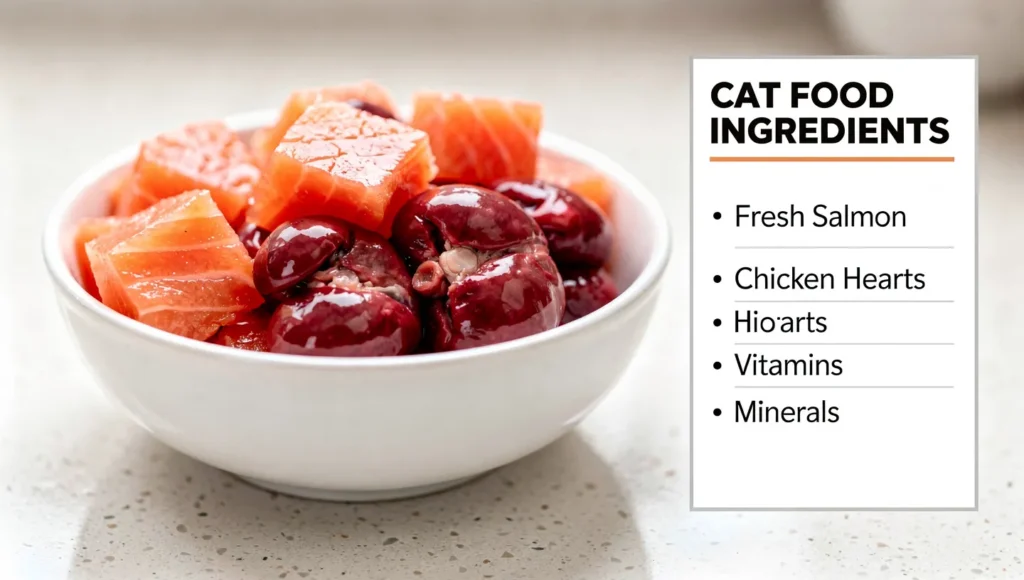
You might see “Fresh Chicken” as the first item on the ingredients list. While this sounds great, fresh meat is about 70% water. Once that food is processed into dry kibble, the water is removed, and the actual amount of chicken protein drops significantly. This is why many high-quality brands also include “Chicken Meal”—a concentrated, rendered form of meat that provides more actual protein per gram than fresh meat alone.
Naming Names: The Importance of Specificity
As an expert, my number one rule is: Look for named species. You want to see “Chicken,” “Turkey,” or “Salmon.” If you see vague terms like “Meat Meal,” “Animal Fat,” or “Poultry By-Products,” you should be concerned. These terms allow manufacturers to change the source of the protein based on what is cheapest at the time, which can lead to digestive issues or unexplained allergic reactions in sensitive cats.
Expert Tip: The first five ingredients usually make up about 80% of the entire bag. If the first three ingredients aren’t clear, named animal proteins, it’s probably best to keep looking for a better nutritional profile.
| Ingredient Type | ✅ Good (Look for These) | 🚩 Red Flags (Avoid These) |
|---|---|---|
| Proteins | Named meats (Chicken, Salmon, Lamb) | Generic “Meat,” “Animal Meal,” “Poultry” |
| Fats | Chicken Fat, Salmon Oil | Animal Fat, Vegetable Oil |
| Preservatives | Mixed Tocopherols (Vitamin E), Rosemary | BHA, BHT, Ethoxyquin |
| Fillers | Whole vegetables (peas, carrots) | Corn Gluten Meal, Wheat, Soy |
While the ingredients list tells us what is in the food, it doesn’t always tell us the nutritional balance. For that, we need to dive into the technical side of the label: the Guaranteed Analysis table—which we will cover next.
🧪 Decoding the Guaranteed Analysis Table
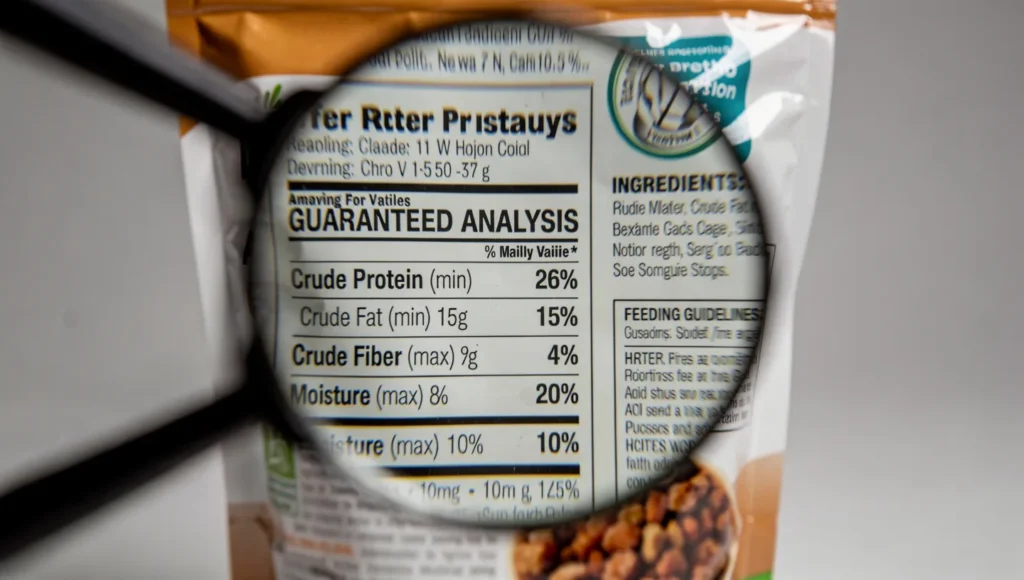
The Guaranteed Analysis is essentially the “Nutrition Facts” panel for your cat. By law, cat food labels must list four main components: minimum crude protein, minimum crude fat, maximum crude fiber, and maximum moisture. While these numbers give you a baseline, they don’t always tell the whole story—especially if you are comparing different types of food.
The “Crude” Reality
You’ll notice the word “Crude” before protein and fat. This refers to the method of testing, not the quality of the ingredient. It measures the total nitrogen content to estimate protein. However, it doesn’t tell you if that protein comes from high-quality muscle meat or harder-to-digest sources like feathers or hooves. This is why you must always cross-reference the Guaranteed Analysis with the ingredients list we discussed earlier.
The Moisture Trap: Comparing Wet vs. Dry Food
One of the biggest mistakes cat owners make when reading cat food labels is comparing the protein percentage of wet food directly to dry food. For example, a dry food might list 30% protein, while a wet food lists only 10%. At first glance, the dry food looks superior. But wait—the wet food is 80% water!
To get an honest comparison, you have to look at the “Dry Matter Basis.” Once you remove the water from the wet food, that 10% protein often jumps to 40% or 50%, making it a protein powerhouse compared to the dry kibble.
💡 Expert Tip: The Dry Matter Hack To compare wet and dry food accurately, follow this simple math: 1. Subtract the moisture percentage (e.g., 80%) from 100 to get the dry matter (20%). 2. Divide the protein percentage (e.g., 10%) by that dry matter (20%). 3. Multiply by 100. Result: That wet food is actually 50% protein!
What to Look For in a Healthy Profile
- High Protein (Min 26-30% for adults): Cats are obligate carnivores and need animal-based amino acids like Taurine to survive.
- Moderate Fat (Min 9%): Provides energy and helps with the absorption of vitamins.
- Low Fiber (Max 5%): Too much filler can lead to large, frequent stools and poor nutrient absorption.
Understanding these numbers is key to maintaining a healthy weight and preventing issues like obesity or diabetes in your feline friend.
🛡️ The Truth About By-products and Grains in Cat Food
The word “by-product” often sends shivers down a cat owner’s spine, conjuring up images of floor sweepings and “trash.” Similarly, the “grain-free” trend has led many to believe that any grain is a poison for cats. However, if we look at cat food labels through the lens of science rather than marketing, the reality is far more nuanced.
Are By-products Really “Trash”?
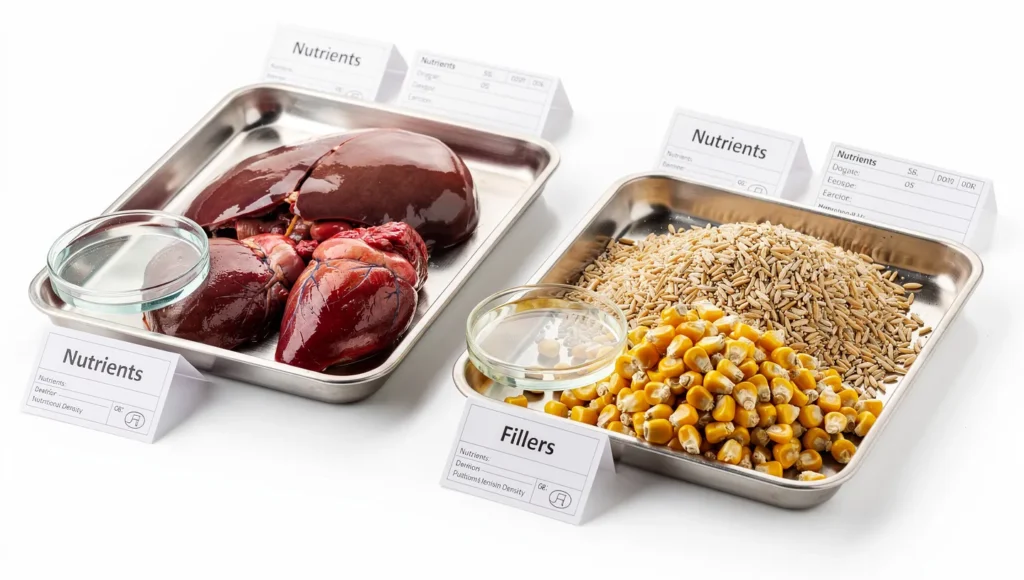
In the wild, cats don’t just eat muscle meat; they eat the whole prey, including the heart, liver, and kidneys. On cat food labels, “by-products” are simply the nutrient-dense organ meats that humans usually don’t eat. These are “nature’s multivitamins,” packed with essential amino acids like Taurine and Vitamin A that are vital for optimal feline health.
The key is looking for named by-products. “Chicken By-product Meal” is a high-quality source of nutrition. However, “Meat By-products” (unnamed) is where the quality becomes a mystery, and that is what you should avoid.
Grains vs. Grain-Free: Finding the Right Balance
Cats are obligate carnivores, meaning they have no biological requirement for carbohydrates. However, grains like rice or oats are often used as “binders” to create kibble. While not inherently toxic, a diet that is too high in grains can lead to obesity. When scanning cat food labels, ensure that grains aren’t among the top three ingredients.
- The Grain-Free Myth: Many “grain-free” foods replace corn with peas or potatoes, which can be just as high in carbohydrates.
- Digestibility: Some cats have sensitivities to gluten, but for most, a small amount of whole grain is perfectly safe as long as the protein remains the primary source of calories.
💡 Expert Tip: Quality over Labeling Trends Don’t be afraid of “Chicken By-product Meal” if it’s from a reputable brand. It often contains more essential minerals and vitamins than plain “Chicken Meat.” Focus on the named species rather than the scary-sounding words.
Now that we’ve cleared the air on these controversial ingredients, let’s identify the real “villains”—the red flags that should make you put that bag back on the shelf immediately.
🚩 Red Flags to Avoid on Any Pet Food Labels
Sometimes, what is not in the food is just as important as what is. Even high-end brands can sometimes hide cheap fillers or chemical “shortcuts” that lead to long-term health issues. When scanning cat food labels, if you spot any of the following ingredients, it is a clear sign to look for a better alternative.
Chemical Preservatives: The Silent Villains
Manufacturers often use synthetic chemicals to extend the shelf life of kibble for years. While effective for business, these can be harmful to your cat’s internal organs. Avoid any product containing:
- BHA (Butylated Hydroxyanisole) & BHT (Butylated Hydroxytoluene): Known carcinogens in some laboratory studies; these are used to prevent fats from spoiling.
- Ethoxyquin: Originally developed as a pesticide, it is still found in some lower-quality cat food labels as a preservative for fish meal.
- Propylene Glycol: Used to maintain moisture in “semi-moist” treats, but it is toxic to cats in certain amounts and can cause red blood cell damage.
“Mystery” Ingredients and Vague Terms
If the manufacturer doesn’t want to name the animal, there is usually a reason. High-quality cat food labels are proud of their ingredients. Avoid vague terms that hide the source of the protein or fat:
- “Animal Fat” or “Poultry Fat”: Where did it come from? Which animal? This lack of transparency is a major red flag for cats with allergies.
- “Meat Meal”: This could be a mix of various low-quality protein sources. Always look for a named meal like “Chicken Meal.”
- Artificial Colors (Red 40, Yellow 5, Blue 2): Cats are colorblind to these shades! These are added purely to appeal to human eyes and have been linked to hyperactivity and allergies.
Expert Tip: Beware of “Ingredient Splitting” Manufacturers sometimes split a low-quality ingredient (like corn) into different names (e.g., corn gluten meal, ground corn, corn flour). This allows them to list these smaller portions lower on the ingredients list so that meat appears as the #1 ingredient, even if the food is mostly corn.
Feeding your cat these low-quality ingredients can lead to chronic issues, such as frequent vomiting or poor coat health. Always cross-reference with FDA safety guidelines to stay informed.
✅ The AAFCO Statement: The Seal of Nutritional Adequacy
You have checked the ingredients and analyzed the percentages, but there is one final sentence you must find on all cat food labels before you buy. This is the AAFCO (Association of American Feed Control Officials) statement. Without this, you cannot be sure the food provides the 100% complete nutrition your cat needs to stay healthy.
Complete and Balanced vs. Intermittent Feeding
Not all cat food is designed to be a daily meal. Some products are marketed as “toppers” or “mix-ins,” which lack essential vitamins and minerals. Look for these specific phrases on cat food labels:
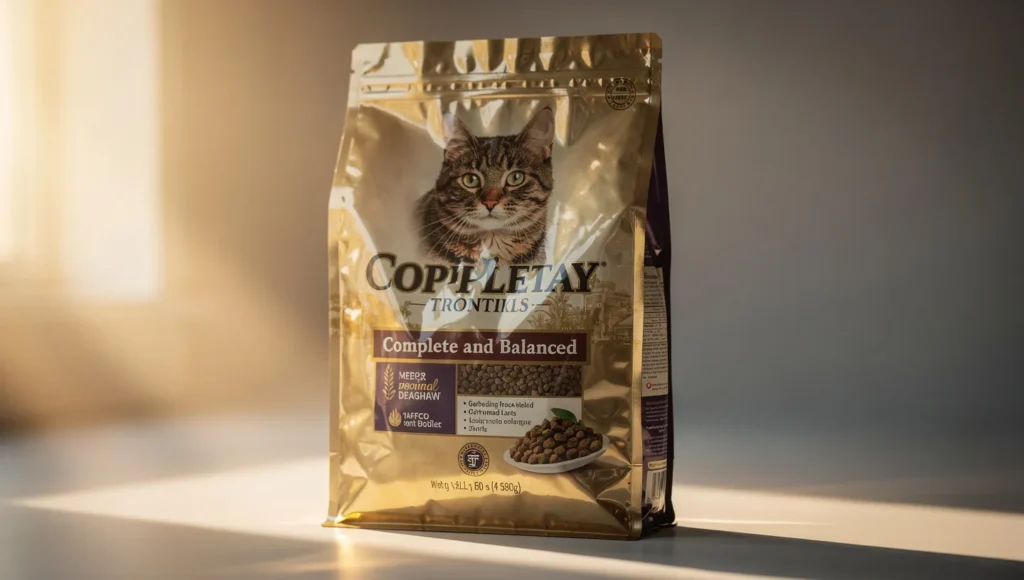
- “Complete and Balanced”: This means the food contains every single nutrient a cat needs in the correct proportions. This should be your primary choice for daily feeding.
- “For Intermittent or Supplemental Feeding Only”: This is a major warning. It means the food is essentially a treat and lacks vital nutrients like Taurine or Calcium. Feeding this exclusively can lead to severe nutritional deficiencies.
Matching the Life Stage
A kitten has very different nutritional needs than a 15-year-old senior cat. AAFCO statements on cat food labels will also specify the “Life Stage.” Ensure you are choosing a formula that matches your cat’s current age:
• Growth: For kittens and pregnant/nursing cats.
• Adult Maintenance: For healthy adult cats.
• All Life Stages: Formulated to meet the needs of any cat, though often higher in calories.
Expert Tip: The Feeding Trial Advantage If the label says the food was “tested using AAFCO feeding trials,” it means real cats actually ate this food in a controlled study and thrived. This is the “Gold Standard” of cat food labels, showing the manufacturer invested in real-world results rather than just a mathematical formula.
A Final Word on Being a Label-Savvy Cat Parent
Becoming an expert at reading cat food labels is one of the greatest gifts you can give your pet. It allows you to see past the flashy marketing and expensive commercials to understand exactly what is fueling your cat’s body. Remember, the best food isn’t always the most expensive one—it’s the one with transparent ingredients, a solid guaranteed analysis, and a clear AAFCO statement.
By taking those extra 60 seconds in the pet store to flip the bag over, you are actively extending your cat’s life and preventing avoidable health issues. Your cat might not be able to read the ingredients list, but they will certainly feel the difference in their energy, coat, and overall happiness. Stay curious, stay informed, and always put your cat’s nutrition first!