You’re running a brush through your long-haired cat’s coat — again — and hitting the same stubborn mats you dealt with last week. She flinches. You stop. You both know this isn’t working.
That’s usually the moment “lion cut” starts sounding less extreme and more… reasonable.
Lion cut for cats is one of the most searched grooming decisions among owners of long-haired breeds — and also one of the most misunderstood. Some swear by it. Others call it cruel. Most people just want a straight answer.
This guide gives you exactly that: what a lion cut actually involves, when it genuinely helps, when it doesn’t, and how to make the right call for your cat — not someone else’s.
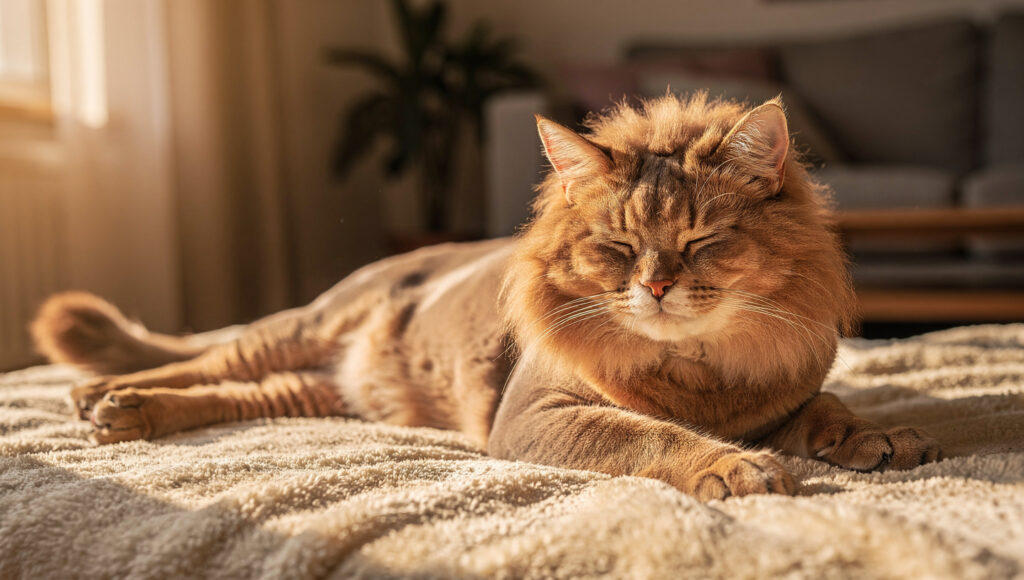
A lion cut is a grooming style where most of a cat’s body fur is shaved short — typically down to about 1–2 inches or less — while leaving the fur longer around the head, neck (the “mane”), lower legs, and the tip of the tail.
The result? Your cat ends up looking, quite literally, like a tiny lion.
There are two main versions you’ll come across:
Style
What’s Shaved
What’s Left
Full Lion Cut
Entire body from neck to tail base
Head mane, paws, tail tip
Modified Lion Cut
Body + hindquarters
More fur left on legs and chest
The modified version is often recommended for cats who are more sensitive or have thinner coats — it’s less dramatic and tends to cause less disruption to the cat’s natural insulation.
One thing worth clarifying right away: a lion cut is a grooming procedure, not a medical one. It doesn’t treat skin conditions, parasites, or any underlying health issue. It’s a physical solution to a coat management problem — nothing more, nothing less.
Why Do Cats Get a Lion Cut?
Lion cut for cats doesn’t happen on a whim. Most owners arrive at this decision after weeks — sometimes months — of struggling with a coat that’s become genuinely unmanageable.
🐾 Common Reasons Owners Choose a Lion Cut
Severe matting is the number one reason. When mats get tight enough, they pull on the skin, restrict movement, and become painful. At that point, brushing isn’t a solution — it’s just adding more stress. Shaving is often the only humane way to start fresh. If your cat’s coat has reached that stage, you may also want to read about how to build a brushing routine that prevents this from happening again.
Senior cats who’ve stopped self-grooming are another common case. In my experience, older cats — especially those with arthritis or reduced mobility — simply can’t reach certain areas anymore. The coat deteriorates fast, and owners are often left managing a hygiene problem that compounds weekly.
Hairball management is sometimes cited, though the evidence here is mixed. Shorter fur means less ingested hair during grooming — which can reduce hairball frequency in heavy shedders. If your cat already struggles with this, it’s worth reviewing why cats vomit after eating to rule out other causes first.
Post-surgery or mobility issues occasionally make a lion cut the most practical option — particularly when a cat needs wound monitoring or can’t tolerate regular brushing due to pain.
Overheating concerns come up often, but this one deserves a direct correction: cats don’t regulate body temperature the way humans do. Their coat actually provides insulation against both heat and cold. Shaving doesn’t automatically keep a cat cooler — and in some cases, it removes a layer of protection they actually need. More on this in the pros and cons section.
Lion Cut for Cats – The Real Pros and Cons
This is where a lot of online content gets either too enthusiastic or too alarmist. The honest answer is: it depends entirely on why you’re doing it.
✅ When It Actually Helps
Eliminates painful matting immediately. When mats are beyond brushing, shaving is the kindest reset you can give a suffering coat.
Reduces daily grooming burden for owners of high-maintenance breeds like Persians or Maine Coons.
Improves hygiene in senior or overweight cats who can no longer groom themselves effectively — especially around the hindquarters.
Simplifies post-surgical care when wound access and cleanliness are priorities.
⚠️ What Owners Don’t Expect
Loss of natural insulation. A cat’s double coat regulates temperature in both directions. After a lion cut, indoor-outdoor cats are more vulnerable to sunburn in summer and cold stress in winter.
Behavioral changes and stress. Some cats handle the process fine. Others become withdrawn, hide more, or show increased anxiety for days or weeks after. According to the ASPCA, cats that aren’t gradually introduced to grooming tools and handling are significantly more likely to show stress responses during and after procedures like full-body shaving.
Sunburn risk is real. Light-colored or pink-skinned cats exposed to sunlight after a lion cut can develop sunburn quickly — something most owners don’t anticipate.
It does NOT reduce shedding long-term. The hair grows back. The shedding returns. If managing loose fur around the house is your main goal, a lion cut buys you time — it doesn’t solve the problem.
Regrowth can be uneven or change texture. Especially in double-coated breeds, the fur sometimes grows back with a different feel or distribution. Usually temporary, but worth knowing.
💡 Expert Tip: One mistake I often see is owners requesting a lion cut primarily for aesthetic reasons or because “it looks cute.” The coat serves real biological functions. If there’s no medical or grooming management reason behind it, the risk-benefit balance shifts significantly — and most professional groomers will tell you the same.
Is a Lion Cut Good for Your Cat? What Vets Actually Say
Lion cut for cats doesn’t have a universal answer — and any groomer or vet who tells you otherwise isn’t being straight with you.
The honest position most veterinary professionals take is conditional: a lion cut can be appropriate in specific circumstances, but it shouldn’t be the first tool you reach for.
According to the Cornell Feline Health Center, regular grooming and early mat prevention are always preferable to full shaving — but when a cat’s coat has deteriorated beyond routine management, intervention becomes necessary.
Here’s a practical decision matrix to help you think it through:
Factor
Lion Cut Makes Sense
Consider Alternatives First
Coat condition
Severe, painful matting
Mild tangles or moderate mats
Age & mobility
Senior cat, limited self-grooming
Young, healthy, active cat
Health status
Post-surgery, skin access needed
No medical reason
Grooming tolerance
High anxiety, can’t handle brushing
Tolerates regular grooming
Coat type
Single coat (e.g., Persian)
Dense double coat (e.g., Maine Coon)
Season
Indoor-only cat
Outdoor or semi-outdoor cat
When vets tend to support it:
The cat is in discomfort due to matting
Self-grooming has declined significantly due to age or health
Post-surgical access to the skin is required
The owner genuinely cannot maintain the coat between professional visits
When vets typically prefer alternatives:
The reason is purely cosmetic
The cat is young and healthy with a manageable coat
The breed has a protective double coat that serves a real insulation function
The cat has a history of high stress during grooming
The key takeaway: a lion cut is a last resort tool, not a starting point. If you’re still in the early stages of managing your cat’s coat, building a consistent brushing habit is worth trying first — here’s a guide on how to brush your cat without stress that walks you through it step by step.
Is a Lion Cut Cruel? The Honest Answer
This question comes up constantly — and it deserves a direct, nuanced response.
No, a lion cut is not inherently cruel. When performed correctly, by a professional, on a cat that needs it — it can genuinely relieve discomfort and improve quality of life.
But context matters enormously.
When it can cross the line:
Shaving a cat at home without experience is where things go wrong most often. Cat skin is thin, loose, and folds unexpectedly. Clippers can cause cuts, razor burns, or skin tears in seconds — especially around the belly, armpits, and groin. This is not a DIY project unless you’ve been trained on it.
Doing it purely for aesthetics on a cat that shows grooming stress puts the animal through an unnecessary experience for your benefit, not theirs.
Skipping desensitization before the appointment. Cats that have never been handled extensively, never heard clippers, and never experienced restraint will find the process significantly more distressing.
Signs of stress to watch for after a lion cut:
Hiding more than usual for 24–72 hours (some is normal)
Refusing food or water
Excessive vocalization
Over-grooming the shaved areas or refusing to groom at all
Aggression toward owners or other pets
Most cats settle back to normal within a few days. If stress signs persist beyond a week, it’s worth a conversation with your vet.
One practical step that makes a real difference: in the days before a grooming appointment, spend time gently handling your cat’s paws, belly, and neck — the areas that will be worked on. It won’t eliminate stress entirely, but it lowers the baseline significantly.
Lion Cut by Breed – Does It Matter?
Absolutely — and this is one of the most under-discussed aspects of the lion cut conversation.
Not all coats are the same. The decision looks very different depending on what your cat is actually built with.
🦁 Lion Cut for Maine Coon
Maine Coons have a dense double coat built for cold climates. That coat isn’t just aesthetic — it actively regulates body temperature and protects the skin.
Shaving a Maine Coon removes that insulation layer, which means:
Increased vulnerability to temperature changes
Potential for uneven or altered regrowth
Higher stress risk due to the cat’s sensitivity to environmental changes
When it makes sense: Severe matting that can’t be managed any other way, or significant mobility issues in older Maine Coons.
When it doesn’t: Cosmetic reasons, mild shedding management, or “summer cooling” — the coat actually helps regulate against heat too. You can read more about Maine Coon-specific care in the Maine Coon care guide.
🐱 Persian Cat Lion Cut
Persians are probably the breed most commonly associated with lion cuts — and for good reason.
Their long, silky single coat mats faster than almost any other breed, and owners who don’t maintain a daily brushing routine often find themselves facing a full mat situation within weeks. For Persians, a lion cut is sometimes the most practical reset available.
An alternative worth considering: the Teddy Bear Cut, which trims the coat to 1–2 inches all over without the dramatic shaved-body look. It’s less extreme, easier on the cat, and still dramatically reduces grooming maintenance. Persian owners dealing with frequent matting will also find useful prevention strategies in the Persian cat care guide.
Recommended frequency: No more than 2–3 times per year, with professional grooming maintenance in between.
❄️ Lion Cut for Siberian Cats
Siberians have a triple-layer coat that provides exceptional natural insulation — one of the densest among domestic breeds.
In most cases, a lion cut is not recommended for Siberians. The coat serves real protective functions, and removing it creates more problems than it solves. Regular professional brushing and deshedding treatments are almost always the better path for this breed.
How Long Does a Lion Cut Last & What to Expect
Lion cut for cats isn’t permanent — but the timeline surprises a lot of owners.
Average regrowth timeline:
Timeframe
What to Expect
Weeks 1–3
Coat looks very short, skin more visible
Month 1–2
Soft fuzz begins returning, uneven in places
Month 3–4
Noticeable length returning, especially on mane
Month 5–6
Most cats back to near-original length
6+ months
Full coat typically restored in healthy cats
Factors that affect regrowth speed:
Age — younger cats regrow faster
Nutrition — a protein-rich diet directly supports coat recovery
Health status — underlying conditions can slow regrowth
Breed — double-coated breeds sometimes take longer and may show texture changes
Will the coat come back exactly the same?
Usually yes — but not always immediately. Some cats, especially those with double coats, experience a temporary change in texture after shaving. The undercoat and topcoat can grow back at different rates, creating a slightly different feel for a few months.
This is almost always temporary. If regrowth seems significantly delayed or patchy after 6 months, mention it to your vet.
Smarter Alternatives to a Lion Cut
Before committing to a full shave, it’s worth knowing what else is on the table.
Regular brushing routine — the single most effective prevention tool. Even 5 minutes daily makes a significant difference for long-haired breeds. A complete guide to stress-free brushing is worth bookmarking if you haven’t already.
Professional dematting — a skilled groomer can often remove mats that seem impossible at home, without resorting to full shaving.
Spot trims — trimming only the problem areas (belly, armpits, hindquarters) is far less disruptive than a full lion cut and handles most hygiene and matting issues.
Dietary support for coat health — omega-3 fatty acids and adequate protein intake directly affect coat quality and reduce excessive shedding. If you want to understand what supports coat health from the inside, the complete cat diet guide covers this in detail.
Deshedding treatments — professional grooming sessions that remove the undercoat without shaving are available at most cat-specialized groomers and work well for breeds like Maine Coons and Siberians.
Should You Give Your Cat a Lion Cut? Make the Call
Use this checklist before making a decision:
Is matting severe enough that brushing causes pain or is no longer possible?
Has my cat’s self-grooming declined due to age, weight, or mobility?
Is there a medical reason (post-surgery, skin monitoring) that requires coat removal?
Is my cat an indoor-only cat (reduces sunburn and temperature risk)?
Have I tried professional dematting or spot trimming first?
Am I working with a professional groomer, not attempting this at home?
If you answered yes to the first three and no to DIY: a lion cut is likely a reasonable choice for your cat’s situation.
If the main reasons are cosmetic or convenience-based: consider whether the tradeoffs — stress, insulation loss, regrowth unpredictability — are worth it for your specific cat.
The lion cut is a tool. A useful one in the right situation. But comfort and function should always come before aesthetics — that’s the standard every grooming decision should be held to.
Frequently Asked Questions
Is a lion cut painful for cats?
The cut itself isn’t painful when performed by a professional with proper equipment. The stress of restraint and clippers can be uncomfortable — especially for cats with no prior grooming exposure — but physical pain from the shaving process itself is not expected when done correctly.
Does a lion cut help with shedding?
Temporarily, yes. With less fur, there’s less to shed in the short term. But the coat grows back, and shedding returns. It’s not a long-term solution for managing loose fur around your home.
Can I give my cat a lion cut at home?
This is strongly not recommended. Cat skin is thin, loose, and prone to accidental cuts from clippers — particularly in the belly and armpit areas. Professional groomers trained specifically in cat handling are equipped to manage this safely. Home shaving attempts frequently result in skin injuries and significant stress.
How often can a cat get a lion cut?
Most professionals recommend no more than 2–3 times per year, with adequate time between sessions for the coat to recover. More frequent shaving can affect coat texture and skin health over time.
A cat enthusiast dedicated to feline well-being. Here, I share the insights of my experience in understanding cat body language, behavior modification, and selecting the best preventative diets. My goal is to make cat ownership a joyful and seamless experience through simple, effective tips that prioritize prevention over cure.