
You’ve seen those adorable videos of “sausage cats” waddling across a living room, and your heart probably did a little flip. But then, the nagging voice of a responsible pet parent kicked in: Is it cruel? Are they in constant pain? Can they even climb the litter box? I’ve spent over a decade working with feline behavior and preventive health, and I can tell you that the world of Munchkin cat care is often misunderstood. Some see them as fragile glass dolls, while others treat them like regular cats without a second thought. The truth, as always, lies somewhere in the middle.
Living with a Munchkin isn’t about managing a disability; it’s about adjusting your perspective to a cat that lives just four inches off the ground. In my experience, these cats don’t know they are “different”—they have the heart of a lion and the speed of a sports car, provided you set their stage correctly.
This guide is designed to strip away the myths and give you the raw, vet-backed reality of raising a healthy, happy Munchkin. Whether you are a new owner or just doing your homework, you’re about to learn exactly what it takes to protect those short legs and big personalities.
Table of Contents
- 📋 Quick Summary: Munchkin Cat Care at a Glance
- What Makes Munchkin Cats Different? 🐾
- Is Munchkin Cat Care Harder Than Normal Cats?
- The Core Routine: What Changes?
- Health and Pain Myths: The Reality
- Nutrition: Why Weight is Your #1 Priority
- Home Modifications: Living Low 🏠
- Behavior and Personality: The “Magpies” of Cats
- Are Munchkin Cats Ethical?
- 📊 Munchkin Cat Care Checklist
- Why Proactive Care Defines Their Future 🐈⬛
- People Also Ask: Munchkin Cat Care FAQs
- 1. Are Munchkin cats in constant pain?
- 2. Can Munchkin cats clean themselves properly?
- 3. Do Munchkin cats have a shorter lifespan?
- 4. How much does it cost to take care of a Munchkin cat?
- 5. Are Munchkin cats high-maintenance pets?
- The Bottom Line
📋 Quick Summary: Munchkin Cat Care at a Glance
| Aspect | Details |
|---|---|
| Care Level | Moderate (Requires environment tweaks) |
| Ideal Weight | 6–9 lbs (Critical for joint health) |
| Exercise Needs | High energy, low-impact play |
| Grooming | Weekly (Shorthair) to 3x weekly (Longhair) |
| Best For | Families, apartment living, attentive owners |
| Key Health Focus | Spinal alignment and weight management |
What Makes Munchkin Cats Different? 🐾
Munchkin cat care starts with understanding that these felines are not “dwarfs” in the way we might think of human medical conditions. They are the result of a naturally occurring genetic mutation that affects the long bones in their legs while leaving their spine and head perfectly normal in size.
The first thing you’ll notice—besides the obvious “low-rider” look—is how they move. Unlike a typical domestic shorthair that uses a high-arching leap to reach a counter, a Munchkin is built for cornering. They are the ferrets of the cat world; they are incredibly fast on the floor and can navigate tight spaces with surprising agility.
One mistake I often see is owners assuming Munchkins are less active. In reality, their energy levels often surpass calmer breeds like the Ragdoll. However, because their legs are shorter, their muscles have to work twice as hard to cover the same distance. This means they burn energy differently and require a home that supports their “horizontal-first” lifestyle.
Is Munchkin Cat Care Harder Than Normal Cats?
Whenever a nervous owner asks me if they are signing up for a high-maintenance nightmare, my answer is always the same: It’s not harder, it’s just more intentional.
Munchkin cat care doesn’t require specialized medical equipment, but it does require a “Munchkin-eye view” of your home. You aren’t dealing with a sick animal; you are dealing with a cat whose physical reach is limited.
The Core Routine: What Changes?
In many ways, the daily grind is identical to any other breed. They eat the same high-protein diet, crave the same midnight snuggles, and definitely have the same “zoomies” at 3 AM.
✅ What Stays the Same:
- Social Needs: They are incredibly people-oriented and hate being left alone.
- Litter Habits: Their instinct to dig and hide waste is exactly the same.
- Basic Health: They need the same vaccinations and parasite prevention as any cat.
🛠️ What Needs a Tweak:
- Vertical Access: You can’t expect them to clear a five-foot jump safely.
- Litter Box Entry: A standard high-sided box can become a painful hurdle over time.
- Weight Monitoring: There is zero margin for error here; one extra pound is a heavy burden on those short limbs.
In my years of consulting, I’ve found that the owners who struggle are the ones who try to force a Munchkin to live in a “tall cat’s” world. Once you add a few ramps and lower the bowls, the “extra work” virtually disappears.
Health and Pain Myths: The Reality
One mistake I often see is the blanket assumption that every short-legged cat is suffering. In my experience, a well-bred Munchkin is as vibrant as any other cat. The key is avoiding the “extreme” look. Responsible breeders prioritize structural integrity over “cuteness.”
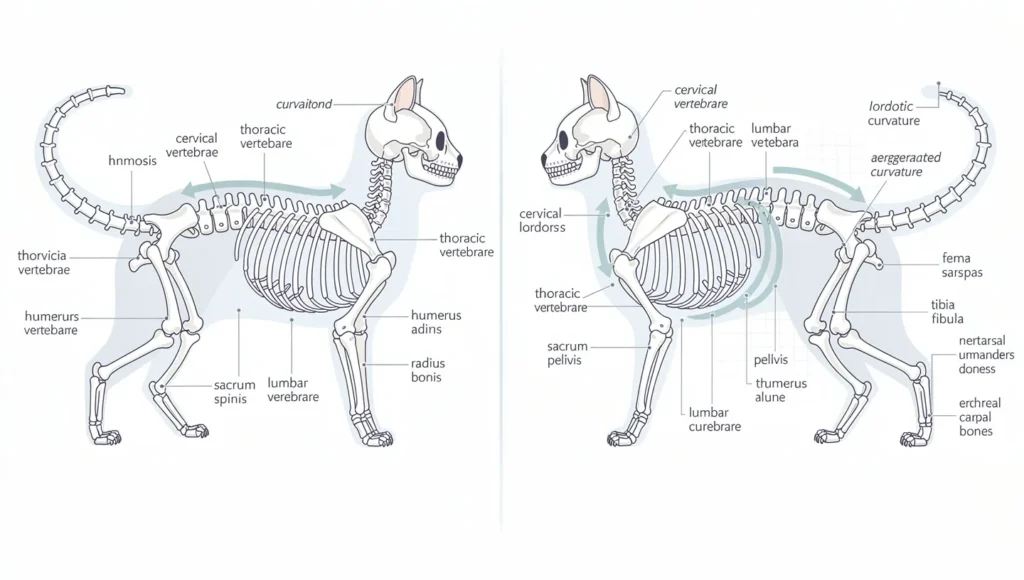
- Lordosis (Swayback): A rare spinal curvature often linked to poor breeding. Early signs include rapid breathing or reluctance to jump.
- Pectus Excavatum: A hollow-chest deformity. Most mild cases don’t affect quality of life, but severe cases require monitoring.
- The Pain Myth: Short legs do not equal chronic pain. However, they do mean a higher risk of osteoarthritis if the cat is allowed to jump from high surfaces repeatedly.
Nutrition: Why Weight is Your #1 Priority
In the world of Munchkin cat care, weight management is non-negotiable. One extra pound on a Munchkin is like 15 pounds on a human—it crushes their joints and strains their spine.
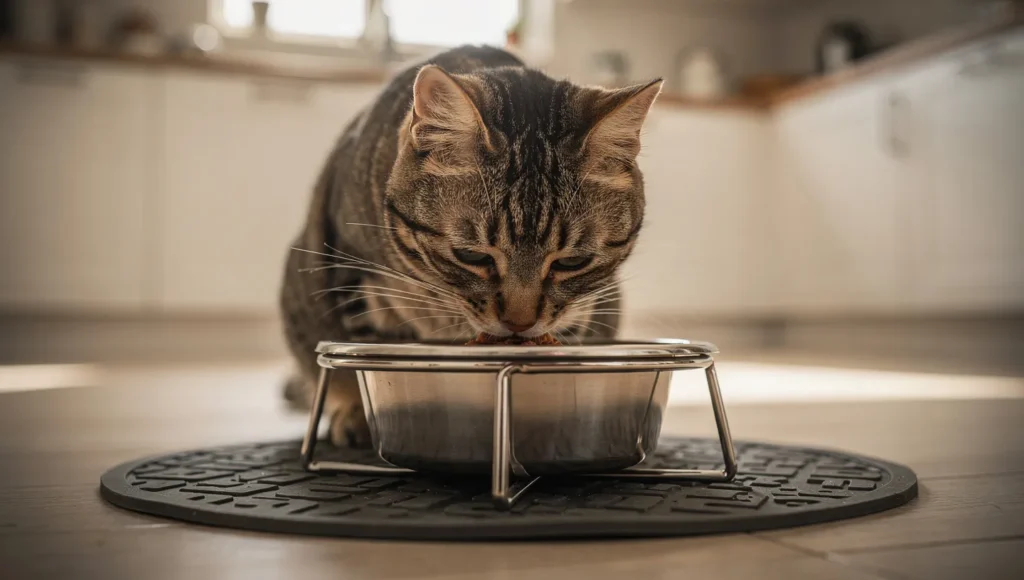
- The Elevated Bowl: Use a shallow, raised feeder (3 inches) to prevent neck strain while eating.
- Protein over Carbs: Stick to high-protein wet food to maintain lean muscle. Check our guide on how to read cat food labels to avoid hidden fillers.
- Hydration: Many Munchkins struggle with standard water bowls. Multiple shallow water stations are a must. For a deeper look at hydration strategies, visit our cat hydration guide.
Home Modifications: Living Low 🏠
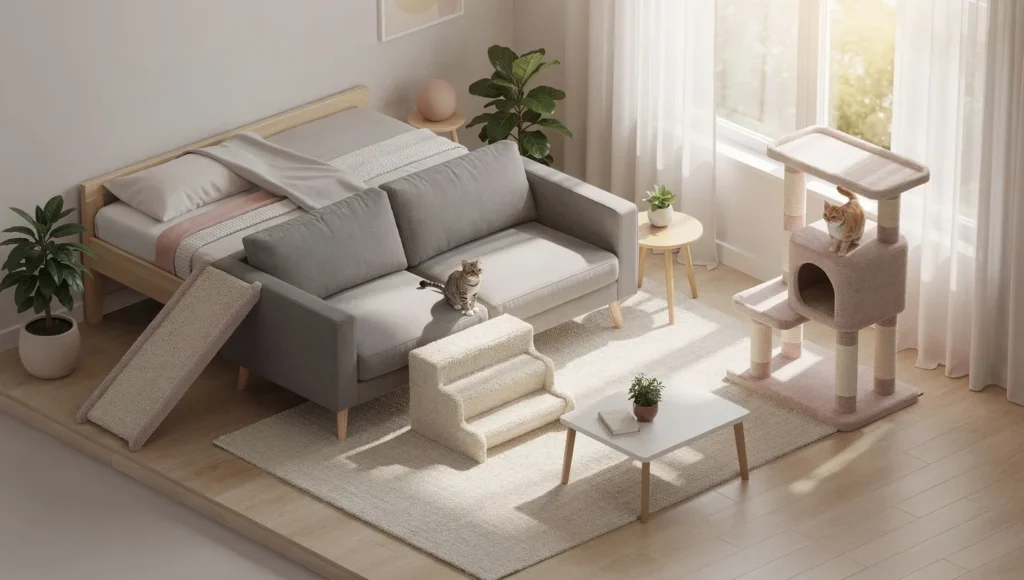
You don’t need a padded cell, just a smarter layout. Think “horizontal-first” and your cat will thrive.
- Litter Boxes: Swap high-walled boxes for low-entry versions (3-4 inches max). This prevents joint stress as they age.
- Pet Ramps: Place carpeted ramps next to your bed or couch. It turns a risky leap into a safe walk.
- Stability over Height: Avoid 6-foot cat trees. Choose sturdy, wide platforms under 30 inches. For safe vertical options, see our cat window perch guide.
Behavior and Personality: The “Magpies” of Cats
Munchkins are famously social and have a weird obsession with shiny objects. I’ve worked with cats that would hoard jewelry and pens under the sofa like tiny dragons.
- Dog-like Loyalty: They will follow you from room to room—expect a “shadow” cat.
- The “Rabbit” Sit: They often sit on their hind legs like a rabbit to get a better view.
- Compatibility: They are excellent with children and other pets. If you are bringing a new friend home, follow our protocol for introducing two cats.
Are Munchkin Cats Ethical?
This is the elephant in the room. The ethics of Munchkin cat care depend entirely on the source. The TICA breed standard emphasizes that the mutation is naturally occurring, but that doesn’t excuse “teacup” or “micro” breeding.
- Support Adoption: Many Munchkins end up in rescues. Check Petfinder before buying.
- Avoid Backyard Breeders: If a breeder cannot provide X-rays of the parents’ spines, walk away.
📊 Munchkin Cat Care Checklist
- Daily: Visual gait check + wet food in elevated bowls.
- Weekly: Grooming “blind spots” (lower back and belly).
- Monthly: Home weigh-in (target: 6–9 lbs).
- Annually: Senior-style joint and dental checkup starting at age 5.
Why Proactive Care Defines Their Future 🐈⬛
Munchkin cats aren’t tragic victims or designer accessories—they are high-energy companions with unique physical requirements. Their short legs don’t define their quality of life; your care decisions do.
By focusing on obsessive weight control, making small home tweaks like ramps, and choosing ethical sources, you ensure their “low-rider” build is a feature, not a bug.
Be the informed owner they deserve, and they will reward you with a decade of fearless, playful loyalty.
People Also Ask: Munchkin Cat Care FAQs
I’ve analyzed the most common questions owners search for on Google. Here is the direct truth about living with these short-legged felines:
1. Are Munchkin cats in constant pain?
No, Munchkin cats are not inherently in pain. Their short legs are caused by a natural mutation called achondroplasia which affects the long bones, not the nerves or spinal discs. However, they can develop pain later in life if they become obese or are allowed to jump from high surfaces, leading to early-onset osteoarthritis.
2. Can Munchkin cats clean themselves properly?
Because of their shorter limbs, Munchkins have “blind spots” they cannot reach, particularly the lower back and the base of the tail. In my experience, a key part of Munchkin cat care is assisting them with weekly brushing in these areas to prevent painful mats and skin oil buildup.
3. Do Munchkin cats have a shorter lifespan?
Not necessarily. A well-bred Munchkin cat can live between 12 to 15 years, which is the standard for most domestic indoor cats. Their lifespan is determined more by diet, weight management, and indoor safety than by the length of their legs.
4. How much does it cost to take care of a Munchkin cat?
Beyond the initial purchase price ($1,000–$2,500), annual Munchkin cat care costs range from $800 to $1,200. This includes high-protein food, routine vet visits, and preventive joint supplements. I always recommend pet insurance for this breed to cover potential future mobility issues.
5. Are Munchkin cats high-maintenance pets?
I categorize them as “moderate-maintenance.” While they don’t need the extreme grooming of a Persian, they require more environmental planning. You must proactively modify your home with low-entry litter boxes and ramps to prevent long-term joint wear.
The Bottom Line
Munchkin cats aren’t designer accessories; they are high-energy companions with unique physical limits. By focusing on weight control and making small home tweaks, you can ensure their short legs never hold back their big spirits. Love them right, or don’t get one.