
You wake up at 3 AM—again—to the sound of purring right next to your ear. Your cat is curled up on your pillow, her whiskers tickling your face, and you can’t help but wonder: why does my cat sleep next to my head every night? Is she trying to suffocate me? Does she think she’s the boss? Or is there something deeper going on?
If you’ve been asking yourself this question, you’re not alone. Thousands of cat owners experience this exact scenario, and while it might feel adorable (or slightly annoying), there’s actually a lot of science and behavior behind it.
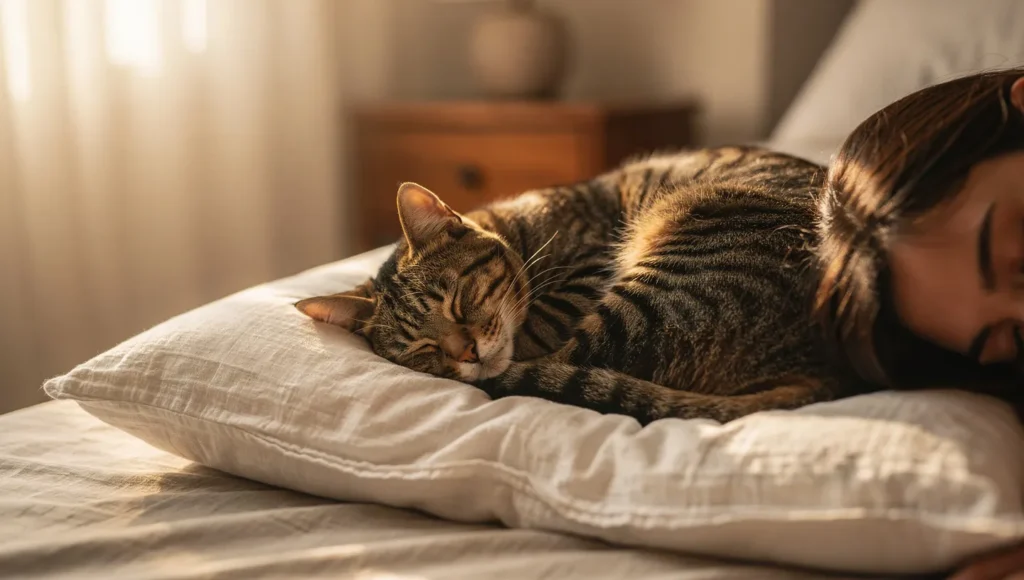
Table of Contents
- 🎯 Quick Answer
- 🧠 7 Real Reasons Your Cat Sleeps Next to Your Head
- 1. Your Head Is a Heat Magnet
- 2. They Feel Safe Around Your Face 🛡️
- 3. Cat Bonding Behavior: You’re Part of the Colony 💕
- 4. Your Pillow Smells Like Home 👃
- 5. The Height Advantage
- 6. You Move Less Up There 😴
- 7. Establishing Hierarchy (Yes, Really) 👑
- ✅ Is It Normal for Cats to Sleep Near Your Head?
- 🚨 When to Worry: Red Flags to Watch For
- ⚖️ Should You Let Your Cat Sleep Next to Your Head? (Pros & Cons)
- 🔄 How to Gently Redirect Your Cat (If Needed)
- 1. Create an Equally Appealing Alternative
- 2. Gradual Displacement
- 3. Establish a Bedtime Routine
- 4. Make Your Pillow Less Appealing
- 5. Provide Enrichment Throughout the Day
- 📋 Quick Summary: Understanding Your Cat’s Head-Sleeping Habit
- ❓ Frequently Asked Questions
- Why does my cat only sleep on my pillow and not my partner’s?
- Is it safe for my cat to sleep near my head?
- Why does my cat sleep on my head instead of just next to it?
- Can I train my cat to stop sleeping on my pillow?
- My cat suddenly started sleeping on my head—should I be worried?
- Do certain breeds prefer sleeping near heads more than others?
- 💭 Final Thoughts
🎯 Quick Answer
Why does my cat sleep next to my head every night? Cats sleep near your head primarily for warmth, security, and bonding. Your head emits consistent heat, remains relatively still during sleep, and your breath provides comforting rhythmic sounds. This behavior signals trust and affection—your cat views you as a safe companion and part of their family unit.
🧠 7 Real Reasons Your Cat Sleeps Next to Your Head
1. Your Head Is a Heat Magnet
Cats are heat-seekers by nature. Their ideal body temperature is around 102°F, which is higher than ours. Your head releases more heat than most other parts of your body during sleep because of increased blood flow to the brain. In my years of working with cat owners, I’ve noticed this behavior intensifies during colder months—cats instinctively migrate to the warmest spot available, and that’s often your head or neck area.
Expert Tip: If your cat is obsessively seeking warmth near your head in summer, check for signs of illness. Sick cats often feel colder than usual and may display increased heat-seeking behavior.
2. They Feel Safe Around Your Face 🛡️
When a cat chooses to sleep near your head, they’re making a vulnerability statement. In the wild, cats are both predators and prey. Sleeping is when they’re most defenseless. By positioning themselves near your face—where your breathing, heartbeat sounds, and subtle movements are most noticeable—they’re using you as an early warning system.
I’ve seen this pattern especially strong in rescue cats or those with anxiety histories. The rhythmic sound of your breathing acts like a biological white noise machine, signaling that everything is safe.
3. Cat Bonding Behavior: You’re Part of the Colony 💕
Despite their reputation for independence, cats are social creatures with their chosen family. Sleeping in close proximity—especially near the head—mimics how kittens pile together with their mother and littermates. This is pure cat bonding behavior sleeping at work.
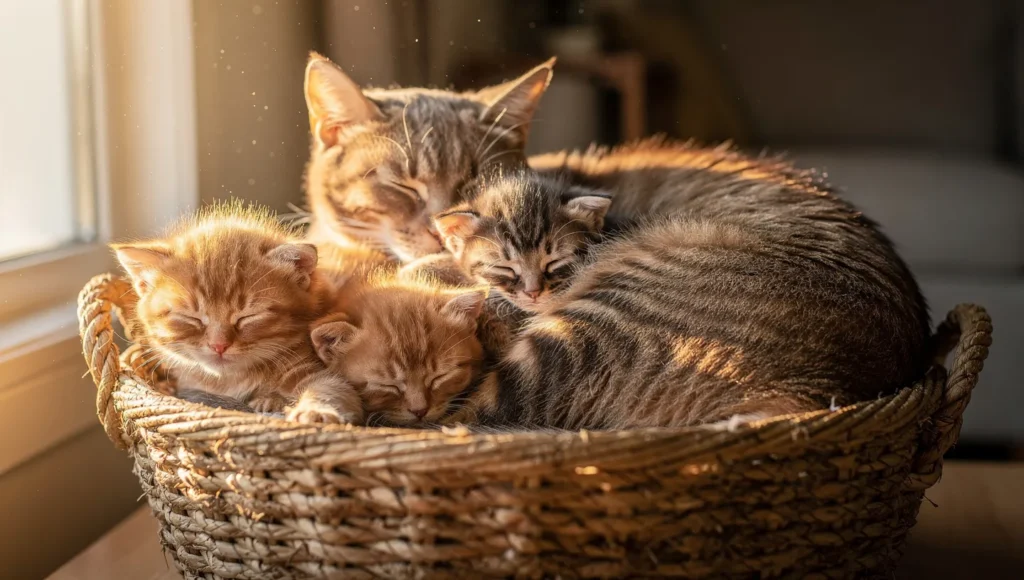
When your cat sleeps next to your head, she’s essentially saying, “You’re my person, and I trust you completely.” This cat sleeping near head meaning translates to acceptance and affection in the feline world.
4. Your Pillow Smells Like Home 👃
Cats have scent glands on their faces, paws, and flanks. Your pillow is saturated with your scent, which your cat finds incredibly comforting. Additionally, by sleeping on your pillow, your cat is mixing her scent with yours—a behavior called “allorubbing” in animal behavior circles.
This scent-sharing strengthens social bonds. A common mistake I see owners make is washing bedding too frequently with strong detergents, which can actually stress cats out by removing familiar scents.
5. The Height Advantage
Cats feel safest when elevated. Your bed is already higher than the floor, but your pillow offers an additional height boost. From this vantage point, your cat can monitor the room for potential threats (or that suspicious dust bunny in the corner).
This cat sleeping position behavior is rooted in survival instinct—higher ground equals better security.
6. You Move Less Up There 😴
Let’s be honest: you probably toss and turn more from the waist down. Your head and upper body remain relatively stable during sleep. Cats prefer sleeping surfaces that won’t suddenly shift and disturb their rest.
If you’re a restless sleeper and your cat still insists on the head area, it’s an even stronger sign of attachment—she’s willing to tolerate minor disruptions to be close to you.
7. Establishing Hierarchy (Yes, Really) 👑
While we like to think of our cats as equals, they often see the household through a hierarchical lens. In multi-cat homes, the “alpha” cat often claims the highest sleeping spot. When your cat sleeps above you—especially near your head—she may be asserting a gentle dominance or simply claiming prime real estate.
This isn’t aggressive; it’s more like your cat saying, “I’m important here, and this spot proves it.”
✅ Is It Normal for Cats to Sleep Near Your Head?
Short answer: Absolutely.
Is it normal for cats to sleep near your head? Yes, this is completely normal feline behavior. Most cats exhibit this sleeping preference at some point, especially if they’re bonded with their owner. It’s particularly common in:
- Indoor-only cats who view you as their primary social companion
- Single-cat households where you’re the main source of interaction
- Rescue cats who’ve formed strong attachment bonds
- Kittens and young cats who are more social and playful
However, there are some situations where this behavior might warrant attention:
🚨 When to Worry: Red Flags to Watch For
While cat sleeping on my pillow is usually harmless, watch for these warning signs:
- Sudden behavior change: If your independent cat suddenly becomes clingy and insists on sleeping on your head, it could indicate anxiety, illness, or pain
- Obsessive behavior: Constantly pacing, vocalizing, or refusing to sleep anywhere else
- Aggression when moved: Hissing, swatting, or biting when you try to relocate them
- Physical symptoms: Excessive drooling, lethargy, changes in appetite, or litter box issues alongside the new sleeping pattern
- Breathing interference: If your cat is actually obstructing your breathing or causing sleep disruption severe enough to affect your health
When in doubt, consult your vet. Behavioral changes can be early indicators of medical issues, especially in senior cats.
⚖️ Should You Let Your Cat Sleep Next to Your Head? (Pros & Cons)
| Pros ✅ | Cons ❌ |
|---|---|
| Strengthens your bond and trust | Can disrupt your sleep quality |
| Provides comfort and warmth for both of you | Potential allergen exposure if you’re sensitive |
| Reduces cat anxiety and stress | Risk of accidental scratching or hair in face |
| Many owners find the purring soothing | May make it harder to break the habit later |
| Promotes feelings of security for your cat | Not ideal if you have respiratory issues |
My take? If it doesn’t bother you and you’re both sleeping well, there’s no reason to stop it. The bond you’re building is genuine and valuable. However, if you’re waking up congested, covered in fur, or genuinely sleep-deprived, it’s okay to set boundaries.
🔄 How to Gently Redirect Your Cat (If Needed)
If why does my cat sleep next to my head every night has become “how do I make this stop,” here are humane, stress-free solutions:
1. Create an Equally Appealing Alternative
- Place a heated cat bed near your pillow (not on it)
- Use a bed that mimics your scent—put an unwashed t-shirt in it
- Elevate the alternative bed so it’s at the same height as your pillow
2. Gradual Displacement
- Don’t abruptly ban your cat from the bedroom
- Start by moving the cat bed a few inches away from your head each night
- Reward your cat with treats when she uses the new spot
3. Establish a Bedtime Routine
- Play vigorously with your cat 30 minutes before bed to tire her out
- Feed her right before bedtime (cats naturally sleep after eating)
- Create a predictable routine so she knows what to expect
4. Make Your Pillow Less Appealing
- Use a pillowcase with a texture your cat dislikes (some cats hate satin)
- Keep a small handheld fan nearby to create gentle air movement
- Place a few aluminum foil pieces on your pillow during the day (cats hate the sound and texture)
5. Provide Enrichment Throughout the Day
- Bored cats are more likely to seek constant companionship
- Consider puzzle feeders, window perches, or interactive toys
- If you’re gone during the day, another cat companion might help distribute social needs
Important: Never punish or yell at your cat for this behavior. It will damage your bond and increase anxiety, potentially making the problem worse.
📋 Quick Summary: Understanding Your Cat’s Head-Sleeping Habit
🎯 Main Reasons:
- Warmth-seeking behavior
- Trust and bonding
- Safety and security
- Scent comfort
- Height preference
⚠️ When to Act:
- If it’s affecting your sleep health
- If you have severe allergies
- If behavior appears obsessive or anxious
✅ Healthy Approach:
- Accept it as a sign of love
- Or redirect gently without punishment
- Consult a vet if paired with other symptoms
❓ Frequently Asked Questions
Why does my cat only sleep on my pillow and not my partner’s?
Cats often form stronger bonds with one person in the household—usually whoever feeds them, plays with them most, or matches their energy level. Your cat may also prefer your scent or find your sleeping pattern more predictable. If you want to share the love, have your partner take over feeding duties for a few weeks.
Is it safe for my cat to sleep near my head?
For most people, yes. However, if you have severe allergies, asthma, or respiratory issues, sleeping with a cat near your face can worsen symptoms. Additionally, if you’re a very heavy sleeper, there’s a small risk of accidentally rolling onto a small cat. Use common sense and monitor both your health and your cat’s safety.
Why does my cat sleep on my head instead of just next to it?
This usually means your cat is maximizing warmth and proximity. Sleeping on your head rather than beside it provides 360-degree warmth and the most stable surface. It’s also a stronger dominance signal—your cat is literally claiming the highest point. If this is uncomfortable, try the redirection techniques above.
Can I train my cat to stop sleeping on my pillow?
Yes, but it requires patience and consistency. Use the gradual displacement method combined with positive reinforcement. Never physically remove your cat in anger or frustration. Remember: you’re changing a behavior rooted in trust and affection, so approach it with compassion. For more training tips, check out our guide on cat body language.
My cat suddenly started sleeping on my head—should I be worried?
Sudden behavioral changes always warrant attention. Monitor for other symptoms like changes in appetite, litter box habits, vocalization, or energy levels. If you notice anything unusual, schedule a vet visit. Otherwise, it could simply mean your bond has deepened or your cat is seeking extra comfort due to environmental changes (new pet, move, construction noise, etc.).
Do certain breeds prefer sleeping near heads more than others?
Yes! Breeds known for being “velcro cats”—like Siamese, Ragdolls, and Burmese—are more likely to exhibit this clingy sleeping behavior. On the other hand, more independent breeds like Russian Blues might prefer sleeping nearby but not directly on you.
💭 Final Thoughts
Why does my cat sleep next to my head every night? Because in her world, you’re warmth, safety, family, and home—all rolled into one. This behavior is a testament to the trust and bond you’ve built together.
If you’re enjoying those late-night purrs and gentle headbutts, embrace it. You’re experiencing one of the purest forms of feline affection. If it’s become a problem, remember that you can set boundaries without damaging your relationship—just do it gradually, kindly, and with plenty of positive reinforcement.
Either way, take a moment to appreciate what this behavior really means: your cat has chosen you as her safe place in the world. And honestly? That’s pretty special.
Want to understand even more about your cat’s sleeping habits? Check out our comprehensive guide on why cats sleep so much and learn about the fascinating world of feline rest cycles.
Sweet dreams—to both you and your head-sleeping companion. 🌙😺