
Siamese Cat Care: 7 Things I Wish I Knew Before Bringing One Home
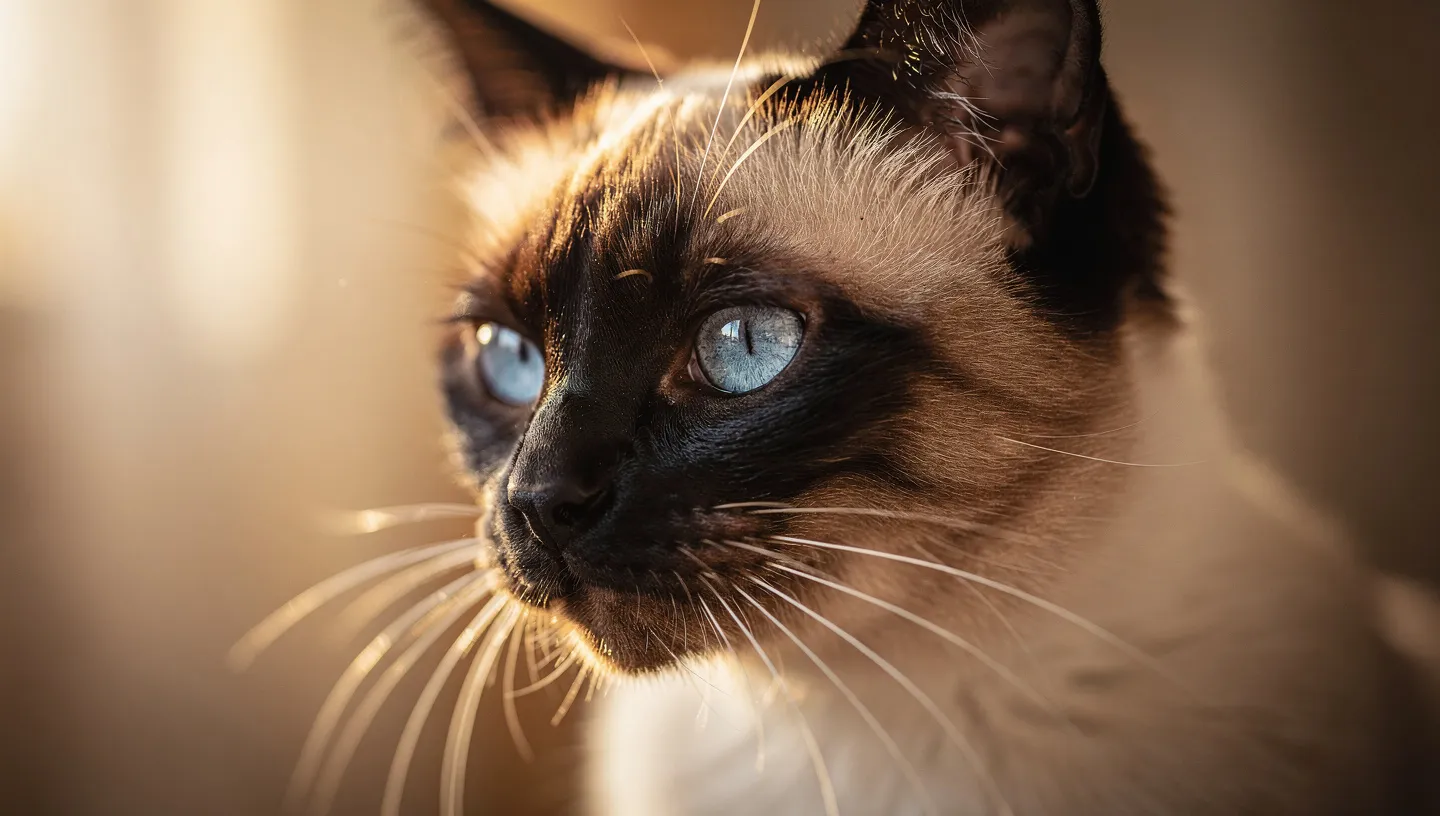
I have to be honest with you — when I decided to bring home a Siamese cat, I had absolutely no idea what I was signing up for.
My friend Marcus — a guy whose enthusiasm for animals has always been inversely proportional to his actual knowledge of them — came with me to pick up the cat I eventually named Sultan. On the drive home, Marcus looked over at the carrier with complete confidence and said, “Bro, Siamese cats are basically royalty. Silent, elegant, just sits there looking beautiful.”
That night, the moment I turned off the lights, Sultan launched into what
I can only describe as a full operatic performance in the hallway. Not a meow. A declaration. A protest. An announcement to the entire building that he had arrived and expected to be acknowledged immediately.
I called Marcus at 2 AM. He told me — half asleep — “Maybe he’s hungry.
Or maybe that’s just… his royal ritual.”
That noisy night was the beginning of my real education in Siamese cat care — and exactly why I’m writing this guide for you today.
Quick note before we dive in: Everything in this article is based on personal experience and research from trusted sources. It’s meant to inform, not replace advice from your vet. If something seems off with your cat, always check with a professional.
So, Are Siamese Cats Hard to Take Care Of?
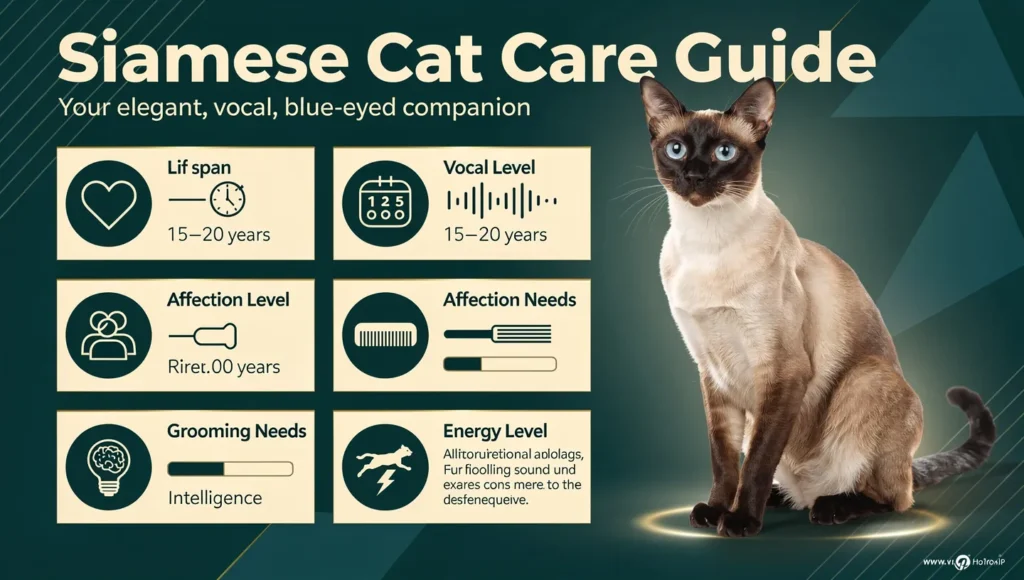
No, Siamese cats are not hard to take care of, but they are unlike any other cat breed you’ve ever met. Siamese cats aren’t high-maintenance in the way a Persian or a long-haired breed might be, but they have intense emotional and social needs that most first-time owners simply aren’t prepared for.
Here’s what that actually means in practice:
- Grooming: Easy. Short coat, minimal shedding.
- Feeding: Standard — quality protein-rich food, fresh water always.
- Attention: This is where it gets real. They need you. Daily. A lot.
- Mental stimulation: Non-negotiable. A bored Siamese is a destructive Siamese.
- Noise level: High. Very high. They talk back.
If you can handle the emotional intensity, Siamese cat care is genuinely rewarding. If you’re looking for a low-key, independent cat — this probably isn’t your match.
The Real Siamese Cat Personality (Nobody Prepares You For This)
Here’s the thing.
Most breed guides will tell you Siamese cats are “vocal and affectionate.” What they don’t tell you is what that actually feels like at 11 PM on a Tuesday.
Sultan doesn’t just meow. He has opinions. About dinner. About the fact that I’m working instead of paying attention to him. About the suspicious noise outside the window. About everything.
Siamese cats are among the most communicative cat breeds in existence.
According to information from trusted veterinary sources, their vocalizations are remarkably varied — they use different tones for different needs, and over time, you genuinely start to understand what each sound means.
From my experience, the communication is one of the best parts. But it takes adjustment.
What the Siamese personality actually looks like day-to-day:
- Follows you from room to room (yes, even the bathroom — especially the bathroom)
- Wants to be involved in everything you’re doing
- Will tap you with a paw if you’ve been ignoring them too long
- Gets genuinely upset if their routine changes
- Forms deep bonds with one or two people in the household
- Can be standoffish with strangers — until they decide they like them
If your cat is waking you up with midnight announcements, you’re not alone.
There’s actually a lot going on behind that behavior — this breakdown of why cats meow at night explains the patterns really well and helped me understand Sultan a lot better.
And if your Siamese follows you to every single room? That’s not clinginess
for the sake of it — there are real behavioral reasons behind it.
Here’s why cats follow their owners everywhere, and honestly, reading that made me feel a lot less like I was losing my mind.
Siamese Cat Attention Needs: What “Needy” Actually Looks Like
Most people get this wrong.
When someone says a Siamese is “needy,” they imagine a cat that’s slightly more affectionate than average. That’s not quite it.
A Siamese cat’s need for connection is closer to what you’d see in a highly social dog. They thrive on interaction, routine, and the feeling that they’re part of your world — not just living alongside it.
What happens when they don’t get enough attention:
- Increased vocalization (more noise, more insistently)
- Destructive behavior around the house
- Following you with visible anxiety
- In some cases, over-grooming or appetite changes
This is separation anxiety, and it’s real in Siamese cats. If you work long hours and your cat is home alone most of the day, this breed can genuinely struggle.
I noticed it with Sultan on days I’d be out for six or seven hours — he’d greet me at the door not just excited, but visibly wound up. The guide to cat separation anxiety on this site gave me a practical framework for managing it, and a few small routine changes made a noticeable difference.
Honestly? The biggest thing I learned is that 20 minutes of focused play before you leave the house does more than leaving the TV on all day.
The Toilet Paper Avalanche (And Other Boredom Disasters)
Let me tell you about the afternoon I came home to find my apartment redecorated.
I’d been out for about four hours — forgot to set up Sultan’s puzzle feeder before I left. My friend Marcus happened to stop by right as I was walking in. He opened the bathroom door first.
The hallway was white.
Sultan had pulled an entire roll of toilet paper, walked it through the living room, looped it around the coffee table legs, and was sitting on top of the washing machine looking — I promise you — proud. Not guilty. Proud.
Marcus looked at the scene, looked at Sultan, and said with total sincerity: “At least the décor is cohesive now.”
This is what Siamese cat intelligence looks like when it has nothing to do.
And this is important: Siamese cats aren’t being bad when they do this. They’re bored. There’s a difference. A bored Siamese will find stimulation wherever they can — and you won’t always like where they find it.
What actually works for mental stimulation:
- Puzzle feeders — turn mealtime into a 15-minute mental workout
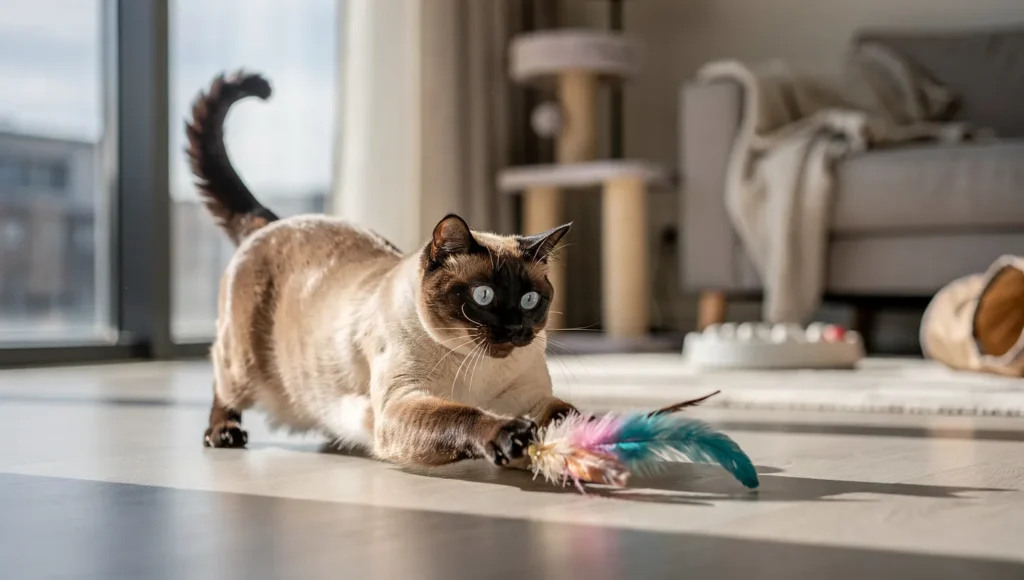
- Wand toys and interactive play — at least once daily, not optional
- Window perches with outdoor views — hours of entertainment for free
- A second cat — honestly, Siamese cats do significantly better with a companion if you’re away regularly
For the toy side of things, I’ve tried a lot of options over the years.
The guide to the best interactive cat toys here breaks down what actually keeps high-intelligence cats engaged versus what they’ll ignore after five minutes — which saved me from wasting money on a lot of things Sultan refused to look at.
Siamese Cat Physical Care: The Basics That Actually Matter
Here’s some good news after everything I just told you about emotional demands — the physical side of Siamese cat care is genuinely straightforward.
No complicated grooming routines. No special bathing schedules. Sultan has a short, silky coat that basically takes care of itself with a quick brush once or twice a week. That’s it.
But “simple” doesn’t mean “nothing.” There are a few areas worth paying attention to.
Coat and grooming:
Short-coated, low-shedding, minimal matting. A soft bristle brush once or twice a week keeps things clean and reduces hairballs. Siamese cats actually tend to enjoy being brushed — for Sultan it became a bonding ritual more than a chore.
Feeding and hydration:
Siamese cats are active and lean by nature. They do well on high-protein food with real meat as the first ingredient. I personally feed Sultan a mix of wet and dry — the wet food helps with hydration, which matters a lot for cats who don’t always drink enough on their own.
From my experience, free-feeding dry food all day doesn’t work well with this breed. They’ll overeat when bored — and boredom, as we’ve established, is a recurring theme. Scheduled meals work better.
If you’re still figuring out what food actually works for an indoor cat like Sultan, the guide to the best cat food for indoor cats breaks down what to look for on the label and what to avoid. Genuinely useful — I wish I’d read it earlier.
And on the water front, getting Sultan a fountain changed everything.
Cats in general don’t have a strong thirst drive — Siamese included. Moving water encourages them to drink more, and it makes a real difference in their long-term kidney health. More on keeping cats properly hydrated here.
Dental care — and this one matters more than most people realize:
Siamese cats have a genetic predisposition to periodontal disease.
This isn’t a minor issue — untreated dental disease in cats connects to kidney problems, heart issues, and chronic pain.
I didn’t know this when I first got Sultan. By his third year, his vet flagged early tartar buildup and I had to get serious about his teeth fast.
What actually works:
- Enzymatic toothpaste with a finger brush (start slow, be patient)
- Dental treats as a supplement — not a replacement
- Annual professional cleaning once your vet recommends it
- Dental-formula dry food to reduce buildup between cleanings
If you want the full picture on this, the cat dental care guide here covers everything from brushing technique to what early gum disease actually looks like — worth reading before it becomes an expensive vet bill.
Siamese Cat Health Issues You Should Know About
Siamese cats are generally healthy and live long lives — we’re talking 15 to 20 years in many cases, which is remarkable. But like most purebred cats, they carry some genetic predispositions worth knowing.
This is information, not a reason to panic. Just things to watch for.
| Health Issue | What to Watch For | What to Do |
|---|---|---|
| Periodontal disease | Bad breath, pawing at mouth, reduced eating | Regular dental care + annual vet check |
| Progressive Retinal Atrophy | Bumping into things, night vision issues | Genetic screening, regular eye exams |
| Amyloidosis (liver) | Lethargy, weight loss, increased thirst | Early vet diagnosis is critical |
| Respiratory issues | Chronic sneezing, nasal discharge | Vet evaluation — may be chronic |
| Heart disease (HCM) | Rapid breathing, lethargy, low energy | Annual cardiac screening recommended |
According to the ASPCA, routine wellness exams are one of the most effective ways to catch developing health issues before they become serious — and for a breed like the Siamese, that advice especially applies.
And this is important: most of these conditions are very manageable when caught early. The cats I’ve seen struggle most were the ones whose owners were caught off guard. Don’t be that owner.
For a broader look at health warning signs that apply to any cat, PetMD has solid reference material on Progressive Retinal Atrophy specifically — worth bookmarking.
Is a Siamese Cat Right for You? (Be Honest With Yourself)
I’m going to be straight with you here, because I think a lot of Siamese cat care content online is basically cheerleading for the breed regardless of fit.
Personally, I wouldn’t recommend a Siamese to someone who works 12-hour days, travels frequently, or is looking for a cat that’s happy doing its own thing while you’re busy.
That’s not a criticism of the breed. It’s just honesty about what they need.
A Siamese cat will thrive if you:
✅ Work from home or have flexible hours
✅ Have another pet who can keep them company
✅ Genuinely enjoy interactive, communicative cats
✅ Can commit to 20-30 minutes of daily active play
✅ Like the idea of a cat that’s emotionally invested in you
A Siamese cat will struggle if you:
❌ Are away from home 8-10+ hours daily with no companion animal
❌ Prefer a quiet, independent cat
❌ Travel often without pet care arrangements
❌ Live in a space with zero enrichment options
❌ Get easily frustrated by persistent vocalization
There’s no shame in knowing your lifestyle isn’t the right fit.
The wrong cat for your situation doesn’t become the right one just because they’re beautiful.
If you’re newer to cat ownership and not sure where Siamese cats fit in the spectrum of beginner-friendly breeds, this guide to the best cat breeds for beginners is genuinely honest about what’s easy, what’s demanding, and what the differences actually feel like day-to-day.
And if you’re in an apartment and wondering whether a Siamese works in a smaller space — they actually can, as long as vertical space and enrichment are covered. The apartment cat breeds guide covers exactly that scenario.
Real Questions About Living With a Siamese Cat
Are Siamese cats good for beginners?
They can be — but only if you know what you’re getting into. Siamese cat care isn’t difficult on the physical side, but the emotional intensity and vocal nature can genuinely overwhelm someone expecting a low-key first cat.
Do Siamese cats get lonely?
Yes — and more than most breeds. Siamese cats form intense bonds and genuinely feel the absence of their people. If you’re away for long stretches regularly, a second cat as a companion makes a significant difference in their wellbeing. A bored, lonely Siamese will tell you about it loudly and creatively.
Why is my Siamese cat so vocal?
It’s simply how they’re built. Siamese cats have one of the widest vocal ranges of any domestic breed — they use different sounds for hunger, attention, boredom, excitement, and yes, just to narrate their day at you. It’s not a problem to fix. It’s a feature of the breed that you either grow to love or find exhausting. Sultan once held a 20-minute conversation with a pigeon through the window. I stayed to watch the whole thing.
How much attention does a Siamese cat need per day?
At minimum, 30-45 minutes of active, focused interaction — real playtime, not just being in the same room. They also do well with ambient companionship throughout the day (working from home, having the TV on, talking to them). The more genuine interaction, the more settled they are.
Can Siamese cats be left alone?
Short-term, yes — a few hours is fine. Extended daily solitude is where it gets hard. If your schedule means 8+ hours alone every day, plan for enrichment, a companion animal, or a midday check-in if possible. It’s not about being overprotective — it’s just what this breed genuinely needs to stay emotionally healthy.
One Last Thing Before You Go
Siamese cats are not low-maintenance pets — but they’re not high-maintenance in the way people usually mean either.
What they need most isn’t elaborate grooming or expensive food.
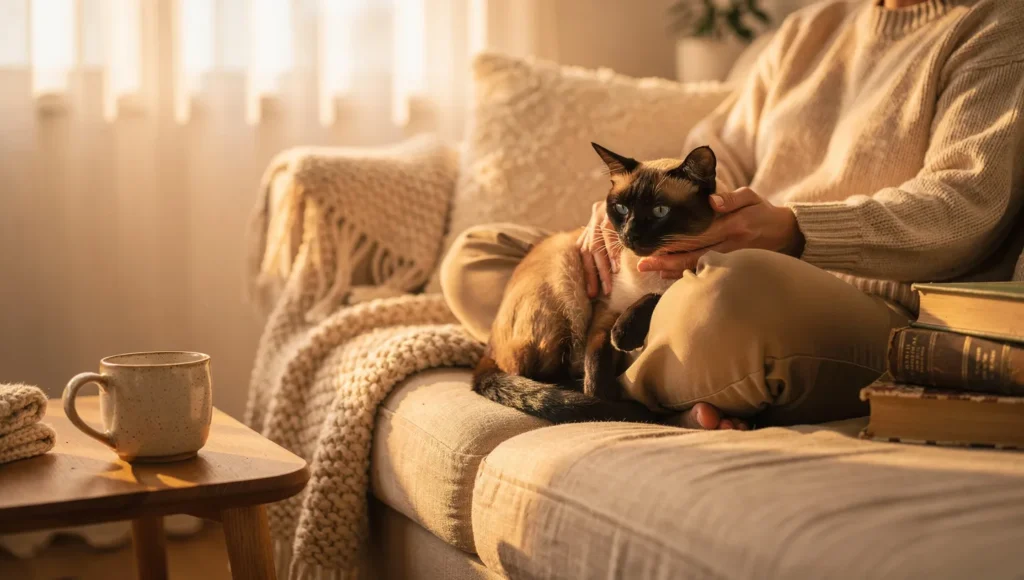
They need you. Your time, your voice, your presence. In return, you get a cat that will follow you everywhere, talk to you constantly, and bond with you in a way that honestly feels less like owning a cat and more like having a very opinionated, blue-eyed roommate who pays rent in affection.
Sultan is still going strong. Still loud. Still staging the occasional
home renovation project when I leave him unsupervised too long.
Siamese cat care has taught me more about patience, routine, and connection than I ever expected from a 10-pound animal.
And I genuinely wouldn’t have it any other way.
I want to send a real thank-you to everyone in the Felina Care Hub community who shared their own Siamese stories — your experiences shaped a lot of what went into this guide, and we read every single comment.
Now it’s your turn: What’s the weirdest conversation you’ve ever had with your Siamese? Drop it in the comments below. And if this guide helped you, share it with someone who’s thinking about bringing one of these royal creatures home — they deserve to know what’s actually coming. 😄

Reader Discussion (0)
Have a question regarding this guide? Join the community discussion below.