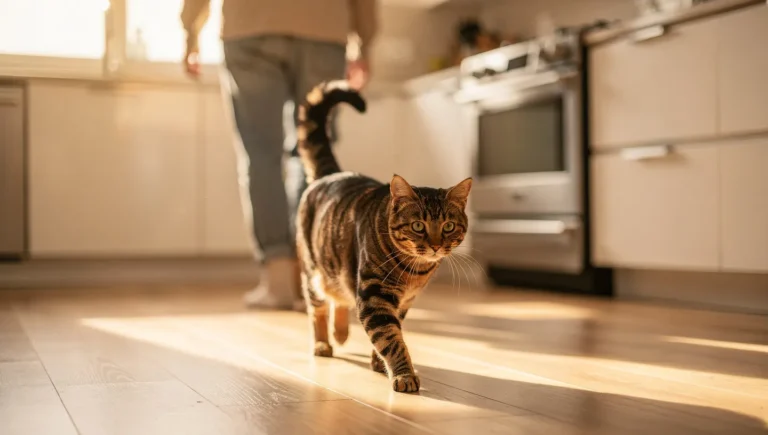

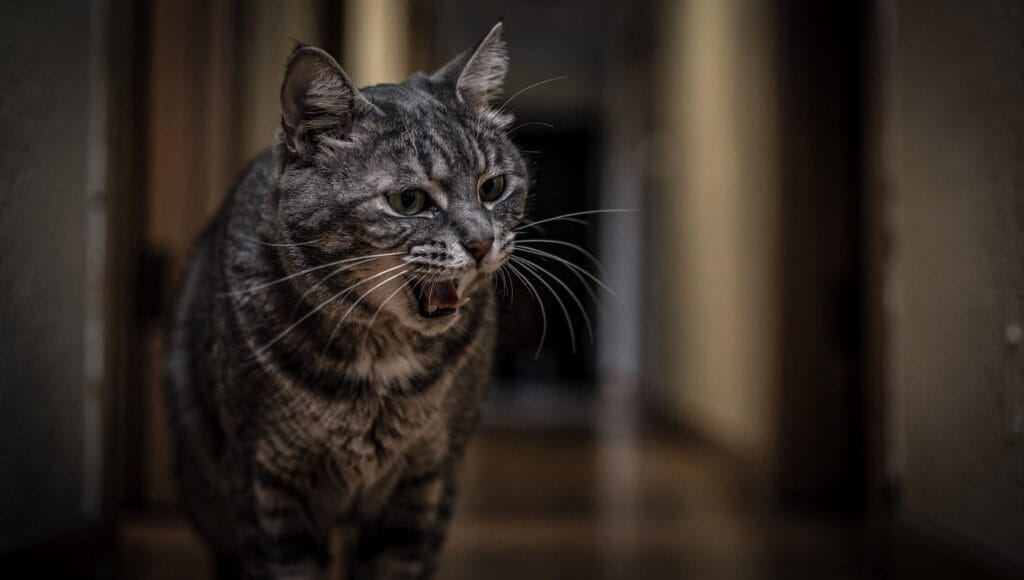
Cat meowing at night is one of the most frustrating challenges a cat parent can face, especially when you have a long work day ahead. You’ve just tucked yourself into bed, the lights are out, and suddenly, a series of persistent, loud vocalizations starts echoing through the hallway. It feels like your feline friend has a personal vendetta against your sleep schedule.
Before you reach for the earplugs, it is important to understand that your cat isn’t trying to be annoying. To them, the night is a prime time for communication. While humans are strictly diurnal, cats operate on a completely different internal clock that often clashes with our 8-hour sleep cycle.
Quick Summary: Most nighttime vocalization is a cry for attention, food, or a result of pent-up energy. However, in older cats, it can sometimes signal a medical issue that requires a vet’s attention.
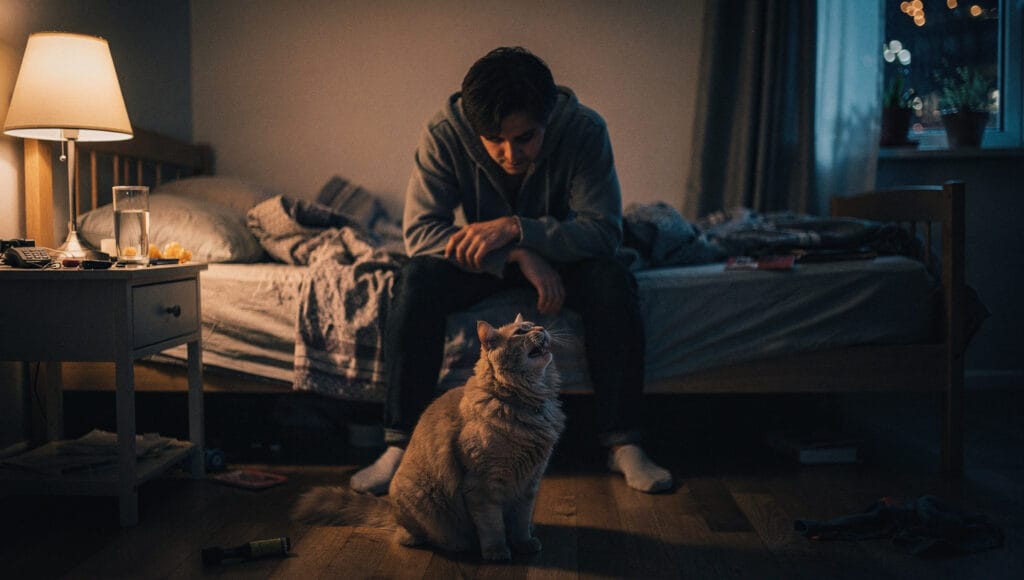
Table of Contents
- 🌙 Cat meowing at night: Understanding Nocturnal Behavior
- 🐾 Cat meowing at night: 7 Common Reasons Behind the Noise
- 🍱 1. Hunger or Boredom (The “Midnight Snack” Demand)
- 🧠 2. Senior Cat Health and Cognitive Issues
- 💘 3. The Search for a Mate (Hormonal Meowing)
- 😰 4. Anxiety or Loneliness
- 🩺 5. Underlying Medical Pain
- 🎣 6. Seeking Attention (The Reward Loop)
- 🏡 7. Territorial Changes
- 🛑 How to Stop Cat Meowing at Night: A Practical Action Plan
- ✅ The Do’s and Don’ts of Nighttime Meowing
- 🌙 The Ultimate Pre-Bedtime Routine
- 🩺 When Should You Consult a Veterinarian?
- Frequently Asked Questions
🌙 Cat meowing at night: Understanding Nocturnal Behavior
Cat meowing at night often stems from their evolutionary roots. Many people believe cats are purely nocturnal, but they are actually crepuscular. This means they are naturally most active during the dawn and dusk—the times when their wild ancestors would typically hunt for prey.
When your house goes dark and quiet, your cat’s predatory instincts may kick in. Without a mouse to hunt or a tree to climb, that energy is often redirected into vocalization. If you find yourself wondering why do cats sleep so much during the day only to wake up when you go to bed, you are witnessing this biological mismatch in action.
Why the “Night Crazies” Happen:
- Stored Energy: Indoor cats often spend the day napping while we are at work, leaving them with a “full battery” at midnight.
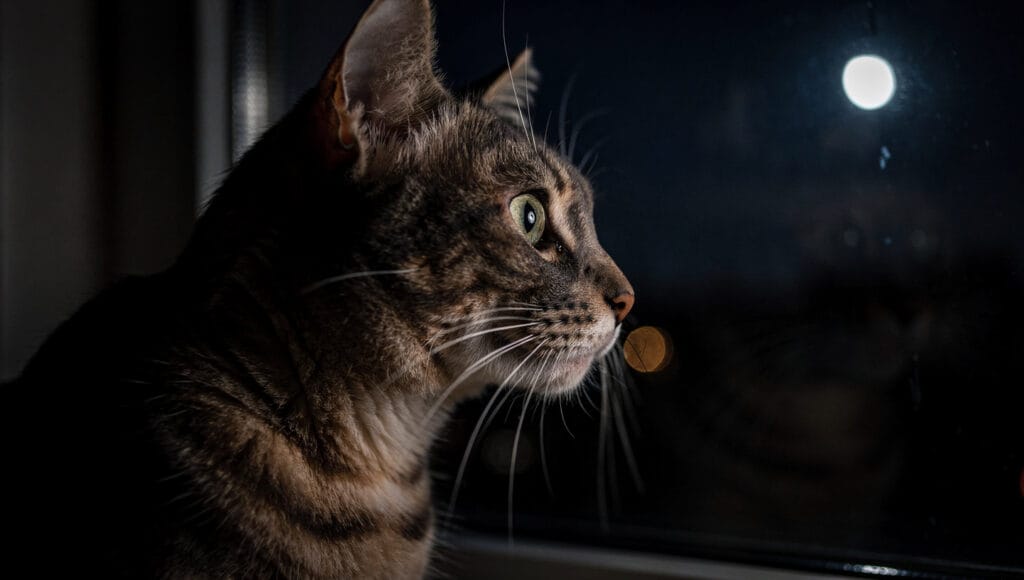
- Heightened Senses: Cats can see and hear things in the dark that we can’t—like a tiny insect or a stray cat outside—triggering an alert meow.
- Loneliness: The sudden silence of a sleeping household can be jarring for a social cat who wants interaction.
🐾 Cat meowing at night: 7 Common Reasons Behind the Noise
If your cat is turning the hallway into a concert hall at 3 AM, there is usually a very specific “why” behind the “meow.” Understanding these triggers is the first step to reclaiming your sleep.
🍱 1. Hunger or Boredom (The “Midnight Snack” Demand)
It is common for owners to feed their cats early in the evening. By the time midnight rolls around, your cat’s stomach might be growling. This “hunger” isn’t just about calories; it’s often about boredom.
If your cat realizes that a few loud cries result in a bowl of kibble or a quick pet, they will repeat the behavior. To understand better what drives their appetite, check our guide on what do cats eat to ensure their daily nutritional needs are being met during the day.
🧠 2. Senior Cat Health and Cognitive Issues
As cats age, they can experience a condition called Feline Cognitive Dysfunction (FCD), which is essentially cat dementia. Senior cat health is a major factor in nighttime vocalization.
Older cats may become disoriented or anxious in the dark, leading to loud, distressed meowing. This is particularly common in breeds known for being vocal, such as those we discussed in our Siamese cat care guide. According to the Cornell Feline Health Center, disorientation is a primary symptom of aging in felines.
💘 3. The Search for a Mate (Hormonal Meowing)
If your cat isn’t spayed or neutered, the nighttime noise is likely hormonal. A female in heat will let out piercing yelps to attract a mate, while unneutered males will meow loudly if they scent a female nearby. This isn’t a behavioral “problem”—it’s a biological drive.
😰 4. Anxiety or Loneliness
Cats are more social than they get credit for. If you’ve recently moved houses or introduced a new family member, your cat might feel insecure.
Nighttime is when the house is most still, which can amplify their anxiety. You can often tell if a cat is anxious by watching their body language; for more on this, see our article on cat tail language.
🩺 5. Underlying Medical Pain
Sometimes, cat meowing at night is a cry for help. Conditions like overactive thyroid (hyperthyroidism) or kidney disease can cause restlessness and increased vocalization. If the meowing is new, loud, and persistent, it’s always worth a vet check-up to rule out physical pain.
🎣 6. Seeking Attention (The Reward Loop)
Let’s be honest: sometimes we are our own worst enemies. If you get out of bed to hush your cat, even if it’s to scold them, you have given them exactly what they wanted—attention. This creates a “Reward Loop” where the cat learns that noise equals human interaction.
🏡 7. Territorial Changes
Cats are creatures of habit. A new piece of furniture, a stray cat wandering outside the window, or even a change in the scent of the house can trigger territorial meowing. They are essentially “claiming” the space during the night when they feel most vulnerable.
Expert Tip: Never punish your cat for meowing at night. Punishment only increases anxiety and can damage your bond. Instead, focus on “ignoring” the bad behavior and “rewarding” the quiet times.
🛑 How to Stop Cat Meowing at Night: A Practical Action Plan
Solving the “midnight concert” issue requires a mix of patience, environmental changes, and a solid routine. You cannot stop cat meowing at night overnight, but with consistency, you will see results within 1–2 weeks.
✅ The Do’s and Don’ts of Nighttime Meowing
| What to Do (The Solution) | What NOT to Do (The Trap) |
|---|---|
| Ignore the noise completely. Any response is a reward. | Shout or scold. This is still “attention” to a cat. |
| Schedule a vigorous play session before bed. | Get up to feed them. This trains them to wake you up. |
| Use automatic feeders for early morning meals. | Keep the house too bright. Darkness cues sleep. |
| Provide enrichment toys to combat boredom. | Give up after two nights. Consistency is key. |
🌙 The Ultimate Pre-Bedtime Routine
To sync your cat’s internal clock with yours, follow the “Hunt-Eat-Groom-Sleep” method. This mimics a cat’s natural cycle in the wild.
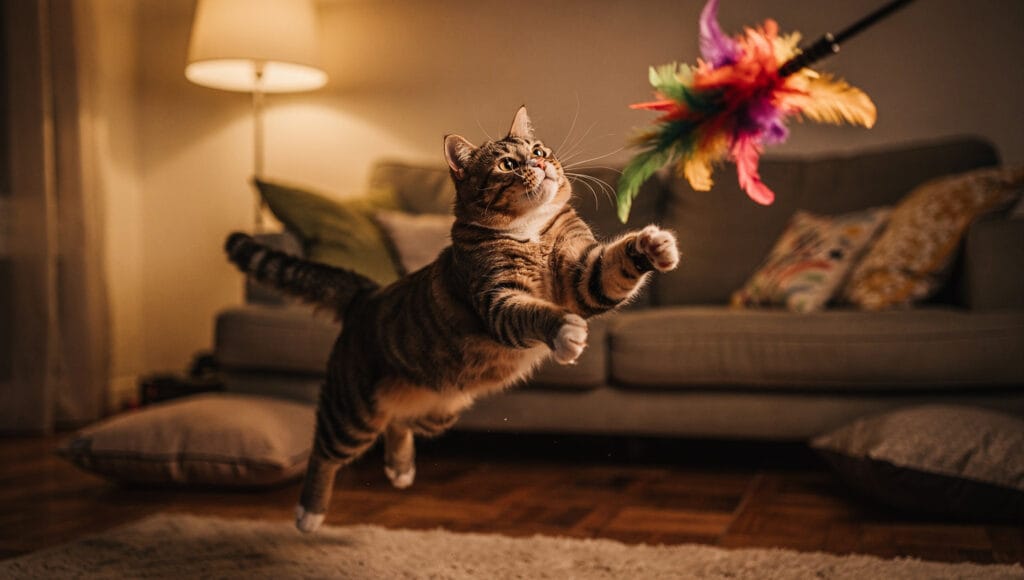
- Play Hard (The Hunt): 20 minutes before bed, use a wand toy to get your cat jumping and running. If you find they are getting too aggressive during play, read our guide on why does my cat bite me to manage overstimulation.
- The Big Meal (The Catch): Feed your cat their largest meal of the day immediately after play. A full belly naturally leads to sleepiness.
- Grooming Time (The Clean): Brush your cat gently. This acts as a soothing massage. If you’re not sure how to start, check how to brush your cat for a stress-free experience.
- Lights Out (The Sleep): Once they are settled, dim the lights and head to bed.
🩺 When Should You Consult a Veterinarian?
If your cat is older and the meowing is a new development, senior cat health should be your priority. Nighttime vocalization can be a sign of high blood pressure or hyperthyroidism. According to the ASPCA, any sudden change in vocalization in an aging cat warrants a medical screening.
If your cat seems physically fine but still won’t stop “making biscuits” on your head and meowing, they might just be seeking comfort. You can learn more about this in our article on why do cats knead.
Quick Summary: Your Path to a Quiet Night
- Burn Energy: Play right before bed.
- Full Bellies: Feed the main meal late at night.
- Zero Reaction: Do not acknowledge the meowing at 3 AM.
- Check Health: Rule out pain or cognitive decline in senior cats.
Frequently Asked Questions
Why is my cat meowing at night all of a sudden?
Sudden cat meowing at night is often caused by hunger, boredom, or recent changes in the home environment. In senior cats, it can also signal health problems such as hyperthyroidism or cognitive dysfunction that require veterinary attention.
Should I ignore my cat meowing at night?
Yes. If your cat is meowing for attention, any reaction—even yelling or scolding—can reinforce the behavior. As long as there are no signs of pain or medical distress, completely ignoring the noise is the most effective approach.
How long does it take to stop cat meowing at night?
With a consistent pre-bedtime routine and no response to nighttime meowing, most cat owners see noticeable improvement within 1 to 2 weeks. Consistency is essential to break the attention-reward cycle.