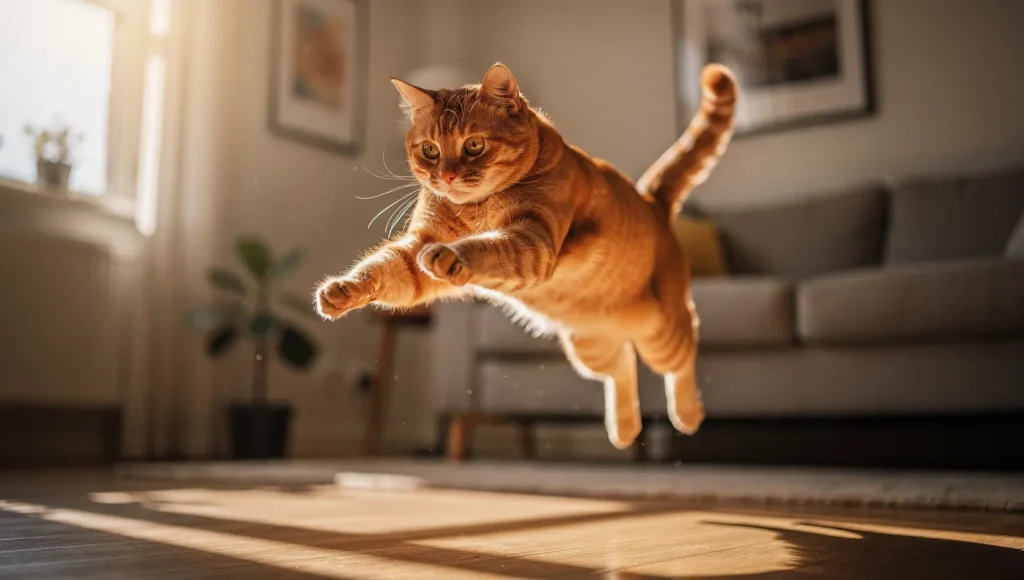
Cat weight loss is a journey that requires patience, empathy, and a solid plan. While “chonky” cats may look adorable in social media memes, carrying excess weight is a silent struggle that can limit your feline friend’s ability to jump, play, and live their best life.
As someone who has spent over a decade observing feline behavior and nutrition, I know that seeing your cat struggle with their weight can be heartbreaking. It’s not just about the numbers on the scale; it’s about restoring their energy and zest for life.
Helping your cat reach a healthy weight isn’t about restriction—it’s about transition. By focusing on biological needs rather than just cutting calories, you can achieve sustainable results without causing stress to your pet.
This guide is designed to walk you through the essential steps of a successful weight management plan, focusing on behavioral changes and nutritional secrets that actually work.
🐾 Why Cat Weight Loss Matters: More Than Just Aesthetics
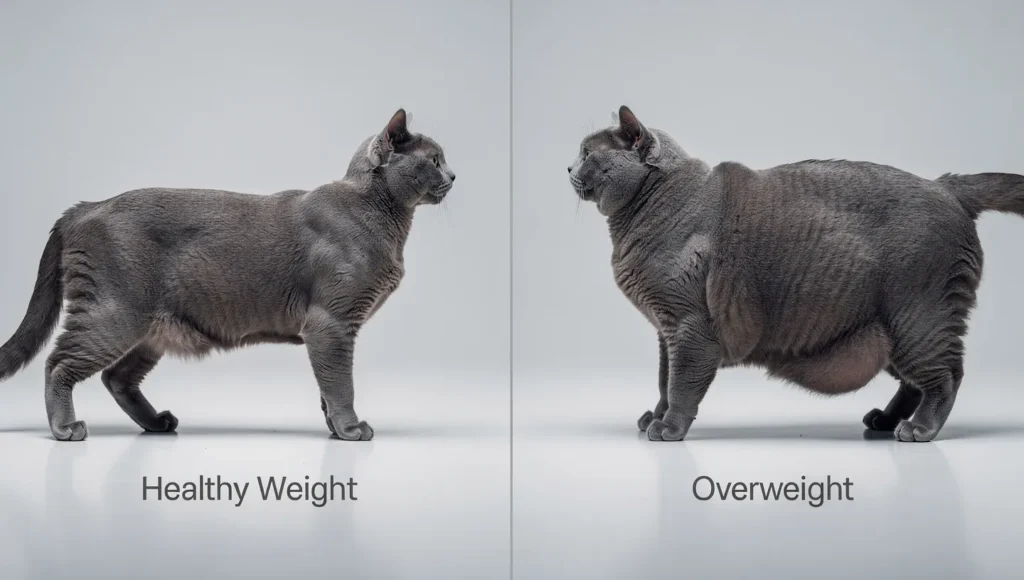
When we talk about cat weight loss, we aren’t just thinking about how your cat looks. In the feline world, every extra pound can significantly impact their skeletal structure and internal organs. As a cat grows heavier, their natural instincts—like climbing and pouncing—become difficult, leading to a sedentary lifestyle that can spiral into further health issues.
Reducing your cat’s weight is truly a gift of time and comfort. Here is why prioritizing a healthy weight is crucial:
Joint Health and Mobility: Heavy cats put immense pressure on their joints, often leading to early-onset arthritis. By focusing on weight management, you ensure they can still enjoy their favorite “zoomies” without pain.
Respiratory Ease: Excess fat can press against the chest wall, making it harder for your cat to breathe deeply, especially during play.
Emotional Well-being: A lean cat is an active cat. When a cat feels light, they are more engaged with their environment and their human companions.
If you notice your cat has become lethargic or stopped grooming hard-to-reach spots, these could be subtle indicators of a larger problem. Understanding how to tell if your cat is sick is vital, as obesity often masks other underlying symptoms that every owner should be aware of.
🥣 The Game Changer: Using Slow Feeders for Cat Weight Loss
One of the biggest hurdles in any cat weight loss journey is the “speed eater.” Many indoor cats inhale their food in seconds, which often leads to immediate vomiting—a phenomenon commonly known as “scarf and barf.” This habit prevents the brain from receiving satiety signals, leaving your cat feeling hungry even after a full meal.
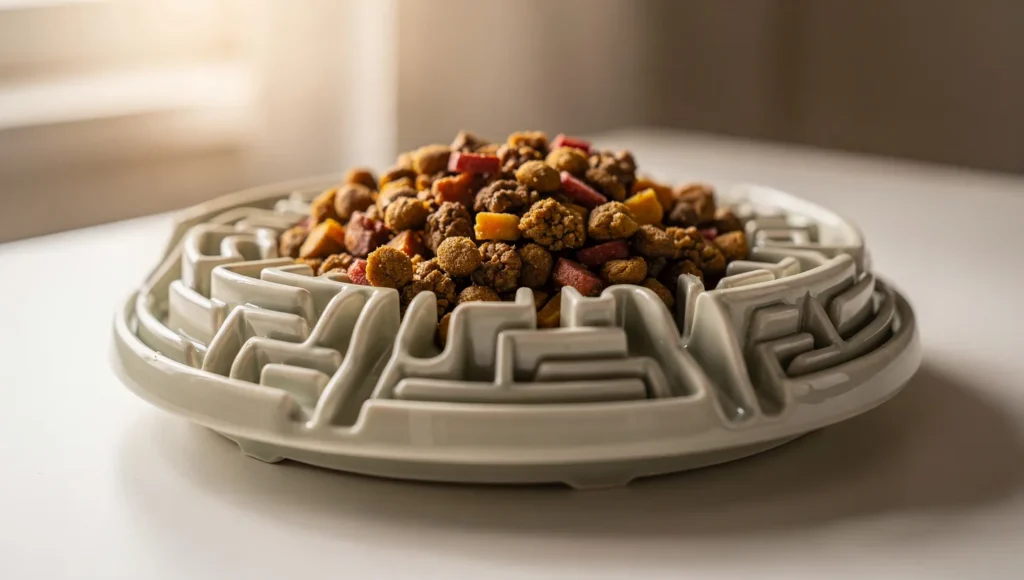
Slow feeders are essentially puzzles for mealtime. By adding ridges, mazes, and obstacles, these bowls force your cat to use their paws or tongues to retrieve kibble, turning a 30-second meal into a 10-minute mental workout.
Improved Digestion: Slowing down the pace reduces the amount of air swallowed, which is a major factor in why cats throw up after eating.
Mental Enrichment: It taps into their natural hunting instincts, providing “indoor enrichment” that burns extra calories.
Satiety Control: Eating slowly gives the hormones responsible for feeling “full” enough time to reach the brain.
📊 Comparing Mealtime Strategies
Feature
Standard Feeding Bowl
Slow Feeder / Puzzle Bowl
Eating Speed
Extremely Fast (Seconds)
Slow & Intentional (Minutes)
Digestion
High risk of bloating/vomiting
Smooth and steady digestion
Satiety Level
Low (Cat asks for more food)
High (Cat feels satisfied)
Engagement
Zero mental stimulation
High cognitive engagement
💡 Expert Tip
If you are on a budget, you don’t need to buy a fancy bowl right away. Try placing a few clean, large stones (too big to swallow) or a clean golf ball in their regular dish. Your cat will have to “hunt” around the objects, slowing them down instantly!
🥩 Wet Food Benefits: The Secret Weapon for Cat Weight Loss
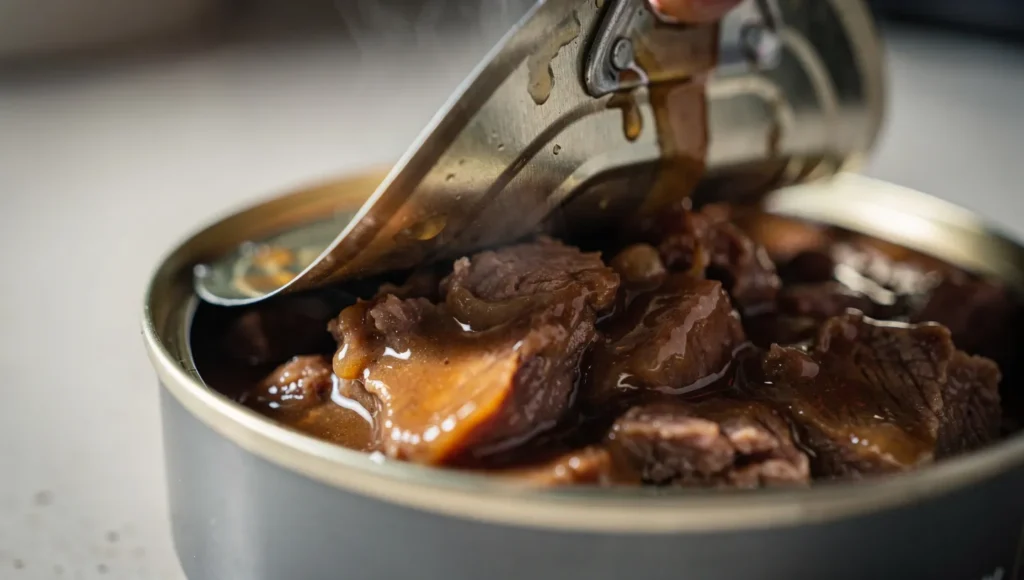
Many owners fear that starting a cat weight loss plan means their feline friend will be constantly hungry and meowing for treats. This is where high-quality wet food becomes your best ally. Unlike dry kibble, which is calorie-dense and low in moisture, wet food allows your cat to eat a larger volume of food while consuming fewer total calories.
Think of it as “volumetric eating” for cats. Because wet food is roughly 70-80% water, it fills the stomach quickly, providing that essential feeling of fullness (satiety) without the heavy caloric load of carbohydrates found in dry biscuits.
Metabolic Hydration: Cats have a naturally low thirst drive. High moisture intake through wet food keeps their metabolism humming and supports kidney health during weight transition.
Low Carbohydrate Profiles: Most weight-related issues stem from the high carb content in cheap kibble. Wet food typically mimics a cat’s natural prey-based diet—high protein and low carbs.
The “Full” Factor: The physical weight of wet food in the stomach sends signals to the brain that the meal was substantial, reducing post-meal begging.
Choosing between wet vs dry cat food is a critical decision in this journey. For many overweight cats, shifting the ratio toward more wet meals is the fastest way to see results without causing feline frustration.
💡 Expert Tip: The Hydration Hack
If your cat is particularly stubborn about food portions, try adding two tablespoons of warm water to their wet food and mashing it into a “soup.” This increases the volume even further, slows down their eating, and ensures they stay perfectly hydrated!
🧮 Calorie Counting 101: Simple Home Awareness for Cat Weight Loss
Most owners think that cat weight loss requires complex equations, but it’s actually much simpler: it’s about awareness. Many of us are “accidental overfeeders”—adding just a few extra kibbles here and there can equal a cheeseburger in human terms for a small cat.
Instead of getting bogged down in veterinary math, focus on becoming a “label detective” at home. Understanding the energy density of what goes into the bowl is the first step toward a leaner feline.
The Power of the Back Label: Every bag or can has a “kcal/cup” or “kcal/kg” rating. Start by checking how many calories are in one serving. Learning how to read cat food labels is your most important tool in this journey.
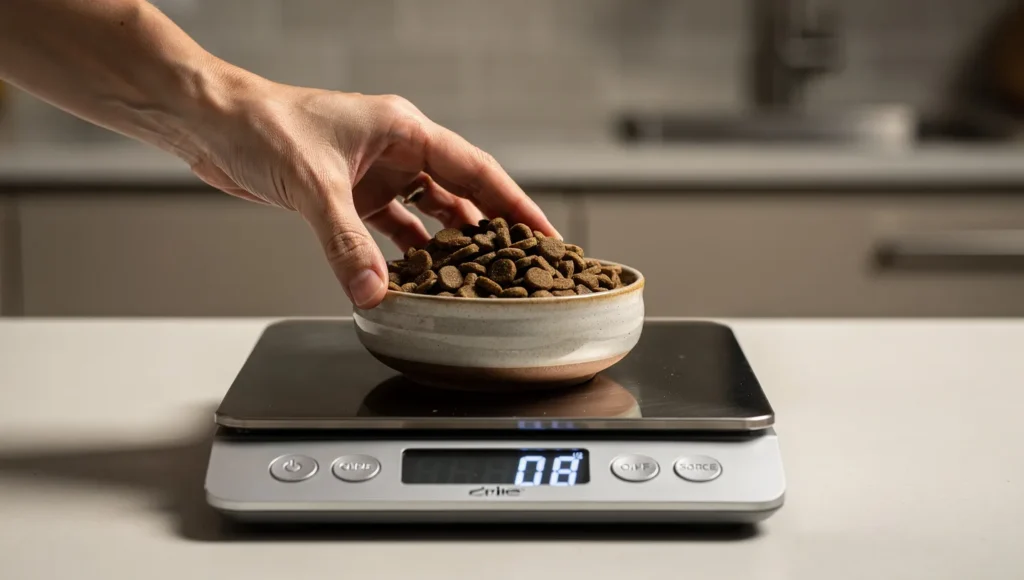
Use a Consistent Measuring Tool: Don’t just “eyeball” it with a coffee mug. Use a standard measuring cup or, better yet, a small kitchen scale. Consistency prevents the “creeping calories” that stall progress.
The 10% Rule for Treats: Treats shouldn’t be eliminated, but they should be counted. Ensure that treats make up no more than 10% of your cat’s daily intake.
🏠 The “Small Subtraction” Method
If you aren’t sure where to start, don’t slash the food in half—that’s dangerous. Instead, try reducing their current daily portion by just 5-10%. Observe their energy levels and weight over two weeks, then adjust slightly again if needed.
💡 Expert Tip: The Visual Diary
Take a photo of your cat from above (the “bird’s eye view”) once a week. Sometimes the scale doesn’t move fast, but you’ll start to see a “waistline” appearing behind the ribs. These visual wins are what keep you motivated!
🎾 Beyond the Bowl: Active Play for Natural Cat Weight Loss
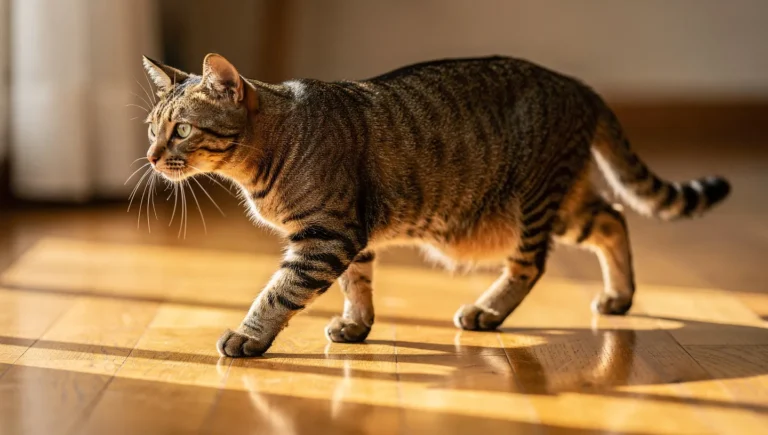
Diet is only one half of the equation; movement is the other. However, cat weight loss shouldn’t feel like a chore for your feline. You don’t need a kitty treadmill; you just need to tap into their natural hunting instincts. Cats are sprinters, not marathon runners, so short bursts of high-intensity play are much more effective than long, forced sessions.
By transforming your home into an interactive playground, you encourage your cat to burn calories through “stealth exercise”—movement they actually enjoy.
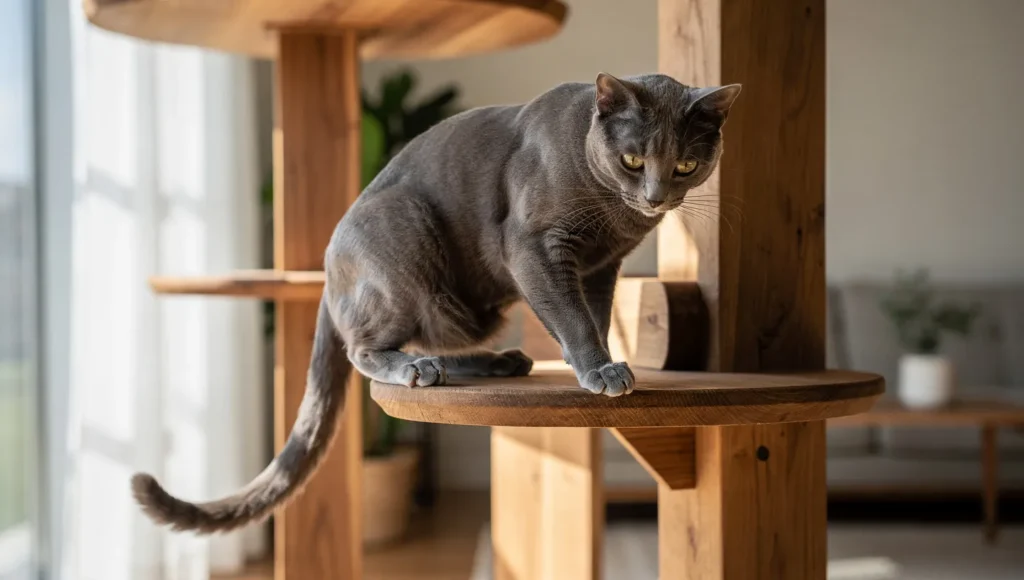
Embrace Vertical Space: Cats love to climb. Providing high perches encourages them to jump and balance, which works their core muscles. Investing in the best cat trees is a fantastic way to increase their daily “step count” vertically.
Interactive Wand Toys: Nothing beats a feather wand. It mimics the flight of a bird, triggering a predatory response that gets even the laziest cat off the sofa. Aim for two 5-minute sessions a day.
Smart Puzzle Feeders: As we mentioned earlier, food shouldn’t be “free.” Hiding healthy treats around the house or using rolling treat balls forces your cat to move and think to get their reward.
The “Laser” Caution: While great for movement, always end a laser session by letting your cat “catch” a physical toy or a tiny treat. This prevents the psychological frustration of never catching the “prey.”
💡 Expert Tip: The “Play-Eat-Groom-Sleep” Cycle
Try to schedule your main play session right before a meal. This follows a cat’s natural biological clock: they hunt (play), they catch and eat (mealtime), and then they groom and sleep. This ritual boosts their metabolism and leaves them feeling deeply satisfied.
Your Journey Toward a Healthier Feline Friend
Embarking on a cat weight loss plan is one of the most loving things you can do for your pet. It’s not about restriction or punishment; it’s about giving them back their mobility, their energy, and ultimately, more years by your side. Remember, progress is measured in small victories—a cat that jumps higher, plays longer, or simply looks more comfortable in their own skin.
Don’t be discouraged if the results don’t happen overnight. Feline metabolism is unique, and slow, steady progress is always the safest route. You have the tools, the knowledge, and the heart to make this work. Your cat might not be able to thank you in words, but their renewed zest for life will say it all.
Have you started a weight management journey with your cat? What was your biggest challenge? Share your story in the comments below—we’d love to hear from you!
A cat enthusiast dedicated to feline well-being. Here, I share the insights of my experience in understanding cat body language, behavior modification, and selecting the best preventative diets. My goal is to make cat ownership a joyful and seamless experience through simple, effective tips that prioritize prevention over cure.