
Can cats drink milk without facing painful digestive consequences? We’ve all seen the classic image: a fluffy kitten happily lapping up a saucer of creamy white milk. It feels natural, but the real question every owner must ask is, can cats drink milk safely in 2026?
While most felines are naturally drawn to the rich taste of dairy, their bodies often lack the enzymes to process it. Understanding why can cats drink milk as kittens but lose that ability as adults is key to preventing long-term health issues.
In this guide, we’ll break down the science of lactose intolerance, identify the warning signs of an upset stomach, and provide you with safe, vet-approved alternatives that your cat will love just as much as the real thing.
Table of Contents
- ⚡ Quick Summary: Milk Safety at a Glance
- 💡 Expert Tip: The 10% Rule
- 🥛 Can Cats Drink Milk Without Getting Sick? Understanding the Biological Truth
- ⚠️ The “Low-Fat” & Fairlife Trap
- Symptoms to Watch For: What Happens After a Cat Drinks Milk?
- 🩺 Cat Diarrhea & Upset Stomach: Safe Home Remedies
- 💡 Expert Tip: Probiotics for Recovery
- 🐱 Kittens vs. Adult Cats: Is There a Difference in Milk Needs?
- ⚠️ Why Grocery Store Milk is Dangerous for Kittens
- 🍼 What Should Orphaned Kittens Drink?
- 🧠 Behavioral Insight: Why Do Cats Crave Milk if It’s Bad for Them?
- ❓ FAQs: Your Quick Questions Answered
- 1. Is it okay to give my cat lactose-free milk made for humans?
- 2. My cat just licked some spilled milk; should I call the vet?
- 3. Why are cats obsessed with milk if it’s bad for them?
- 4. What about plant-based milks like Almond or Soy?
- 5. Can I use evaporated or powdered milk for an orphaned kitten?
- 💡 Expert Tip: The “Bowl” Alternative
⚡ Quick Summary: Milk Safety at a Glance
If you are in a hurry to know which dairy products are safe for your feline friend, use this comparison table as your first line of defense.
| Milk Type | Is it Safe? | Recommendation |
|---|---|---|
| Cow’s Milk | ❌ No | Causes diarrhea and gas in most adult cats. |
| Goat’s Milk | ⚠️ Caution | Lower in lactose but very high in fat; use sparingly. |
| Lactose-Free Milk | ✅ Yes | Generally safe as an occasional treat. |
| Commercial Cat Milk | ✅ Yes | Specifically formulated to be safe and digestible. |
| Plant-Based (Soy/Almond) | ❌ No | Often contains thickeners or sweeteners like Xylitol. |
💡 Expert Tip: The 10% Rule
Never let “extra” treats—including safe milk alternatives—exceed 10% of your cat’s daily caloric intake. Even safe human foods can lead to obesity if not managed carefully. For a better understanding of what fits into a healthy menu, check out our guide on safe human foods for cats.
🥛 Can Cats Drink Milk Without Getting Sick? Understanding the Biological Truth
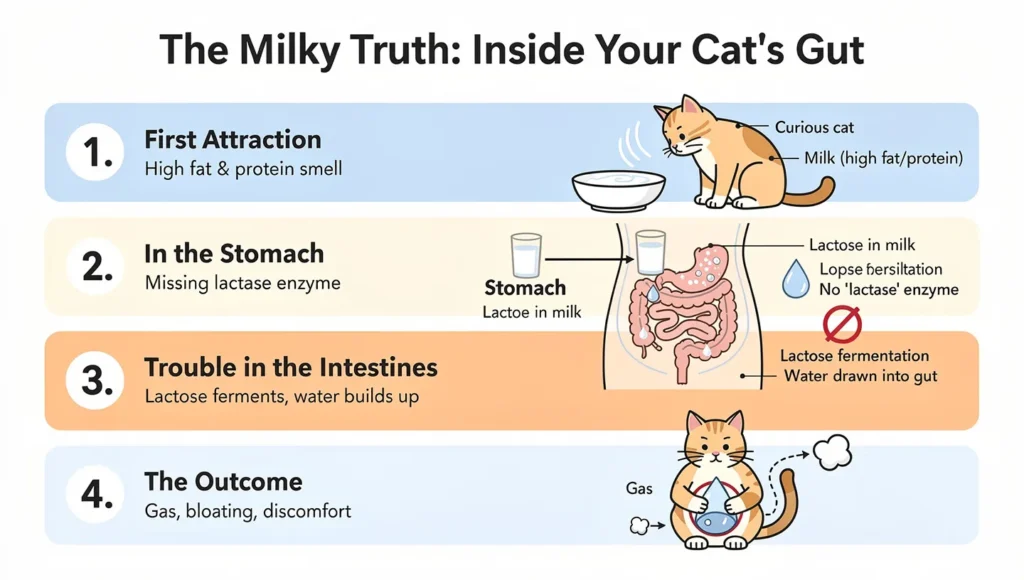
The short answer is: most adult cats cannot. The reason boils down to a biological process called Lactose Intolerance. Just like some humans, most cats stop producing lactase—the enzyme required to break down the milk sugar (lactose)—once they are weaned off their mother’s milk.
According to the Cornell Feline Health Center, when an intolerant cat consumes dairy, the undigested lactose passes through the digestive tract, fermenting and drawing in water, which results in uncomfortable gastrointestinal distress.
⚠️ The “Low-Fat” & Fairlife Trap
You might think that picking up a carton of 2 percent milk for cats or even skimmed milk is a safer bet since it’s “lighter.” However, the real villain isn’t just the fat—it’s the lactose (milk sugar). Even low-fat milk for cats contains the exact same amount of lactose that triggers digestive flares.
Furthermore, while brands like Fairlife milk for cats are ultra-filtered and often lactose-free, they aren’t a “health food.” They are still calorie-dense and lack the specific nutrients your feline needs. If you’re looking for a treat, stick to specialized feline-safe liquids, or better yet, a fresh bowl of filtered water to keep their kidneys happy.
Symptoms to Watch For: What Happens After a Cat Drinks Milk?
If your feline friend has managed to sneak a few laps from your cereal bowl, you need to stay vigilant. Lactose intolerance symptoms usually appear within 8 to 12 hours after ingestion. While some cats might only experience mild discomfort, others may suffer from severe gastrointestinal distress.
Keep a close eye on your pet for the following red flags:
- Abdominal Pain: Your cat may seem hunched over or sensitive when touched near the belly.
- Bloating and Gas: You might hear “gurgling” sounds coming from their stomach.
- Diarrhea: This is the most common symptom, often appearing as very loose or watery stools.
- Vomiting: If the dairy doesn’t sit well, their body will try to expel it quickly.
If you notice these signs, it is important to assess the severity. You can cross-reference these behaviors with our guide on how to tell if your cat is sick to decide if a vet visit is necessary.
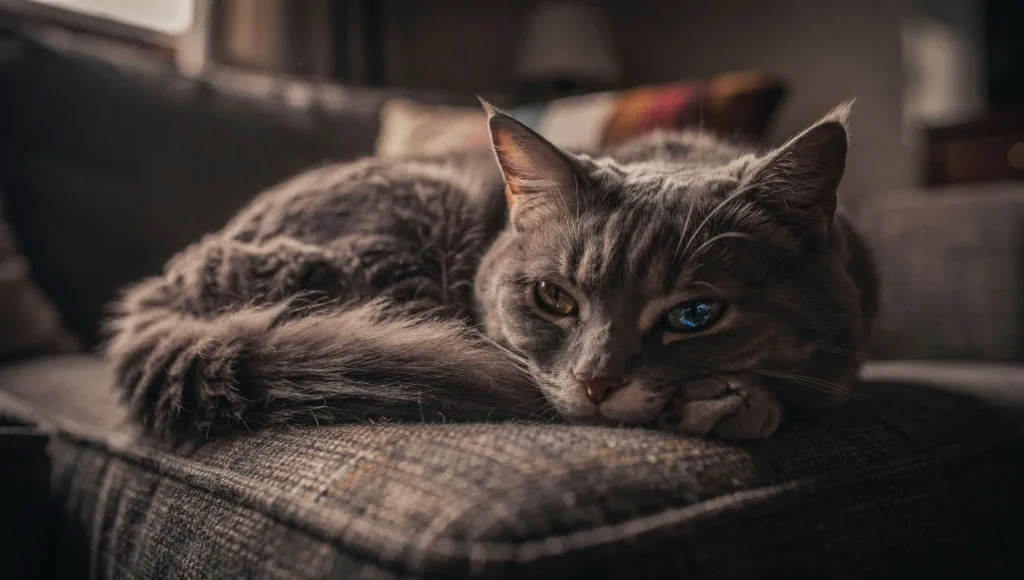
🩺 Cat Diarrhea & Upset Stomach: Safe Home Remedies
Finding out your cat is unwell can be stressful, but if the symptoms are mild, you can manage the recovery at home. Here is our expert-recommended cat diarrhea home treatment protocol to help your cat bounce back:
- Temporary Fasting (12 Hours): Give your cat’s digestive system a break. Remove food for 12 hours (but never water) to allow the inflammation to subside.
- Focus on Hydration: Diarrhea leads to rapid fluid loss. Ensure they have access to fresh, clean water. You can also offer a small amount of unseasoned chicken broth (no onions or garlic!) to encourage drinking.
- Introduce Bland Foods: Once the vomiting stops, offer small portions of boiled, skinless chicken or a teaspoon of plain canned pumpkin (not pie filling).
- Monitor Litter Box Habits: Track the frequency and consistency of their stools. If you see blood or if the diarrhea lasts more than 24 hours, contact your vet immediately.
For more chronic digestive issues or if your cat frequently suffers from nausea, you might want to read our analysis on why cats throw up after eating.
💡 Expert Tip: Probiotics for Recovery
Adding a feline-specific probiotic to their bland meal can help restore the healthy bacteria in their gut that was flushed out during the bout of diarrhea. Consult your vet for the best brand for your specific breed.
🐱 Kittens vs. Adult Cats: Is There a Difference in Milk Needs?
It is a common misconception that since kittens drink their mother’s milk, cow’s milk must be a suitable substitute. However, the biological reality is quite different. While kittens are born with high levels of the lactase enzyme to digest their mother’s milk, their digestive system is specifically designed for feline-only nutrients, not bovine (cow) dairy.
As kittens grow and begin to eat solid food—usually around 4 to 8 weeks—the production of lactase significantly decreases. This transition is nature’s way of preparing them for a meat-based diet. By the time they are adults, most cats have lost the ability to process dairy altogether.
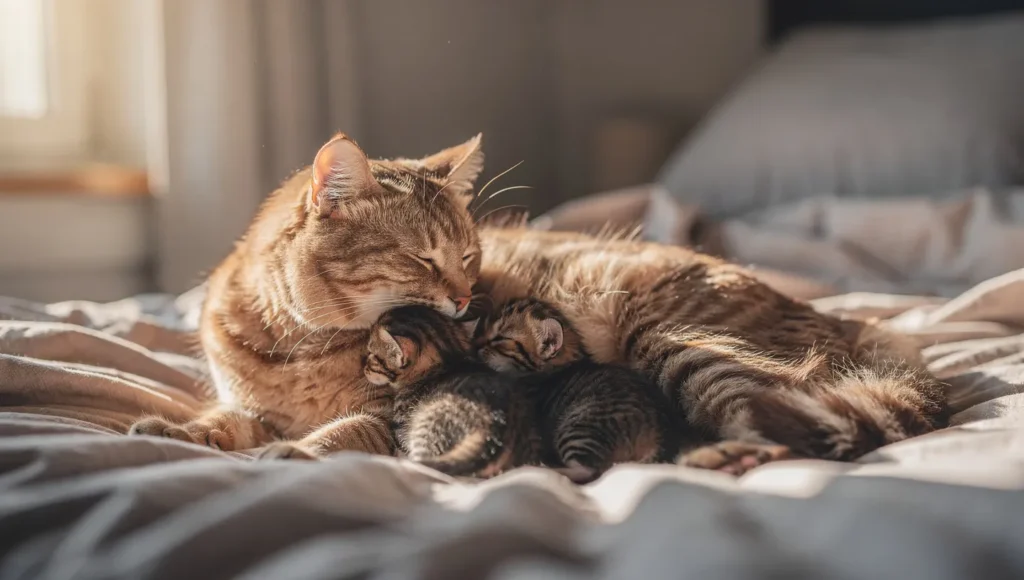
⚠️ Why Grocery Store Milk is Dangerous for Kittens
If you find an orphaned kitten, your first instinct might be to reach for a carton of milk from the fridge. Please stop. Giving cow’s milk to a kitten can be fatal for two main reasons:
- Nutritional Deficiency: Cow’s milk does not contain the right balance of amino acids, minerals, and fats that a developing kitten needs to survive.
- Severe Dehydration: Because kittens have sensitive stomachs, the lactose in cow’s milk causes rapid diarrhea. For a small kitten, losing fluids this quickly can lead to life-threatening dehydration in a matter of hours.
If you are caring for a young feline, it is crucial to understand their overall development. You can learn more about their unique requirements in our ultimate guide to the best diet for a healthy cat.
🍼 What Should Orphaned Kittens Drink?
If the mother cat is not available, you must use a Kitten Milk Replacer (KMR). This is a scientifically formulated substitute that mimics the mother’s milk. Brands like PetAg KMR or Royal Canin Babycat Milk are widely recommended by experts and can be found at most pet supply stores.
According to the ASPCA, water should be the only other liquid introduced once a kitten is fully weaned. This ensures they stay hydrated without the risk of an upset stomach.
🧠 Behavioral Insight: Why Do Cats Crave Milk if It’s Bad for Them?
If milk causes so much trouble, why does your cat look at you with those pleading eyes every time you open the fridge? The answer lies in their survival instincts and early memories.
To a cat, the smell of milk represents two things: High Fat and High Protein. In the wild, felines are biologically programmed to seek out calorie-dense foods to sustain their energy levels. Even though they can’t digest the lactose, their nose tells them, “This is a rich energy source!”
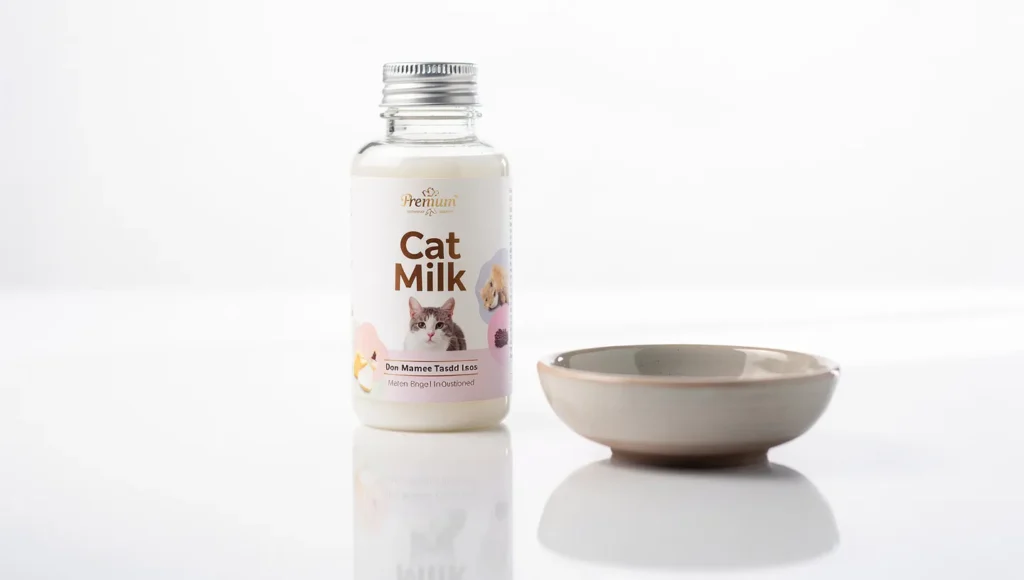
Additionally, there is a powerful psychological connection to kittenhood. The act of lapping up milk can be a “comfort” behavior, reminding them of the safety and warmth of their mother. Understanding these subtle cues is part of mastering cat body language to better bond with your pet.
❓ FAQs: Your Quick Questions Answered
1. Is it okay to give my cat lactose-free milk made for humans?
In short: Yes, but don’t overdo it. Since the lactose is already broken down, it won’t cause the “stomach-turning” symptoms. However, human milk is often high in calories and sometimes fortified with extra calcium or sweeteners that cats don’t need. Think of it like a “cheat meal”—a teaspoon once a week is fine, but it shouldn’t replace their water.
2. My cat just licked some spilled milk; should I call the vet?
Take a deep breath! A few licks from a cereal bowl won’t be fatal for most adult cats. Keep an eye on them for the next 8 to 12 hours. If they seem a bit gassy or have a loose stool, just give their stomach a break from food for a few hours. If the diarrhea lasts more than a day, then it’s time for a quick vet check-up.
3. Why are cats obsessed with milk if it’s bad for them?
It’s a survival instinct. To a cat’s nose, the smell of dairy represents a concentrated source of fat and protein. Their brain tells them “this is high-energy food,” but their gut doesn’t have the “software” (enzymes) to process it once they grow up. They like the taste, but their bodies definitely don’t like the results.
4. What about plant-based milks like Almond or Soy?
It’s a hard pass. While they are lactose-free, many plant-based milks contain thickeners like carrageenan or sweeteners like Xylitol, which can be toxic to cats. Plus, cats are “obligate carnivores,” meaning their bodies aren’t designed to process plant juices. Stick to what nature intended!
5. Can I use evaporated or powdered milk for an orphaned kitten?
Please, avoid this at all costs. Powdered human milk (like Nido) doesn’t have the specific antibodies and nutrients a kitten needs to survive and grow. It can cause severe dehydration very quickly. If you find a kitten in need, always use a dedicated Kitten Milk Replacer (KMR) from a pet store or vet clinic.
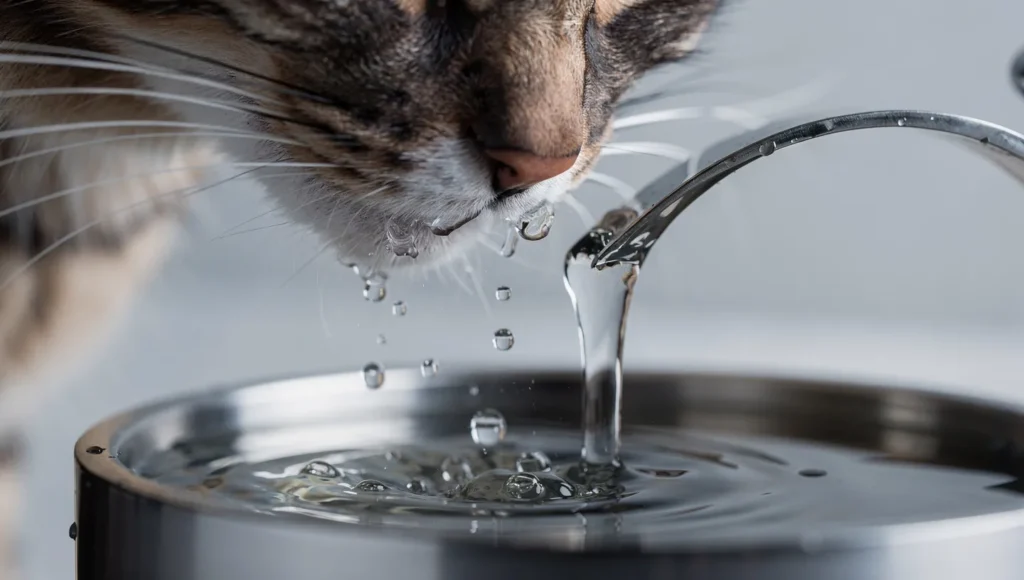
💡 Expert Tip: The “Bowl” Alternative
If your cat craves the routine of milk rather than the liquid itself, try offering a small amount of wet food mixed with warm water. This creates a “creamy” soup that is hydrating, safe, and delicious!