
Human foods toxic to cats are often hiding in plain sight, turning a shared snack into a life-threatening emergency. As a cat parent, your natural instinct is to share your life—and sometimes your plate—with your feline companion. However, because a cat’s liver lacks certain enzymes to process specific compounds, what is a “superfood” for you can be a deadly toxin for them. Understanding the boundaries of feline nutrition isn’t just about avoiding an upset stomach; it’s about life-saving prevention.
⚡ Quick Summary: Emergency FAQ
What are the most toxic human foods for cats?
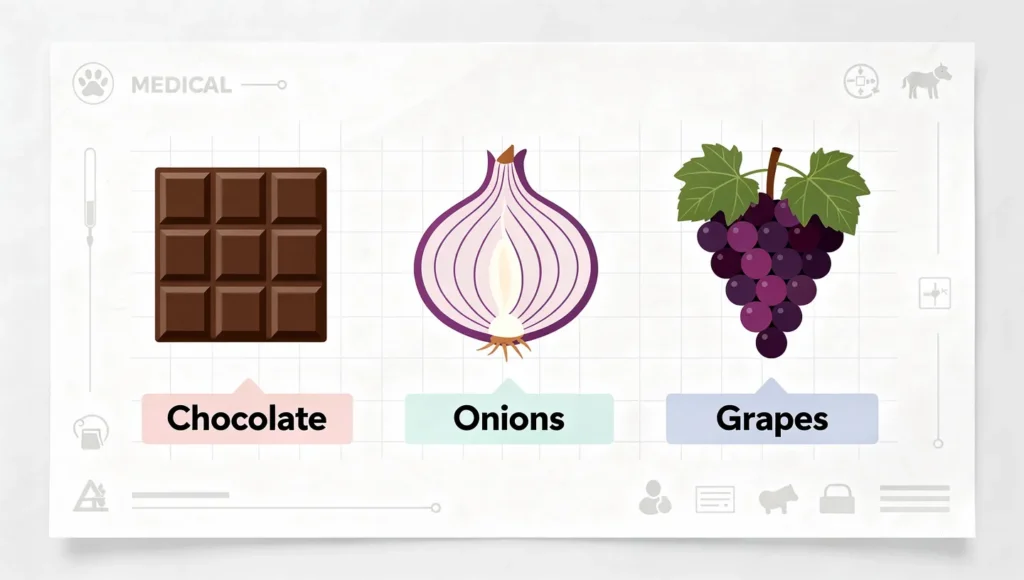
The “Big Five” include Chocolate (theobromine), Onions/Garlic (allium species), Grapes/Raisins, Alcohol, and Xylitol (artificial sweetener). Even small amounts can cause irreversible organ damage.What should I do immediately if my cat eats something toxic?
- Identify: Note what was eaten and how much.
- Contact: Call your veterinarian or an animal poison control center immediately.
- Secure: Do not induce vomiting unless specifically instructed by a professional.
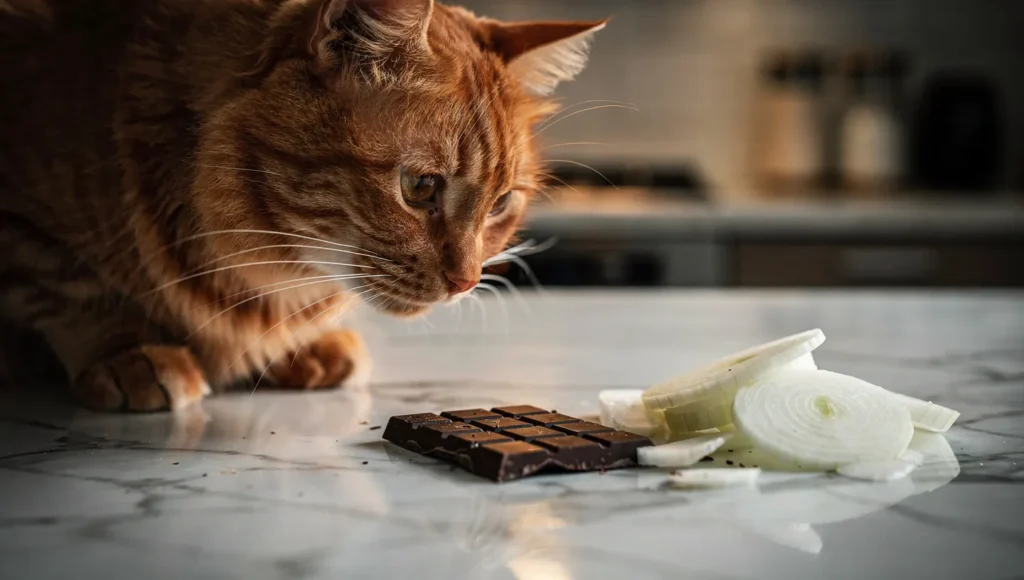
Table of Contents
- 🚫 Human Foods Toxic to Cats: The 10 Deadliest Items on the “Never-Give” List
- 🍫 Alcohol, Chocolate, and Caffeine (The Nervous System Attackers)
- 🧅 Onions, Garlic, and Chives (The Blood Destroyers)
- 🍇 Grapes and Raisins (The Silent Kidney Killers)
- 🍞 Raw Dough and Yeast
- 🕵️ Hidden Killers: Dangerous Ingredients in Everyday Foods
- 🍬 Xylitol: The Sweet Poison
- 🥩 Fat Trimmings and Bones
- 🥛 The Dairy Myth: Milk and Cheese
- 💡 Expert Tip: The Peanut Butter Trap
- 🧂 Salt and Spices
- 🌡️ Symptoms of Food Poisoning in Cats: What to Watch For
- 🚩 Red Flag Indicators of Toxicity
- 💡 Expert Tip: The “Behavioral Baseline”
- 🚨 Emergency Action Plan: What to Do if Your Cat Eats Toxic Food
- 🚑 While You Wait for the Vet
- 🥗 Safe Treats: Healthy Human Food Alternatives for Cats
- 🍗 Lean Proteins: The Golden Standard
- 🥕 Feline-Safe Vegetables & Fruits
- 🍳 Cooked Eggs
- 💡 Expert Tip: The 10% Rule
- 🛡️ Cat-Proofing Your Kitchen: Prevention is the Best Cure
- Final Thoughts from Felina Care Hub
🚫 Human Foods Toxic to Cats: The 10 Deadliest Items on the “Never-Give” List
To protect your cat, you must recognize that their biology is fundamentally different from ours. Many items in our pantry are safe for dogs but lethal for cats. Here is the breakdown of the primary offenders that should never cross your cat’s lips.
🍫 Alcohol, Chocolate, and Caffeine (The Nervous System Attackers)
Chocolate contains a compound called theobromine, which cats metabolize very slowly. Even a small piece of dark chocolate can lead to heart arrhythmias, tremors, and seizures. Similarly, caffeine and alcohol (ethanol) act as massive stimulants or depressants that a cat’s small body cannot filter, leading to rapid central nervous system failure.
If you notice your cat acting hyperactive or unusually lethargic after a kitchen mishap, it is crucial to monitor their body language for signs of distress or panting.
🧅 Onions, Garlic, and Chives (The Blood Destroyers)
Whether raw, cooked, or powdered, members of the Allium family are incredibly dangerous. These plants cause oxidative damage to a cat’s red blood cells, leading to a condition called Heinz body anemia.
Symptoms often don’t appear for 2 to 4 days after ingestion. Your cat may seem tired or have pale gums—telltale signs that their body is struggling to carry oxygen.
🍇 Grapes and Raisins (The Silent Kidney Killers)
While the exact toxin in grapes is still being researched by organizations like the ASPCA, the result is well-documented: acute kidney failure. Some cats may eat one grape and be fine, while others suffer total renal shutdown from a single raisin. Since there is no “safe” dose, the rule is zero tolerance.
🍞 Raw Dough and Yeast
If you are a home baker, keep your dough covered. When a cat eats raw yeast dough, it continues to rise in their warm, moist stomach. This causes extreme bloating and can lead to a twisted stomach (GDV). More dangerously, the fermenting yeast produces alcohol, which enters the bloodstream and causes alcohol poisoning.
🕵️ Hidden Killers: Dangerous Ingredients in Everyday Foods
Is xylitol toxic to cats? Absolutely—and it’s one of the most underestimated killers in modern households. While many pet owners are aware of chocolate, it’s the “invisible” ingredients in processed human foods that often lead to emergency vet visits. These substances are frequently hidden in products labeled as “healthy” or “sugar-free.”
🍬 Xylitol: The Sweet Poison
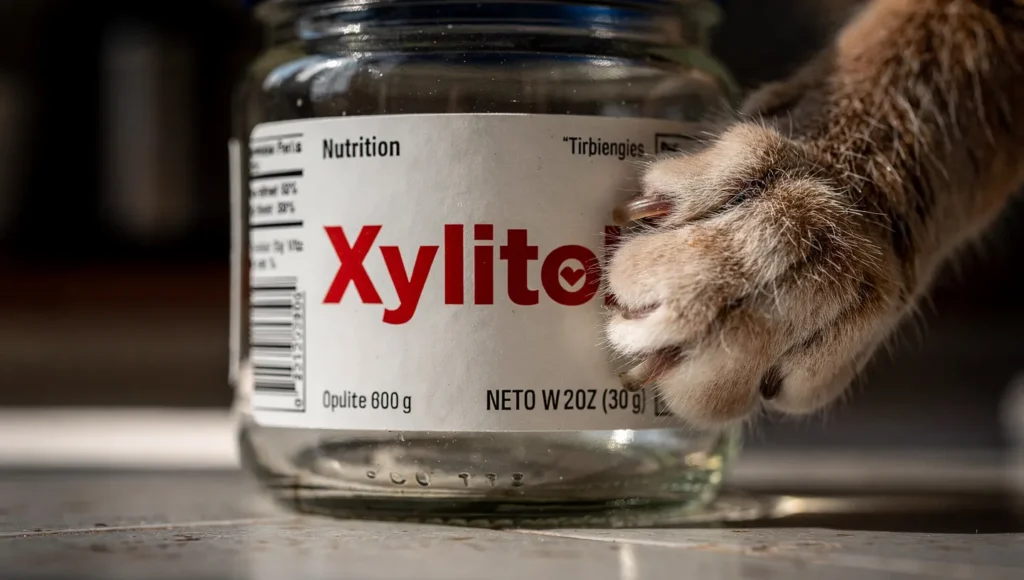
Xylitol is a sugar substitute found in sugar-free gum, candies, and even some brands of peanut butter. In cats, xylitol triggers a massive, rapid release of insulin, leading to a life-threatening drop in blood sugar (hypoglycemia). If untreated, it can cause acute liver failure within hours. Always check the labels of any creamy treat before letting your cat have a lick.
🥩 Fat Trimmings and Bones
It might be tempting to toss your cat the leftover fat from your steak, but this is a recipe for disaster. Cooked fat trimmings can cause pancreatitis, a painful and potentially fatal inflammation of the pancreas. Furthermore, cooked bones become brittle and can splinter, causing internal lacerations or fatal obstructions in the digestive tract.
🥛 The Dairy Myth: Milk and Cheese
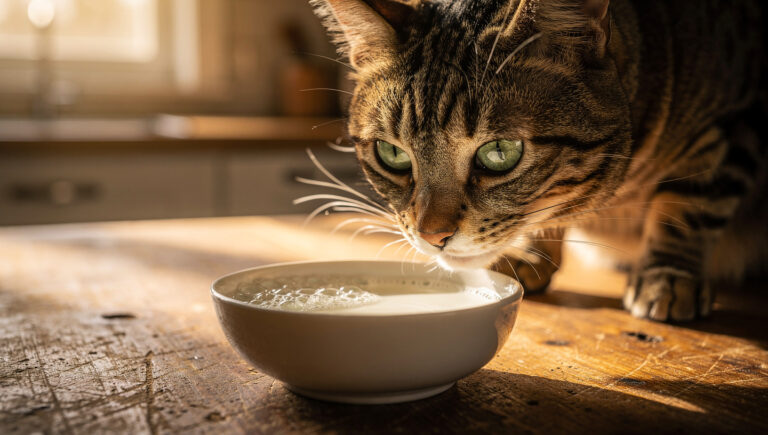
Despite the classic image of a kitten with a saucer of milk, most adult cats are actually lactose intolerant. Their digestive systems lack the enzyme (lactase) to break down the sugars in dairy. Giving your cat milk can lead to severe diarrhea, gas, and abdominal pain.
💡 Expert Tip: The Peanut Butter Trap
Many owners use peanut butter to hide medication for their pets. However, because of the increasing use of xylitol in “low-calorie” peanut butter, this practice has become dangerous. Never give your cat peanut butter without reading the ingredient list for “Xylitol” or “Birch Sugar” first.
🧂 Salt and Spices
High amounts of salt can lead to “salt poisoning” or sodium ion poisoning in cats. This manifests as vomiting, diarrhea, and even tremors. Additionally, spices like nutmeg (containing myristicin) can cause hallucinations and increased heart rate, making that bite of your spiced holiday pumpkin pie a serious risk.
For more information on why common dairy is a bad idea, read our full breakdown: Can Cats Drink Milk? Risks & Safe Alternatives.
🌡️ Symptoms of Food Poisoning in Cats: What to Watch For
Recognizing the signs of human foods toxic to cats early can be the difference between a quick recovery and a tragic outcome. Cats are masters at hiding pain, so you must be vigilant in observing any deviation from their normal behavior. Symptoms can range from mild digestive upset to severe neurological failure depending on the toxin ingested.
| Symptom Category | Common Signs to Watch For | Likely Toxin Sources |
|---|---|---|
| Digestive | Vomiting, diarrhea, drooling, loss of appetite | Dairy, Fat trimmings, Onions |
| Neurological | Tremors, seizures, lack of coordination (ataxia) | Alcohol, Caffeine, Chocolate |
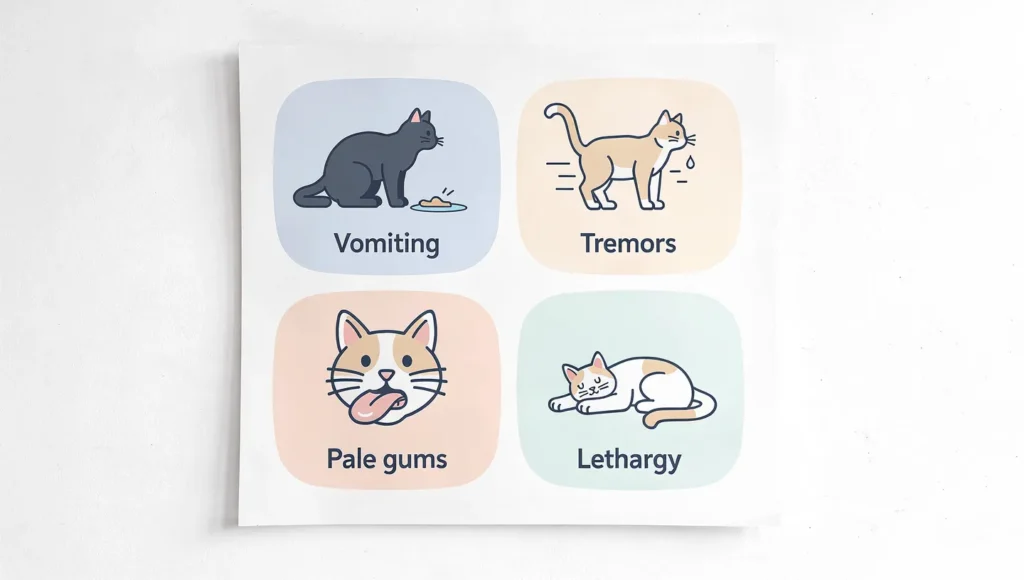
| Systemic | Pale gums, lethargy, orange-colored urine | Grapes, Raisins, Onions, Garlic |
🚩 Red Flag Indicators of Toxicity
If you suspect your cat has ingested something dangerous, look for these specific “Red Flag” signals. Remember, some symptoms of human foods toxic to cats may take hours or even days to manifest.
- Excessive Drooling (Ptyalism): This is often the first sign of oral irritation or chemical reaction to a toxin.
- Abdominal Pain: Your cat may crouch in a “bread loaf” position or hiss when touched. You can learn more about these subtle cues in our guide on Cat Body Language.
- Changes in Gum Color: Healthy gums should be bubblegum pink. Pale, white, or yellowish gums are a veterinary emergency.
- Difficulty Breathing: Panting or open-mouthed breathing in cats is never normal and often indicates a systemic reaction.
💡 Expert Tip: The “Behavioral Baseline”
Every cat owner should know their pet’s “normal.” If your usually affectionate cat is suddenly hiding under the bed or acting aggressive, it’s often a sign of internal distress. For a full list of warning signs, check out our article on How to Tell if Your Cat is Sick.
🚨 Emergency Action Plan: What to Do if Your Cat Eats Toxic Food
When you realize your pet has consumed human foods toxic to cats, every second counts. Panic is your enemy; a clear, structured response is your cat’s best chance at a full recovery. Follow this emergency protocol immediately:
- Secure the Cat and the Substance: Quickly move your cat to a safe, quiet room to prevent further stress. Collect what remains of the food, including the packaging or wrappers. This helps the vet identify specific ingredients like Xylitol or high cocoa percentages in chocolate.
- Call for Professional Help: Immediately contact your local veterinarian or an emergency pet hospital. If it is after hours, call a dedicated resource like the ASPCA Animal Poison Control Center (888-426-4435). Be prepared to provide your cat’s weight, symptoms, and the estimated time of ingestion.
- Wait for Instructions Before Acting: Never induce vomiting or administer “home remedies” (like hydrogen peroxide or milk) unless explicitly directed by a professional. In some cases, inducing vomiting can cause the toxin to burn the esophagus or lead to aspiration pneumonia.

🚑 While You Wait for the Vet
Keep your cat warm and minimize noise. If the substance was on their fur (like garlic oil or spilled alcohol), do not let them lick it off; instead, wait for the vet’s advice on whether to wash the area. Early intervention within the first 60 minutes—often called the “Golden Hour”—significantly improves the prognosis for recovery from food poisoning.
🥗 Safe Treats: Healthy Human Food Alternatives for Cats
After learning about human foods toxic to cats, it’s natural to feel hesitant about offering anything from your kitchen. However, you don’t have to cut out shared treats entirely. The secret lies in “plain and simple.” While their primary nutrition should come from a high-quality wet or dry food diet, the following human foods can be safe, occasional snacks.
🍗 Lean Proteins: The Golden Standard
Cats are obligate carnivores, meaning they thrive on animal protein. Small amounts of the following, provided they are cooked plain (no oil, salt, garlic, or onions), are excellent treats:
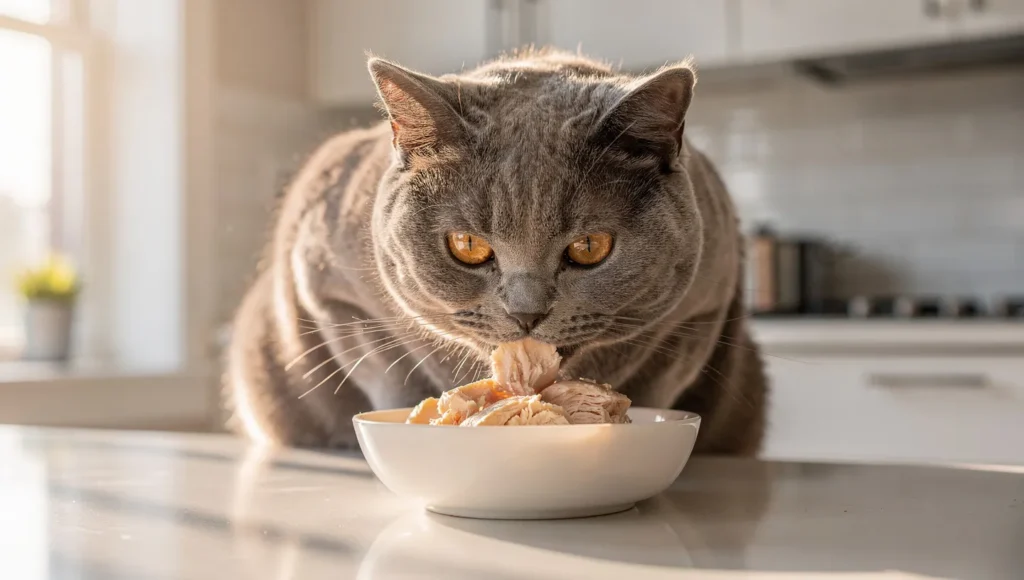
- Boiled Chicken Breast: The safest and most popular high-protein snack.
- Cooked Turkey: Great for sensitive stomachs.
- Lean Beef: Ensure all fat trimmings are removed to avoid pancreatitis.
🥕 Feline-Safe Vegetables & Fruits
While cats don’t “need” veggies, some provide fiber that can help with digestion.
- Steamed Broccoli or Green Beans: Many cats enjoy the crunch.
- Blueberries and Melon: These are packed with antioxidants. For a complete list of safe produce, see our guide on Safe Fruits for Cats.
🍳 Cooked Eggs
Eggs are a powerhouse of protein and amino acids. However, they must always be fully cooked. Raw egg whites contain avidin, which can interfere with the absorption of Vitamin B (biotin), and raw eggs carry the risk of Salmonella.
💡 Expert Tip: The 10% Rule
Even the healthiest human food treats should never exceed 10% of your cat’s daily caloric intake. Overfeeding treats, even safe ones, can lead to obesity and nutritional imbalances. For a deep dive into what is 100% vet-approved, check out our comprehensive resource: What Can Cats Eat? Safe Human Foods.
🛡️ Cat-Proofing Your Kitchen: Prevention is the Best Cure
Identifying human foods toxic to cats is the first step, but creating a secure environment is what prevents a crisis. Cats are agile, curious, and often motivated by scent, making your kitchen a high-risk zone if not properly managed.
To keep your feline companion safe, implement these simple storage and safety habits:
- Install Cabinet Latches: If your cat has figured out how to open cupboards, use child-safety locks to secure areas where you store onions, garlic, or cleaning supplies.
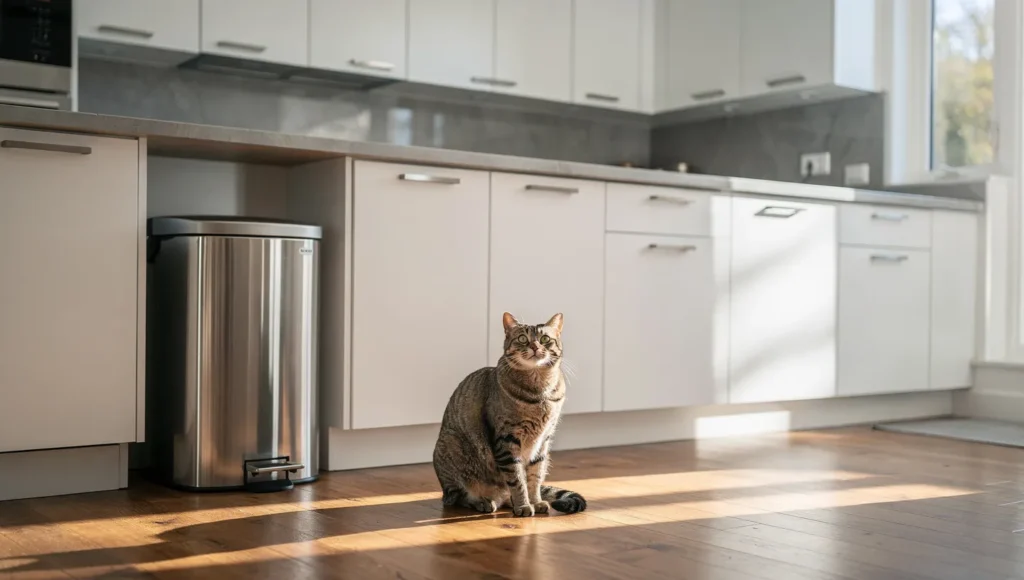
- Use Secure Trash Cans: Many poisonings happen because a cat scavenges through the trash. Invest in a heavy-duty bin with a locking lid to keep “scraps” out of reach.
- Clear Counters Immediately: Never leave ingredients like chocolate or dough rising on the counter unattended. A split-second jump is all it takes for a cat to ingest something dangerous.
- Label and Store Separately: Keep “human-only” treats in air-tight containers and consider labeling them clearly so other family members or guests don’t accidentally share them with the cat.
Final Thoughts from Felina Care Hub
As a cat parent, you are the gatekeeper of your cat’s health. While it is tempting to share every culinary experience with your furry friend, their unique biology demands caution. By focusing on safe, species-appropriate treats and keeping toxic human foods out of reach, you ensure a long, healthy, and vibrant life for your feline companion.
Remember: Prevention is always the best cure. Stay vigilant, read labels, and when in doubt—keep the human food on your plate and the cat treats in their bowl.