
You’ve seen their exotic ticked coat and those impossibly alert eyes—and now you’re wondering if an Abyssinian cat is the right fit for your home. I’ve worked with hundreds of cat owners over the years, and Abyssinians are hands-down one of the most misunderstood breeds. People expect a cuddly lap cat and get a tiny, intelligent tornado instead.
Here’s the truth: Abyssinian cats are not for everyone. But if you value intelligence, loyalty, and a feline that acts more like a dog than a traditional cat, you might have just found your perfect match.
In this guide, I’ll walk you through everything the glossy breed profiles won’t tell you—from the real personality quirks to the hidden costs, health risks, and whether this “miniature cougar” actually fits apartment living.
Quick Summary Box:
✅ Energy Level: Extremely high (not a couch potato)
✅ Affection Style: Loyal but independent (follows you everywhere, hates being held)
✅ Best For: Active owners, experienced cat people, childfree or older kids
❌ Not Ideal For: First-time owners seeking a low-maintenance lap cat
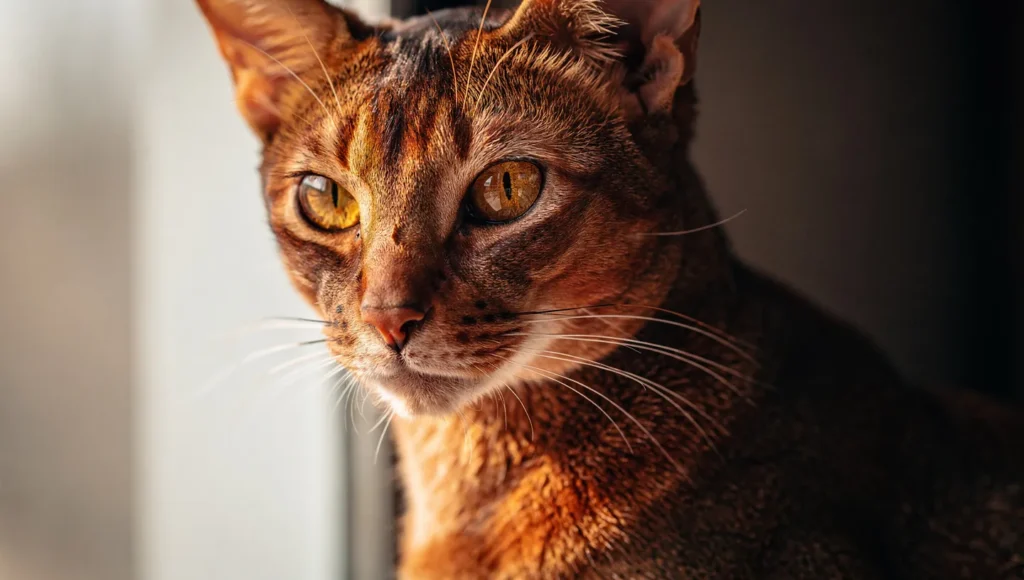
Table of Contents
- 🌍 What Makes the Abyssinian Cat Special?
- Ancient Origins and the Unique Ticked Coat
- Intelligence Level Compared to Other Breeds
- 😺 Abyssinian Cat Personality: What Owners Don’t Expect
- The “Shadow Cat” Phenomenon: Loyal as a Dog, Independent as a Cat
- Are Abyssinian Cats Affectionate or Independent?
- Do Abyssinian Cats Like to Cuddle?
- The Vertical Obsession: Why Your Aby Needs Height
- 🏠 Is an Abyssinian Cat Right for You?
- 📊 The Golden Table: Is This Breed Your Match?
- Best Home Environment: Apartments vs Houses
- Good With Kids and Other Pets?
- 🧠 Mental Stimulation: The Make-or-Break Factor
- ⚖️ Abyssinian Cat Pros and Cons (Honest Breakdown)
- 💰 Why Are Abyssinian Cats So Expensive?
- Breeding Complexity
- Health Screening Costs
- 🏥 Health, Lifespan, and Common Issues
- 🍽️ Abyssinian Cat Care Tips From Real Owners
- 🎯 Final Verdict: Should You Get an Abyssinian Cat?
- 🌟 Quick Recap: Abyssinian Cat at a Glance
🌍 What Makes the Abyssinian Cat Special?
Ancient Origins and the Unique Ticked Coat
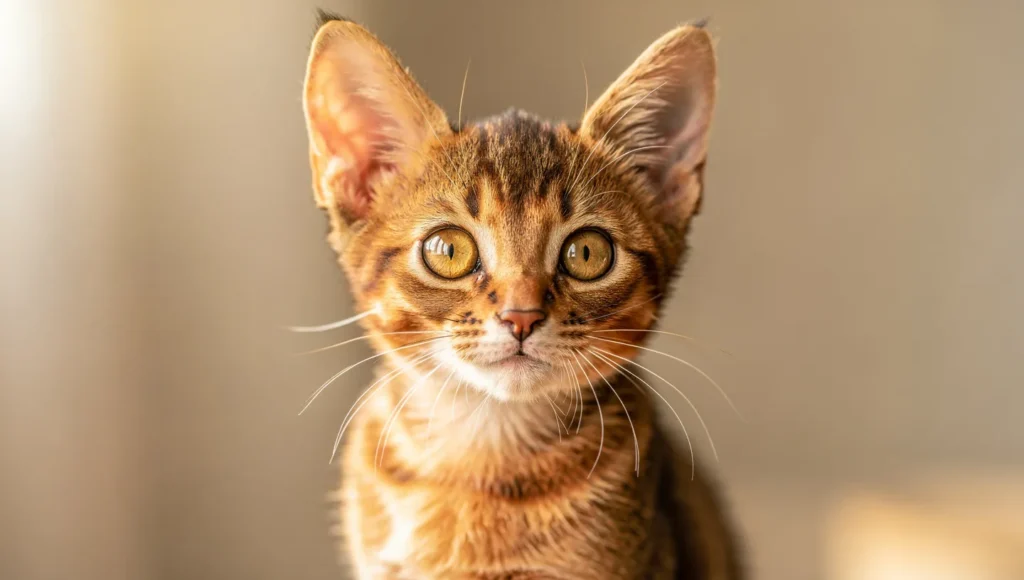
The Abyssinian cat didn’t just wander out of ancient Egypt—though their appearance suggests otherwise. While their exact origin remains debated, genetic studies point to Southeast Asia and the Indian Ocean coast. What’s undeniable? Their ticked coat (also called agouti) is unlike any other domestic breed.
Each individual hair has multiple bands of color, creating a shimmering, wild appearance that changes in different lighting. It’s not striped, spotted, or solid—it’s nature’s gradient effect on a single strand.
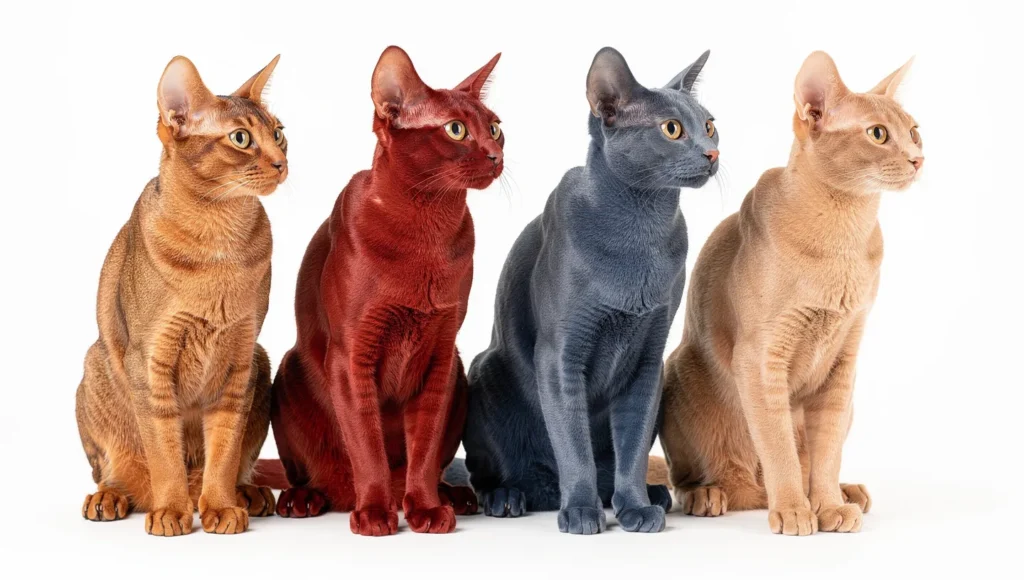
Common Abyssinian coat colors:
- Ruddy (reddish-brown with black ticking) — the original and most iconic
- Red (cinnamon-toned with chocolate ticking)
- Blue (warm beige-gray with slate-blue bands)
- Fawn (soft cream with light cocoa ticking)
Intelligence Level Compared to Other Breeds
I’m not exaggerating when I say Abyssinians are smarter than most dogs. In my experience, they rank alongside Siamese and Bengals in problem-solving ability.
They learn to:
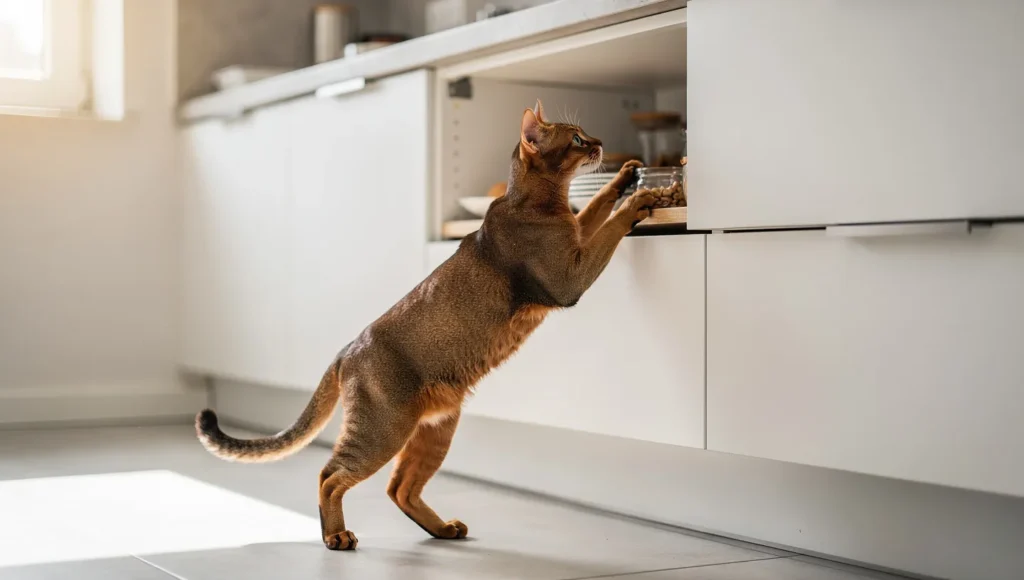
- Open cabinets and doors
- Turn on faucets (yes, really)
- Play fetch and learn tricks
- Understand routines with eerie accuracy
Expert Tip:
If you’re not ready to cat-proof your home like you would for a toddler, an Abyssinian will outsmart every “secure” latch you install.
😺 Abyssinian Cat Personality: What Owners Don’t Expect
The “Shadow Cat” Phenomenon: Loyal as a Dog, Independent as a Cat
If you’ve ever owned a dog, you know that feeling of being followed room to room. Abyssinian cats do the exact same thing—but on their own terms.
I’ve heard countless owners describe their Aby as a “velcro cat without the velcro.” They’ll supervise you in the shower, sit outside the bathroom door, and relocate to whatever room you’re in. But the moment you try to scoop them up for a cuddle? They’re gone.
This isn’t aloofness—it’s proximity-based affection. Abyssinians bond deeply with their humans, but they prefer being near you, not on you.
What this looks like in real life:
- Morning routine: Your Aby perches on the sink while you brush your teeth
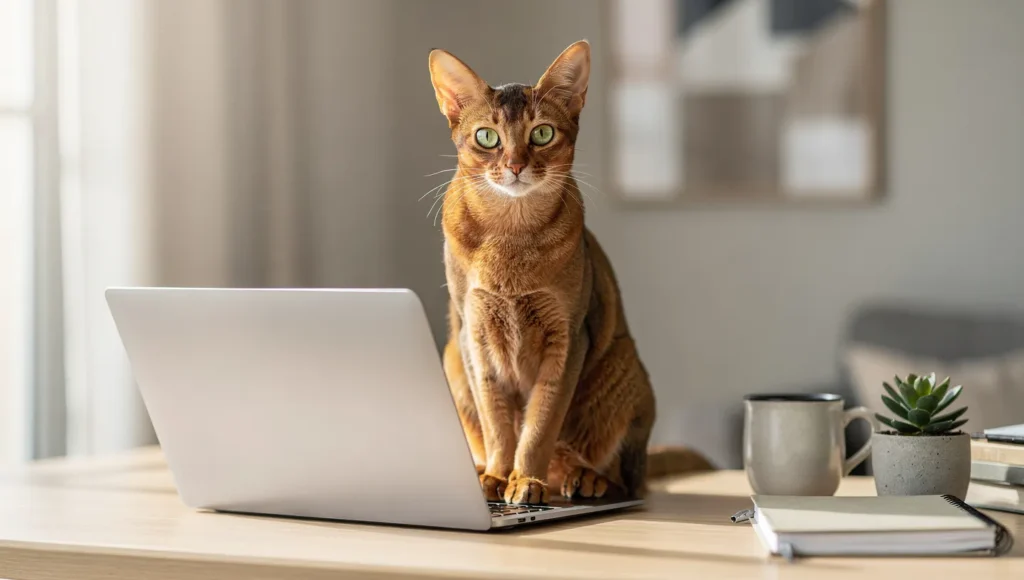
- Work-from-home: Expects a spot on your desk (yes, on the keyboard)
- Cooking: Supervises from the counter (good luck keeping them off)
- Bedtime: Sleeps at your feet or beside you—not in your arms
Expert Tip:
If you want a cat that greets you at the door, follows you like a shadow, and actually misses you when you’re gone—the Abyssinian delivers. But if you dream of a purring lapful of fur during movie night, keep reading.
Are Abyssinian Cats Affectionate or Independent?
Here’s the paradox that confuses new owners: Abyssinians are incredibly affectionate but fiercely independent.
They show love through:
✅ Head bunts and cheek rubs
✅ Soft chirps and trills (they’re vocal, but not Siamese-level loud)
✅ Bringing you toys for interactive play
✅ Sleeping in the same room as you
They do NOT show love through:
❌ Sitting still on your lap for hours
❌ Tolerating being carried around
❌ Cuddling when you want it (only when they initiate)
This breed respects you as a companion, not a servant. If you understand cat body language, you’ll notice they communicate consent very clearly—and expect you to listen.
Do Abyssinian Cats Like to Cuddle?
Let me be blunt: No, most Abyssinians do not like traditional cuddling.
But here’s what people get wrong—they assume “doesn’t cuddle” means “not loving.” That’s like saying someone who doesn’t like hugs doesn’t care about you.
Abyssinians show affection differently:
- On their schedule: They might curl up next to you at 11 PM every night like clockwork
- Mutual respect: They want affection with you, not to you
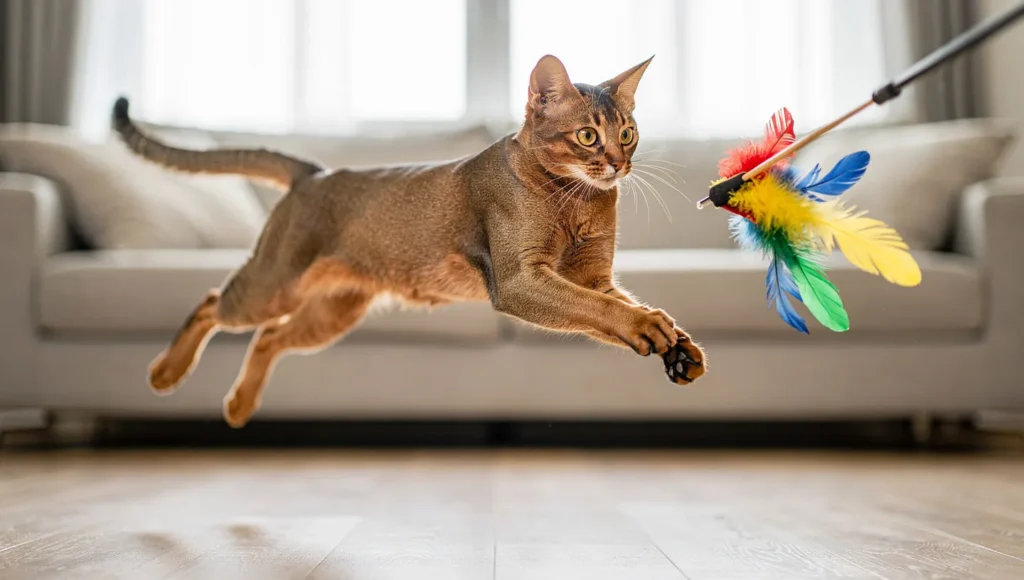
- Play = love language: A 20-minute feather wand session means more to them than forced lap time
Common owner mistake:
Forcing an Abyssinian into your arms damages trust. In my years working with this breed, the cats who became most affectionate were the ones whose owners respected their boundaries from day one.
The Vertical Obsession: Why Your Aby Needs Height
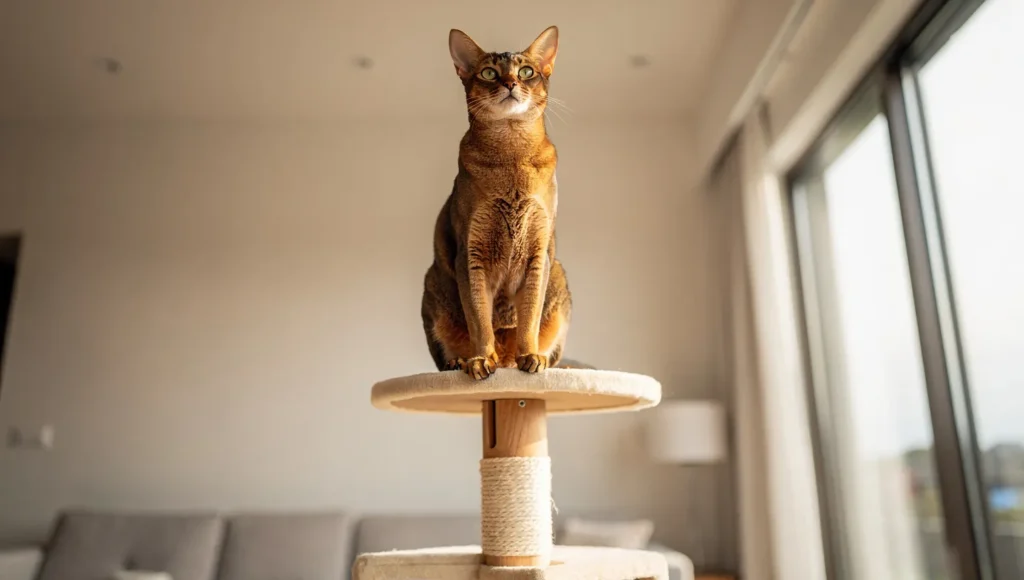
If there’s one non-negotiable for Abyssinian happiness, it’s vertical territory.
These cats are climbers by nature. In the wild, their ancestors surveyed their environment from elevated perches. Your Aby has the same instinct—times ten.
What happens without vertical space:
- Destructive behavior (climbing curtains, knocking over shelves)
- Anxiety and stress (no safe high vantage point)
- Redirected energy (attacking ankles, zoomies at 3 AM)
The solution:
Invest in a tall, sturdy cat tree—and I mean sturdy. Abyssinians are athletes. Wobbly furniture won’t cut it.
Look for:
✅ Multi-level platforms (minimum 5 feet tall)
✅ Wide base for stability
✅ Sisal scratching posts
✅ At least one enclosed hideaway
Pro tip from real owners:
Many Aby owners install wall-mounted shelves to create a “cat highway” around the room. It’s enrichment and furniture protection in one.
🏠 Is an Abyssinian Cat Right for You?
This is the most important section of this guide. I’ve seen too many Abyssinians rehomed within the first year—not because they’re bad cats, but because owners didn’t understand what they were signing up for.
Let me give you the honest breakdown.
📊 The Golden Table: Is This Breed Your Match?
| Factor | ✅ Abyssinian Thrives | ❌ Abyssinian Struggles |
|---|---|---|
| Owner Experience | Experienced cat owners, dog owners transitioning to cats | First-time cat owners expecting low-maintenance |
| Activity Level | Active households, work-from-home setups | Quiet homes, owners gone 10+ hours daily |
| Space Type | Apartments with vertical enrichment, houses with cat-proofing | Small spaces without climbing options |
| Affection Style | People who respect boundaries, “quality time” lovers | Lap cat seekers, constant physical contact needers |
| Other Pets | Homes with dogs (especially active breeds), other confident cats | Homes with timid cats, small prey animals (birds, hamsters) |
| Children | Older kids (8+) who understand gentle handling | Toddlers who grab/chase, very young children |
| Noise Tolerance | Moderate (they’re vocal but not excessive) | Need for silent environment |
| Budget | Can afford $1,200–$2,500 initial cost + premium food/vet care | Tight budget, limited emergency vet fund |
Best Home Environment: Apartments vs Houses
Here’s the surprise: Abyssinians can thrive in apartments—but only if you meet their non-negotiable needs.
✅ What makes an apartment work:
- Vertical space: Floor-to-ceiling cat trees, wall shelves, window perches
- Interactive playtime: Minimum 30–45 minutes daily (split into 2–3 sessions)
- Mental stimulation: Puzzle feeders, rotating toys, bird TV by the window
- Owner presence: They tolerate alone time better than Siamese, but 8–10 hours is the max
❌ What kills the apartment dream:
- Zero climbing structures (they’ll destroy your curtains instead)
- Long work hours + no enrichment = destructive anxiety
- Noise-sensitive neighbors (Abyssinians are athletes—expect running and jumping)
Houses are ideal if you cat-proof properly:
Abyssinians will find the one cabinet you forgot to latch. They’ll knock over the decorative vase. They’ll open the screen door if it’s not secured.
I always tell new owners: “If a curious toddler could get into it, so can your Aby.”
Good With Kids and Other Pets?
👶 Children: Age Matters More Than You Think
Abyssinians are NOT tolerant of rough handling.
Here’s the breakdown:
- Toddlers (0–5 years): ❌ High risk. Abyssinians will scratch or flee if grabbed, chased, or squeezed.
- School-age kids (6–10 years): ⚠️ Possible, if the child is taught consent-based interaction (let the cat approach first, no forced hugs).
- Tweens/teens (11+ years): ✅ Great match. Old enough to engage in play properly and respect boundaries.
What works:
Teaching kids to use interactive toys instead of hands. Abyssinians love “hunting” feather wands with respectful playmates.
What doesn’t:
Expecting the cat to tolerate being dressed up, carried around like a baby, or cornered for affection.
🐕 Dogs: A Surprisingly Perfect Pairing
This might shock you: Abyssinians often get along better with dogs than with other cats.
Why? Because they share the same energy.
Best dog matches:
✅ Active breeds (Border Collies, Australian Shepherds, Labs)
✅ Playful, confident dogs who respect feline boundaries
✅ Dogs trained with basic commands (especially “leave it”)
Red flags:
❌ High prey-drive breeds (huskies, terriers, some hounds)
❌ Overly dominant or reactive dogs
❌ Households skipping proper introductions (yes, the slow introduction method works for dogs too)
I’ve personally seen Abyssinians play fetch with the family dog, groom each other, and even sleep curled up together. The key is matching energy levels.
🐱 Other Cats: Confidence Is Key
Abyssinians can live with other cats—but not all cats can live with an Abyssinian.
Good matches:
✅ Other active breeds (Bengals, Siamese, Oriental Shorthairs)
✅ Confident, playful adult cats
✅ Kittens raised together from a young age
Poor matches:
❌ Timid, shy, or senior cats who want peace and quiet
❌ Territorial cats who don’t tolerate high energy
❌ Persian or Ragdoll types (too laid-back for Aby intensity)
Pro tip:
If you already have a mellow lap cat and want to add an Abyssinian, prepare for stress. The Aby will want to play 24/7, and your chill cat will hate it.
🧠 Mental Stimulation: The Make-or-Break Factor
Let me be crystal clear: A bored Abyssinian is a destructive Abyssinian.
This isn’t a breed you can leave with a bowl of kibble and expect happiness. They need jobs and specific environmental enrichment to stay mentally healthy.
Daily enrichment checklist:
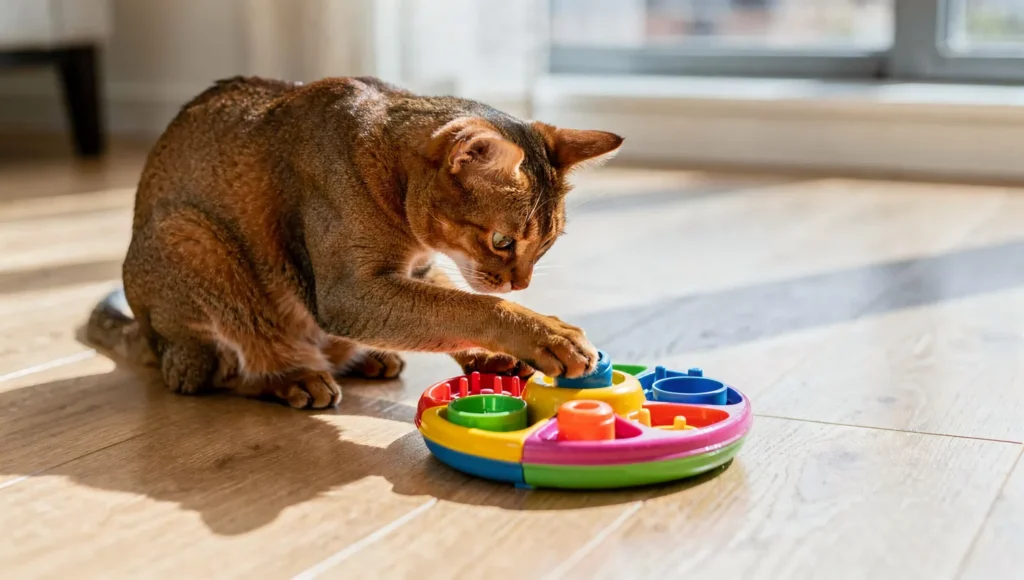
- ✅ Puzzle feeders (make them work for food)
- ✅ Rotating toy selection (they get bored of the same wand)
- ✅ Window perch with a view (bird watching is their Netflix)
- ✅ Clicker training or trick sessions (yes, seriously—teach fetch, sit, high-five)
- ✅ Supervised outdoor time in a catio or on a leash (some Abys take to harness training beautifully)
What I see in under-stimulated Abys:
- Counter surfing and food stealing
- Aggression toward other pets
- Excessive vocalization
- Destructive scratching beyond normal limits
- Depression (yes, cats get depressed—watch for withdrawal and appetite loss)
⚖️ Abyssinian Cat Pros and Cons (Honest Breakdown)
| ✅ Pros | ❌ Cons |
|---|---|
| Dog-like loyalty and companionship | Demands constant mental stimulation |
| Highly intelligent and trainable | Will outsmart childproofing attempts |
| Low-shedding, minimal grooming | Expensive initial cost ($1,200–$2,500) |
| Playful and entertaining to watch | Not a lap cat—hates restraint |
| Generally healthy with long lifespan | Prone to specific genetic issues (see below) |
| Gets along well with dogs | Too energetic for elderly or sedentary owners |
| Soft, quiet vocalizations | Destructive when bored or under-stimulated |
Bottom line: If you want an interactive, athletic companion who respects you as an equal—this is your breed. If you want a low-maintenance decoration, keep looking.
💰 Why Are Abyssinian Cats So Expensive?
Short answer: Breeding complexity + health screening + rarity.
Breeding Complexity
- Small litter sizes: Abyssinians average 3–4 kittens per litter (vs. 5–6 for most breeds)
- Color genetics: Producing show-quality ticked coats requires careful pairing
- High kitten mortality: Reputable breeders lose more kittens than average due to genetic sensitivities
Health Screening Costs
Ethical breeders test for:
- Progressive Retinal Atrophy (PRA) — genetic blindness
- Pyruvate Kinase Deficiency (PK-Def) — anemia
- Renal amyloidosis — kidney disease
Each test costs $100–$300 per cat. Multiply that by breeding pairs, and you see why prices reflect real investment.
Red flag: Abyssinians under $800 likely come from backyard breeders skipping health tests. You’ll pay later in vet bills.
🏥 Health, Lifespan, and Common Issues
Average lifespan: 12–15 years (some reach 18+ with excellent care)
Genetic conditions to monitor:
| Condition | Symptoms | Prevention/Management |
|---|---|---|
| Progressive Retinal Atrophy (PRA) | Night blindness, dilated pupils, bumping into objects | DNA test before breeding; no cure but manageable |
| Pyruvate Kinase Deficiency | Anemia, lethargy, weakness | Blood tests; treatable with supplements |
| Renal Amyloidosis | Increased thirst, vomiting, weight loss | Early kidney monitoring; senior diet adjustments |
| Dental Disease | Bad breath, drooling, difficulty eating | Regular dental care and vet cleanings |
Good news: With proper screening and care, most Abyssinians live long, healthy lives. The key is choosing a breeder who health-tests and being proactive with vet visits.
🍽️ Abyssinian Cat Care Tips From Real Owners
Diet:
- High-protein, grain-free wet food (they’re obligate carnivores)
- Avoid fillers and by-products—read those ingredient labels
- Puzzle feeders slow down fast eaters and add mental challenge
Exercise:
- Minimum 30 minutes interactive play daily (split into sessions)
- Rotate toys weekly to prevent boredom
- Invest in a sturdy cat tree and window perches
Grooming:
- Weekly brushing (their short coat barely sheds)
- Nail trims every 2–3 weeks—learn to do it safely
- Dental checks during annual vet visits
Enrichment hacks from experienced owners:
- Bird feeder outside a window = hours of entertainment
- Cardboard boxes with cutout holes = instant playground
- Teach fetch—most Abys love retrieving toys
🎯 Final Verdict: Should You Get an Abyssinian Cat?
Get an Abyssinian if:
✅ You’re home often or work remotely
✅ You enjoy interactive play and training
✅ You have space for vertical enrichment
✅ You want a loyal “shadow” companion
✅ You can afford quality food and vet care
Skip this breed if:
❌ You want a cuddly lap cat
❌ You work long hours with no enrichment plan
❌ You have toddlers or timid pets
❌ You prefer low-energy, low-maintenance cats
❌ You’re on a tight budget
My honest take after years in the field:
Abyssinians are extraordinary cats for the right owner. They’re not starter pets. But if you’re ready for a feline that challenges you, entertains you, and bonds with you like no other—this ancient breed will change how you see cats forever.
Still unsure? Read our guide on bringing home a new kitten to prepare your space properly.
🌟 Quick Recap: Abyssinian Cat at a Glance
Personality: Intelligent, loyal, playful, independent
Energy Level: Very high
Grooming Needs: Low (weekly brushing)
Health: Generally healthy; watch for genetic conditions
Lifespan: 12–15 years (up to 18+)
Best For: Active owners, experienced cat people, dog lovers
Price Range: $1,200–$2,500 from reputable breeders
Final thought: The Abyssinian isn’t just a pet—it’s a lifestyle. Choose wisely, and you’ll have a once-in-a-lifetime companion.