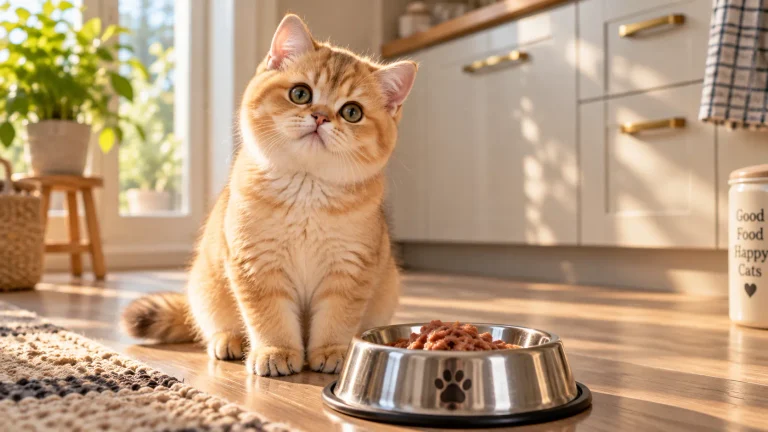

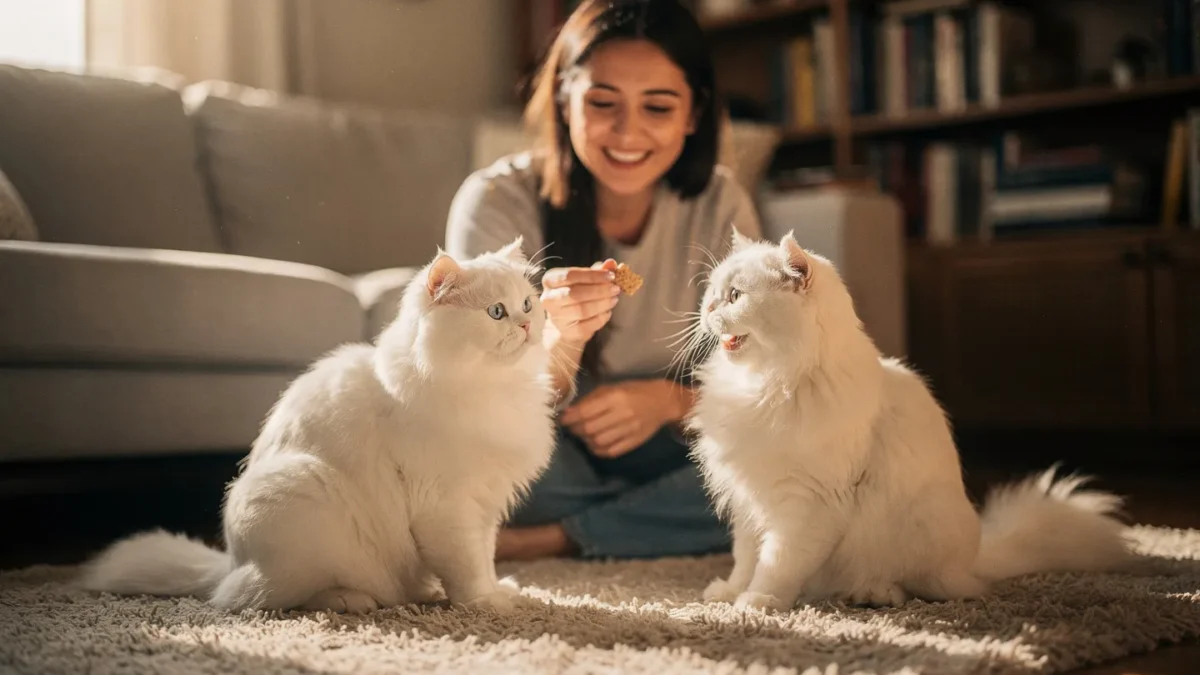
I have a cat who firmly believes that opening any kitchen cabinet is a legally binding contract promising her a treat.
If I open a cabinet just to grab a glass, she somehow materializes out of thin air, sits directly on my feet, and stares up at me with those huge, dramatic eyes like she hasn’t eaten since 2012. And if I walk away without handing over a snack? That disappointed side-eye could probably melt steel. 😼
That is exactly why homemade cat treats can be so tempting. You get to choose the ingredients, keep the recipe simple, and maybe even find something your cat loves more than the treats sitting in the cupboard.
But here’s the thing: homemade doesn’t automatically mean healthy or safe.
Some foods that are perfectly fine for people don’t belong in a cat’s bowl, and even a good ingredient can become too much when treats start replacing part of a balanced diet. The good news is that making simple treats at home doesn’t have to be complicated.
In this guide, you’ll find easy homemade cat treats made with simple ingredients, including tuna, chicken, pumpkin, crunchy treats, no-bake options, and a soft lickable recipe. I’ll also cover which ingredients to avoid, how much is reasonable to offer, and how to store your homemade treats so you don’t end up with a mystery container growing science experiments in the back of your refrigerator.
A quick note before we start: This article is based on personal observations and research from trusted sources. It’s meant for general information, not as a substitute for advice from your veterinarian. If your cat has a medical condition, food allergy, or is on a special diet, it’s best to check with your veterinary team before adding homemade treats.

Table of Contents
- Why Make Homemade Cat Treats?
- You Know What Goes Into the Bowl
- They Can Be Simpler Than Store-Bought Treats
- Homemade Doesn’t Mean “Give Your Cat as Much as They Want”
- 7 Homemade Cat Treat Recipes to Try
- 1. Easy Tuna Cat Treats
- 2. Simple Chicken Cat Treats
- 3. Pumpkin Cat Treats
- 4. No-Bake Cat Treats
- 5. Crunchy Homemade Cat Treats
- 6. Frozen Cat Treats
- 7. Lickable Cat Treats
- Which Treat Should You Make for Your Cat?
- Ingredients to Avoid in Homemade Cat Treats
- How Many Homemade Treats Can You Give Your Cat?
- How to Store Homemade Cat Treats
- Common Mistakes People Make With Homemade Cat Treats
- Homemade Cat Treats FAQ
- Are homemade treats healthy for cats?
- What is a good homemade treat for cats?
- Can I make cat treats without flour?
- Can cats eat homemade tuna treats?
- Can I make no-bake cat treats?
- Can I make lickable treats at home?
- Can kittens have homemade treats?
- How long do homemade cat treats last?
- A Simple Final Tip From One Cat Lover to Another
Why Make Homemade Cat Treats?
Homemade treats give you one big advantage: you know exactly what you’re putting in your cat’s bowl. You can keep the ingredients simple, adjust the texture to your cat’s preference, and make a small batch instead of buying a bag of treats your cat may sniff once and completely ignore.
You Know What Goes Into the Bowl
One of my favorite things about making treats at home is the control.
Instead of reading a long ingredient list and wondering what half of it means, you can start with a few familiar ingredients and keep things straightforward. Chicken, for example, can be just that—plain, properly cooked chicken prepared without seasonings that aren’t appropriate for cats.
That simplicity can be especially useful when your cat is picky. You can change the texture, make smaller pieces, or leave out an ingredient your cat doesn’t seem to tolerate well.
And yes, some cats will still sniff your carefully prepared homemade treat, turn around, and walk away.
Cats have opinions. Lots of them.
They Can Be Simpler Than Store-Bought Treats
You don’t need a kitchen full of fancy equipment or ingredients with names you can barely pronounce.
Some homemade treats can be made with only a few ingredients and basic preparation. You can also make a small amount at first, which is a smart move if you’re not sure whether your cat will like it.
Personally, I’d rather make a tiny batch and discover that my cat loves it than spend time making 50 treats that end up staring back at me from the refrigerator.
Homemade Doesn’t Mean “Give Your Cat as Much as They Want”
This is where things change.
A homemade treat can be made from nutritious ingredients and still count as a treat—not a replacement for your cat’s regular, complete diet.
Treats should remain a small part of the overall diet. Veterinary nutrition guidance commonly recommends keeping treats to no more than about 10% of a cat’s daily calorie intake, with the remaining calories coming from a nutritionally complete and balanced food.
So think of homemade treats as the fun little bonus.
They’re the “I love you” snack—not breakfast, lunch, and dinner wearing a tiny cat-shaped disguise.
7 Homemade Cat Treat Recipes to Try
Ready for the fun part?
These seven homemade cat treat ideas cover different textures and flavors, so you don’t have to make the same recipe for every cat. Start with the one that matches what your cat already enjoys, make a small batch, and see what happens.
And if your cat gives you that famous “I have no idea what this is” look?
Don’t take it personally. You’re living with a cat.
1. Easy Tuna Cat Treats
Tuna is a popular choice for homemade cat treats because many cats already recognize the smell and get very interested the moment they hear a can opening.just keep in mind that tuna is a snack, not a daily diet — see our guide on can cats eat tuna daily for full safety details.
For a simple baked version, use plain tuna packed in water, drain it well, and combine it with a small amount of cooked egg and enough of a suitable dry ingredient to form a workable dough.
You’ll need:
- Plain tuna packed in water, drained
- One cooked egg
- A small amount of flour or another suitable dry ingredient
How to make them:
- Preheat your oven to about 350°F.
- Mix the ingredients until they form a soft dough.
- Roll the mixture into small pieces.
- Place them on a lined baking sheet.
- Bake until the treats are firm and cooked through.
- Let them cool completely before offering one to your cat.
Keep the pieces genuinely small. These are treats, not tuna dinner wearing a different outfit.
Best for: Cats who already love fish-flavored treats.

2. Simple Chicken Cat Treats
If your cat isn’t particularly impressed by fish, chicken is an easy alternative.
Use plain cooked chicken without seasoning, especially without ingredients such as onion or garlic. Finely chop or process the chicken so it can be mixed into small, easy-to-handle treats.
You’ll need:
- Plain cooked chicken
- One cooked egg
- A small amount of a suitable dry ingredient
How to make them:
- Preheat the oven to about 350°F.
- Finely chop the cooked chicken.
- Mix it with the egg and dry ingredient.
- Form tiny bite-sized pieces.
- Place them on a lined baking sheet.
- Bake until cooked and firm.
- Cool completely before serving.
Here’s my favorite part about this kind of recipe: you can make a very small batch first.
There is no prize for producing 100 treats your cat refuses to eat.
Best for: Cats who prefer poultry over fish.
3. Pumpkin Cat Treats
Pumpkin can add a different texture and flavor to a homemade treat, but keep the recipe simple. If you’re using canned pumpkin, choose plain pumpkin rather than pumpkin pie filling our full guide to pumpkin for cats breaks down exact safety rules and benefits.
You’ll need:
- Plain pumpkin puree
- A cat-friendly protein such as cooked chicken
- A small amount of a suitable dry ingredient
How to make them:
- Combine the ingredients in a bowl.
- Mix until you have a soft, workable mixture.
- Shape into tiny treats.
- Bake according to the recipe style you’re using.
- Allow them to cool completely before serving.
The goal here isn’t to turn pumpkin into a miracle ingredient. It’s simply another way to make a small, interesting snack your cat may enjoy.
Best for: Cats who enjoy softer, milder-flavored treats.

4. No-Bake Cat Treats
Not every homemade treat needs to go into the oven.
No-bake recipes can be useful when you want something quick, especially if you’re making a tiny batch just to test whether your cat likes a particular combination.
A simple approach is to combine a cooked protein with another cat-friendly ingredient (check our list of safe human foods for cats if you’re not sure what’s okay to mix).
The basic idea:
- Use a familiar cooked protein.
- Keep the mixture simple.
- Avoid seasonings and sweeteners.
- Form very small portions.
- Refrigerate them as appropriate for the ingredients.
The important part is not the word “no-bake.” It’s the ingredients.
No oven does not mean no safety rules.
Best for: Busy cat owners who want a quick homemade option.
5. Crunchy Homemade Cat Treats
Some cats love that little crunch.
If yours is one of them, a small baked biscuit can be more appealing than a soft treat. The trick is to keep the pieces small and avoid making them so hard that they’re difficult for your cat to handle.
A simple baked mixture can be shaped into tiny nuggets or flattened into small pieces before going into the oven.
Try this approach:
- Combine your cooked protein with the other ingredients.
- Form very small pieces.
- Flatten them slightly so they cook evenly.
- Bake until firm.
- Cool completely before serving.
You don’t need giant biscuits shaped like fish.
Your cat will probably be just as impressed by something the size of your fingertip.
Best for: Cats that prefer crunchy textures.

6. Frozen Cat Treats
Frozen treats are a fun option, especially when your cat enjoys cold, soft textures.
For a simple version, blend a cat-friendly ingredient with enough water to create a smooth mixture, then freeze it in very small portions.
Silicone molds can make this especially easy.
Just remember: the portions should be tiny. A treat doesn’t need to be the size of an ice cube from your refrigerator.
Simple method:
- Blend the ingredients until smooth.
- Pour a small amount into a silicone mold.
- Freeze until firm.
- Remove one portion at a time.
- Let it soften slightly before offering it if the texture is too hard.
Best for: Cats who enjoy chilled or soft treats.
7. Lickable Cat Treats
This one is for the cats who would happily choose a creamy lickable treat over almost anything else.
And yes, you can make a homemade version without trying to recreate a commercial product ingredient-for-ingredient.
The easiest approach is to blend a plain cooked protein with enough water to create a smooth, spoonable or lickable consistency.
You’ll need:
- Plain cooked chicken or another suitable protein
- Water
- A blender or food processor
How to make it:
- Add the cooked protein to a blender.
- Add a small amount of water.
- Blend until completely smooth.
- Add a little more water if needed to reach a creamy consistency.
- Serve a small portion fresh.
- Refrigerate or freeze the remaining mixture according to the ingredients and storage guidance.
This texture can be especially useful for cats that aren’t interested in crunchy treats.
It can also turn an ordinary snack into something that feels like a very serious event.
Because apparently, licking chicken from a spoon is five-star dining when you’re a cat.
Best for: Cats that love soft, creamy, lickable textures.

Which Treat Should You Make for Your Cat?
The best homemade treat is the one that matches your cat—not the one that looks fanciest on Instagram. Start with your cat’s usual preferences, then keep the portion small.
| If your cat… | Try… |
|---|---|
| Loves fish | Tuna treats |
| Prefers poultry | Chicken treats |
| Likes softer food | Pumpkin or lickable treats |
| Loves crunch | Baked treats |
| Enjoys cold textures | Frozen treats |
| Avoids fish | Chicken-based recipes |
If your cat is extremely picky, don’t make a giant batch right away. Make two or three tiny portions and let your cat decide which one deserves a place in the treat rotation. Honestly, cats are surprisingly good food critics.
Ingredients to Avoid in Homemade Cat Treats
A homemade treat should be simple, but “simple” doesn’t mean every kitchen ingredient is fair game. According to the ASPCA, some common human foods can be dangerous for cats.
Avoid ingredients such as:
- Onions and garlic — avoid them completely.
- Chocolate and caffeine — not appropriate for cats.
- Xylitol — keep products containing this sweetener away from your cat.
- Excessive salt or seasoning — cats don’t need your dinner spices.
- Raw or questionable ingredients — don’t add unnecessary food-safety risks.
One more rule I personally like: if you’re not sure an ingredient is appropriate for cats, leave it out rather than experimenting with your cat as the taste tester.
How Many Homemade Treats Can You Give Your Cat?
Treats should stay a small part of your cat’s daily calories, not quietly become a second meal. Veterinary nutrition guidance commonly recommends keeping treats to about 10% or less of daily calories, with the rest coming from a complete and balanced diet.
A few practical rules:
- Keep pieces tiny—about the size of your fingertip or smaller.
- Count homemade treats along with other treats your cat gets that day.
- Don’t increase portions just because the ingredients are homemade.
- For kittens, cats with medical conditions, food allergies, or special diets, check with your veterinary team before adding new treats.
How to Store Homemade Cat Treats
Storage depends on the ingredients and how the treats were prepared. As a simple rule, refrigerate perishable homemade treats promptly, use clean airtight containers, and freeze portions you won’t use soon.
- Refrigerator: Keep perishable treats chilled and use them promptly.
- Freezer: Freeze small portions so you only thaw what you need.
- Label it: Write the preparation date on the container.
- When in doubt: If the smell, appearance, or texture seems off, throw it away.
Making a small batch is usually smarter than filling half the refrigerator. Your cat may love the recipe—or may decide that the only acceptable treat is the one you didn’t make.
Common Mistakes People Make With Homemade Cat Treats
Most people get this wrong: they focus on making the recipe impressive instead of making it appropriate for the cat.
Watch out for these common mistakes:
- Making treats too large.
- Adding unnecessary seasonings.
- Making a huge batch before testing the recipe.
- Giving treats too frequently.
- Assuming “homemade” automatically means nutritionally complete.
- Ignoring your cat’s preferred texture.
Here’s the funny part: your cat doesn’t care how much effort you put into the recipe. If a tiny piece makes her happy, you’ve already won.
Homemade Cat Treats FAQ
Are homemade treats healthy for cats?
They can be a reasonable occasional snack when made with appropriate ingredients and given in moderation. They should not replace a complete and balanced diet.
What is a good homemade treat for cats?
Plain cooked chicken or other cat-appropriate ingredients can make a simple starting point. Choose something your cat already tolerates and enjoys.
Can I make cat treats without flour?
Yes. Some homemade treats can be made without flour, including simple soft or lickable versions. The recipe still needs to use cat-appropriate ingredients.
Can cats eat homemade tuna treats?
Tuna can be used as an occasional treat, but it shouldn’t become a daily dietary staple. For a broader look at tuna and cats, see our guide to feeding tuna to cats.
Can I make no-bake cat treats?
Yes. No-bake options can be very simple, especially when using cooked ingredients that can be blended or shaped into small portions.
Can I make lickable treats at home?
Yes. A smooth mixture of plain cooked protein and water can create a simple lickable texture. Serve small portions and store the remaining mixture safely.
Can kittens have homemade treats?
Kittens have different nutritional needs because they’re growing. Treats should remain occasional, and it’s sensible to check with your veterinary team before introducing homemade treats to a very young kitten.
How long do homemade cat treats last?
There’s no single shelf-life for every recipe. Ingredients, moisture, cooking method, and storage all matter. When you’re unsure, make a smaller batch and refrigerate or freeze it appropriately rather than guessing.
A Simple Final Tip From One Cat Lover to Another
Don’t chase the perfect recipe. Start with something simple, make a tiny batch, and watch your cat’s reaction.
If your cat takes one bite, walks away, and then looks at you like you’ve personally betrayed the family, welcome to cat ownership. 😼
And if you find a homemade treat that makes your cat come running from the other side of the house, we’d genuinely love to hear about it. Leave a comment and tell us which recipe your cat picked—and share this guide with another cat owner whose kitchen has already become a full-time snack bar.
Thanks for being here, and give your furry food critic an extra little scratch from us.