
I almost made a terrible mistake before getting my first cat.
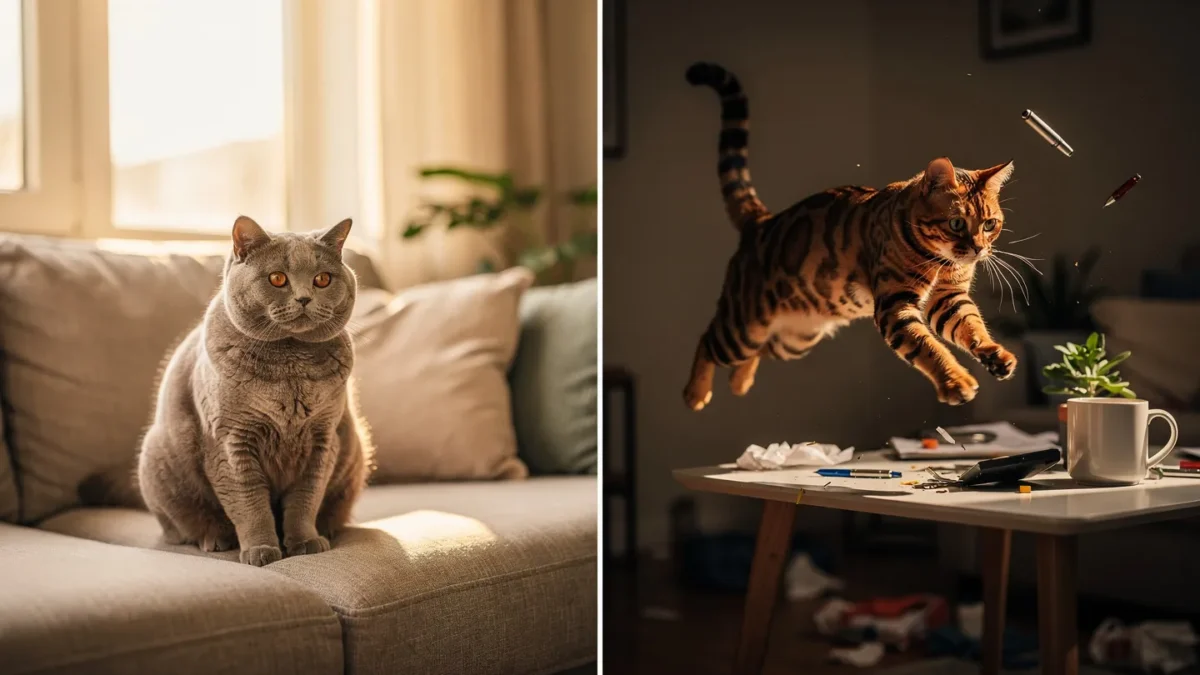
I was living in a 650-square-foot apartment downtown, completely convinced I wanted a Bengal. They looked stunning online — all spotted and wild. A friend talked me out of it at the last minute, and honestly? That was one of the best interventions of my life.
Choosing the wrong cat breed for a small space isn’t just inconvenient. It’s stressful — for you and the cat.
So if you’re trying to figure out the best cat breeds for apartments, this guide is going to save you a lot of headaches. I’ll walk you through what actually matters, which breeds genuinely thrive in small spaces, and — just as importantly — which ones you should avoid entirely.
Quick note: This article is based on personal experience and research from trusted sources like ASPCA and PetMD. It’s meant for informational purposes only and isn’t a substitute for advice from your vet — especially if you’re dealing with a specific health or behavioral concern.
Table of Contents
- What Actually Makes a Cat “Apartment-Friendly”?
- It’s Not Just About Size
- The Energy Level Is Everything
- A Quick Word on Noise
- Don’t Forget Alone Time
- The 7 Best Cat Breeds for Apartments (Ranked & Rated)
- 1. Ragdoll
- 2. British Shorthair
- 3. Russian Blue
- 4. Persian
- 5. Burmese
- 6. Scottish Fold
- 7. American Shorthair
- Apartment Cat Breeds — Quick Comparison Table
- Worst Cat Breeds for Apartments (Don’t Make This Mistake)
- How to Choose the Right Cat for YOUR Apartment
- Still Have Questions?
- What cat is best for indoors?
- Can cats live happily in apartments?
- What is the 3-3-3 rule for cats?
- Are cats okay alone all day?
- Make the Right Choice
What Actually Makes a Cat “Apartment-Friendly”?
An apartment-friendly cat is typically a low-to-medium energy breed that adapts well to smaller spaces, stays relatively quiet, and doesn’t require constant stimulation or outdoor access to stay happy and mentally healthy.
That’s the short answer — and honestly, that’s what Google wants too. But let me break down what really defines the best cat breeds for apartments in a way that’s actually useful.
It’s Not Just About Size
Most people assume small cats = apartment cats. That’s not really how it works.
A tiny, hyperactive cat can turn your studio into a demolition zone. Meanwhile, a larger, calm breed might spend 18 hours napping on your couch without a single complaint. What matters isn’t size — it’s temperament.
Here’s what I look for when evaluating a breed for apartment life:
- Energy level: Does this cat need to run laps, or is it happy with a 10-minute wand toy session?
- Noise level: Some breeds are vocal. Like, annoyingly vocal at 2 a.m. vocal.
- Independence: Can the cat handle being alone for 8–9 hours while you’re at work?
- Adaptability: Does it stress easily from small-space constraints, or does it just… not care?
- Destructive tendencies: Will it claw your couch into oblivion if it gets bored?
The Energy Level Is Everything
Personally, I think energy level is the single most important factor — more than noise, more than coat maintenance.
A high-energy cat in a small apartment isn’t just annoying. According to the ASPCA, cats that don’t get adequate environmental enrichment can develop stress-related behaviors: over-grooming, aggression, or compulsive habits. That’s not good for anyone.
Low-to-medium energy cats, on the other hand, tend to self-regulate. They play when they want, nap when they want, and generally don’t need you to entertain them every waking hour.
A Quick Word on Noise
If you live in an apartment building, noise matters — both for you and your neighbors. Some breeds (looking at you, Siamese) are extremely talkative and will meow loudly and persistently. Others are almost eerily quiet.
This is where understanding cat body language becomes really helpful — sometimes what looks like a “quiet” cat is actually communicating in ways that don’t involve sound at all.
Don’t Forget Alone Time
Here’s the thing most listicles skip over entirely.
If you work a 9-to-5 (or longer), your cat is going to spend a lot of time alone. Some breeds handle this fine. Others spiral into separation anxiety, destructive behavior, or endless meowing the moment you walk out the door.
For a deep dive on this, check out our guide on cat separation anxiety — it’s eye-opening, especially if you’ve ever come home to chaos and had no idea why.
The 7 Best Cat Breeds for Apartments (Ranked & Rated)
Let me be upfront: this isn’t a random list pulled from somewhere. Every pick among these best cat breeds for apartments is someone I’ve either owned, fostered, or spent serious time around. And for each one, I’ll give you a real-world picture — not just “they’re calm and loving.” Because honestly, that describes half the cats on the internet.
Each breed gets a quick score out of 5 for three things that actually matter in apartment life:
🔋 Energy | 🔊 Noise | ✂️ Maintenance
1. Ragdoll
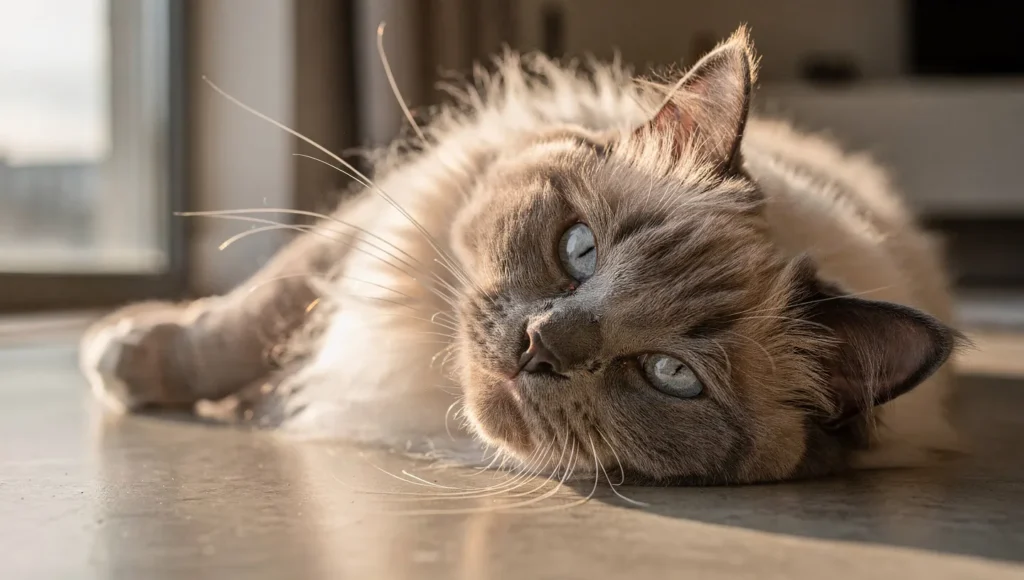
If there’s one breed practically made for apartment living, it’s the Ragdoll.
These cats are almost suspiciously chill. They go limp when you pick them up (hence the name), they follow you from room to room like a soft shadow, and they almost never raise their voice. I had a Ragdoll named Biscuit for three years in a one-bedroom apartment. The man never knocked a single thing off a shelf. Truly an icon.
They do need daily interaction — they’re not the “leave me alone” type. But they’re not destructive or demanding about it. A 15-minute play session and some lap time? They’re good.
| 🔋 Energy | 🔊 Noise | ✂️ Maintenance |
|---|---|---|
| ⭐⭐☆☆☆ Low | ⭐☆☆☆☆ Very Quiet | ⭐⭐⭐☆☆ Medium |
✅ Best for: First-time owners, people who work from home, families with kids
❌ Not ideal for: Anyone gone 12+ hours daily (they get lonely)
👉 We have a full Ragdoll care guide if you want to go deeper on their temperament.
2. British Shorthair
The British Shorthair is basically the introvert of the cat world — and I mean that as a compliment.
They’re calm, they’re self-sufficient, and they genuinely don’t need you to entertain them every hour. They’ll sit across the room, watch you work, and look completely content doing absolutely nothing. It’s kind of peaceful, honestly.
They’re not big cuddlers — don’t expect them to crawl into your lap constantly. But they’re consistently good-natured, making them one of the best cat breeds for apartments and daily routines.
One thing to watch: they’re prone to weight gain. If you’ve got a small space and a British Shorthair, you’ll want to be intentional about feeding and play. Our cat weight loss guide covers exactly how to manage that without turning mealtime into a battle.
| 🔋 Energy | 🔊 Noise | ✂️ Maintenance |
|---|---|---|
| ⭐⭐☆☆☆ Low | ⭐⭐☆☆☆ Quiet | ⭐⭐☆☆☆ Low-Medium |
✅ Best for: Busy professionals, people who value independence, quieter households
❌ Not ideal for: Owners who want a highly affectionate, velcro-type cat
👉 Full breakdown in our British Shorthair care guide
3. Russian Blue
Here’s the thing about Russian Blues — they look like little gray aristocrats and they act like it too.
They’re loyal to their person in a way that feels almost dog-like. But around strangers? Completely unbothered. Which actually makes them perfect for apartments — they won’t stress out when maintenance comes in, they just… disappear for a bit and come back when the coast is clear.
They’re playful but not exhausting. Smart but not destructive. And they’re on the lower end of the Fel d 1 protein scale, which matters if you or anyone in your home has mild cat allergies.
| 🔋 Energy | 🔊 Noise | ✂️ Maintenance |
|---|---|---|
| ⭐⭐⭐☆☆ Medium | ⭐⭐☆☆☆ Quiet | ⭐☆☆☆☆ Very Low |
✅ Best for: Single owners, allergy-prone households, people who want a loyal but not clingy cat
❌ Not ideal for: Loud, chaotic households — they stress in high-noise environments
👉 More in our Russian Blue complete guide
4. Persian
Persians are the definition of low-drama.
They move slowly, they speak rarely, and their idea of a perfect day involves a soft blanket and a sunny window. For a small apartment, that energy is genuinely ideal.
The tradeoff? That gorgeous coat needs daily brushing — no way around it. If you skip it, you’ll end up with mats that are painful for the cat and a headache for you. But if you’re someone who finds grooming sessions relaxing (I actually do), a Persian is a dream.
Also worth noting: their flat faces mean they can be prone to breathing issues and dental problems. Regular vet checks matter more with this breed than most.
| 🔋 Energy | 🔊 Noise | ✂️ Maintenance |
|---|---|---|
| ⭐☆☆☆☆ Very Low | ⭐☆☆☆☆ Very Quiet | ⭐⭐⭐⭐⭐ High |
✅ Best for: Calm households, experienced cat owners, people who enjoy grooming routines
❌ Not ideal for: Busy owners with no time for daily coat care
5. Burmese
Most people sleep on Burmese cats, and I genuinely don’t understand why.
They’re affectionate without being overbearing, playful without being chaotic, and they have this warm, almost puppy-like quality that makes them incredibly easy to live with. They’re also surprisingly adaptable — I’ve seen Burmese thrive in tiny studio apartments and sprawling houses with equal ease.
They do like company though. If you’re gone all day, consider getting two — they do well in pairs.
| 🔋 Energy | 🔊 Noise | ✂️ Maintenance |
|---|---|---|
| ⭐⭐⭐☆☆ Medium | ⭐⭐☆☆☆ Moderate | ⭐⭐☆☆☆ Low-Medium |
✅ Best for: Social owners, multi-cat households, people who want a playful but manageable cat
❌ Not ideal for: Anyone gone long hours without a second pet for company
6. Scottish Fold
That permanently-worried expression fools you every time. Scottish Folds are actually incredibly easygoing.
They’re quiet, moderately playful, and they adapt to small spaces without complaint. They tend to sit in funny upright positions (the “Buddha sit” is very real) and they’re endlessly entertaining without being destructive.
Important note: Scottish Folds carry a genetic condition called osteochondrodysplasia that affects their joints. This isn’t something to ignore. If you’re considering this breed, read our Scottish Fold health guide before committing — it covers what to watch for and how to keep them comfortable long-term.
| 🔋 Energy | 🔊 Noise | ✂️ Maintenance |
|---|---|---|
| ⭐⭐☆☆☆ Low-Medium | ⭐⭐☆☆☆ Quiet | ⭐⭐☆☆☆ Low-Medium |
✅ Best for: Apartment dwellers who want personality without chaos
❌ Not ideal for: Owners who skip vet visits — health monitoring matters with this breed
7. American Shorthair
Honestly, the American Shorthair is the most underrated option when looking for the best cat breeds for apartments
No extreme personality quirks, no high-maintenance grooming, no dramatic health conditions. They’re just… solid. Friendly, adaptable, healthy, and genuinely easy to live with. They’ve been companion cats for so long that they’ve basically evolved to fit human living spaces naturally.
If you’re a first-time owner who doesn’t want to do a lot of research into breed-specific care — this is your cat.
| 🔋 Energy | 🔊 Noise | ✂️ Maintenance |
|---|---|---|
| ⭐⭐☆☆☆ Low-Medium | ⭐⭐☆☆☆ Quiet | ⭐☆☆☆☆ Very Low |
✅ Best for: First-time owners, families, anyone wanting a no-fuss companion
❌ Not ideal for: People looking for a highly unique or exotic breed personality
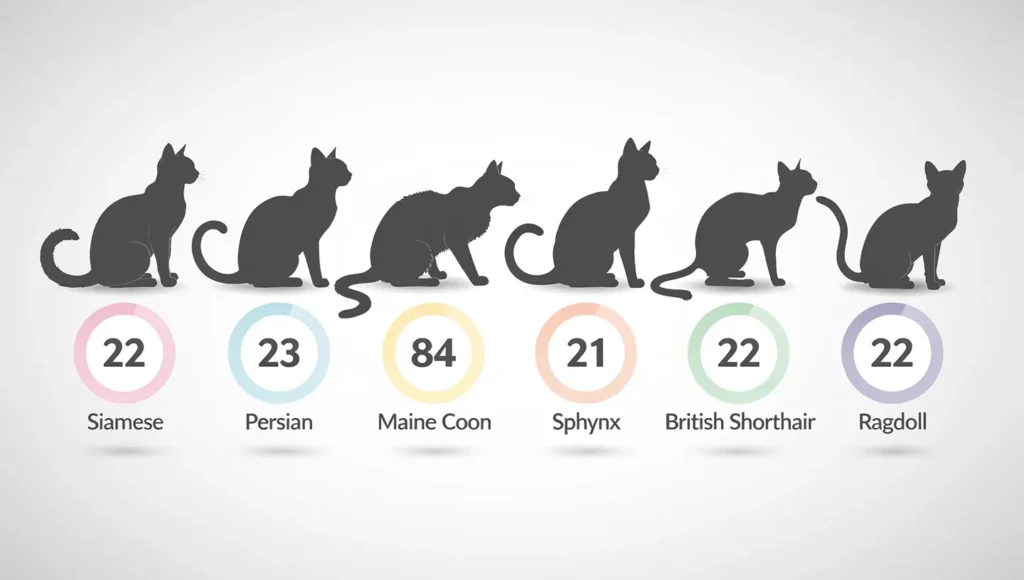
Apartment Cat Breeds — Quick Comparison Table
| Breed | Energy | Noise | Maintenance | Best For | Alone Time Tolerance |
|---|---|---|---|---|---|
| Ragdoll | 🔋 Low | 🔇 Very Quiet | ✂️ Medium | Families / WFH | Medium |
| British Shorthair | 🔋 Low | 🔇 Quiet | ✂️ Low | Busy Professionals | High |
| Russian Blue | 🔋 Medium | 🔇 Quiet | ✂️ Very Low | Single Owners | High |
| Persian | 🔋 Very Low | 🔇 Very Quiet | ✂️ High | Experienced Owners | Medium |
| Burmese | 🔋 Medium | 🔉 Moderate | ✂️ Low | Social Owners | Low |
| Scottish Fold | 🔋 Low-Med | 🔇 Quiet | ✂️ Low-Med | Personality Seekers | Medium |
| American Shorthair | 🔋 Low-Med | 🔇 Quiet | ✂️ Very Low | First-Time Owners | High |
Worst Cat Breeds for Apartments (Don’t Make This Mistake)
Most people get this wrong. They pick a breed based on looks — and end up with a cat that’s genuinely miserable in a small space.
Here are the breeds I’d personally avoid in an apartment setting:
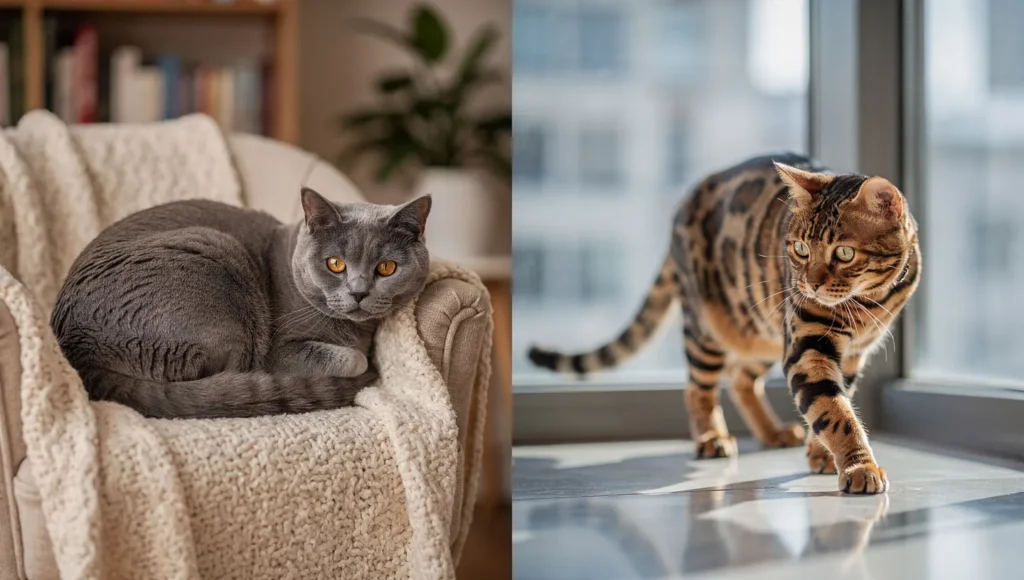
- Bengal — High energy, needs to run. A bored Bengal will redecorate
your apartment whether you like it or not. Full breakdown in our
Bengal behavior guide - Siamese — Incredibly vocal. If you have thin walls and neighbors,
this is a problem waiting to happen. Check our
Siamese care guide
for what living with one actually looks like - Maine Coon — Lovable giants, but they need space and serious
daily stimulation. A small apartment genuinely stresses them out - Savannah (F1–F2) — Part wild cat. Not even close to apartment-ready.
Our Savannah behavior guide
explains exactly why - Abyssinian — Curious, athletic, constantly moving. They need vertical
space and mental challenges that most apartments simply can’t provide
This is where things change. A cat that’s “friendly and affectionate” on paper can be a nightmare in 600 square feet if it has the wrong energy profile.
How to Choose the Right Cat for YOUR Apartment
Skip the generic advice. Answer these three questions first:
1. How many hours are you away daily?
- Under 6 hours → most breeds on this list work
- 8–10 hours → stick to British Shorthair, Russian Blue, or American Shorthair
- 10+ hours → seriously consider adopting two cats
2. How much interaction do you actually want?
- “I want a lap cat” → Ragdoll or Burmese
- “I want companionship but not clinginess” → Russian Blue or British Shorthair
- “Low maintenance, easygoing” → American Shorthair, no question
3. Are you a first-time owner?
- Yes → American Shorthair or Ragdoll. Both are forgiving of rookie mistakes
- No → any breed on this list works, as long as you match energy levels
From my experience, the mistake isn’t picking a “bad” breed — it’s picking a breed that doesn’t match your lifestyle.
A Persian in the hands of someone who hates daily grooming is going to be miserable for both of them.
Still Have Questions?
What cat is best for indoors?
Ragdolls and British Shorthairs consistently top the list of the best cat breeds for apartments — low energy, quiet, and genuinely content with indoor life.
Can cats live happily in apartments?
Absolutely — as long as you pick the right breed and provide basic enrichment: a window perch, a scratching post, and daily play sessions. Our cat window perch guide is a good starting point for setting up a stimulating indoor space.
What is the 3-3-3 rule for cats?
It’s a general adjustment timeline: 3 days to decompress, 3 weeks to learn the routine, 3 months to feel at home. Give any new cat — regardless of breed — that full window before judging their personality. More on this in our new cat first night guide.
Are cats okay alone all day?
Depends on the breed. High-independence breeds like Russian Blue and British Shorthair handle it well. Social breeds like Burmese or Ragdoll do better with a companion. According to AVMA, environmental enrichment is key for cats left alone regularly.
Make the Right Choice
You don’t need a big house to give a cat a great life. You just need the right cat.
Pick a breed that matches your energy, your schedule, and your space — not one that looks good in photos. Your future cat will thank you for it.