

I remember the first time I was making breakfast and my cat, Miso, jumped on the counter and started sniffing my scrambled eggs like they were the greatest thing she’d ever smelled. I gave her a tiny piece without thinking — then spent the next hour wondering if I’d just done something terrible.
If you’ve been there too, you’re not alone. A lot of cat owners ask the question “can cats eat eggs” exactly more nuanced than a simple yes or no. In this guide, I’ll walk you through everything I’ve learned — from the real benefits to the risks you genuinely need to watch out for.
Quick Note: This article is based on personal experience raising cats and research from trusted sources. It’s for informational purposes only and doesn’t replace professional veterinary advice. When in doubt, always check with your vet first.
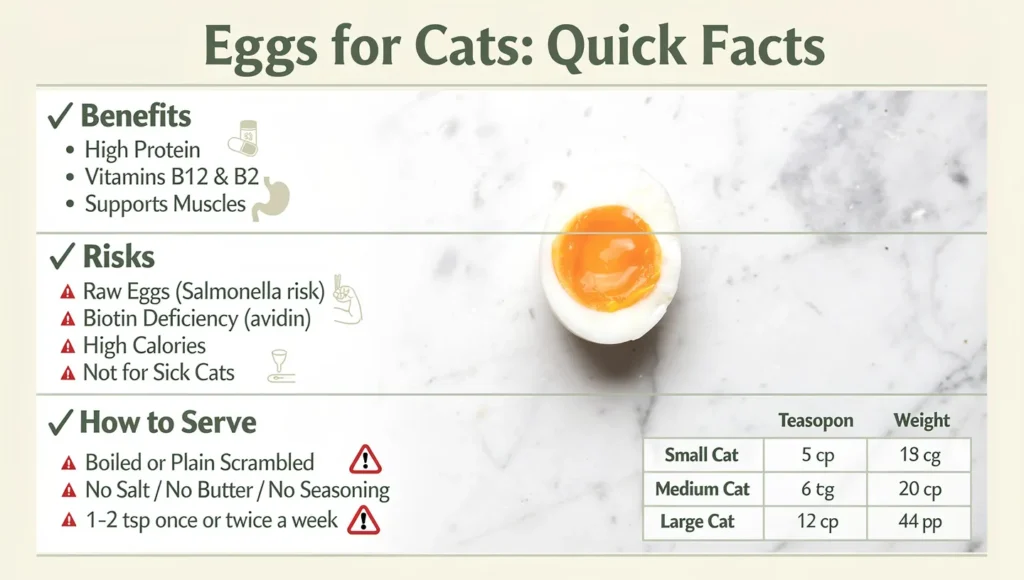
Table of Contents
- Are Eggs Safe for Cats? Here’s the Short Answer
- 🥚 Nutritional Benefits of Eggs for Cats
- ⚠️ Can Cats Eat Raw Eggs? (The Real Risk)
- 🍳 Best Way to Feed Eggs to Cats
- 🥣 How Much Egg Can a Cat Eat?
- 🐱 Can Kittens Eat Eggs?
- 🚫 When Eggs Are NOT Safe for Cats
- 🆚 Eggs vs Other Human Foods for Cats
- ❓ FAQs: Can Cats Eat Eggs?
- Can cats eat eggs yolk safely?
- Can cats eat eggs every day?
- Are scrambled eggs safe for cats?
- Can cats eat eggshells?
- What happens if my cat eats raw egg?
- Final Thoughts: Are Eggs Good for Cats?
Are Eggs Safe for Cats? Here’s the Short Answer
Can cats eat eggs? Yes — but only under the right conditions. Cooked eggs can be a safe, protein-rich treat for most healthy adult cats when given in small amounts. Raw eggs are a different story entirely, and we’ll get to that in a moment.
The key thing to understand is that eggs aren’t toxic to cats the way onions or chocolate are. According to sources like the ASPCA, plain cooked eggs are generally considered safe for cats in moderation. But “safe” doesn’t mean “unlimited.”
Many cat owners I’ve talked to assume that because eggs are healthy for humans, they must be great for cats too. That’s partially true — but cats have very different nutritional needs. What works well as an occasional treat can cause problems if it becomes a regular part of their diet.
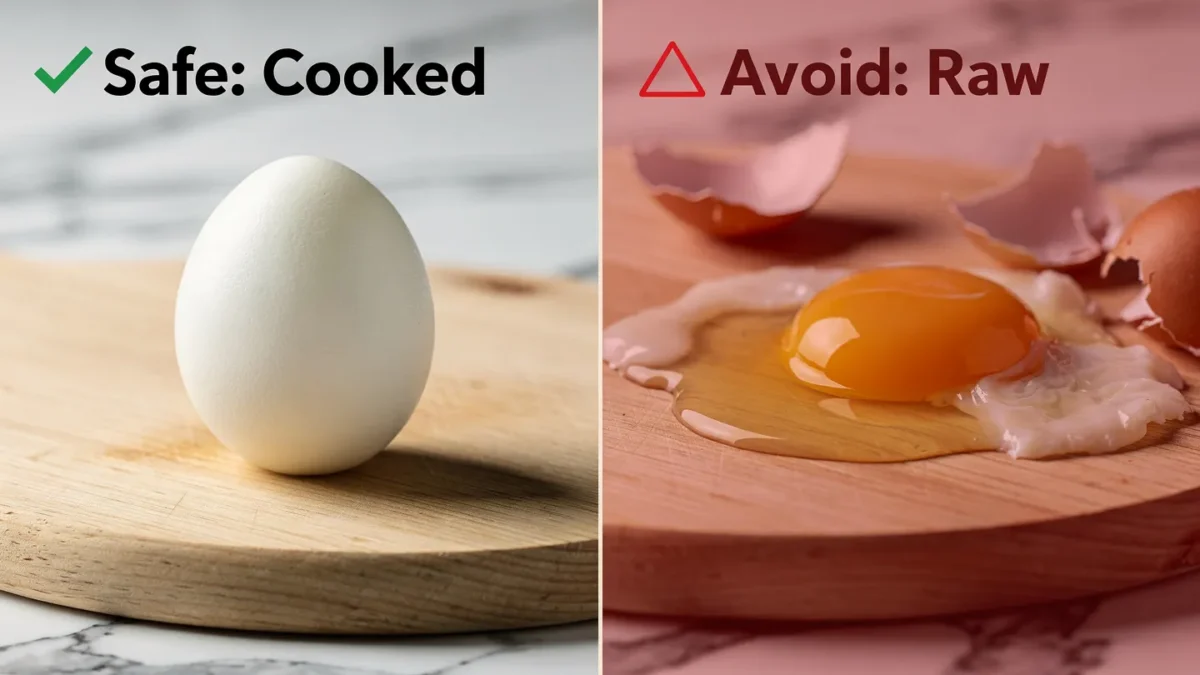
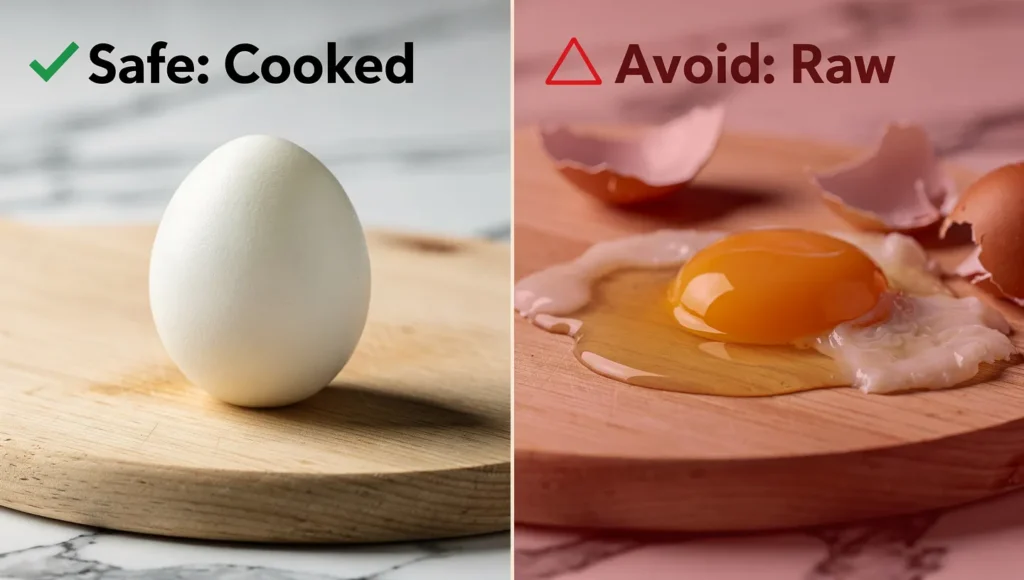
The biggest distinction you need to know is cooked vs. raw. Cooked eggs — boiled or plain scrambled — are the only form worth considering. Raw eggs carry real risks that simply aren’t worth taking, no matter how convenient they seem.
🔗 Related: What Can Cats Eat? A Complete Guide to Safe & Healthy Cat Foods
🥚 Nutritional Benefits of Eggs for Cats
Eggs are genuinely nutritious — and that’s true for cats too, when served correctly. A single egg contains high-quality protein, essential amino acids, and several vitamins that can support your cat’s overall health. From what I’ve seen, cats who get small amounts of egg occasionally tend to enjoy it as a treat.
Here’s what eggs actually bring to the table nutritionally:
- High-quality protein — Eggs contain all the essential amino acids cats need, including taurine, which is critical for heart and eye health.
- Healthy fats — In small amounts, the fats in eggs can support your cat’s coat and skin condition.
- Vitamin B12 — Supports nerve function and overall energy metabolism.
- Riboflavin (B2) — Helps with energy production and healthy skin.
- Selenium — An antioxidant that supports immune function.
According to nutritional data from sources like PetMD, eggs are considered one of the most digestible protein sources available — which is why some vets may recommend them for cats recovering from illness or with sensitive stomachs.
That said, eggs are also high in calories and fat. For cats prone to weight gain, even a small extra calorie source can add up over time. If your cat is already on a carefully managed diet, it’s worth factoring that in.
⚠️ Can Cats Eat Raw Eggs? (The Real Risk)
Can cats eat raw eggs? This is where things get serious. Raw eggs are not safe for cats, and this isn’t just overcautious advice — there are real, documented risks involved that I personally wouldn’t want to gamble with.
The two main concerns with raw eggs are:
1. Bacterial contamination (Salmonella & E. coli)
Raw eggs can carry Salmonella or E. coli — bacteria that can cause serious digestive illness in cats, including vomiting, diarrhea, lethargy, and in severe cases, systemic infection. Research suggests that cats can contract Salmonella from contaminated food, and the symptoms can escalate quickly, especially in young or immunocompromised cats.
2. Biotin deficiency from raw egg whites
Raw egg whites contain a protein called avidin, which blocks the absorption of biotin (Vitamin B7). Biotin is essential for healthy skin, coat, and cell growth in cats. Based on veterinary sources, regular consumption of raw egg whites can lead to biotin deficiency over time — causing skin problems, hair loss, and general lethargy.
| Risk | Cause | Potential Effect |
|---|---|---|
| Salmonella | Raw egg bacteria | Vomiting, diarrhea, fever |
| E. coli | Contamination | Digestive illness, lethargy |
| Biotin Deficiency | Avidin in raw egg whites | Skin issues, hair loss |
From what I’ve researched, cooking the egg completely eliminates both of these risks — avidin is deactivated by heat, and bacteria are killed.
There’s genuinely no benefit to feeding raw eggs that outweighs these risks.
🔗 Related: Human Foods Toxic to Cats: The Ultimate Safety Guide for Owners
🍳 Best Way to Feed Eggs to Cats
If you’re wondering can cats eat eggs safely, the safest and most enjoyable way to share eggs with your cat is to keep things simple. From my experience, cats don’t need fancy preparation — plain boiled or plain scrambled eggs (with absolutely nothing added) work perfectly as an occasional treat.
Here’s what to always avoid when preparing eggs for your cat:
- No salt — Even small amounts can disrupt your cat’s sodium balance
- No butter or oil — Adds unnecessary fat with zero nutritional benefit
- No milk — Many cats are lactose intolerant and it can cause stomach upset
- No seasonings — Garlic, onion powder, and spices are toxic to cats
- No cheese or toppings — Keep it plain, always
Boiled eggs are honestly the easiest option. I usually just set aside a small piece before I season my own food. Plain scrambled eggs cooked in a dry pan work just as well — cats seem to enjoy the softer texture too.
One thing I always remind myself: eggs are a treat, not a meal replacement.
Your cat’s regular food already provides balanced nutrition. Eggs are just a little bonus on the side, not a dietary staple.

🥣 How Much Egg Can a Cat Eat?
When it comes to “can cats eat eggs”, portion size matters more than most people realize. Even healthy foods can cause problems when overfed — and eggs are calorie-dense enough that a little goes a long way for a small animal like a cat.
A general guideline based on veterinary sources is that treats — including eggs — should make up no more than 10% of your cat’s daily calorie intake. For most average-sized cats, that translates to roughly:
| Cat Weight | Safe Egg Portion | Frequency |
|---|---|---|
| Under 8 lbs | 1–2 teaspoons | Once a week |
| 8–12 lbs | 1 tablespoon | Once or twice a week |
| Over 12 lbs | Up to 2 tablespoons | Once or twice a week |
These are rough estimates — every cat is different, and factors like
activity level, age, and existing health conditions all play a role.If your cat is overweight or has kidney issues, I’d suggest checking with a vet before adding eggs to their routine.
From what I’ve seen, starting small is always the smartest move. Offer a tiny piece first and watch how your cat reacts over the next 24 hours.
No vomiting, normal litter box behavior, and good energy? That’s a good sign they’re handling it well.
🐱 Can Kittens Eat Eggs?
If you’re asking can cats eat eggs for kittens, they can technically eat small amounts of cooked egg, but I’d approach this one with extra caution.Their digestive systems are still developing, and introducing new foods too early can cause unnecessary stomach upset.
A few things to keep in mind with kittens specifically:
- Kittens need nutrient-dense kitten food as their primary diet —
eggs should never displace that - Portions should be even smaller than adult cat servings — think
half a teaspoon at most - Always introduce new foods one at a time so you can identify any
reactions clearly - Avoid eggs entirely for kittens under 3 months — their systems
are simply too young for food experimentation
From what I’ve read across veterinary sources, most healthy kittens over 3–4 months can tolerate a tiny taste of plain cooked egg occasionally.
But given how sensitive young cats can be, it’s honestly not something I’d prioritize. Their regular kitten food covers everything they need.
🔗 Related: Kitten Care Guide: The Ultimate Blueprint for Raising a Happy, Healthy Feline
🚫 When Eggs Are NOT Safe for Cats
Even if can cats eat eggs safely in general, cooked eggs aren’t right for every cat.There are specific situations where eggs should be avoided entirely — and knowing these can save you a stressful vet visit down the line.
Cats with known food allergies
Some cats develop sensitivities to eggs, just like humans can. Signs of an egg allergy may include itchy skin, excessive grooming, vomiting, or diarrhea after eating. If you notice any of these after introducing eggs, stop immediately and consult your vet.
Cats with kidney disease
Eggs are high in protein and phosphorus — two things that can put extra strain on kidneys that are already compromised. Based on information from veterinary nutrition sources, cats with chronic kidney disease (CKD) are typically placed on low-phosphorus diets, and adding extra protein sources like eggs isn’t advisable without vet guidance.
Cats with pancreatitis or digestive issues
The fat content in eggs — especially yolks — can potentially trigger flare-ups in cats prone to pancreatitis. For cats with a history ofdigestive problems, plain low-fat foods are usually the safer route.
Overweight cats
Eggs add calories. For a cat already struggling with weight, every extra calorie source counts. If your cat is on a weight management plan, check out this guide on cat weight loss before adding treats to their diet.
🔗 Related: How to Tell if Your Cat is Sick: 10 Critical Signs Every Owner Must Know
🆚 Eggs vs Other Human Foods for Cats
It helps to put eggs in context with other human foods cats might encounter.
Not everything from your kitchen is safe — and understanding the spectrum helps you make smarter decisions overall.
| Human Food | Safe for Cats? | Notes |
|---|---|---|
| Cooked eggs | ✅ Yes | Plain only, in moderation |
| Cooked chicken | ✅ Yes | Excellent protein source |
| Plain pumpkin | ✅ Yes | Great for digestion |
| Cow’s milk | ⚠️ Caution | Most cats are lactose intolerant |
| Safe fruits (blueberries) | ⚠️ Small amounts | Occasional treat only |
| Onion / Garlic | ❌ No | Toxic — avoid completely |
| Chocolate | ❌ No | Highly toxic |
| Raw eggs | ❌ No | Salmonella + biotin risk |
From what I’ve seen, eggs actually sit pretty comfortably in the “safe treat” category compared to a lot of other human foods. They’re far safer than dairy or many fruits — as long as they’re cooked and plain.
🔗 Related:
❓ FAQs: Can Cats Eat Eggs?
Can cats eat eggs yolk safely?
Yes, in small amounts. Egg yolks are rich in fat and calories, so they should be given sparingly. They’re safe when cooked, but the high fat content makes them less ideal than egg whites for regular treats.
Can cats eat eggs every day?
I wouldn’t recommend it. Daily egg feeding can add up in calories and may throw off the nutritional balance of your cat’s regular diet. Once or twice a week is a much safer approach for most healthy cats.
Are scrambled eggs safe for cats?
Yes — as long as they’re plain. Scrambled eggs cooked without butter, oil, salt, milk, or seasonings are perfectly safe for cats. The soft texture actually makes them easy for cats to eat and digest.
Can cats eat eggshells?
Some sources suggest that crushed eggshells can provide a small calcium boost. However, sharp shell fragments can potentially irritate the digestive tract. It’s not something I’d personally recommend without specific veterinary guidance.
What happens if my cat eats raw egg?
A small accidental lick of raw egg is unlikely to cause serious harm.
But if your cat consumed a significant amount of raw egg — especially raw white — monitor for vomiting, diarrhea, or lethargy and contact your vet if symptoms appear.
Final Thoughts: Are Eggs Good for Cats?
After everything I’ve researched and observed with my own cats, my honest take is this: so if you’re still wondering can cats eat eggs, eggs can be a genuinely nice occasional treat for most healthy adult cats — but they’re not a necessity, and they’re definitely not a daily food.
The rule I follow is simple: cooked, plain, and small portions.
Boil an egg, set aside a teaspoon-sized piece before you add anything to yours, and let your cat enjoy it as a special treat once a week. That’s it. No overthinking required.
If your cat has any underlying health issues — kidney disease, digestive sensitivity, or weight problems — it’s always worth a quick conversation with your vet before introducing new foods. A little caution upfront
saves a lot of stress later.
And remember: the best diet for your cat is still a complete, balanced cat food that meets their specific life stage needs. Eggs are just a small, tasty bonus — not a meal.
Want to learn more about what’s safe for your cat to eat? Check out our complete guide: What Can Cats Eat? Safe Foods You Can Share (and What to Avoid)