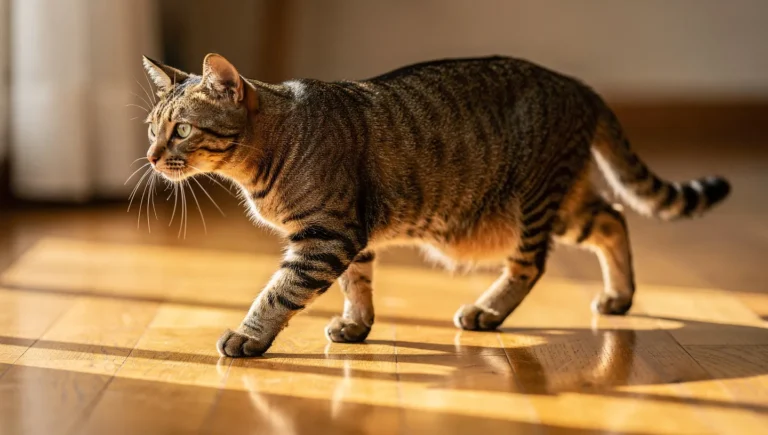

Cat dental care is often the last thing on a pet parent’s mind until that first stinky “feline kiss” happens. We’ve all been there: you lean in for a sweet cuddle, only to be met with a cloud of “tuna-breath” that makes you recoil. While we often joke about it, persistent bad breath is usually a cry for help from your cat’s mouth.
Taking a proactive approach to cat dental care isn’t just about avoiding “stink breath”; it’s about adding quality years to your best friend’s life. Many owners don’t realize that oral health is a window into the body. By the time a cat shows obvious signs of pain, the dental issues are often advanced.
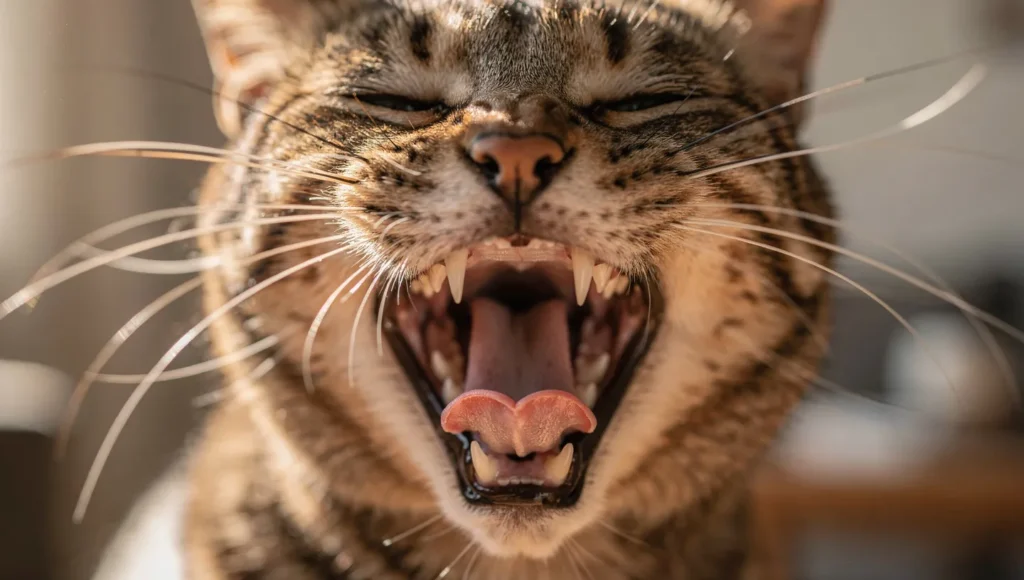
Table of Contents
- 🦷 Why Cat Dental Care is More Than Just “Fresh Breath”
- 💡 Expert Tip: The Silent Sufferers
- 🤢 Understanding Cat Bad Breath (Halitosis): Causes and Solutions
- The Plaque and Tartar Factor
- Does Diet Play a Role?
- 📊 Normal vs. Abnormal Breath: What’s That Smell?
- When Bad Breath Signals Internal Issues
- 🪥 Brushing Teeth: A Step-by-Step Guide for Reluctant Cats
- Step 1: Choosing the Right Tools
- Step 2: The “Taste Test” Introduction
- Step 3: The Gentle Technique
- 💡 Expert Tip: Build a Routine
- Step 4: The Reward
- ✨ Effective Bad Breath Remedies and Plaque Removal at Home
- The Power of Dental Treats: Are They Worth It?
- Water Additives: The “Mouthwash” for Cats
- Natural Chew Toys and Diet
- 📋 Quick Summary: The “Lazy” Dental Routine
- Don’t Forget the Environment
- 🚩 5 Signs Your Cat Needs a Professional Dental Cleaning
- 1. Persistent Red or Bleeding Gums
- 2. Difficulty Eating or Dropping Food
- 3. Excessive Drooling and Pawing at the Mouth
- 4. Loose, Discolored, or Missing Teeth
- 5. Severe, Non-Stop Halitosis
- 💡 Expert Tip: The Power of X-Rays
- 🥗 How Diet Influences Cat Dental Care
- The Great Debate: Dry vs. Wet Food
- Essential Nutrients for Oral Health
- Frequently Asked Questions About Cat Dental Care
- Is cat dental cleaning really necessary?
- How can I take care of my cat’s teeth at home?
- How often should a cat get dental care?
- What are the signs of dental problems in cats?
- Human Foods and Dental Hazards
🦷 Why Cat Dental Care is More Than Just “Fresh Breath”
You might think a little “kitty breath” is normal, but in the wild, cats use their teeth for more than just eating; they are essential survival tools. In a domestic setting, cat dental care serves as the first line of defense against systemic health issues.
When oral hygiene is neglected, bacteria from the mouth don’t just stay there. They can enter the bloodstream, potentially affecting the heart and kidneys. This is why understanding the basics of cat dental care is a fundamental part of being a responsible owner.
💡 Expert Tip: The Silent Sufferers
Cats are masters at hiding discomfort. Unlike humans, a cat with a toothache will often continue to eat, making it hard to tell if your cat is sick. Watch for subtle cues like tilting the head while chewing or sudden preference for wet food over kibble.
🤢 Understanding Cat Bad Breath (Halitosis): Causes and Solutions
While a faint smell of their last meal is normal, a pungent odor usually points to a breakdown in cat dental care. In the veterinary world, chronic bad breath is known as halitosis, and it’s rarely just about the mouth. Identifying bad breath causes is the first step toward reclaiming those fresh-smelling snuggles.
The Plaque and Tartar Factor
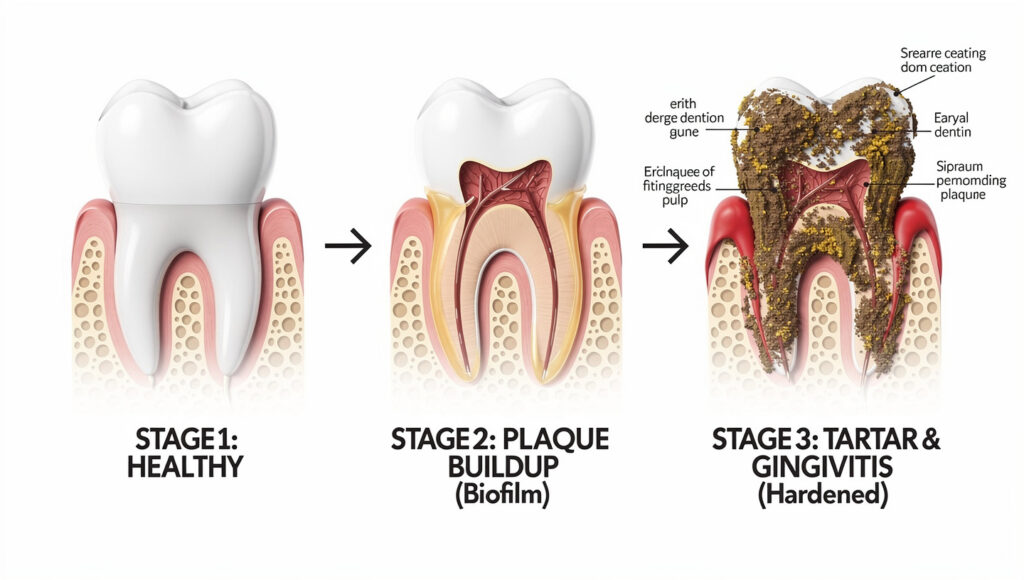
The most common culprit behind a stinky mouth is the buildup of plaque. This sticky film of bacteria forms on the teeth within hours of eating. If it isn’t removed through regular cat dental care habits, it hardens into tartar (calculus), which traps even more bacteria against the gums.
This process leads to inflammation, known as gingivitis, creating a “rotten” smell that no amount of hiding can mask. Addressing this early is the best way to ensure effective plaque removal before it requires surgery.
Does Diet Play a Role?
Many owners wonder if their choice of food contributes to bad breath. While wet food can sometimes cling to the teeth more than kibble, the “crunchy food cleans teeth” theory is mostly a myth.
For a deeper dive into how food affects your feline’s health, check out our guide on Wet vs Dry Cat Food to see which is better for your pet’s specific needs.
📊 Normal vs. Abnormal Breath: What’s That Smell?
Use this table to help identify if your cat’s breath is a minor hygiene issue or a sign that you need professional help.
| Breath Scent | Potential Meaning | Action Required |
|---|---|---|
| Mild Fishy/Neutral | Normal feline scent. | Maintain routine cat dental care. |
| Rotten/Foul | Gum disease or tooth decay. | Needs a dental exam soon. |
| Sweet/Fruity | Potential sign of diabetes. | Consult a vet immediately. |
| Ammonia/Urine | Possible kidney issues. | Urgent veterinary check-up. |
When Bad Breath Signals Internal Issues
Sometimes, bad breath causes originate in the gut or organs. For instance, if your cat’s mouth smells like a litter box, it could indicate that the kidneys aren’t filtering toxins properly.
According to the Veterinary Oral Health Council (VOHC), keeping a close eye on these scents can be a life-saving habit for any cat owner.
🪥 Brushing Teeth: A Step-by-Step Guide for Reluctant Cats
Let’s be honest: most cats react to a toothbrush like it’s a tiny vacuum cleaner. However, brushing teeth is the gold standard of cat dental care. It is the only way to physically disrupt plaque before it turns into stone-hard tartar. If your cat is a “reluctant patient,” the secret isn’t force; it’s a slow-and-steady introduction.
Step 1: Choosing the Right Tools
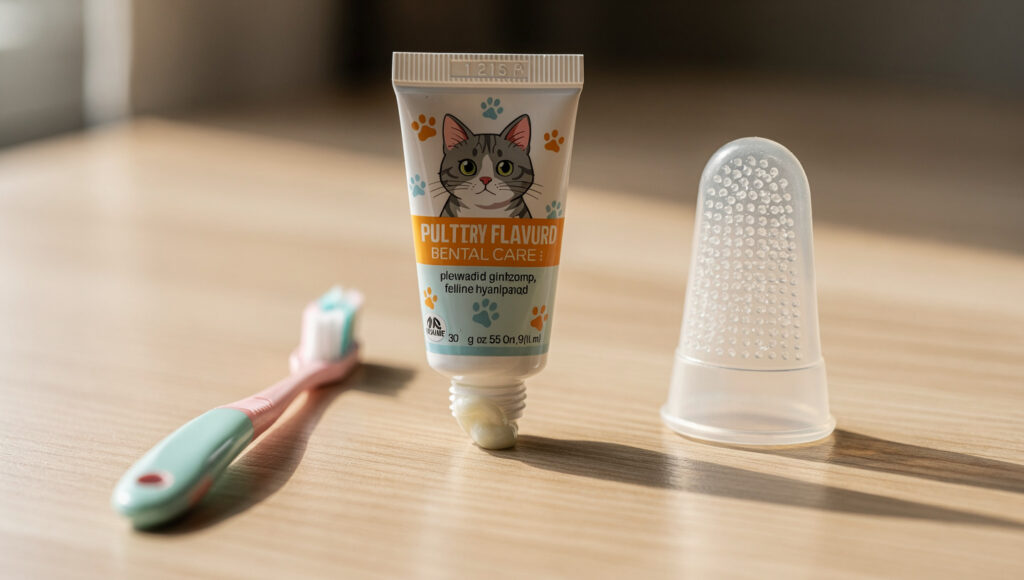
Never use human toothpaste, as it contains fluoride and xylitol, which are toxic to felines. Instead, grab a poultry-flavored enzymatic toothpaste.
Expert Hack: Many professional groomers recommend using a baby toothbrush instead of a bulky pet store brush. The bristles on a baby toothbrush are designed for sensitive gums and the small head fits perfectly into those hard-to-reach back corners of a cat’s mouth.
Step 2: The “Taste Test” Introduction
Don’t rush in with the brush on day one. Start by letting your cat lick the flavored toothpaste off your finger. You want them to associate cat dental care with a delicious treat. Once they are excited about the flavor, you’ve won half the battle.
Step 3: The Gentle Technique
When your cat is comfortable with the taste, follow these steps to master brushing teeth:
- The Lip Lift: Gently lift the side of the lip while the cat is relaxed.
- The Angle: Position the baby toothbrush at a 45-degree angle to the gum line.
- Circular Motion: Focus on the outside surfaces of the upper teeth (where most plaque accumulates).
- Short Sessions: Even 30 seconds is a victory!
💡 Expert Tip: Build a Routine
Try to pair teeth brushing with another calm activity, like grooming. If you can handle your cat’s paws safely as we discussed in our guide on how to trim cat nails safely, you will find that dental care becomes much easier over time.
Step 4: The Reward
Always end the session with a high-value treat or a favorite play session. This positive reinforcement ensures that the next time you bring out the baby toothbrush, your cat stays curious rather than cautious.
✨ Effective Bad Breath Remedies and Plaque Removal at Home
Let’s be realistic: some days, brushing your cat’s teeth just isn’t going to happen. Whether you have a hectic schedule or a particularly spicy feline, you need a reliable bad breath remedy that works in the background. Luckily, modern cat dental care has evolved to include several hands-off options that assist in plaque removal without the drama.
The Power of Dental Treats: Are They Worth It?
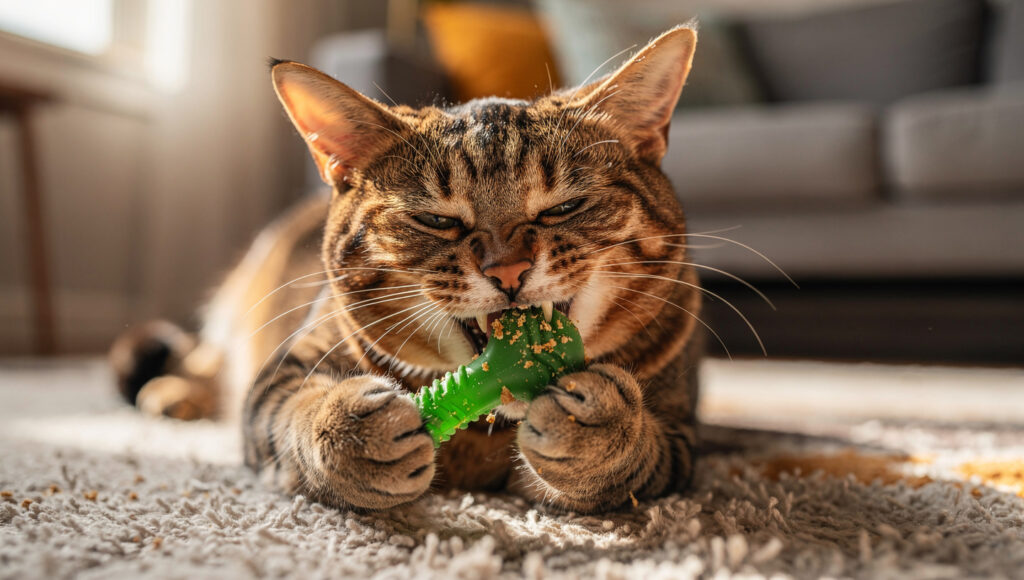
One of the most popular ways to manage oral hygiene is through specialized treats. Products like Greenies for cats are specifically designed with a unique texture that cleans down to the gum line as the cat chews.
The mechanical scraping action of Greenies for cats helps “scrub” away daily plaque before it can harden. When choosing treats, always look for the VOHC seal of approval to ensure they are effective for cat dental care.
Water Additives: The “Mouthwash” for Cats
If your cat’s breath is still a bit “funky,” consider a dental water additive. These are tasteless, odorless liquids you add to their water bowl. They contain enzymes that break down bacteria in the mouth throughout the day. It’s a low-effort bad breath remedy that helps keep the oral biome balanced.
Natural Chew Toys and Diet
Encouraging your cat to gnaw on silvervine sticks or safe dental toys can provide additional plaque removal benefits. Also, remember that what goes into the stomach affects the mouth. For a list of tooth-friendly snacks, check our guide on safe human foods for cats to see which treats are both delicious and healthy.
📋 Quick Summary: The “Lazy” Dental Routine
If you can’t brush daily, try this “Hands-Off” approach:
- Morning: Add a vet-approved dental additive to the water fountain.
- Evening: Give 2-3 Greenies for cats as a reward for playtime.
- Weekly: Check the gums for any new redness or swelling.
Don’t Forget the Environment
A clean mouth is part of a clean home. While we focus on oral health, keeping the litter area fresh also helps with the overall “scent” of your living space. You might find our review of the best cat litter for 2026 helpful for maintaining a completely odor-free home.
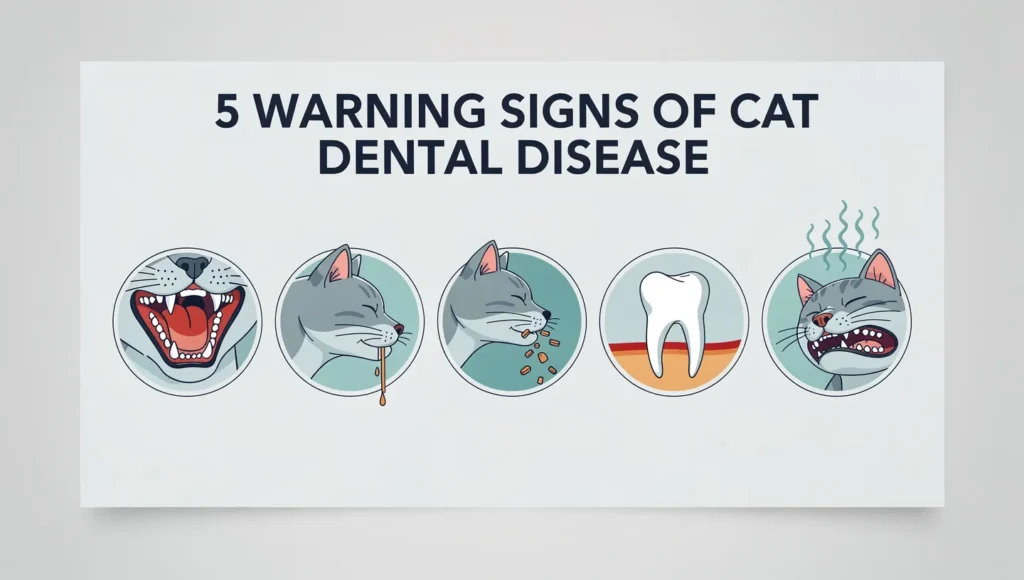
🚩 5 Signs Your Cat Needs a Professional Dental Cleaning
Even with the most dedicated cat dental care routine at home, some cats are genetically prone to dental issues. Just like humans need a dental hygienist, cats occasionally require a professional “deep clean” under anesthesia. If you notice any of these red flags, it’s time to put down the baby toothbrush and call your vet.
1. Persistent Red or Bleeding Gums
Healthy gums should be a pale, consistent pink. If you see a bright red line where the teeth meet the gums, this is a sign of gingivitis. Bleeding while eating or during a light session of brushing teeth is a clear signal that the inflammation has progressed and needs medical attention.
2. Difficulty Eating or Dropping Food
Have you noticed your cat acting hungry but then hesitating over their bowl? If they tilt their head at an odd angle or drop kibble after picking it up, they likely have a painful tooth. In many cases, owners realize this too late. Learning how to tell if your cat is sick through these subtle behavioral changes is vital for early intervention.
3. Excessive Drooling and Pawing at the Mouth
While some cats drool when happy, sudden excessive drooling—especially if it’s tinged with blood—is a major warning sign of oral distress. If your cat is frequently pawing at their mouth or rubbing their face against furniture more than usual, they are likely trying to dislodge a painful tooth or soothe a gum infection.
4. Loose, Discolored, or Missing Teeth
If you spot a tooth on the carpet or notice that a tooth looks brown or grey, the decay is advanced. At this stage, plaque removal at home is no longer possible. A vet will need to perform X-rays to see if the root is rotted and requires extraction.
5. Severe, Non-Stop Halitosis
If you’ve tried water additives and Greenies for cats but the “rotten” smell persists, the bacteria have likely moved deep under the gum line where no brush can reach. This persistent bad breath is the most common reason for a professional cleaning.
💡 Expert Tip: The Power of X-Rays
Did you know that 60% of feline dental disease happens below the gum line? A professional cleaning isn’t just a “tooth polish”; it includes dental X-rays that can find hidden infections before they turn into life-threatening abscesses.
🥗 How Diet Influences Cat Dental Care
The old saying “you are what you eat” applies to our feline friends just as much as it does to us. While cat dental care often focuses on external cleaning, what goes into the bowl plays a massive role in the health of the teeth and gums. A balanced diet provides the building blocks for strong enamel and a healthy immune system to fight off oral bacteria.
The Great Debate: Dry vs. Wet Food
There is a long-standing myth that dry kibble acts like a toothbrush, scraping plaque away as the cat bites. In reality, most cats swallow their kibble whole or shatter it into small pieces that provide very little abrasive benefit.
If you want to prioritize cat dental care through diet, look for specialized dental formulas. These kibbles are larger and have a specific fiber structure that doesn’t crumble instantly, forcing the cat to chew and effectively “scrub” the tooth surface. For a full breakdown of the nutritional differences, see our guide on the best diet for a healthy cat.
Essential Nutrients for Oral Health
For a cat to maintain strong teeth, their diet must be rich in certain minerals and vitamins:
- Calcium and Phosphorus: Vital for maintaining the bone structure around the teeth.
- Vitamin C: Supports gum health and helps reduce inflammation.
- Probiotics: Specific oral probiotics can help crowd out the “bad” bacteria that cause bad breath.

Frequently Asked Questions About Cat Dental Care
Is cat dental cleaning really necessary?
Yes, cat dental cleaning is far more than just keeping your cat’s breath fresh. It plays a crucial role in preventing painful conditions like gum disease, tooth decay, and infections that can spread to vital organs such as the heart and kidneys. A simple routine today can save your cat from serious health issues later.
How can I take care of my cat’s teeth at home?
Taking care of your cat’s teeth at home doesn’t have to be complicated. Start with gentle brushing using a vet-approved toothpaste, and support it with dental treats, water additives, or chew toys. Even small, consistent habits can significantly reduce plaque buildup and keep your cat comfortable.
How often should a cat get dental care?
Ideally, brushing your cat’s teeth daily offers the best protection against plaque and tartar. However, even brushing a few times per week is beneficial. In addition, an annual veterinary check-up helps detect hidden dental issues early, before they turn into bigger problems.
What are the signs of dental problems in cats?
Cats rarely show pain openly, so it’s important to watch for subtle signs. Bad breath, red or bleeding gums, difficulty eating, drooling, or pawing at the mouth can all indicate dental issues. Any sudden change in eating habits or behavior should never be ignored.
Human Foods and Dental Hazards
While we all love to share snacks, some human foods can be detrimental to cat dental care. Sugary treats (which cats can’t even taste!) promote bacterial growth, while very hard bones can actually cause tooth fractures. Always refer to our safe human food guide before sharing your dinner.
According to research from Cornell Feline Health Center, a combination of a high-quality diet and active mechanical cleaning is the only “secret” to lifelong feline oral health. By merging nutrition with regular brushing teeth sessions, you are giving your cat the best chance at a pain-free, happy life.