
“What’s the best kitten food for weight gain?”
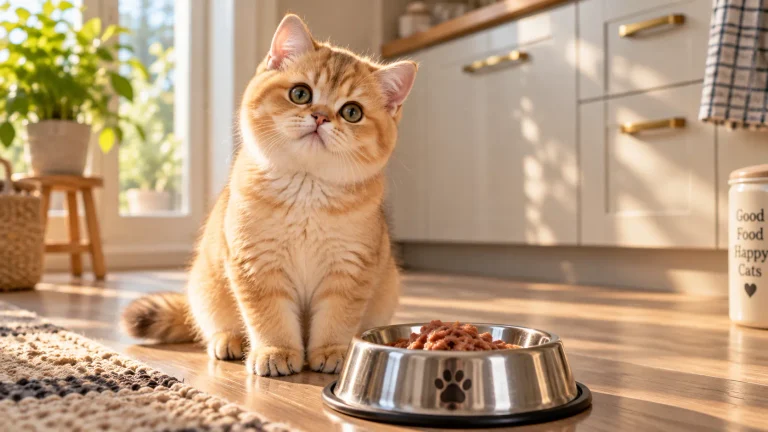
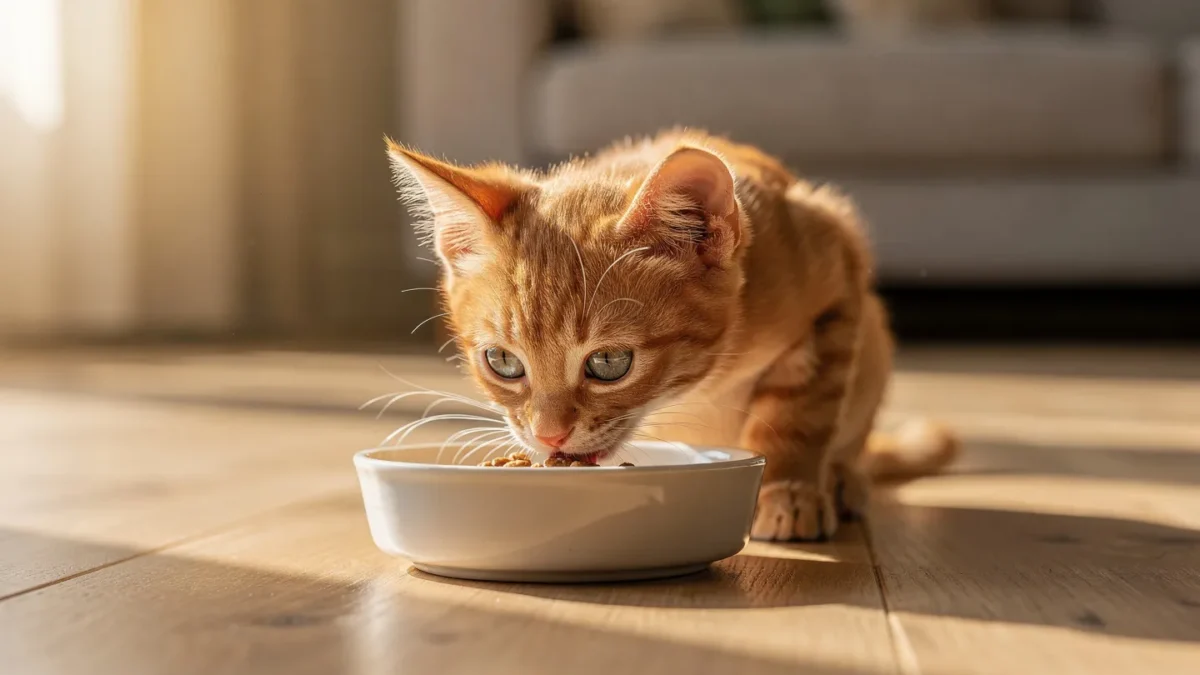
That was the question my nephew Sami asked me one afternoon when I stopped by his family’s place. A few minutes into my visit, he proudly walked in holding his brand-new kitten, arms stretched out like he was presenting a trophy. “Look at him! He’s so skinny! How do I make him gain weight?”
I looked down at that tiny ball of fur staring up at me with wide, innocent eyes, and I couldn’t help but smile. Sami was clearly taking his new job as a kitten dad very seriously. But underneath the dramatic delivery, it was actually a really fair question — one that thousands of owners search for every month while trying to find the right kitten food for weight gain, without always knowing whether their kitten even needs it in the first place
This article combines the real-life question that inspired it with information from trusted veterinary and pet-nutrition sources. It’s designed to help you understand what may be going on—not to replace a veterinarian’s advice when your kitten isn’t gaining weight or seems unwell.

Table of Contents
- What Is a Healthy Weight for a Kitten, Really?
- Why Is My Kitten So Skinny If She Eats All the Time?
- The Kitten Food for Weight Gain Decision Framework
- What to Look for in Kitten Food for Weight Gain
- Wet vs. Dry: Which Actually Helps Her Gain Weight?
- Feeding Strategy That Actually Works
- Weekly Monitoring: How to Know It’s Working
- When Food Isn’t the Answer: Red Flags for the Vet
- Quick Answers You’re Probably Searching For
- What can I feed my kitten to gain weight?
- How do I fatten up a kitten fast?
- Can I give my adult cat kitten food to gain weight?
- Is kitten food high in calories?
- What should I do if my skinny kitten isn’t improving?
- Before You Go
What Is a Healthy Weight for a Kitten, Really?
There’s no single magic number that tells you whether your kitten is underweight. A 4-month-old Maine Coon and a 4-month-old Siamese are going to look completely different on a scale, and that’s normal — breed, age, and frame size all play a role.
What actually matters more than the number on the scale is something called the Body Condition Score (BCS), a simple 1-to-9 scale that vets use to judge whether a cat is too thin, just right, or overweight — just by looking and feeling.
Here’s the quick version:
- 1–3 (too thin): Ribs, spine, and hip bones are easily visible and felt with no fat cover. There’s an obvious “hourglass” waist from above, and almost no belly fill at all.
- 4–5 (ideal): Ribs are easy to feel with a slight fat cover, there’s a visible waist behind the ribs, and a small, neat belly tuck.
- 6–9 (overweight): Ribs are hard to feel under a thicker fat layer, and the waist starts to disappear.
Honestly, the first time I ran my hands along a kitten’s ribs to check this, I felt a little silly. But it takes about ten seconds, and it tells you way more than a number on a bathroom scale ever could.
H3: How to Check Your Kitten’s Body Condition at Home
Run your fingers gently along her ribcage — you should be able to feel the ribs without pressing hard, similar to feeling the back of your hand. Then look at her from above: a healthy kitten usually has a slight waist behind the ribs, not a flat line and not a bulge.
If you’re feeling bone with no cushion at all, or her spine and hip bones are sticking out sharply, that’s a sign she may genuinely be underweight — and it’s worth a quick chat with your vet, especially for very young kittens.
Why Is My Kitten So Skinny If She Eats All the Time?
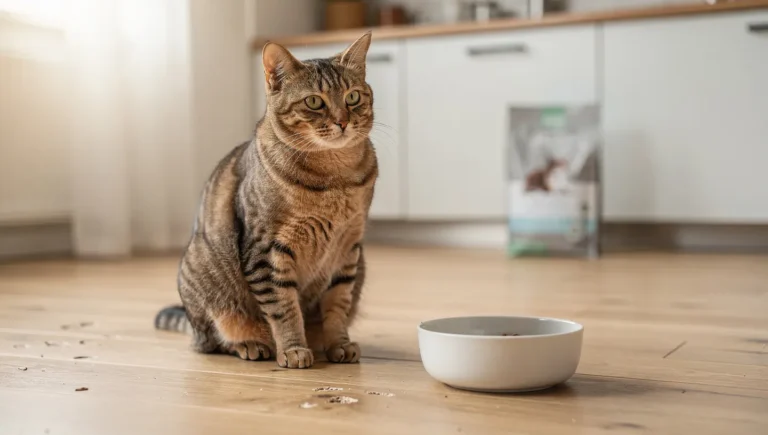
If your kitten is eating well but still looks thin, the food itself probably isn’t the whole story — something is either using up those calories faster than she can absorb them, or making it harder for her to eat as much as she actually needs.
H3: She’s Eating a Lot but Not Gaining
This is the pattern that worries owners the most, and honestly, it worried me too the first time I saw it with a foster kitten years ago. A few common culprits here:
- Intestinal parasites — extremely common in young kittens, especially rescues or strays, and one of the top reasons a kitten eats normally but stays thin (if you notice bloating, vomiting, or unusual stool, check our complete guide on symptoms of worms in cats).
- An underlying illness — anything from a mild infection to something more serious can burn through calories faster than normal
- Mealtime competition — in multi-cat or multi-kitten households, a shy or slower eater can lose out even when food is technically “available”
- Dental discomfort — sore gums or baby teeth coming in can make a kitten eat less than it looks like, even if she’s hanging around the bowl
H3: She’s Just Not Eating Much
Here’s the thing — sometimes it’s simpler than an illness. Some kittens are just picky, some are stressed after a recent move or adoption, and some genuinely don’t like the texture or flavor of what’s in the bowl. This is a palatability and comfort issue more than a medical one, though it’s still worth watching closely. If your kitten is refusing food entirely or just picking at it, check our action plan for what to do when a cat is not eating.
H3: Small-Framed vs. Actually Underweight
And then there’s the kitten who’s simply built smaller. Not every skinny-looking kitten is underweight — some breeds and individual cats are just naturally leaner or smaller-boned. This is where the Body Condition Score from the last section matters more than her size compared to her littermates or the kitten next door.
Most people get this wrong: they assume “small” automatically means “underweight,” and start changing food before they’ve actually figured out which one they’re dealing with.
The Kitten Food for Weight Gain Decision Framework
This is the part most guides skip, and it’s honestly the part I wish someone had walked me through the first time I dealt with an underweight kitten. Instead of jumping straight to “here’s a food to try,” it helps to figure out which situation you’re actually in first.
H3: She Eats Normally and Is Gaining — Just Slowly
If her weight is trending up, even gradually, and her energy and coat look healthy, you’re probably fine. Keep feeding an appropriate kitten-formulated diet and recheck her Body Condition Score every couple of weeks rather than switching foods out of impatience.
H3: She Eats Well but Isn’t Gaining at All
This is the pattern worth investigating before changing food. Parasites are one of the most common causes here — if you haven’t ruled that out yet, our guide on symptoms of worms in cats walks through what to look for. It’s also worth confirming she’s actually getting enough — check our kitten feeding chart by age to make sure portions match her age and weight.
H3: She’s Eating Less Than Usual
A drop in appetite, even a small one, is worth watching closely rather than ignoring. If it continues for more than a day or two, take a look at our article on what it means when a cat won’t eat for a clearer sense of when this becomes urgent.
H3: She’s Losing Weight, Not Just Failing to Gain It
This is where I’d stop experimenting with different foods altogether. Losing weight is a different problem than slow weight gain, and it deserves its own look — our piece on unexplained weight loss in cats covers the distinction well, and it’s also a good moment to rule out digestive issues like the ones described in cat diarrhea causes and treatment.
H3: When to Stop Trying New Foods and Call Your Vet
Here’s the thing — food can only fix a food problem. If you’ve already checked portions, tried a calorie-dense kitten formula, and she’s still not budging after a couple of weeks, or if she shows any other symptoms (lethargy, vomiting, diarrhea, a bloated belly), that’s your cue to stop guessing and get a professional opinion. According to the ASPCA, kittens have much higher and more specific nutritional needs than adult cats, and prolonged failure to gain weight at that age isn’t something to keep troubleshooting alone.
Most people get this wrong: they treat food-switching as a trial-and-error project that can go on for weeks. It shouldn’t. If two food changes haven’t helped, the answer probably isn’t food number three.

What to Look for in Kitten Food for Weight Gain
If you’re choosing kitten food for weight gain, skip the marketing claims and check these five things on the label instead:
- “Complete and balanced” for growth/kitten life stage — not “all life stages,” not adult food with a high-calorie label slapped on it
- Calorie density (kcal/oz or kcal/can), not just kcal/cup — dry and wet formats aren’t comparable that way
- A named animal protein source (chicken, salmon, turkey) listed first, not a vague “meat meal”
- Feeding directions matched to her current weight, not her adult target weight
Kitten Food vs. Adult Cat Food: Why Life Stage Matters
Here’s the trap: giving her a “high-calorie” adult food seems logical, but adult formulas aren’t built for growth. Kittens need more protein, fat, and specific nutrients like DHA for brain development that adult food simply isn’t formulated to provide — AAFCO confirms life stage matters more than calorie count alone. Calories get her weight up; the wrong formula won’t get her growing right.

Wet vs. Dry: Which Actually Helps Her Gain Weight?
When it comes to kitten food for weight gain specifically, wet food usually wins — not because it’s “better” overall, but because it’s easier to eat in volume for a kitten with a small stomach and packs calories with less bulk-filling fiber.
- Wet food: higher moisture, often easier for picky or slow eaters to finish a full portion
- Dry food: more calorie-dense per gram, useful for free-feeding between meals
- Best combo: wet as the main calorie driver, dry left out for grazing
My honest take: I’ve had more luck jump-starting weight gain with wet food first, then adding dry once appetite picks back up. If you want the deeper mechanics of each, our wet vs. dry cat food guide covers it in full.
Feeding Strategy That Actually Works
- 3–4 small meals a day instead of one or two big ones — easier on a small stomach, steadier calorie intake
- Warm wet food slightly to boost the smell and make it more appealing (check our guide to warming wet cat food for safe methods)
- Feed her separately if there’s competition from other cats
- Use treats and toppers to add interest, not to replace meals — they should never become a substitute for a complete kitten diet
This is where a lot of well-meaning owners go wrong: piling on treats feels like progress, but it just adds empty calories without the nutrients she actually needs to grow.
Weekly Monitoring: How to Know It’s Working
- Weigh her once a week, same day, same scale — a kitchen scale works fine
- Recheck her Body Condition Score every 2 weeks, not daily (day-to-day changes are noise)
- Track trend, not single numbers — a slow, steady climb is the goal, not a dramatic jump
PetMD notes healthy kitten weight gain is gradual — expect ounces per week, not overnight change.
When Food Isn’t the Answer: Red Flags for the Vet
Call your vet if you notice:
- No weight gain after 2+ weeks of a proper feeding plan
- Vomiting, diarrhea, or a visibly bloated belly
- Lethargy or hiding more than usual
- Visible worms or an increasingly dull, rough coat
If any of these sound familiar, our guides on symptoms of worms in cats and cat diarrhea causes and treatment are worth a look before your appointment.
Quick Answers You’re Probably Searching For
What can I feed my kitten to gain weight?
The best kitten food for weight gain is a calorie-dense, life-stage-appropriate wet or dry formula — ideally wet as the main driver, with dry available for grazing.
How do I fatten up a kitten fast?
Don’t aim for fast — aim for steady. Rapid weight gain isn’t healthy growth; it just stresses a small digestive system.
Can I give my adult cat kitten food to gain weight?
In small amounts short-term, sometimes yes under vet guidance — but it’s not a long-term fix, since adult cats have different nutrient needs than kittens.
Is kitten food high in calories?
Generally yes compared to adult food, since kittens need more energy per pound for growth.
What should I do if my skinny kitten isn’t improving?
Stop switching foods and see a vet — persistent failure to gain weight usually points to something food alone can’t fix.
Before You Go
Sami’s kitten, by the way, is doing just fine now — turns out the right kitten food for weight gain paired with a proper feeding schedule did the trick, not “more food,” just the right food. I want to thank him for the reminder that behind every one of these questions is someone who genuinely cares and just needs the right information.
Share your own experience in the comments below — it might be exactly what another worried cat owner needs to read today. And if this guide helped, pass it along to a fellow cat parent who might be asking the same question. A little knowledge and a little patience go a long way for a small kitten. ❤️