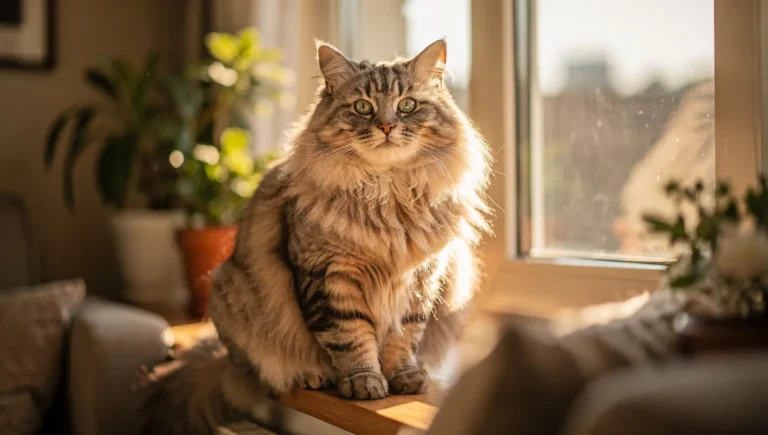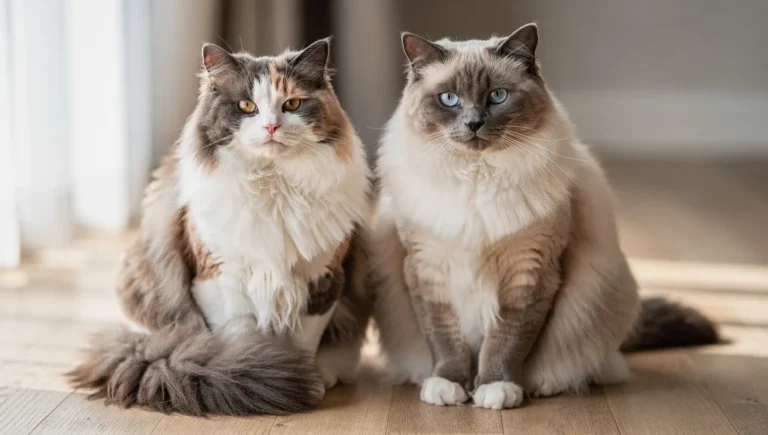

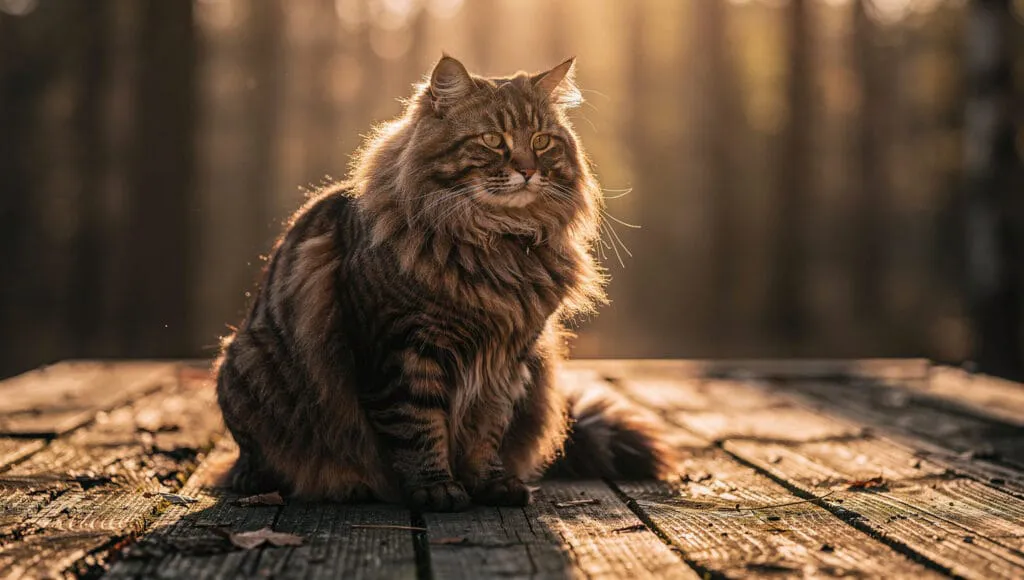
Maine Coon Cat Care starts with the realization that you aren’t just bringing home a pet; you are welcoming a mythical, lion-like companion with a heart of gold. Known for their staggering size and distinct “lynx-like” features, these cats have captured the hearts of families worldwide, balancing a rugged outdoor heritage with a sophisticated indoor charm.
Living with a Maine Coon is a rewarding experience that requires a specialized approach to their health and happiness. From their slow maturation process to their famous “trilling” voices, every aspect of their personality is as grand as their physical stature.
This guide will walk you through everything you need to know to ensure your giant friend thrives, ensuring your bond grows as big as they do.
Table of Contents
- 🦁 Maine Coon Cat Characteristics and Appearance
- 📏 Maine Coon Cat Size and Weight: How Big Is Too Big?
- 🧠 Understanding the Maine Coon Cat Personality
- 🏥 Maine Coon Cat Lifespan and Common Health Problems
- 🧬 Genetic Health Concerns
- 🪮 Essential Maine Coon Grooming Routine
- 🌲 Maine Coon vs. Norwegian Forest Cat: Spotting the Differences
- Frequently Asked Questions About Maine Coon Cat Care
- 1. Are Maine Coon cats good for beginners?
- 2. How much does it cost to own a Maine Coon cat?
- 3. Do Maine Coon cats require a lot of grooming?
- 4. Can Maine Coon cats live in apartments?
- 5. How big do Maine Coon cats get?
- 6. Are Maine Coon cats high maintenance?
- 7. What is the lifespan of a Maine Coon cat?
- 8. Do Maine Coon cats get along with dogs?
- 9. What do Maine Coon cats eat?
- 10. Are Maine Coon cats affectionate?
- Final Thoughts: Is the Maine Coon Right for You?
🦁 Maine Coon Cat Characteristics and Appearance
Maine Coon cat characteristics are unmistakable, blending a rugged “wildcat” aesthetic with a surprisingly soft, affectionate expression. Evolution designed these cats to survive harsh North American winters, resulting in several unique features that define their majestic look according to the CFA breed standards.
- 🐾 The Iconic Lynx Tips: One of the most famous traits is the tufts of fur sprouting from the tips of their ears, giving them a wild, lynx-like silhouette.
- 🧣 The Lion’s Mane: They possess a thick ruff of fur around their neck, resembling a lion’s mane, which adds to their regal presence and keeps them warm.
- ❄️ The Snowshoe Paws: Their large, tufted paws act like natural snowshoes, allowing them to navigate snowy terrains with ease in their ancestral Maine woods.
- 🦊 The Plumed Tail: Their tail is exceptionally long and bushy, often compared to a raccoon’s tail, which they wrap around their bodies for extra insulation during sleep.
Expert Tip: Don’t let the size of that magnificent tail fool you! Because it’s so fluffy, it can sometimes hide subtle movements. To truly understand what your giant friend is feeling, check out our guide on Cat Tail Language to decode those bushy signals.
The coat itself is heavy and water-resistant, appearing shorter on the shoulders and longer on the stomach. This uneven coat is a hallmark of the breed, requiring specific care to stay mat-free.
📏 Maine Coon Cat Size and Weight: How Big Is Too Big?
When it comes to Maine Coon cat size and weight, the numbers are often surprising to first-time owners. These cats are the largest non-hybrid feline breed, and holding one feels more like holding a small dog than a typical tabby.
Unlike most breeds that reach full maturity in a year, Maine Coons are “slow growers.” They typically take between 3 to 5 years to reach their full physical potential, meaning that cute kitten will be a literal giant before you know it.
| Feature | Male Maine Coon | Female Maine Coon | Average House Cat |
|---|---|---|---|
| Weight | 15–25 lbs (6.8–11.3 kg) | 10–15 lbs (4.5–6.8 kg) | 8–10 lbs (3.6–4.5 kg) |
| Length | 30–40 inches | 28–35 inches | 18–20 inches |
| Height | 10–16 inches | 8–14 inches | 9–10 inches |
It is crucial to monitor their growth progress. Because they are naturally large-boned, owners sometimes struggle to distinguish between a “big cat” and an “overweight cat.”
A healthy Maine Coon should maintain a visible waistline when viewed from above. Keeping them lean is essential to protect their joints from the strain that comes with such a massive frame.
🧠 Understanding the Maine Coon Cat Personality
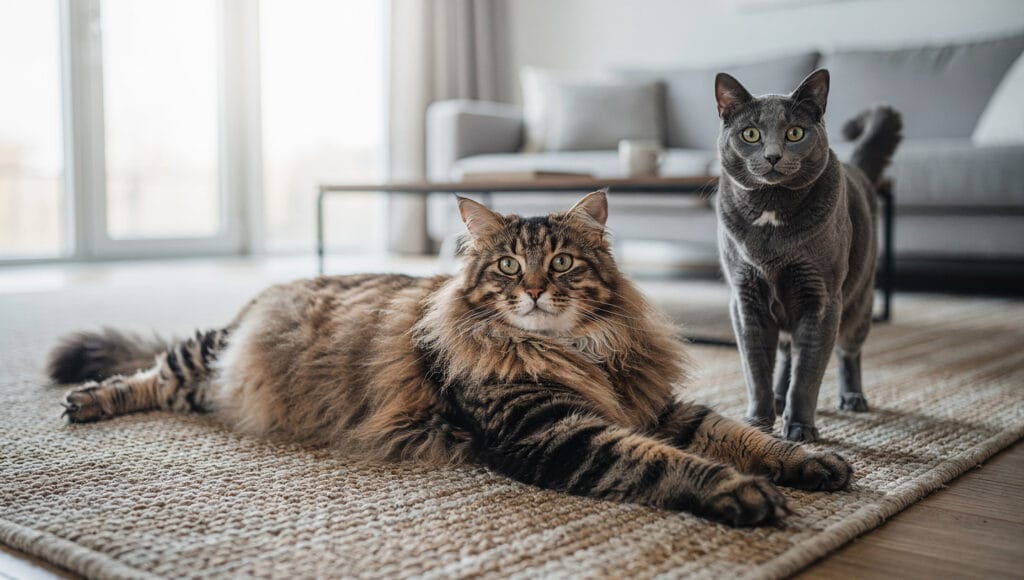
The Maine Coon cat personality is often described as “dog-like.” Unlike many independent breeds, Maine Coons are intensely social and thrive on being part of the family action. They aren’t typically “lap cats” who want to be held constantly; instead, they are “companion cats” who will follow you from room to room just to see what you’re up to.
- 🐾 The Gentle Shadow: They are known for their loyalty. Expect your Maine Coon to sit nearby while you work or wait for you at the door when you come home.
- 🎶 The Trill and Chirp: Instead of a loud meow, these giants communicate with sweet, bird-like trills and chirps. It is their way of checking in with you or expressing excitement.
- 💧 Water Obsessives: Many Maine Coons are fascinated by water. Don’t be surprised if your cat tries to join you in the shower or “washes” their toys in their water bowl.
- 🎾 High Intelligence: They are highly trainable. You can easily teach a Maine Coon to play fetch, walk on a leash, or even open cabinet doors with their dexterous paws.
Because they are so emotionally attuned to their owners, they often show affection through rhythmic behaviors. If you notice your giant friend “making biscuits” on your lap, they are displaying the ultimate sign of comfort and trust. You can learn more about this endearing behavior in our article on Why Do Cats Knead?.
🏥 Maine Coon Cat Lifespan and Common Health Problems
The average Maine Coon cat lifespan typically ranges from 12 to 15 years. While they are generally hardy and robust, their large size and genetic heritage make them prone to specific health conditions that every owner should monitor closely.
A proactive approach to their well-being can ensure they spend those years in comfort. Since they are heavy-boned, maintaining a healthy weight through high-quality protein is vital to avoid putting extra pressure on their hearts and joints.
🧬 Genetic Health Concerns
Because of their specific breeding history, Maine Coons are predisposed to a few hereditary issues:
- Hypertrophic Cardiomyopathy (HCM): This is a form of heart disease that causes the heart walls to thicken. Research from UC Davis Veterinary Medicine suggests that regular DNA testing is the best prevention.
- Hip Dysplasia: Common in larger breeds, this is a malformation of the hip joint. Maintaining a lean weight is the best defense according to VCA Animal Hospitals.
- Spinal Muscular Atrophy (SMA): A genetic disorder affecting motor neurons. While not painful, it affects their mobility and stability.
Expert Tip: Maine Coons can sometimes develop sensitive stomachs. If you notice your giant friend is struggling with their meals, it’s important to distinguish between a simple hairball and a digestive issue. Check out our guide on Why does my cat throw up after eating? for more insights.
Additionally, like many large breeds, they can be prone to urinary issues if they don’t stay hydrated. If you ever notice changes in their litter box habits, such as peeing outside the box, it could be a sign of a urinary tract infection (UTI) or stress.
🪮 Essential Maine Coon Grooming Routine
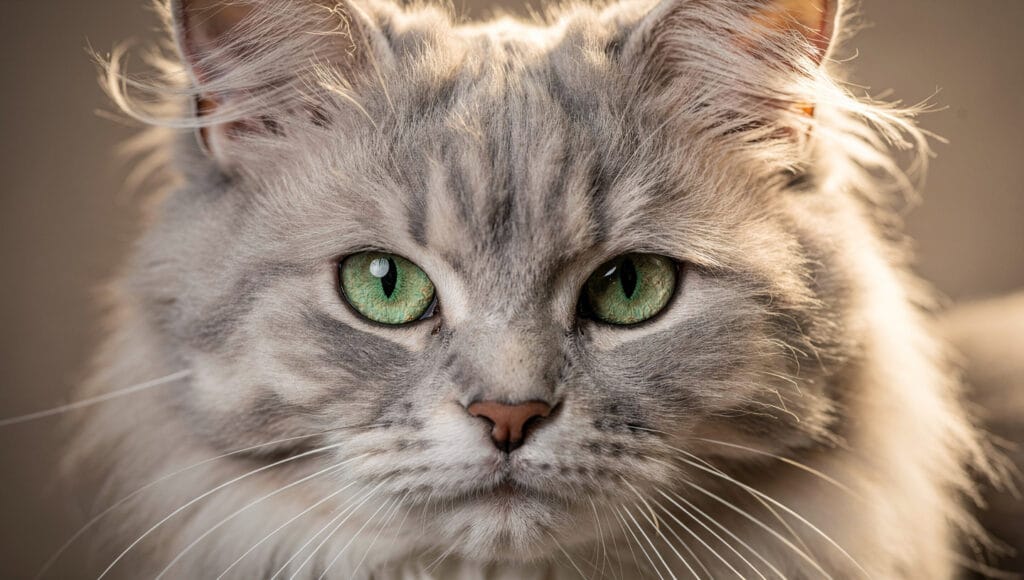
Comprehensive Maine Coon cat care is incomplete without a dedicated grooming schedule. While their fur is naturally water-resistant and silky, their dense undercoat is prone to mats and tangles, especially in high-friction areas like the “armpits” and behind the hind legs.
- 🗓️ The Three-Day Rule: To keep their coat majestic, aim to brush your Maine Coon at least two to three times a week. During shedding seasons, daily brushing may be necessary.
- 🧤 Focus on the Undercoat: Use a high-quality slicker brush or a long-toothed metal comb. The goal is to reach the undercoat where the stubborn knots usually hide.
- 🧼 Bathing Habits: Because of their obsession with water, many Maine Coons actually enjoy an occasional bath. This helps manage oils in their thick fur.
- 💅 Paw and Ear Care: Don’t forget to check their tufted ears for wax buildup and trim those massive “snowshoe” paws to keep them comfortable.
Expert Tip: If your giant friend is a bit reluctant to sit still, don’t force it. Start slow and use positive reinforcement. For a step-by-step breakdown of stress-free techniques, see our guide on How to Brush Your Cat.
🌲 Maine Coon vs. Norwegian Forest Cat: Spotting the Differences
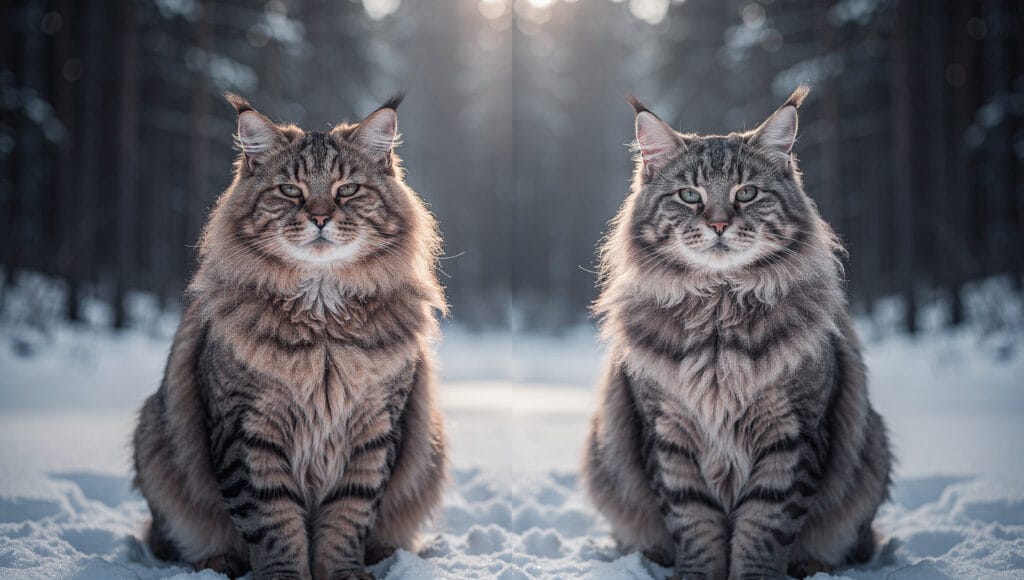
It is very common for cat lovers to mistake the Maine Coon for its European cousin, the Norwegian Forest Cat (often called the “Wegie”). While both are large, rugged breeds, a closer look at their profiles reveals significant differences.
- 📐 The Profile: A Maine Coon has a distinct “stop” or a concave dip in its nose. The Norwegian Forest Cat has a perfectly straight profile from the brow to the nose.
- 👁️ Eye Shape: Maine Coons have large, oval eyes set at a slight slant. Wegies have more almond-shaped eyes, giving them a more “wild” expression.
| Feature | Maine Coon Cat | Norwegian Forest Cat |
|---|---|---|
| Head Shape | Square, boxy muzzle | Equilateral triangle shape |
| Profile | Concave curve (dip) | Straight profile |
| Tail | Extremely long and bushy | Bushy, matches body length |
| Vibe | The “Goofy” Gentle Giant | The “Stoic” Forest Hunter |
Frequently Asked Questions About Maine Coon Cat Care
1. Are Maine Coon cats good for beginners?
Yes, Maine Coon cats are excellent for beginners due to their friendly, gentle, and social nature. However, they require regular grooming and attention, so owners should be prepared for moderate maintenance.
2. How much does it cost to own a Maine Coon cat?
The cost can range from $800 to $2,000 for the cat itself, plus monthly expenses for food, grooming, and vet care, which can reach $50–$150 per month.
3. Do Maine Coon cats require a lot of grooming?
Yes, due to their thick double coat, they need brushing at least 2–3 times per week to prevent mats and tangles.
4. Can Maine Coon cats live in apartments?
Yes, they can adapt well to apartment living as long as they have enough space, toys, and interaction.
5. How big do Maine Coon cats get?
Maine Coons are one of the largest cat breeds, typically weighing between 10–25 lbs and reaching up to 40 inches in length.
6. Are Maine Coon cats high maintenance?
They are moderately high maintenance due to grooming needs and their social personality, but they are easy to manage with a routine.
7. What is the lifespan of a Maine Coon cat?
They usually live between 12 to 15 years, but with proper care, some can live even longer.
8. Do Maine Coon cats get along with dogs?
Yes, they are known for their dog-like personality and usually get along very well with dogs.
9. What do Maine Coon cats eat?
They require a high-protein diet with quality cat food to support their large size and energy levels.
10. Are Maine Coon cats affectionate?
Yes, they are very affectionate and love to stay close to their owners, though they are not overly clingy.
Final Thoughts: Is the Maine Coon Right for You?
Choosing to bring a Maine Coon into your home is a commitment to a decade-plus of companionship with one of the most intelligent and affectionate creatures in the feline world. While their care requirements are higher than your average cat, the emotional reward is immeasurable.
If you have the space for their size and the time for their social needs, you won’t just have a pet; you’ll have a loyal “gentle giant” who will trill and chirp its way into your heart every single day.