
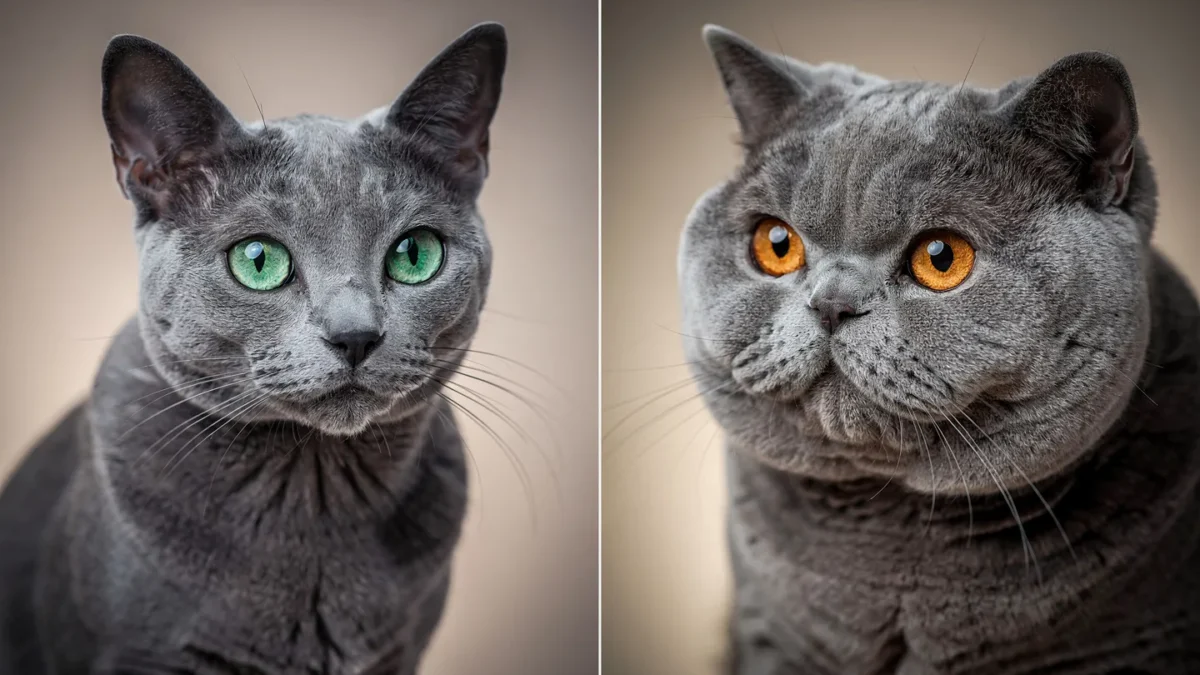
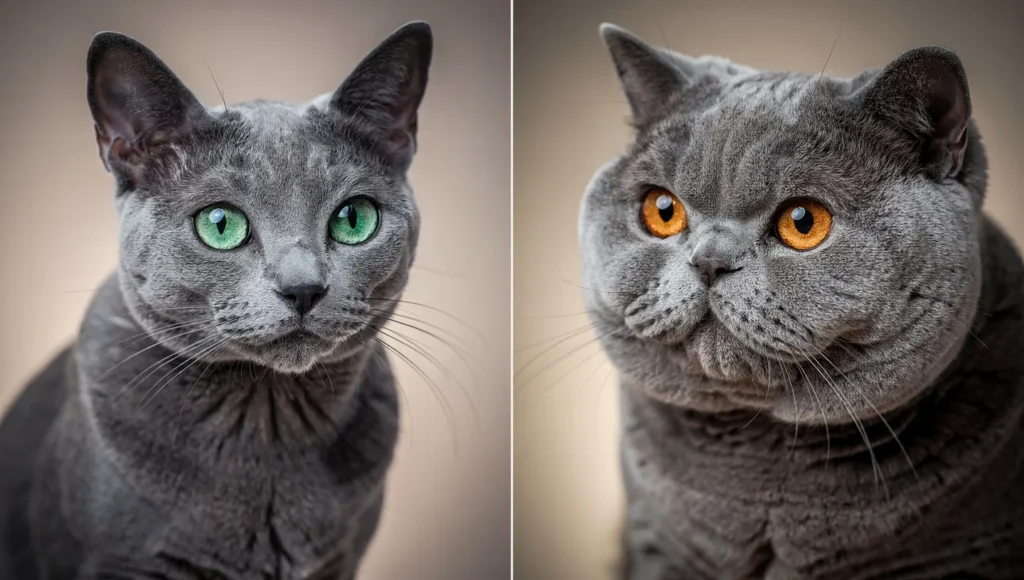
I still remember standing in the living room of a breeder’s home, trying to decide between a Russian Blue vs British Shorthair while looking at two cats sitting side by side — one sleek and silver with piercing green eyes, the other round-faced and plush like a stuffed animal. They both looked calm. They both looked gray. And I had absolutely no idea which one was right for me.
I almost chose based on looks alone.
A lot of cat owners do exactly that — and many of them end up surprised by what they brought home. Not because either cat is “bad,” but because Russian Blues and British Shorthairs are genuinely different in ways that matter for everyday life.
If you’ve been going back and forth between these two breeds, you’re not alone. From what I’ve seen and researched, this is one of the most common dilemmas among first-time and experienced cat owners alike — especially since both breeds share that calm, elegant look that makes them hard to tell apart at first glance.
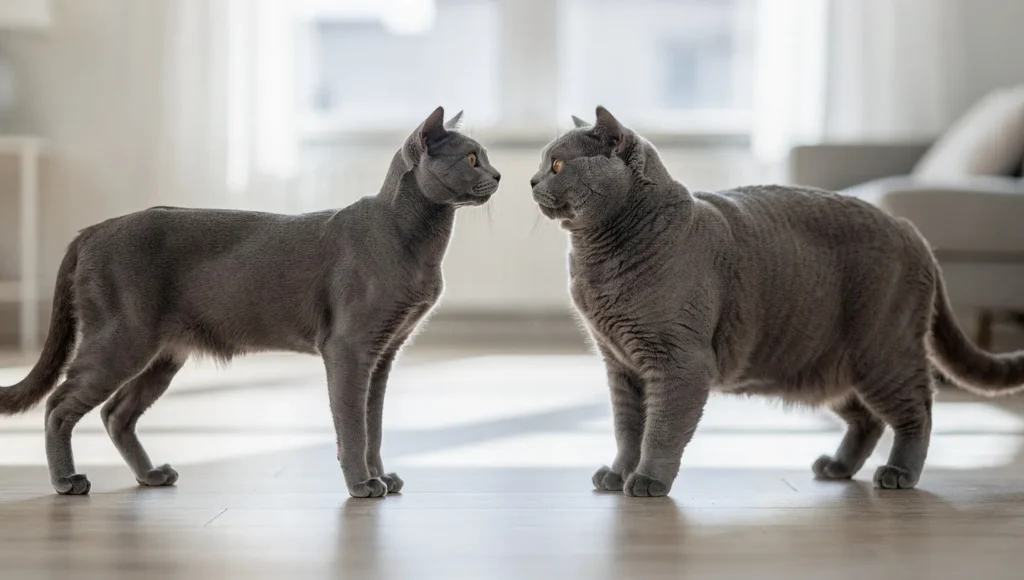
But here’s what I’ve learned: the real differences aren’t in their coats or eye color. They’re in how these cats live with you — their energy, their emotional needs, their quirks, and yes, their cost.
By the end of this guide, you’ll have a clear picture of which breed actually fits your lifestyle — not just your aesthetic.
📌 This article is for informational purposes only and is not a substitute for professional veterinary advice. All health-related information is based on general research and trusted sources such as ASPCA and AVMA.
Table of Contents
- Russian Blue vs British Shorthair: Quick Side-by-Side Comparison
- Personality & Temperament: The Biggest Difference 🐱
- Russian Blue — Loyal but Selective
- British Shorthair — Calm, Adaptable & Beginner-Friendly
- Activity Level & Daily Life Fit ⚡
- Grooming & Maintenance 🧼
- Health & Lifespan Comparison 🏥
- Price & Real Cost of Ownership 💸
- Purchase Price
- Hidden Costs Most Owners Ignore
- Which Cat Is Right for YOU? 🏡
- Russian Blue vs British Shorthair — Choose Based on Your Lifestyle
- Common Mistakes to Avoid ❌
- Helpful Tips for Future Owners ✅
- Frequently Asked Questions ❓
- What is the main difference between Russian Blue and British Shorthair?
- Which one is better for apartments?
- Is the Russian Blue more expensive?
- Which cat is calmer?
- Can I tell if my gray cat is a Russian Blue or British Shorthair?
- Which breed lives longer?
- Which cat sheds more?
- Which Blue Cat Will Win Your Heart? (The Final Verdict)
Russian Blue vs British Shorthair: Quick Side-by-Side Comparison
If you’re short on time, here’s the core difference in one glance: the Russian Blue is a sensitive, loyal companion that bonds deeply with one person — while the British Shorthair is a calm,
adaptable cat that fits almost any home without much fuss.
To simplify the Russian Blue vs British Shorthair comparison, I’ve broken down the core essentials in this high-level table:
| Feature | Russian Blue | British Shorthair |
|---|---|---|
| Personality | Shy with strangers, deeply loyal | Calm, easygoing, adaptable |
| Activity Level | Medium — playful but not demanding | Low — prefers lounging |
| Grooming Needs | Low — short double coat, easy to maintain | Low to Medium — dense coat needs weekly brushing |
| Shedding | Moderate | Moderate to Heavy |
| Good for Families | Yes — best in calm, stable homes | Yes — handles busy households well |
| Good for First-Time Owners | Moderate — needs patience | Yes — very beginner-friendly |
| Price Range | $400 – $1,200 | $800 – $2,000 |
| Lifespan | 15 – 20 years | 12 – 17 years |
Both breeds are quiet, low-drama cats — but that surface-level similarity is exactly what trips people up. Once you look closer, the differences in personality and lifestyle fit become pretty clear.
I’ve found that owners who do their research before choosing almost always end up happier with their cat long-term. Those who don’t?
They often say things like “I didn’t expect it to be this shy” or “I thought it would want more cuddles.”
That’s what this guide is here to help you avoid.
Personality & Temperament: The Biggest Difference 🐱
If there’s one section in this guide I’d ask you to read carefully, it’s this one.
Because the appearance differences between these two breeds?
You can learn those in five minutes. But personality? That’s what you actually live with — every single day.
And from everything I’ve observed and researched, this is where Russian Blues and British Shorthairs diverge the most.
Russian Blue — Loyal but Selective
The Russian Blue is not a cat for everyone.
That’s not a criticism — it’s actually one of the things that makes them so special to the people who truly connect with them. But it’s important to go in with realistic expectations.
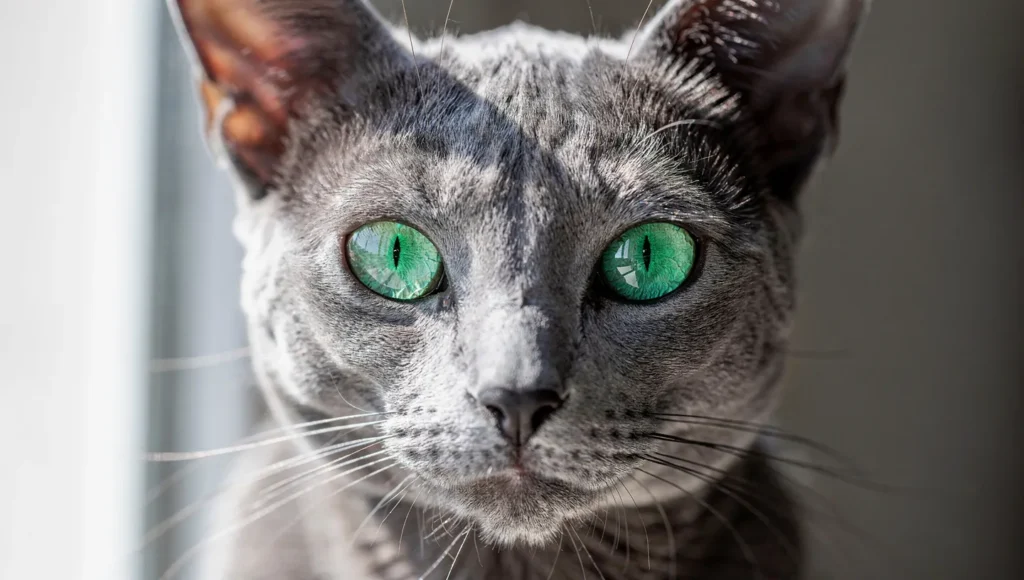
Russian Blues tend to be reserved around strangers. When guests come over, don’t be surprised if your Russian Blue disappears into another room and doesn’t come back until everyone leaves. This isn’t anxiety or a health issue — it’s just how they’re wired.
With their own person, though? It’s a completely different story.
Many Russian Blue owners report that their cat bonds almost exclusively with one or two people in the household — and that bond runs deep.
They follow you from room to room, sit near you while you work, and seem to genuinely tune into your emotional state. Several owners I’ve come across describe it as having “a cat that acts like a dog, but only with you.”
💬 Real Owner Insight: Based on what I’ve read across multiple owner communities, Russian Blues are often described as “velcro cats” — not because they demand constant holding, but because they simply want to be near their person at all times.
They’re sensitive cats that thrive on routine and can become stressed by sudden changes in their environment.
They’re also highly intelligent and observant. If something in your home changes — furniture moved, a new pet introduced, a different schedule — they notice, and they may need time to adjust.
If you have young children or a very busy, unpredictable household, the Russian Blue can still adapt — but it will take patience, consistency, and a calm introduction process.
For a deeper look at everything this breed has to offer, I’d recommend checking out our full Russian Blue Cat Guide — it covers personality, health, and real costs in detail.
British Shorthair — Calm, Adaptable & Beginner-Friendly
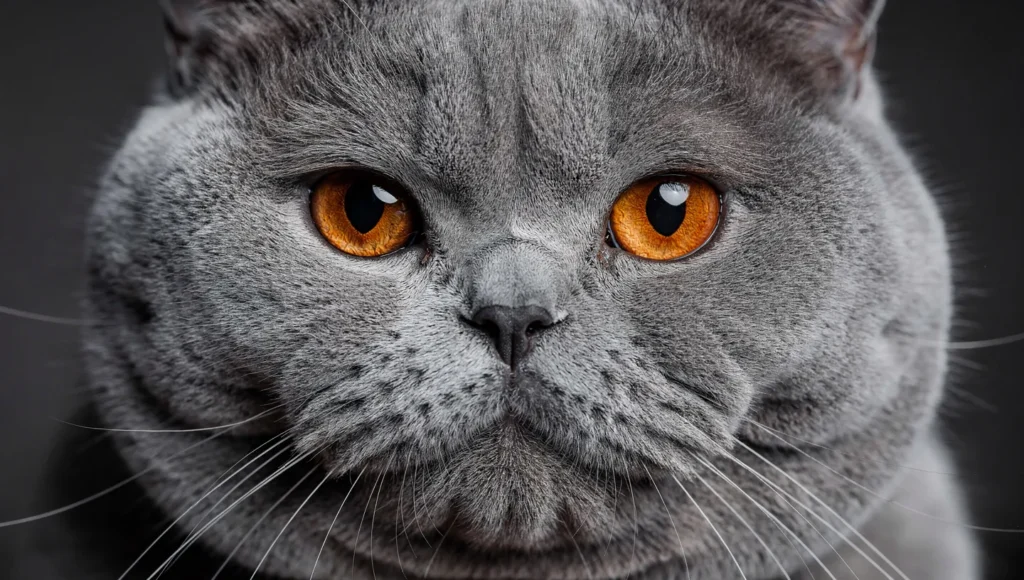
If the Russian Blue is a cat that chooses you, the British Shorthair is a cat that’s comfortable with almost anyone.
This breed is remarkably easygoing. They’re not clingy, they’re not demanding, and they don’t tend to make a fuss when life gets busy or unpredictable. In my experience following various cat owner communities, British Shorthairs consistently come up as one of the most recommended breeds for first-time owners — and it’s easy to see why.
They’re affectionate, but on their own terms. A British
Shorthair won’t usually jump into your lap uninvited — but they’ll happily sit beside you on the couch, follow the family around at a comfortable distance, and generally be a calm, grounding presence in the home.
They handle changes well. New people, new pets, new schedules — British Shorthairs tend to roll with it better than most breeds. They’re not indifferent, they’re just steady.
With children? Generally excellent. With other cats or calm dogs? Usually fine, especially with a proper introduction.
💬 Real Owner Insight: One thing I’ve noticed repeatedly is that British Shorthair owners use the word “easy” a lot. Easy to live with. Easy to introduce to guests. Easy to leave alone for a few hours. That’s not a knock on their depth — it’s genuinely one of their most valued qualities.
For the full picture on caring for this breed — including grooming their dense coat and managing their tendency toward weight gain — our British Shorthair Care Guide is worth a read.
Activity Level & Daily Life Fit ⚡
These two breeds won’t redecorate your house or knock things off shelves for fun. But there’s a real difference in how they spend their energy.
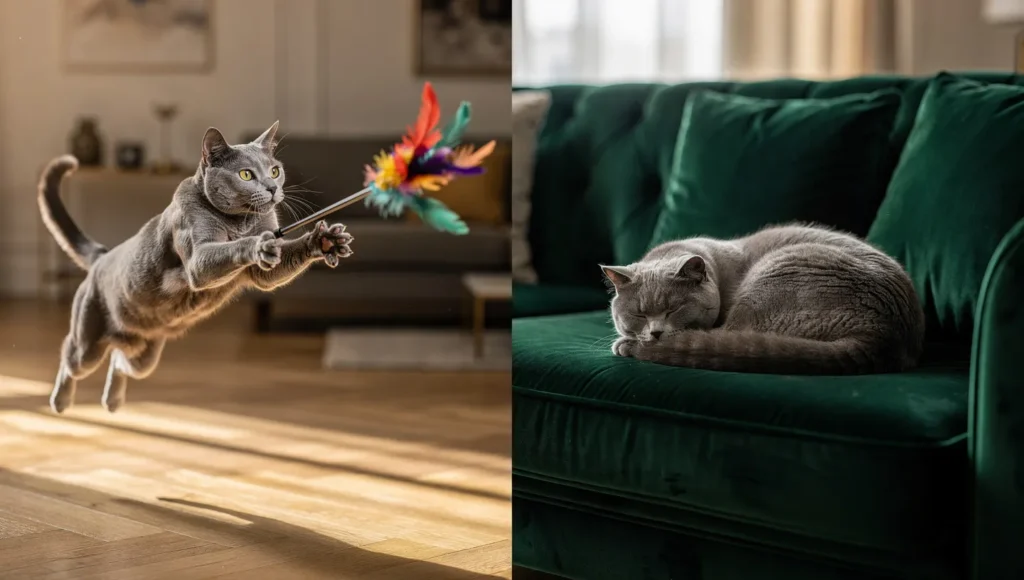
Russian Blue:
- Playful in short bursts — loves a good feather wand session
- Mentally sharp — needs puzzle toys or interactive play
- Settles down quickly and enjoys quiet companionship
British Shorthair:
- Low energy by nature — happiest lounging near you
- Not lazy, just deliberate — plays when it wants to
- Perfect for owners who want a calm, low-demand companion
If you work from home and want a cat that sits nearby without demanding attention every hour — both work. But the Russian Blue will want to be closer to you.
Grooming & Maintenance 🧼
Good news: neither breed will turn your home into a fur storm.
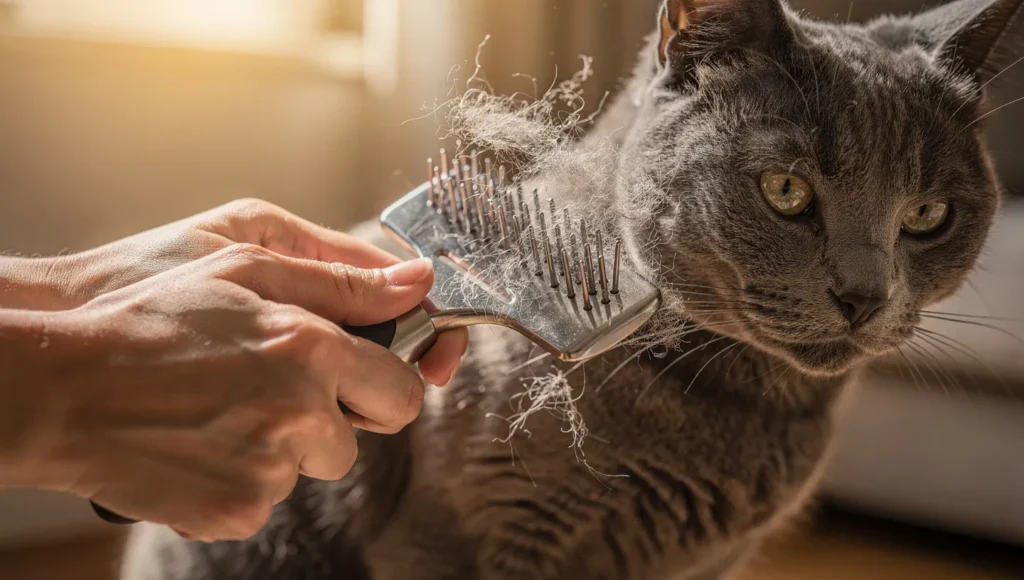
Russian Blue:
- Short double coat — brushing once a week is enough
- Low shedding compared to many breeds
- Minimal grooming fuss overall
British Shorthair:
- Dense plush coat — needs brushing 2x per week
- Sheds more, especially during seasonal changes
- Worth investing in a good deshedding brush
For technique and tool recommendations, our complete cat brushing guide has everything you need.
Health & Lifespan Comparison 🏥
Russian Blue:
- Lifespan: 15–20 years — one of the longer-lived breeds
- Generally healthy with few breed-specific issues
- Can be prone to stress-related symptoms if routine is disrupted
British Shorthair:
- Lifespan: 12–17 years
- Watch for: Hypertrophic Cardiomyopathy (HCM) and weight gain
- Regular vet checkups matter more with this breed
According to general guidance from AVMA, routine wellness visits are the single best thing you can do for any cat’s long-term health — regardless of breed.
For a full list of warning signs to watch at home, see: How to Tell if Your Cat is Sick
Price & Real Cost of Ownership 💸
Purchase Price
| Russian Blue | British Shorthair | |
|---|---|---|
| From reputable breeder | $400 – $1,200 | $800 – $2,000 |
| Show-quality | Up to $2,000 | Up to $3,000+ |
Prices in 2026 have trended upward across both breeds — especially from health-tested, pedigree breeders. A lower price tag is often a red flag worth investigating.
Hidden Costs Most Owners Ignore
- British Shorthair: prone to obesity — may need
prescription food or weight management diet over time - Russian Blue: stress-sensitive — may need calming
supplements or environmental adjustments in unstable homes - Both breeds: routine vet visits, dental care, quality food
The purchase price is just the beginning. Budget realistically for the full lifespan — especially with a breed that can live 15–20 years.
💡 Expert Tip
The most common regret I see from cat owners isn’t about the breed itself — it’s about mismatched expectations.
A Russian Blue won’t warm up to your loud family gathering.
A British Shorthair won’t be your shadow around the house.
Know what you’re looking for before you fall in love with a face.
Which Cat Is Right for YOU? 🏡
Russian Blue vs British Shorthair — Choose Based on Your Lifestyle
Choose the Russian Blue if:
- You live alone or with one quiet partner
- You want a deep, one-person bond
- You have a calm, stable home environment
- You’ve owned cats before and understand shy breeds
Choose the British Shorthair if:
- You’re a first-time cat owner
- You have kids or other pets at home
- Your lifestyle is busy or unpredictable
- You want an easygoing companion, not a shadow

Common Mistakes to Avoid ❌
Mistake #1 That Leads to Rehoming:
Choosing a Russian Blue for a loud, social household — then being surprised when the cat hides permanently and never bonds with anyone. This mismatch is one of the top reasons cats get rehomed. It’s not the cat’s fault. It’s a lifestyle fit problem.
Other mistakes to avoid:
- Ignoring the British Shorthair’s weight — obesity
shortens their lifespan significantly - Skipping early socialization for either breed
- Buying from an unverified breeder to save money —
genetic health issues cost far more long-term - Expecting both breeds to behave the same just because
they look similar
Helpful Tips for Future Owners ✅
- Visit the breeder in person — watch how the kitten
interacts with strangers before committing - Ask for health testing documentation, especially
for British Shorthairs (HCM screening) - Prepare your home before the cat arrives —
hiding spots for Russian Blues, climbing options
for British Shorthairs - Read up on the first weeks:
Kitten Care Guide covers everything you need
for a smooth start
Frequently Asked Questions ❓
What is the main difference between Russian Blue and British Shorthair?
In the Russian Blue vs British Shorthair debate, the main difference is temperament: the Russian Blue is a deeply loyal ‘one-person’ cat, while the British Shorthair is an easygoing, independent companion for everyone.
Which one is better for apartments?
Both are well-suited to apartment living. The British Shorthair adapts more easily to busy or unpredictable spaces. The Russian Blue does best in a calm, quiet home.
Is the Russian Blue more expensive?
Generally no — British Shorthairs from reputable breeders tend to cost more upfront. However, long-term costs can vary based on health and diet needs.
Which cat is calmer?
The British Shorthair is typically calmer and less reactive to change. The Russian Blue is quiet, but more emotionally sensitive.
Can I tell if my gray cat is a Russian Blue or British Shorthair?
Look at the eyes and face shape. Green eyes + angular face = likely Russian Blue. Copper/gold eyes + round face = likely British Shorthair. For certainty, a DNA test is the only reliable method.
Which breed lives longer?
The Russian Blue — with an average lifespan of 15–20 years compared to 12–17 for the British Shorthair.
Which cat sheds more?
The British Shorthair sheds more, especially seasonally. The Russian Blue’s double coat sheds moderately but is easier to manage with weekly brushing.
Which Blue Cat Will Win Your Heart? (The Final Verdict)
Both of these breeds are genuinely wonderful cats — just in very different ways.
The Russian Blue will give you one of the deepest, most loyal bonds you can have with a cat. But it asks for patience, consistency, and a calm environment in return.
The British Shorthair will slot into almost any home and make itself comfortable without much fuss. It’s the kind of cat that makes life feel a little steadier.
Neither is better. They’re just different — and one of them is almost certainly a better fit for your specific life.
Still unsure? Our full breed guides go much deeper:
Whatever you decide — take your time, visit the breeder, and trust your gut. The right cat has a way of making the decision for you.