
Bengal cat behavior is often the first thing that surprises new owners who were initially drawn in by those exotic, leopard-like spots. Imagine coming home to find your feline friend perched on top of the highest kitchen cabinet, chirping loudly as if narrating a hunt—this is just a typical Tuesday with a Bengal.
While they look like they belong in the heart of the jungle, these cats are deeply affectionate “Velcro” companions. However, their high intelligence and wild ancestry mean they require a specific type of engagement that many other breeds don’t.
Understanding their unique needs is the key to a happy home. Whether they are trying to join you in the shower or deciphering how to open the treat jar, their personality is as vibrant as their coat. To truly connect with them, you must first learn the nuances of cat tail language to keep up with their fast-paced moods.
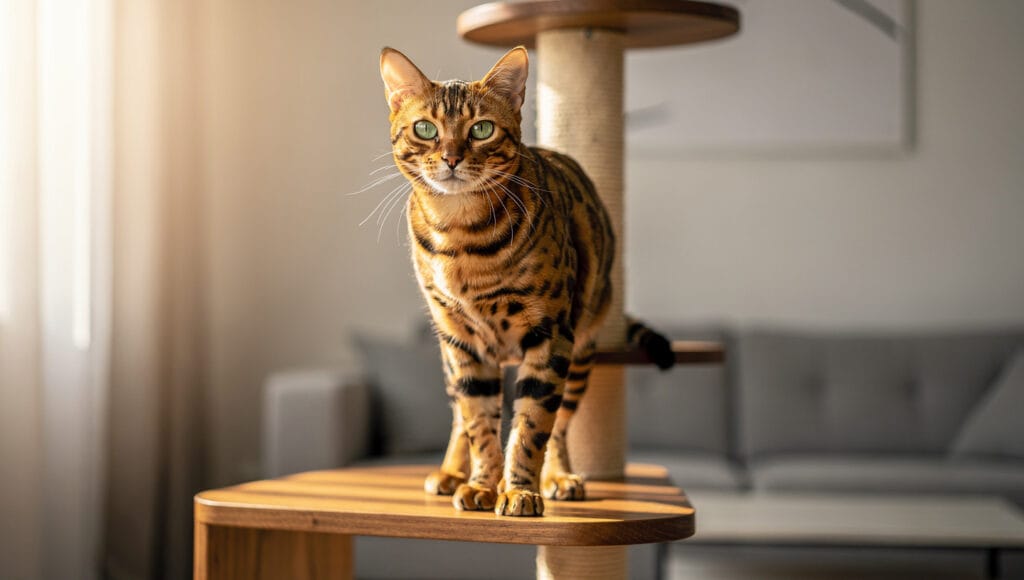
Table of Contents
- 🐆 Understanding the Core: What Defines True Bengal Cat Behavior?
- Key Traits of the Bengal Personality
- 🌊 Do Bengal Cats Like Water? (The Truth Revealed)
- Why Your Bengal Is a “Water Baby” Compared to Normal Cats
- 📋 Bengal Cat Care Guide: A Blueprint for Success
- 🏠 Apartment vs. House: Where Does a Bengal Thrive?
- 🏃♂️ Bengal Cat Exercise Requirements: Burning That Wild Energy
- Maximize Your Vertical Territory
- Leash Walking: Taking the Leopard for a Stroll
- Interactive Puzzles and Brain Work
- 🧠 Solving Common Bengal Cat Behavior Problems
- The “Bengal Yowl”: Excessive Vocalization
- Play Aggression and “Ankle Biting”
- Destructive Scratching
- Frequently Asked Questions About Bengal Cat Behavior
- What behavioral problems are common in Bengal cats?
- Do Bengal cats like to be picked up or held?
- Why does my Bengal cat seem aggressive sometimes?
- How can you tell if a Bengal cat likes you?
- Are Bengal cats social with people and other pets?
- ❤️ Final Verdict: Is Living With a Bengal Worth It?
🐆 Understanding the Core: What Defines True Bengal Cat Behavior?
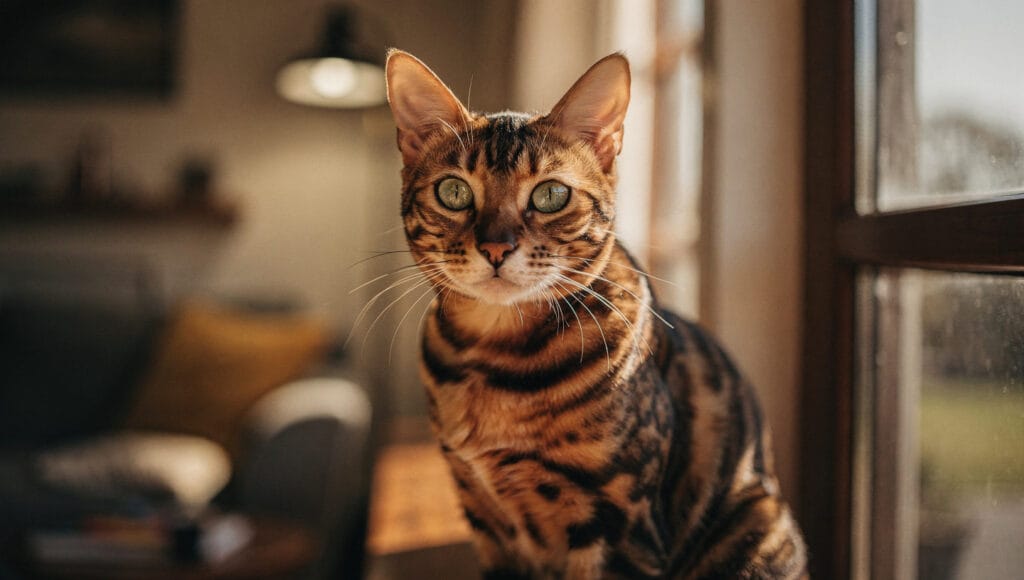
If you are looking for a quiet lap cat that spends 20 hours a day napping, a Bengal will quickly shatter those expectations. Their Bengal cat personality is a fascinating blend of wild curiosity and domestic devotion, often described as “dog-like” due to their loyalty and trainability.
The foundation of Bengal cat behavior lies in their high kinetic energy. They don’t just walk; they prowl, jump, and explore every vertical inch of your home. This isn’t a cat that sits on the sidelines; they want to be the center of every activity you engage in.
Key Traits of the Bengal Personality
- Athletic Prowess: They are Olympic-level jumpers. Don’t be surprised to find them on top of your refrigerator or even the inner ledge of your doors.
- Extreme Intelligence: These cats are problem solvers. They can learn to open cabinets, turn on light switches, and even flush toilets if they are bored.
- Vocal Communication: Bengals don’t just meow; they have a wide vocabulary of chirps, trills, and gravelly growls to tell you exactly how they feel.
- The “Shadow” Effect: Despite their independent look, they are “Velcro cats” that will follow you from room to room just to see what you are doing.
💡 Expert Tip: Because of their high IQ, a bored Bengal is often a “naughty” Bengal. If you don’t provide mental stimulation, they will find their own entertainment—usually at the expense of your curtains or expensive vases!
🌊 Do Bengal Cats Like Water? (The Truth Revealed)
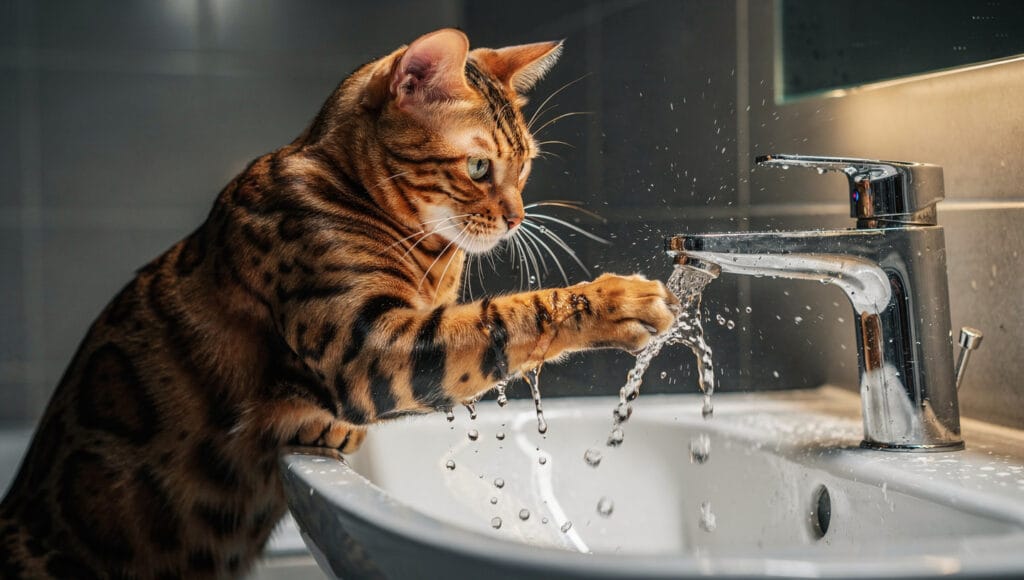
Yes, do Bengal cats like water? Unlike almost every other domestic breed, Bengals are famous for their obsession with H2O. While most cats flee at the sound of a running shower, a Bengal is likely to hop right in with you or spend hours splashing in their water bowl.
This unique behavior isn’t just a quirk; it is rooted in their wild DNA. Their ancestor, the Asian Leopard Cat (Prionailurus bengalensis), is a master fisher that lives near rivers and streams in the wild. This genetic heritage has passed down a lack of fear regarding wet fur, making water a source of play rather than a threat.
Why Your Bengal Is a “Water Baby” Compared to Normal Cats
- Ancestral Instincts: Their wild cousins hunt in water, so the sound of a running faucet triggers their natural “hunting” mode.
- Texture Sensitivity: Unlike the dense, oil-heavy coats of many breeds, a Bengal’s sleek coat dries relatively fast, making the experience of being wet less uncomfortable.
- Visual Stimulation: They are mesmerized by the reflections and movement of flowing water, viewing it as a dynamic toy.
🚿 Life with a Water-Loving Cat: Be prepared for “uninvited guests” in the bathroom. Many Bengal owners report their cats learning how to turn on faucets or even jumping into a full bathtub. Always keep the toilet lid closed to avoid unexpected (and messy) swimming sessions!
📋 Bengal Cat Care Guide: A Blueprint for Success
Creating a successful Bengal cat care guide starts with acknowledging that you aren’t just caring for a pet; you are managing a high-energy athlete. Their physical health is deeply tied to their environment and nutritional intake. To keep their muscles lean and their coat “glittered,” a high-protein diet is non-negotiable.
Beyond food, their grooming needs are relatively low, but the bonding experience is vital. You can learn more about professional techniques in our guide on how to brush your cat to ensure their unique pelt-like fur remains soft and dander-free.
🏠 Apartment vs. House: Where Does a Bengal Thrive?
Many potential owners wonder if these active cats can handle small-space living. The answer is yes—but it requires more effort from the owner to maximize vertical territory.
| Feature | Apartment Living | House Living |
|---|---|---|
| Vertical Space | Mandatory (Wall shelves & ceiling-high trees). | Recommended (Multiple rooms to explore). |
| Safety | High (Secure window screens are a must). | Medium (Consider a secure ‘Catio’ or outdoor enclosure). |
| Mental Stimulation | Critical (Puzzles, window perches, and interactive toys). | Natural (More views and potentially more floor space). |
🥕 Nutritional Note: Always tailor their calorie intake to their activity level. For a deep dive into what keeps a feline healthy, check our article on what do cats eat for a balanced diet breakdown.
While environment and food provide the foundation, the real challenge for any Bengal owner is managing their relentless stamina. This brings us to their most demanding requirement: physical and mental exertion.
🏃♂️ Bengal Cat Exercise Requirements: Burning That Wild Energy
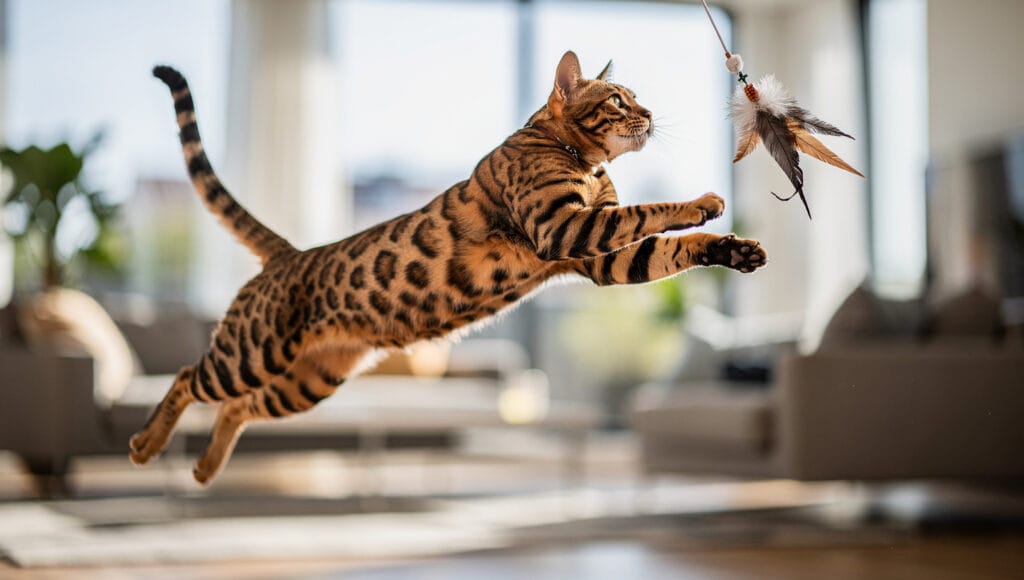
Owning a Bengal is like living with a high-performance athlete that never has an “off” switch. Meeting the specific Bengal cat exercise requirements is not just about keeping them fit; it is about preserving your furniture and your sanity. Without a structured outlet for their stamina, a Bengal will create their own games—which usually involves scaling your curtains or unrolling every toilet paper in the house.
To keep them balanced, you should aim for at least 30 to 60 minutes of active play daily. This doesn’t mean just tossing a mouse toy; it requires interactive sessions that mimic a real hunt. Once they are properly exercised, you’ll notice they settle into those long naps we discuss in our guide on why do cats sleep so much.
Maximize Your Vertical Territory
Bengals have an instinctual drive to be high up. If you don’t provide a “superhighway” of shelves, they will use your bookshelves and cabinets. Floor-to-ceiling cat trees are a must-have for this breed.
Leash Walking: Taking the Leopard for a Stroll
- Start Indoors: Use a high-quality H-style harness. Let them wear it inside first to get used to the sensation.
- Mental Enrichment: Walking outside provides a sensory explosion of smells and sights that tires a Bengal out faster than any indoor toy.
- Safety First: Never use a collar for walking; their slender necks are too fragile and they can easily slip out.
🏆 Expert Tip: The Cat Wheel If you have the space and budget, a cat exercise wheel is the single best investment for a Bengal owner. It allows them to sprint at full speed whenever the “zoomies” hit, providing a perfect outlet for their intense Bengal cat exercise requirements.
Interactive Puzzles and Brain Work
Physical exhaustion is only half the battle. Use food puzzles and treat-dispensing toys to make them “work” for their snacks. This engages their predatory brain and prevents the destructive behaviors often seen in bored Bengals.
🧠 Solving Common Bengal Cat Behavior Problems
Even the most dedicated owners can find themselves overwhelmed by certain Bengal cat behavior problems. It is important to remember that most of these “issues” are simply natural instincts being expressed in an inappropriate environment. Understanding the why behind the behavior is the first step toward a peaceful home.
The “Bengal Yowl”: Excessive Vocalization
Bengals are notoriously chatty. If your cat is yowling at 3 AM, they aren’t necessarily sick; they might just be bored or demanding attention. To curb this, never reward the noise with food or play. Instead, wait for a moment of silence before engaging with them.
Play Aggression and “Ankle Biting”
Because of their high predatory drive, Bengals often view moving feet as prey. If your cat is lunging at your legs, they are likely under-stimulated. We cover the nuances of this “love-hate” relationship in our detailed guide on why does my cat bite me?, which offers specific redirection techniques.
Destructive Scratching
If your sofa is suffering, it’s because your Bengal needs a taller, sturdier scratching post. They need to stretch their entire body length while scratching. Switch to vertical sisal posts or even real wood logs to satisfy this urge naturally.
⚠️ Is This Normal or a Red Flag?
| Normal Bengal Behavior ✅ | Red Flag (Needs Action) ❌ |
|---|---|
| Chirping and loud “talking” to owners. | Sudden, persistent hiding or silence. |
| Zoomies and high-speed running. | Aggression that draws blood or shows real fear. |
| Splashing in water bowls. | Urinating outside the litter box (Potential UTI). |
For more complex behavioral issues, consulting a certified feline behaviorist or checking resources like International Cat Care can provide deeper insights into advanced modification techniques.
Frequently Asked Questions About Bengal Cat Behavior
What behavioral problems are common in Bengal cats?
Bengal cats are incredibly intelligent and energetic, which means their behavior problems usually come from boredom rather than aggression. The most common issues owners report include excessive meowing, destructive scratching, knocking objects off shelves, or constant attention-seeking. In most cases, these behaviors improve dramatically when the cat gets enough physical activity, interactive toys, and daily play sessions.
Do Bengal cats like to be picked up or held?
It depends on the individual cat. Many Bengal cats prefer being near their owners rather than being carried around. Because they are active and curious by nature, they often feel restricted when held for long periods. Some Bengals enjoy short cuddles, but most would rather sit beside you or climb onto your shoulder than stay in your arms.
Why does my Bengal cat seem aggressive sometimes?
What looks like aggression in Bengal cats is often just high energy or frustration. These cats have strong hunting instincts, so without enough playtime they may bite during play, chase moving feet, or pounce suddenly. Regular interactive play sessions with wand toys or puzzle feeders usually reduce these behaviors significantly.
How can you tell if a Bengal cat likes you?
Bengal cats show affection in subtle but meaningful ways. They may follow you around the house, chirp or trill when you enter the room, rub their head against you, or sleep near you. Some Bengals even greet their owners at the door. These behaviors are clear signs of trust and attachment.
Are Bengal cats social with people and other pets?
Yes — Bengal cats are generally very social and interactive. They tend to bond strongly with their owners and often enjoy being involved in daily activities around the house. With proper introductions, many Bengals also get along well with other cats and even dogs. However, their playful and energetic personality means they do best in homes that provide plenty of stimulation and attention.
❤️ Final Verdict: Is Living With a Bengal Worth It?
Living with a Bengal is far more than just “owning a cat”; it is a dynamic lifestyle choice. Their striking looks may be what first catches your eye, but it is their vibrant, unfiltered personality that will ultimately capture your heart. While managing Bengal cat behavior requires a genuine commitment to exercise and mental stimulation, the reward is a bond that is remarkably deep and interactive.
The journey from managing their wild energy to understanding their unique needs leads to a beautiful balance. Once you learn to speak their language and provide the right outlets for their instincts, the “chaos” transforms into a loyal companionship that few other breeds can match.
Your home may never be perfectly quiet again, and your bathroom floors might often be wet, but your life will certainly never be boring. After all, you don’t just own a Bengal; you welcome a small, spirited piece of the wild into your heart.