
I genuinely thought this was going to be easy.
Everyone I asked said the same thing: “American Shorthair? Great choice. Super chill. Low maintenance. Perfect for apartment life.” So I nodded, smiled, and picked up my new cat feeling like an absolute genius.
Three days later, I was on my couch at 2am Googling: “Why does my American Shorthair refuse to sit in my lap?”
Not because something was wrong. But because nobody — not one person — had told me what this cat is actually like to live with. And honestly? I wish someone had just been straight with me from the start.
So that’s what this is. Everything I’ve learned from years of living with this breed — the good, the unexpected, and the stuff that’ll make you laugh in hindsight.
Quick note: This article is based on personal experience and research from trusted sources. It’s meant to inform and help you make a better decision — not replace advice from your vet. If your cat has a health concern, always check with a professional. They went to school for this. I just Googled at 2am.
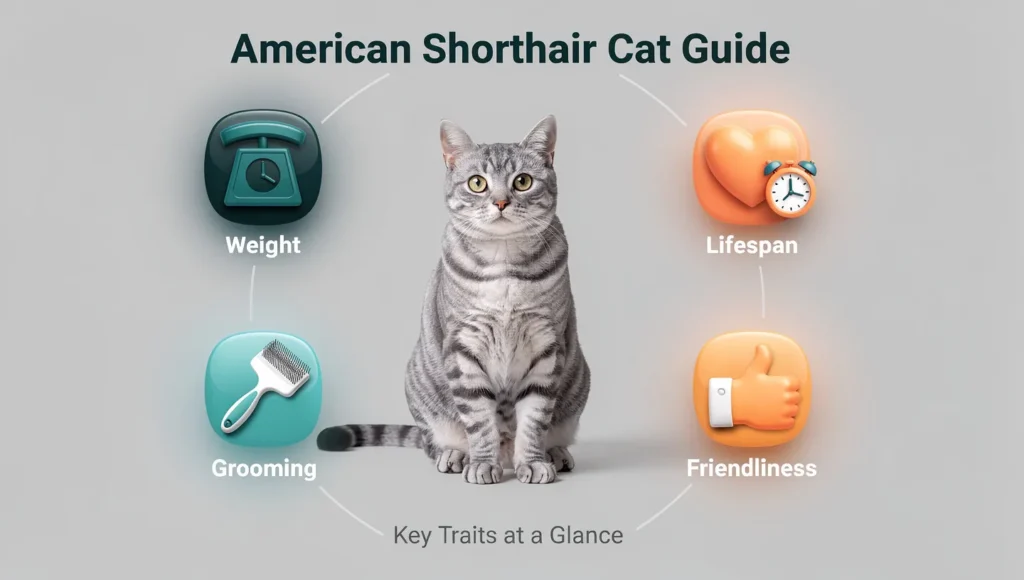
Table of Contents
- So, What Even Is an American Shorthair Cat?
- A Working Cat That Became a Couch Expert
- Wait — Is It the Same as a Domestic Shorthair?
- What Does an American Shorthair Actually Look Like?
- The Colors — Yes, There Are 80+ of Them
- The Personality: The Part Everyone Gets Half-Right
- The “I’ll Sit Next To You, Not ON You” Cat
- Is the American Shorthair Cat Right for YOUR Life?
- This Cat Is Probably Perfect for You If…
- Maybe Think Twice If…
- American Shorthair vs. British Shorthair
- Caring for an American Shorthair: Easier Than You Think
- Feeding: Quality Over Quantity
- Grooming: Honestly, Pretty Simple
- Exercise: Yes, But Make It Fun
- Health Issues to Watch For
- How Much Does an American Shorthair Cat Cost?
- Wait, I Have One More Question: A Quick Reality Check
- Are American Shorthair cats good for beginners?
- Do they like to be held?
- Are they good with kids and other pets?
- Do American Shorthair cats get lonely?
- Are they indoor or outdoor cats?
- So — Are You Getting One?
So, What Even Is an American Shorthair Cat?
The American Shorthair is a naturally developed, medium-to-large domestic cat breed known for its sturdy build, easy-going personality, and impressive adaptability to family life. It’s one of the oldest recognized breeds in North America, with roots going back to the early colonial settlers.
And no — it’s not just “a random cat you find outside.” That’s the first thing most people get wrong.
A Working Cat That Became a Couch Expert
Here’s something kind of cool that most breed guides skip over:
The ancestors of the American Shorthair didn’t come over on a yacht. They came over on ships — working cats brought by European settlers in the 1600s to protect food supplies from rodents. Basically, they were the original pest control.
Over centuries, these cats were selectively bred for health, temperament, and that signature sturdy build. By 1906, the Cat Fanciers’ Association (CFA) officially recognized the breed — making it one of the first five breeds ever registered.
From ship worker to couch potato. Honestly, the glow-up is real.
Wait — Is It the Same as a Domestic Shorthair?
This is where things get confusing for a lot of people, and I totally get it.
A Domestic Shorthair is essentially a mixed-breed cat — no documented pedigree, unpredictable traits, could look like anything. Think of it like a mutt, but make it cute.
An American Shorthair, on the other hand, is a registered purebred with consistent, predictable traits —specific body structure, known health history, and a temperament you can actually plan around.
The confusion makes sense because they can look similar. But they’re not the same thing. Not even close.
According to the Cat Fanciers’ Association, the American Shorthair is one of the most popular pedigreed breeds in the United States — consistently ranking in the top 10 year after year.
What Does an American Shorthair Actually Look Like?
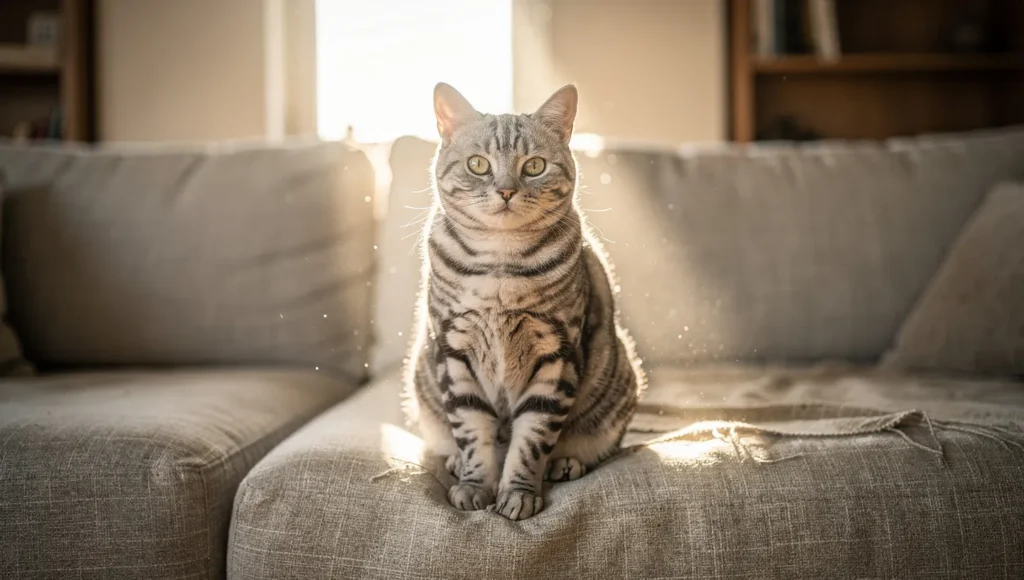
The American Shorthair cat has a medium-to-large, well-muscled body with a broad chest, strong legs, and a rounded face with full cheeks. Males typically weigh between 11–15 lbs, while females usually stay in the 8–12 lb range.
This is not a fragile, delicate cat. This is a solid cat. Pick one up and you’ll know exactly what I mean.
The coat is short, dense, and hard in texture — built to protect against cold and moisture (remember, working cat heritage). It’s not silky like a Ragdoll. (If you’re looking for that plush, silky feel, you might want to check out my guide on Ragdoll Cat Care). It’s more like… practical. Functional. Built for real life.
The Colors — Yes, There Are 80+ of Them
The CFA officially recognizes over 80 color and pattern combinations for this breed. Yes, 80. I had to double-check that too.
| Pattern | Common Examples |
|---|---|
| Classic Tabby | Silver tabby (the iconic one) |
| Solid | White, black, blue |
| Bicolor | Black & white, blue & white |
| Shaded / Smoke | Silver shaded, black smoke |
| Tortoiseshell | Brown tortie, blue-cream |
The silver tabby is probably the most recognized — that’s the one you’ve seen on food cans, stock photos, and “classy cat” Pinterest boards everywhere.
The Personality: The Part Everyone Gets Half-Right
The American Shorthair cat is friendly, adaptable, and genuinely easy to live with — but “easy” doesn’t mean “boring.” This cat has a personality that’ll keep you entertained without overwhelming you.
Here’s the thing though.
Everyone describes this breed as “chill” — and they’re not wrong. But “chill” gets misunderstood. A lot of people assume chill means clingy and cuddly. Like, lap cat energy 24/7.
That’s… not quite it.
The “I’ll Sit Next To You, Not ON You” Cat
The American Shorthair is affectionate on its own terms. It wants to be in the same room as you. It’ll follow you to the kitchen, park itself two feet away, and watch you make coffee like a tiny, judgmental supervisor.
But it won’t demand constant attention. It won’t cry at the door when you leave. It won’t spiral into separation anxiety if you work a 9-to-5.
Personally, I found this… surprisingly refreshing? Coming from someone who had a very clingy cat before, having a cat that respected my personal space felt almost suspicious at first. I kept thinking something was wrong.
Nothing was wrong. That’s just who they are.
They’re also genuinely smart. Not “opens the fridge” smart (thank goodness), but curious, observant, and quick to figure out routines. Mine knew my work schedule within the first week.
Every day at 6pm, she’d appear at the desk. Not meowing. Just… present. Waiting. Judging.
There was this one Tuesday evening — maybe three weeks in — when I was on a long work call. Stressed, distracted, not paying attention to anything around me.
And out of nowhere, she jumped up on the desk, sat exactly between me and the screen, and just… stared at me.
Not asking for food. Not making noise. Just saying, in the most cat way possible: “Hey. You’ve been at this for three hours. Breathe.”
I laughed out loud mid-call.
That moment told me everything about this breed. They’re not needy. But they’re paying attention.
And sometimes, that’s better.
You can also learn a lot about what your cat is feeling just by watching their body language — if you want to go deeper on that, this guide on cat body language breaks it down really well.
Is the American Shorthair Cat Right for YOUR Life?
For most people — yes, the American Shorthair is an excellent pet. It’s one of the most adaptable, low-drama breeds out there. But “most people” isn’t everyone, and this is where I want to be genuinely honest with you.
Most people get this wrong — they pick a cat based on looks, not lifestyle fit. And then six months later they’re frustrated because the cat “isn’t what they expected.”
So let’s actually think this through.
This Cat Is Probably Perfect for You If…
- You have a busy schedule. This breed doesn’t fall apart when you’re not home. It’s independent enough to handle a regular workday without drama.
- You have kids. American Shorthairs are patient, sturdy, and generally good-natured with children.
They’re not fragile, and they don’t spook easily. - You have other pets. With a proper introduction, most American Shorthairs adapt well to other cats
or even calm dogs. They’re not territorial drama queens. - You want a cat, not a shadow. If you love cats but don’t want one glued to you 24/7, this breed is basically your soulmate.
- You’re a first-time cat owner. Honestly? One of the best starter breeds out there. Predictable, healthy, and forgiving of rookie mistakes.
Maybe Think Twice If…
- You want a lap cat. If your dream is a cat that melts into your lap every evening like a furry blanket — you might be disappointed. Not impossible, but not guaranteed either.
- You want a super playful, high-energy cat. This isn’t a Bengal. It’s not going to parkour off your walls at midnight. (Which, depending on your personality, is either a dealbreaker or a selling point.)
- You want a talker. American Shorthairs are relatively quiet. If you want a cat that’ll have full conversations with you, look into a Siamese. Just… know what you’re signing up for.
You know what they say in the US:
“The best pet is the one that matches your lifestyle, not the one that matches your Instagram aesthetic.”
Real talk.
American Shorthair vs. British Shorthair
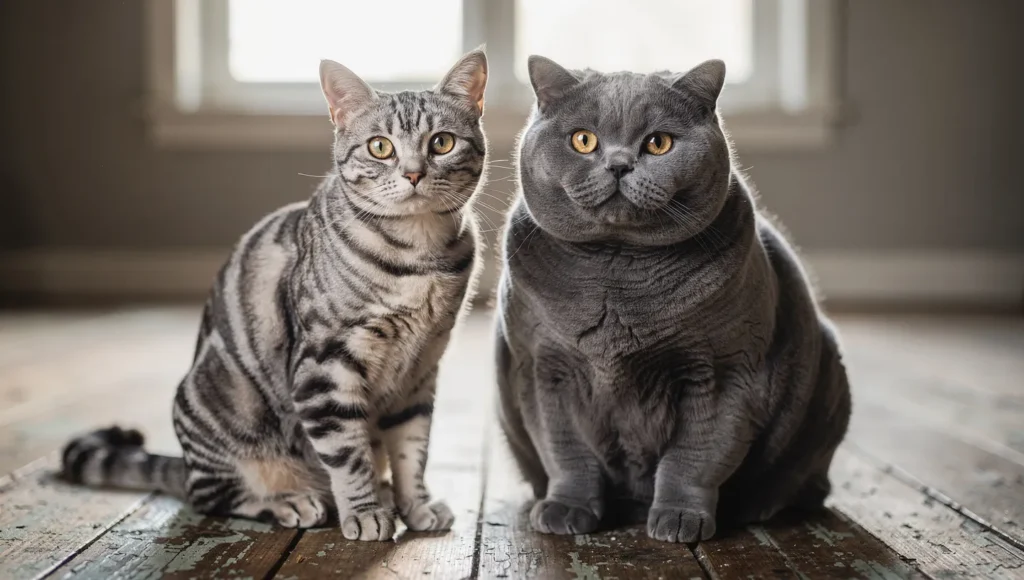
A lot of people compare these two — and honestly, the confusion is understandable. Similar name, similar vibe, very different cats.
| Feature | American Shorthair | British Shorthair |
|---|---|---|
| Build | Athletic, lean-ish | Chunky, very round |
| Face | Slightly angular | Very round/”teddy bear” |
| Personality | Independent + playful | Calm + reserved |
| Affection style | On its own terms | Quiet but loyal |
| Energy level | Moderate | Low-moderate |
| Grooming needs | Minimal | Minimal |
| Beginner friendly | ✅ Yes | ✅ Yes |
| Price range | $800–$1,500 | $1,500–$2,500 |
Both great cats. Different energy. If you want the more “stoic gentleman” vibe — British Shorthair. If you want something a little more playful and less couch-shaped — American Shorthair.
For a deeper look at how different shorthair breeds compare, this breakdown of Russian Blue vs British Shorthair gives you a good feel for how personality differences really play out in real life.
Caring for an American Shorthair: Easier Than You Think
The American Shorthair is one of the lower-maintenance breeds you can own — but “low maintenance” still means some maintenance. Here’s what actually matters.
Feeding: Quality Over Quantity
This breed has a healthy appetite. Like, a very healthy appetite.
And because American Shorthairs tend toward weight gain as they get older, what you feed them matters more than most people realize.
A high-protein, moderate-fat diet works best — ideally with wet food as a significant part of their routine.
Wet food helps with hydration (cats are notoriously bad at drinking enough water on their own) and keeps calories more manageable than free-feeding dry kibble all day.
Personally, I noticed a real difference in my cat’s energy and coat quality after switching to a better food. Not a dramatic overnight thing — more like a slow glow-up over a few weeks.
If you’re not sure where to start with food choices, this guide on best cat food for indoor cats breaks it down really clearly — especially useful if your cat lives mostly inside.
Grooming: Honestly, Pretty Simple
The short, dense coat is one of the great gifts of this breed.
Weekly brushing is enough to keep shedding under control and the coat looking healthy. No professional grooming required. No daily detangling sessions. No dramatic fur explosions on your couch cushions.
A simple brush-through once a week — maybe twice during shedding season — and you’re good. If you want a proper technique that actually works without stressing your cat out, this stress-free brushing guide is genuinely helpful.
Exercise: Yes, But Make It Fun
Here’s something people underestimate —
The American Shorthair looks like a lazy cat. Sturdy build, calm demeanor, perfectly content sitting in a sunbeam for three hours.
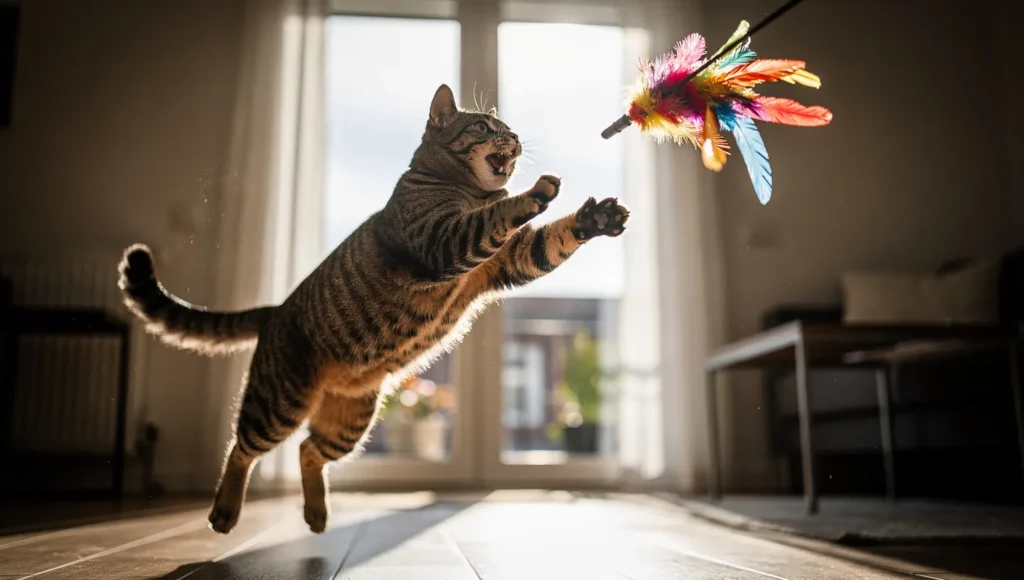
But this cat has real hunting instincts underneath that chill exterior. It needs mental stimulation and physical activity to stay healthy — especially as it gets older and the couch becomes increasingly tempting.
Interactive play sessions — even just 10–15 minutes twice a day — make a huge difference. Wand toys, puzzle feeders, anything that activates that “I’m technically a predator” brain.
For ideas on what actually works, this guide on best interactive cat toys has some solid picks broken down by energy level and age.
Health Issues to Watch For
The American Shorthair is genuinely one of the healthier purebred cats out there. Naturally developed breeds tend to be more genetically diverse — and that usually means fewer health problems.
That said, there are a couple of things worth knowing:
- Obesity. This is the #1 health risk for this breed.
They love food, they’re not hyperactive,
and weight sneaks up on them fast.
Portion control isn’t optional — it’s necessary. - Hypertrophic Cardiomyopathy (HCM).
This is a heart condition that affects many cat breeds,
and American Shorthairs have a genetic predisposition to it.
It’s not a guarantee — but it’s worth knowing about.
Regular vet checkups (especially as your cat ages)
can catch early signs before they become serious.
According to the
American Veterinary Medical Association (AVMA),
routine cardiac screening is recommended for breeds
with known HCM predisposition. - Dental disease. Common in most cats,
but worth mentioning. Regular dental care
goes a long way.
I’m not a vet — not even close. But knowing these things going in means you’re not blindsided later. And blindsided is exactly how I felt about a few things in that first month.
How Much Does an American Shorthair Cat Cost?
From a reputable breeder, an American Shorthair kitten typically costs between $800 and $1,500 in 2026.
Show-quality cats from champion bloodlines can go higher — sometimes $2,000+. But for a healthy, well-socialized pet-quality kitten? That $800–$1,500 range is realistic.
And then there’s the first year.
Honestly, the price of the cat surprised me less than the first-year costs. Here’s a rough breakdown of what to actually expect:
| Expense | Estimated Cost (2026) |
|---|---|
| Kitten purchase | $800 – $1,500 |
| Initial vet visit + vaccines | $150 – $300 |
| Spay/neuter | $200 – $500 |
| Food (annual) | $400 – $800 |
| Litter (annual) | $150 – $300 |
| Toys, bed, scratching post | $100 – $200 |
| Unexpected vet visits | $200 – $500+ |
| Total Year 1 (estimate) | $2,000 – $4,100 |
That’s a real number. Not meant to scare you — just meant to make sure you go in with open eyes.
Thinking about adoption instead?
Purebred American Shorthairs in shelters are rarer, but not impossible to find. The ASPCA and breed-specific rescues are worth checking.
Adoption fees are usually $50–$200, and the cat often comes already vaccinated and spayed/neutered.
Personally, I’d always say: check rescues first. Always.
Wait, I Have One More Question: A Quick Reality Check
Are American Shorthair cats good for beginners?
Yes — honestly, one of the best choices for first-time owners. They’re healthy, adaptable, and not high-drama. They’re forgiving of rookie mistakes in a way that, say, a Bengal absolutely is not.
Do they like to be held?
Some do, some don’t — it really depends on the individual cat and how they were socialized as kittens. As a general rule, American Shorthairs tolerate handling well but prefer to be near you rather than on you. Think “supportive coworker” energy, not “velcro attachment.”
Are they good with kids and other pets?
Generally, yes. They’re patient, sturdy, and not easily spooked. With kids, they’ll usually just walk away from chaos rather than react badly — which is honestly the ideal response. With other pets, a proper introduction goes a long way.
Do American Shorthair cats get lonely?
They handle alone time better than most breeds — but that doesn’t mean they’re completely fine being ignored. They still need daily interaction, play, and connection. “Independent” doesn’t mean “emotionally self-sufficient robot.”
Are they indoor or outdoor cats?
The American Shorthair adapts well to indoor life — and honestly, keeping them indoors is the safer choice. They have strong hunting instincts, so if they do go outside, supervision is a good idea. Indoor life with enough stimulation suits them just fine.
So — Are You Getting One?
Here’s my honest take after years with this breed:
The American Shorthair cat is not the most glamorous cat. It’s not the fluffiest, the most exotic, or the most dramatic. It won’t go viral on TikTok for doing something unhinged at 3am.
But it might be the most livable cat you’ll ever own.
It fits into your life instead of taking it over. It’s healthy, adaptable, and genuinely good-natured. And every now and then — like on a random Tuesday evening when you’ve been staring at a screen too long — it’ll show up and remind you to breathe.
If you’re still figuring out which breed is right for you, this guide on best cat breeds for beginners is a great next step — especially if you want to compare a few options before making a decision.
And if you already have an American Shorthair — or you’re seriously considering one — I’d genuinely love to hear about it.
Drop a comment below. Did you get one? Are you still on the fence? Did your cat also decide to become your unsolicited wellness coach at 6pm on a Tuesday?
Tell me everything. 👇