
So you want to buy a Persian cat — and honestly, I get it. I still remember the day my friend Kareem called me, completely losing his mind with excitement.
“Dude. I found the most BEAUTIFUL Persian kitten online. We’re getting it. This weekend. End of discussion.”
No research. No questions asked. Just pure, unfiltered excitement — and a credit card ready to go.
So we drove 45 minutes to meet a seller… at a gas station parking lot. Red flag number one. But did we care? Absolutely not. We were too busy arguing over what to name him.
We went with Marshmallow. Obviously.
The first night home, I woke up at 2 AM convinced my upstairs neighbor had installed a tiny engine in my ceiling. Nope. That was Marshmallow — snoring like a retired truck driver, parked directly on my pillow, with what appeared to be… tears running down his face onto mine.
Romantic? Not exactly.
That’s when I realized: nobody had warned us. Not about the flat face. Not about the grooming. Not about the vet bills that would soon become a monthly tradition. We just saw “fluffy” and “cute” and completely lost our minds.
If you’re thinking about buying a Persian cat right now — I’m genuinely glad you’re reading this first.
Quick note: Everything here is based on personal experience and research from trusted sources. It’s meant to inform, not replace advice from your vet. When in doubt, always check with a professional.
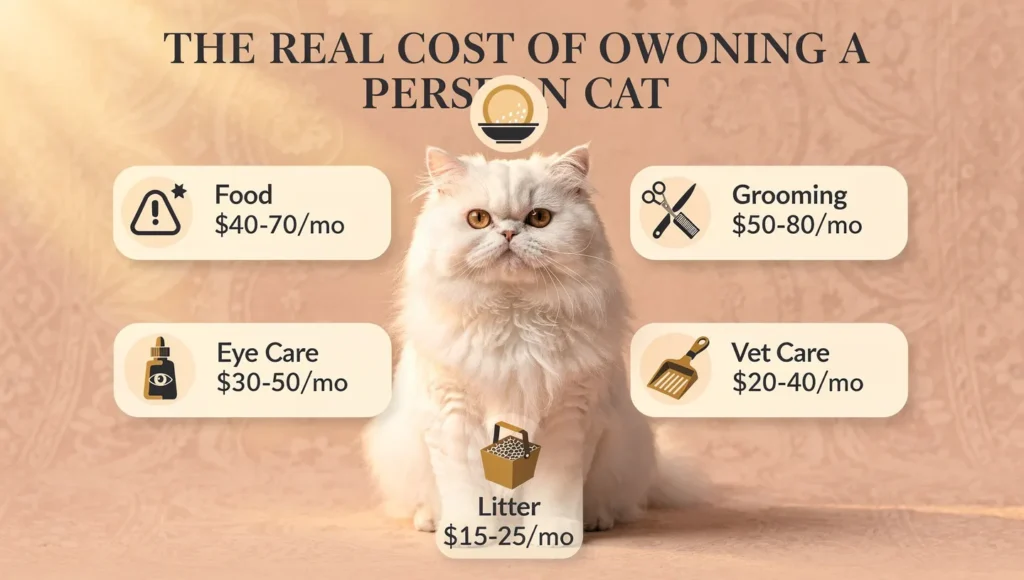
Table of Contents
- So… Is a Persian Cat Actually Right for You?
- The Personality Reality Check
- Persian Cats and Apartments — Yes or No?
- Are They Good for Beginners?
- How Much Does It Really Cost to Buy a Persian Cat?
- The Purchase Price (Breeder vs Adoption)
- The Monthly Costs Nobody Talks About
- Where to Buy a Persian Cat Safely (And Where NOT To)
- Reputable Breeders — What to Look For
- Persian Cat Adoption — A Smarter Option?
- The “Meet at a Gas Station” Red Flag 😂
- 7 Red Flags That Scream “Run Away” 🚩
- Flat Face vs Doll Face Persian — Which Should You Buy?
- Health Differences
- The Brachycephalic Issue Explained Simply
- Which Type Is Easier to Own?
- What No One Tells You About the First Month
- Quick Answers to Questions Most New Owners Ask
- How much does it cost to buy a Persian cat?
- Where can I buy a Persian cat safely?
- Are Persian cats good indoor cats?
- Persian cat adoption vs breeder — which is better?
- How much does a Persian cat cost per month?
- The Bottom Line
So… Is a Persian Cat Actually Right for You?
Persian cats are one of the most beautiful breeds you’ll ever see — calm, gentle, and almost ridiculously photogenic. But “beautiful” doesn’t always mean “easy.”
Before you even think about price or breeders, the first question you need to ask yourself is: does a Persian actually fit your lifestyle?
The Personality Reality Check
Persians are quiet, affectionate, and low-energy. They’re not going to knock your coffee off the table for sport (usually). They’re more of a “loaf on the couch and look majestic” type — which, honestly, sounds perfect until you realize that means they also need YOU around more than other breeds.
They don’t do well with long periods alone. If you’re traveling constantly or working 12-hour days, a Persian might not be the right fit.
From my experience, Marshmallow could handle a regular workday just fine — but the moment I went on a 5-day trip and left him with a friend, I came back to a cat who gave me the silent treatment for three full days.
Dramatic? Yes. Typical Persian behavior? Absolutely.
Persian Cats and Apartments — Yes or No?
Honestly, Persians are one of the best cat breeds for apartment living.
They’re quiet, they don’t need a yard, and they’re perfectly happy with a good window perch and a cozy blanket.
The only thing to consider is air quality — flat-faced Persians can be sensitive to dust and smoke, so good ventilation matters more than square footage.
If you want a deeper look at apartment-friendly breeds, check out our guide on the best cat breeds for apartments — it puts Persian right where it belongs.
Are They Good for Beginners?
This is where I need to be honest with you.
Persians are gentle and forgiving in terms of temperament — but their grooming and health needs are NOT beginner-simple. The daily eye cleaning, the coat brushing, the potential breathing issues… it’s a real commitment.
If you’re a first-time cat owner, you can absolutely do this. But go in with open eyes. Our full guide to the best cat breeds for beginners breaks down exactly what level of care different breeds need — worth reading before you decide.
How Much Does It Really Cost to Buy a Persian Cat?
So you’ve decided to buy a Persian cat — amazing choice. Now let’s talk numbers, because this is where most people get a rude awakening.
The Purchase Price (Breeder vs Adoption)
A Persian kitten from a reputable breeder typically costs anywhere between $800 and $2,500 — and yes, some show-quality lines can go even higher than that.
Adoption is a different story. If you go through a rescue or shelter, you might find a Persian for $75–$200 in adoption fees. The cat might be older, but honestly? Adult Persians are incredibly underrated. They’re calmer, already litter-trained, and — this is important — their personality is fully developed, so there are no surprises.
Personally, I’d seriously consider adoption before going straight to a breeder. Not because breeders are bad — there are excellent ones — but because there are a lot of beautiful Persians sitting in rescues right now waiting for exactly the kind of home you’re about to offer.
The Monthly Costs Nobody Talks About
Here’s the thing most “Persian cat for sale” listings conveniently forget to mention: the purchase price is just the beginning.
| Monthly Expense | Estimated Cost |
|---|---|
| Premium cat food (wet + dry) | $40–$70 |
| Litter | $15–$25 |
| Grooming supplies | $10–$20 |
| Professional grooming (optional) | $50–$80 |
| Eye cleaning supplies | $5–$10 |
| Routine vet visit (averaged monthly) | $20–$40 |
| Toys & accessories | $10–$15 |
| Emergency fund (highly recommended) | $30–$50 |
| Total estimate | $180–$310/month |
Most people Google “how much is a Persian cat” and see $1,000 and think that’s the full cost. It’s not even close.
Marshmallow’s first year cost me significantly more than I expected — mostly because of two emergency vet visits related to his breathing, and one very expensive professional grooming session after I let his coat get completely out of control in month three.
Lesson learned.
For food specifically, Persians do better on high-quality, protein-rich diets — especially wet food for hydration. Our guide on the best cat food for indoor cats has some solid recommendations that work well for flat-faced breeds.
Where to Buy a Persian Cat Safely (And Where NOT To)
Okay. This is the part Kareem and I failed spectacularly at. When you decide to buy a Persian cat, where you get them matters just as much as the cat itself. Let me save you the gas station parking lot experience.
Reputable Breeders — What to Look For
A good breeder isn’t hard to spot once you know what you’re looking for.
They will always let you visit. No excuses, no “the space is being sanitized,” no “the mother is at a wellness retreat.” If they’re proud of how they raise their kittens, they’ll want you to see it.
They’ll also provide:
- Health certificates and vaccination records
- Genetic testing results (especially for PKD — Polycystic Kidney Disease,
which Persians are prone to) - Information about both parents
- A contract that includes a return policy if health issues arise
The ASPCA’s guide to finding a reputable breeder is worth bookmarking — it covers exactly what questions to ask and what answers should make you walk away.
Persian Cat Adoption — A Smarter Option?
Most people don’t realize that Persian-specific rescues exist. Organizations like Persian & Himalayan Cat Rescue place adult cats that need rehoming — and these cats often come already spayed/neutered, vaccinated, and with a known health history.
This is where I’d start if I were doing it again.
The “Meet at a Gas Station” Red Flag 😂
I wish this was a joke. It is not.
When a seller refuses to let you see where the kitten was raised, insists on meeting in a neutral public location, and gets weirdly vague about the mother’s health — that is a kitten mill. Full stop.
Kareem looked at me that day in the parking lot and said: “He seemed nice on the phone though.”
He did seem nice. Marshmallow also arrived with a fungal skin infection hiding under all that fluff, which we discovered approximately four days and one vet bill later.
Most people get this wrong: a low price is not a deal. It’s a warning sign.
7 Red Flags That Scream “Run Away” 🚩
Whether you’re searching for persian kittens for sale near you or browsing online listings, these are the signs that should make you close the tab immediately:
- Refuses to let you visit — no legitimate reason exists for this
- Price seems too good to be true — healthy, well-bred Persians
aren’t cheap - Pushes for quick payment — “someone else is interested, decide NOW”
- No health records available — vaccines, deworming, vet checks are
standard - Can’t tell you the parents’ health history — especially PKD status
- Wants to meet in a public place instead of their home or cattery
- The kitten looks younger than 12 weeks — ethical breeders never
release kittens before 12 weeks minimum
And this is important: if anything feels off during your communication with a seller — trust that feeling. A good breeder will never pressure you.
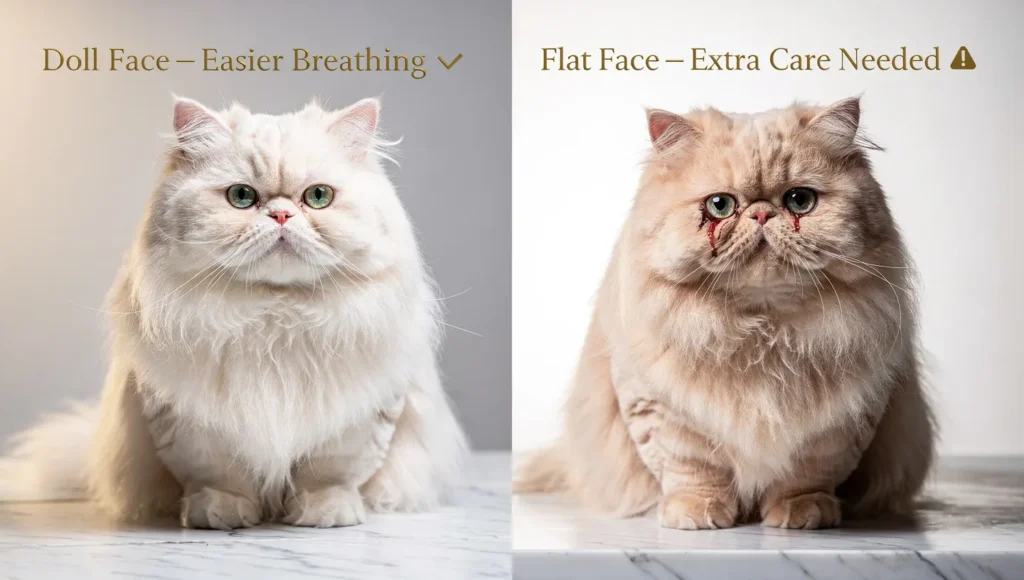
Flat Face vs Doll Face Persian — Which Should You Buy?
This is a question most first-time Persian buyers don’t even know to ask — and it makes a significant difference in daily care and long-term health.
Health Differences
The Doll Face Persian (also called Traditional Persian) has a more natural facial structure — longer nose, wider nostrils, less compressed features. They breathe easier, have fewer eye discharge issues, and generally have fewer respiratory complications.
The Flat Face Persian (Peke-faced or Extreme Persian) is the one you see on Instagram — dramatic, round face, tiny nose. Gorgeous? Yes. But that flat face comes with a condition called Brachycephalic Obstructive Airway Syndrome (BOAS) — which can range from mild snoring (hello, Marshmallow) to serious breathing difficulties that require surgical intervention.
According to the AVMA, brachycephalic cats are significantly more prone to respiratory stress, especially in heat or during physical exertion.
The Brachycephalic Issue Explained Simply
Think of it this way: imagine trying to breathe through a straw while wearing a turtleneck two sizes too small. That’s a rough day for a severely flat-faced cat.
It doesn’t mean you shouldn’t get one — it means you need to be prepared.
No overheating, no stressful travel without planning, regular vet checkups, and knowing the signs of respiratory distress. Our detailed guide on cat respiratory infection symptoms is essential reading if you’re going the flat-face route.
Which Type Is Easier to Own?
Honestly? The Doll Face is easier — less maintenance, fewer health scares,
lower vet costs over time. But if your heart is set on the classic flat face look, just go in prepared and choose a breeder who prioritizes health over extreme features.
What No One Tells You About the First Month
So you’ve done your research, decided to buy a Persian cat the right way, found a reputable breeder, avoided the gas station trap, and brought your Persian home. Congratulations — the chaos is just getting started.
Here’s what the first month actually looks like, based on real experience and zero sugarcoating:
Week 1: The Hiding Phase
Your Persian will probably spend the first few days hiding under the bed or behind the couch. This is completely normal. Don’t force interaction — just let them adjust at their own pace. Leave food, water, and a litter box nearby and give them space.
If you want to understand what’s happening emotionally during this adjustment period, our guide on why cats hide explains it really well.
Week 2: The Personality Reveal
This is when things get interesting. The real Persian comes out — cautious but curious, affectionate but on their own terms. Marshmallow spent most of week two following me from room to room about three feet behind me, pretending he wasn’t following me.
Very dignified behavior.
Week 3: The Grooming Reality
And this is where things change.
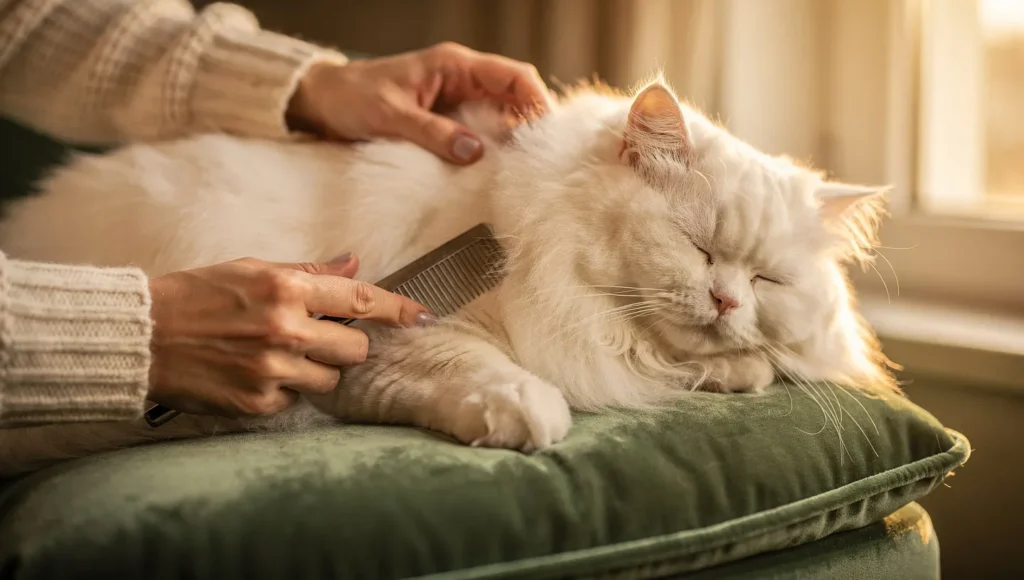
That gorgeous coat? It needs brushing. Every. Single. Day. Or every other day at minimum. If you let it go, you’ll end up with mats that are painful to remove — and trust me, a matted Persian is not a happy Persian.
I learned this the hard way when Marshmallow developed a mat near his shoulder the size of a golf ball. The vet visit that followed was educational and expensive. Our full guide on how to remove matted cat fur safely is genuinely worth reading before you need it — not after.
Week 4: The Eye Cleaning Routine
Persians produce more eye discharge than most breeds — especially flat-faced ones. You’ll need to gently clean around their eyes daily with a soft, damp cloth or vet-approved wipes.
Ignore this and you’ll end up with tear stains, skin irritation, and a cat who looks perpetually sad. Five minutes a day prevents all of that.
Most people get this wrong by using regular cotton balls with tap water. Use proper eye wipes made for cats, or ask your vet for a recommendation.
Quick Answers to Questions Most New Owners Ask
How much does it cost to buy a Persian cat?
A Persian kitten from a reputable breeder typically costs between $800 and $2,500 depending on the bloodline, location, and whether the cat is pet quality or show quality. Adoption from a rescue organization is significantly cheaper — usually $75 to $200 — and is a genuinely great option worth considering.
Where can I buy a Persian cat safely?
The safest options are registered breeders who allow home visits,
Persian-specific rescue organizations, and reputable adoption platforms like Petfinder. Avoid sellers who refuse visits, push for quick decisions, or want to meet in public locations instead of showing you where the kittens were raised.
Are Persian cats good indoor cats?
Yes — Persians are actually one of the best breeds for indoor living.
They’re calm, quiet, not particularly athletic, and perfectly content with a cozy environment. They don’t need outdoor access and generally prefer the comfort and safety of being inside.
Persian cat adoption vs breeder — which is better?
Both are valid paths, but they serve different needs. A breeder gives you a kitten with a known health history and predictable traits. Adoption gives you an adult cat that’s often already vaccinated and spayed or neutered — and you’re giving a home to a cat that genuinely needs one. If you’re open to an adult cat, adoption is hard to beat.
How much does a Persian cat cost per month?
Realistically, budget between $180 and $310 per month for food, litter, grooming supplies, eye care, and a portion set aside for vet visits. This can go higher if you use professional grooming services regularly or if unexpected health issues arise — which, with flat-faced Persians especially, is something to plan for.
The Bottom Line
Buying a Persian cat is one of the most rewarding decisions you can make — as long as you walk into it with both eyes open. And yes, preferably with eyes that are dry, unlike Marshmallow’s, which require daily attention.
They’re not the easiest breed. The coat, the eyes, the potential breathing issues — it’s real work. But what you get in return is a genuinely calm, loving, ridiculously beautiful companion who will follow you around pretending he isn’t following you, steal your warmest blanket without apology, and somehow make every single day a little softer.
Kareem, by the way, ended up adopting his own Persian six months after the Marshmallow incident. He named her Cream Puff.
She also snores.
If you’re ready to take the next step, start with our complete Persian cat care guide — it covers everything from daily grooming routines to long-term health management, so you’re fully prepared before your new companion comes home.