
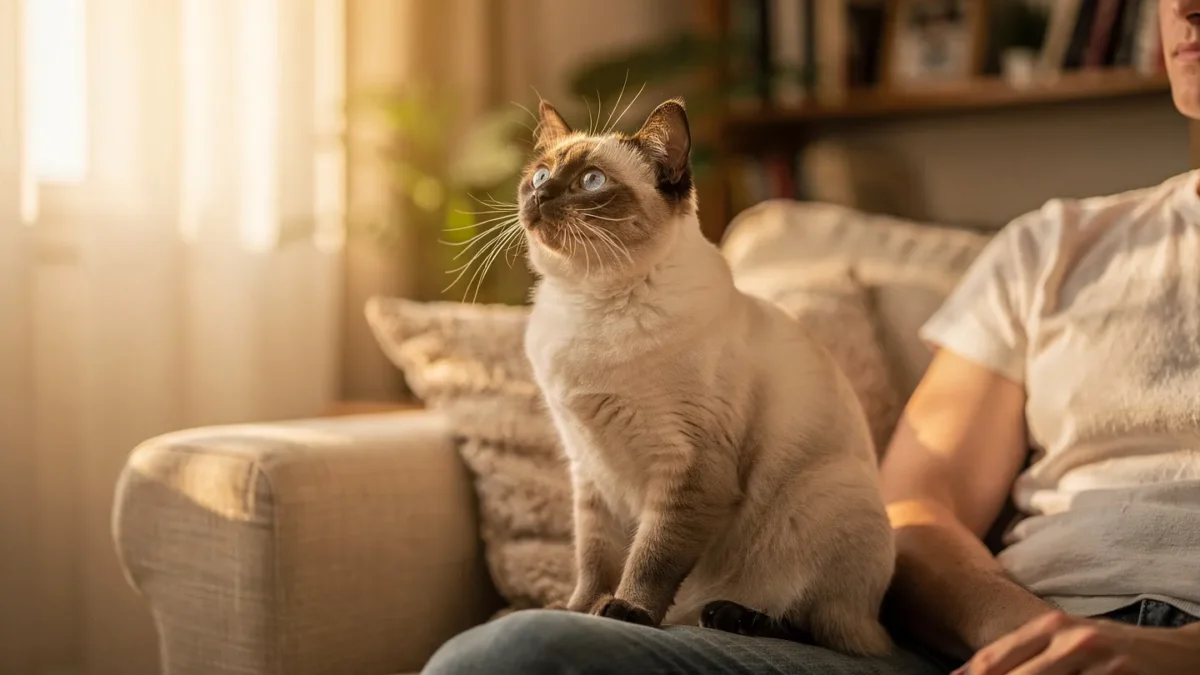
My coworker Sofia is the kind of person who color-coordinates her throw pillows with her curtains. So when she told me she was getting a cat, I wasn’t surprised she chose a Birman. “He’s going to complete the living room,” she said, showing me a photo of a creamy, blue-eyed kitten she’d already named Romeo.
Two weeks later, she called me. Almost in tears. Not sad tears — more like I-don’t-know-whether-to-laugh-or-cry tears.
Romeo had figured out how to open her kitchen cabinets. He’d stolen an entire loaf of bread. And when she found him, he was curled up inside her large salad bowl, completely unbothered, like he’d just renovated the place and decided this was his new bedroom.
I told her, very seriously: “Sofia, Romeo isn’t completing your living room. Romeo IS the living room now.”
She didn’t think it was funny. Romeo did, probably.
And honestly? That one phone call taught me more about Birman cats than any breed profile I’d ever read.
Quick note before we dive in: Everything here is based on personal experience with cats, conversations with other Birman owners, and research from trusted sources like ASPCA and AVMA. This is not veterinary advice — if your cat is showing health concerns, please reach out to your vet. They went to school for this. I just have strong opinions and a lot of cat hair on my couch.
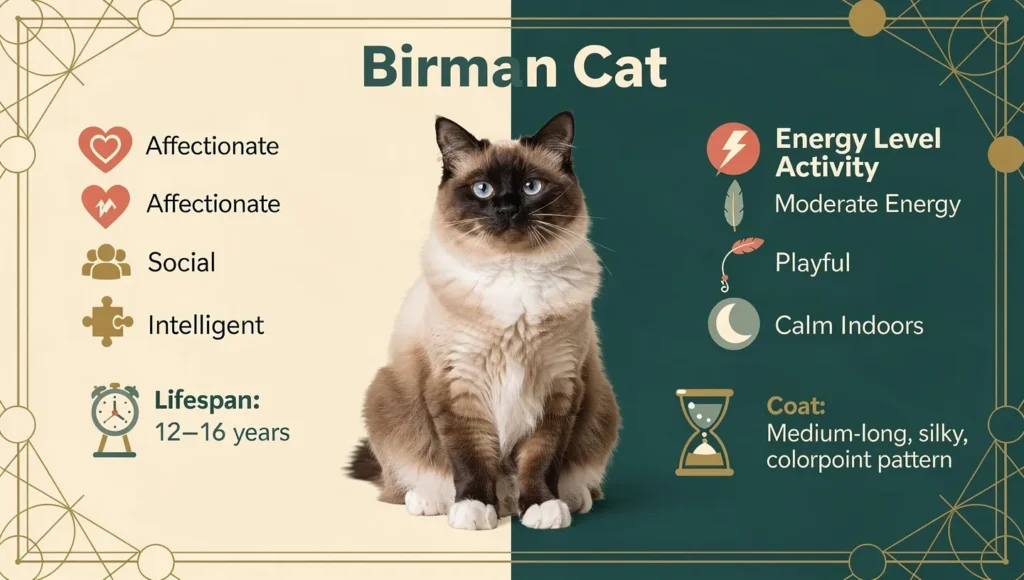
Table of Contents
- The Birman Cat: A Quick Breed Snapshot
- Birman Cat Personality — The “Quiet Shadow” Effect
- What’s It Actually Like Living With a Birman Every Day?
- Are Birman Cats Good for Beginners?
- Birman Cat Grooming — Less Work Than You Think (But There Are Tricks)
- Birman Cat Health — What Vets Actually Watch For
- How Much Does a Birman Cat Cost in 2026?
- Are Birman Cats Hypoallergenic?
- Birman vs Ragdoll — Which One Is Right for You?
- Birman Cat Pros and Cons — The Honest Version
- Is a Birman Cat Right for YOU?
- Birmans: The Quick Answers
- Do Birman cats like to be held?
- Are Birman cats indoor cats?
- How long do Birman cats live?
- Do Birman cats get lonely?
- Are Birman cats high maintenance?
- One Last Thing About Sofia and Romeo
The Birman Cat: A Quick Breed Snapshot
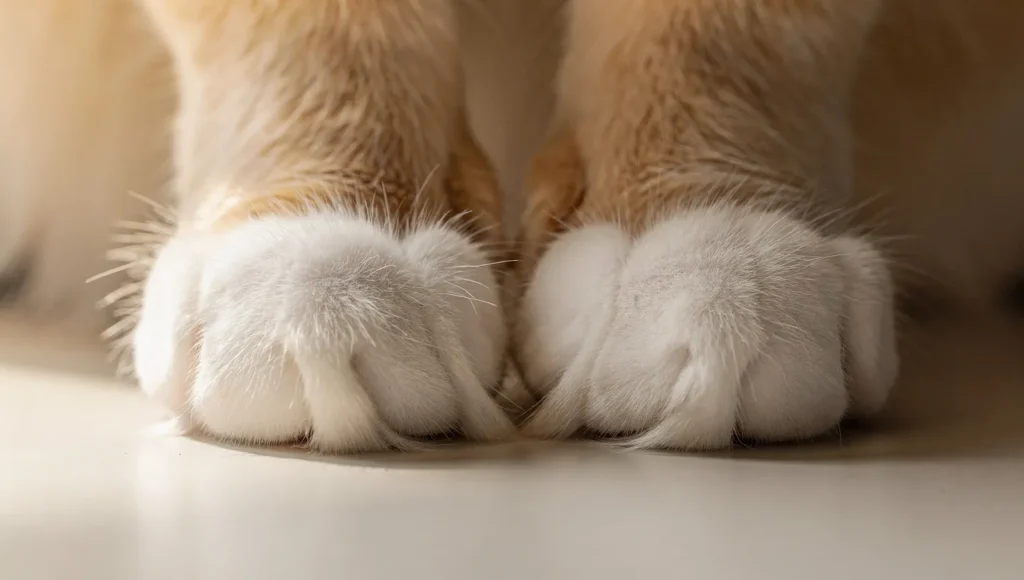
The Birman is a semi-longhaired breed with silky fur, a pointed color pattern, and — this is their signature — pure white “gloves” on all four paws. They originated in Burma (now Myanmar) and are sometimes called the “Sacred Cat of Burma,” which, if Romeo’s behavior is any indication, they take very seriously.
| Feature | Details |
|---|---|
| Size | Medium to large (8–12 lbs) |
| Lifespan | 12–16 years |
| Coat | Semi-long, silky, minimal matting |
| Shedding | Moderate (seasonal spikes) |
| Noise Level | Low to moderate — they talk, but softly |
| Energy Level | Medium — playful but not chaotic |
| Good for Beginners? | Yes, generally |
| Good for Apartments? | Yes |
This is a cat built for people who want real companionship without the drama of a Siamese or the full-time grooming commitment of a Persian.
Birman Cat Personality — The “Quiet Shadow” Effect
Birman cats are affectionate. Not in an overwhelming, clingy, “I will scream if you close the bathroom door” way — but in a quiet, steady way that sneaks up on you.
The term some behaviorists use is “Velcro Cat Syndrome” — meaning the cat attaches to you and follows you from room to room without being loud about it. Most Birmans fit this description almost perfectly. They’ll be wherever you are. Working from home? Cat on the desk. Watching TV? Cat next to you. Taking a shower? Cat sitting outside the bathroom door, judging you silently.
Here’s the thing though — this is not the same as separation anxiety. A cat with separation anxiety will panic, act out, and sometimes cause damage when left alone. A Birman will miss you, maybe meow a little when you walk back in, and then go back to acting like your presence was never that big a deal anyway. They’re dignified like that.
Personally, I find this the most loveable thing about them. They’re interested in you without being desperate about it.
They’re also not big talkers. You’ll hear a soft chirp here, a gentle meow there — nothing like the full-volume commentary you’d get from a Siamese. If you want a cat who lets you know how they feel through subtle body language rather than constant vocalization, Birman is your cat.
What’s It Actually Like Living With a Birman Every Day?
This is where most breed guides get vague. Let me be specific.
With kids: Really good, actually. Birmans are patient and rarely swipe unprovoked. They’re not fragile or jumpy, which matters a lot when there’s a five-year-old involved. They’ll walk away before they scratch — and that tells you a lot about their temperament.
With other cats: Smooth, usually. They’re social enough to enjoy company, but not so territorial that introductions become a war zone. Follow a proper introduction protocol and you’ll be fine.
With dogs: Hit or miss — depends more on the dog than the cat. Birmans are confident enough not to bolt immediately, which actually helps.
With strangers: They won’t hide under the bed for three days when guests arrive. Most will come investigate eventually. Romeo, according to Sofia, greeted her plumber within four minutes. Then followed him around the apartment the whole time he was there. The plumber was charmed. Sofia was mortified.
Alone time: They handle it reasonably well. Not ideal for someone who travels constantly, but a working-from-office schedule? Fine. Just make sure they have enrichment — a good cat tree and some interactive toys will go a long way.
Honestly, the Birman is one of those cats where the daily reality is better than what’s advertised. Most breed guides make them sound like sweet but generic lap cats. What they don’t tell you is that Birmans have a very specific personality — curious, quietly mischievous, and genuinely interested in whatever you’re doing.
Which brings me back to Romeo.
The bread incident? Turned out it wasn’t even about the bread. Sofia set up a little camera after that. Romeo had been opening those cabinets for weeks. He’d open them, look inside, close them, and walk away. He just liked knowing he could.
That’s a Birman for you.
Are Birman Cats Good for Beginners?
Yes — and this is one of the more honest “yes” answers you’ll find for any cat breed.
Birmans are forgiving with new owners. They’re not hyper-sensitive to handling mistakes, they adapt to routines fairly easily, and they won’t make your life miserable if you don’t get everything perfect on day one.
Birman might NOT be right for you if:
- You’re away from home 12+ hours daily with no other pets
- You want a truly independent, low-interaction cat
- You’re allergic and hoping for a hypoallergenic solution (more on this shortly)
- You can’t commit to semi-regular grooming
Birman is a perfect match if:
- You want a calm, loving companion that’s actually present without being demanding
- You have kids, other cats, or a generally busy household
- You’re a first-time cat owner who wants affection without chaos
- You live in an apartment — they adapt very well to smaller spaces, similar to other top apartment breeds
Birman Cat Grooming — Less Work Than You Think (But There Are Tricks)
Let me be upfront: when people hear “semi-longhaired cat,” they immediately picture a full-time grooming commitment. With Birmans, that’s not quite the reality.
Their coat is silky and has very little undercoat compared to breeds like the Maine Coon or the Norwegian Forest Cat.
That means less matting overall. But “less” doesn’t mean “none” — and there are two specific spots that catch most new Birman owners off guard.
Behind the ears. This is where the fur tends to tangle first, quietly, before you notice. Run your fingers there once a week and you’ll catch it early. Let it go for a month and you’re dealing with a knot that requires actual patience to remove — check out this guide on how to safely remove matted cat fur if you’re already in that situation.
Around the hindquarters. This is the one nobody talks about in polished breed profiles. Birmans have long fur near their backend, and litter — especially fine-grain or clumping varieties — can stick to it after a bathroom visit. The practical solution?
A simple sanitary trim every 6–8 weeks, just around that area. You can ask a groomer to do it, or learn to do it carefully at home with rounded-tip scissors. It takes maybe three minutes and saves you from a very unpleasant surprise on your couch later.
Also worth knowing: choosing the right litter actually helps here. Low-tracking, non-clumping formulas tend to cause far fewer fur-related incidents.
The 2026 cat litter guide breaks down the best options for long-haired breeds specifically.
For regular brushing, two to three times a week is realistic. A stainless steel comb works better than a slicker brush for Birman fur — it gets through the silky layers without damaging the coat.
This brushing guide walks you through the technique if you’ve never done it before.
Shedding-wise: expect moderate year-round with two seasonal spikes — spring and fall. Not dramatic, but your black sweaters will notice.
Birman Cat Health — What Vets Actually Watch For
Birmans are generally healthy cats. A well-bred Birman from a responsible breeder can
live comfortably between 12 and 16 years. But “generally healthy” still means there are specific things worth knowing before you bring one home.
Hypertrophic Cardiomyopathy (HCM)
This is the most common heart disease in cats overall, and Birmans have a known genetic predisposition. HCM causes the heart muscle to thicken over time, which eventually affects its ability to pump blood properly. It can develop silently — many cats show no symptoms until the disease is fairly advanced.
This is why annual cardiac screenings matter for this breed.
Polycystic Kidney Disease (PKD)
PKD causes fluid-filled cysts to form in the kidneys. It’s hereditary, which means a cat either carries the gene or doesn’t — and a DNA test can confirm this before symptoms ever appear.
This is important: If you’re buying from a breeder, ask for written DNA clearance documentation for both parents — specifically for HCM and PKD. A reputable breeder will have this without hesitation. If they get defensive or vague when you ask?
Walk away. This is not a minor request — it’s basic responsible breeding practice,
and it protects you from inheriting a serious (and expensive) medical situation alongside your kitten.
Obesity is a quieter but very real risk. Birmans love food and are not particularly athletic by default. Without some structure around feeding and play, weight gain sneaks up on them. If you notice your cat’s belly swinging noticeably when they walk, that’s worth paying attention to — though it’s worth knowing that Birmans do have a natural primordial pouch that can look like extra weight but isn’t.
Know the difference between those two things. Your vet can help you assess it properly at the annual visit.
For a broader reference on warning signs that something’s off with your cat’s health, this guide covers the 10 most critical signals every owner should recognize.
How Much Does a Birman Cat Cost in 2026?
Here’s the honest breakdown — no outdated numbers.
| Expense | Realistic Range (2026) |
|---|---|
| Kitten from reputable breeder | $900 – $2,200 |
| Adoption / rescue | $75 – $250 |
| Initial setup (carrier, litter box, tree, toys) | $300 – $600 |
| Annual food cost | $600 – $1,100 |
| Annual vet visits (routine) | $250 – $500 |
| Professional grooming (optional, 4–6x/year) | $50 – $90 per visit |
| Pet insurance (recommended for this breed) | $30 – $60/month |
The breeder price range is wide because it depends heavily on location, coat quality, lineage, and whether the kitten is show-quality or pet-quality. Pet-quality Birmans are perfectly healthy — they just might have a minor cosmetic variation that disqualifies them from cat shows. For a family companion, pet-quality is completely fine.
Pet insurance is worth seriously considering with Birmans given the HCM and PKD genetic factors. The monthly cost is much easier to manage than a sudden cardiology workup bill.
Are Birman Cats Hypoallergenic?
Short answer: No.
No cat is truly hypoallergenic — including Birmans. The culprit in cat allergies isn’t actually fur, it’s a protein called Fel d 1, which is produced in cat saliva, skin, and glands. When cats groom themselves, this protein gets onto their fur and eventually into the air and onto your surfaces.
Birmans produce Fel d 1 at average levels. They’re not in the lower-allergen category the way Siberian cats sometimes are.
If you have cat allergies and you’re set on a Birman, spend real time with the specific cat before committing — at least an hour or two in the same space.
The cat dander and allergies guide has practical strategies for reducing allergen exposure at home if you decide to move forward.
Birman vs Ragdoll — Which One Is Right for You?
This is one of the most common comparisons people make, and honestly — it’s a fair one.
Both breeds are gentle, affectionate, blue-eyed, and semi-longhaired. From a distance, they can even look similar.
But they’re different in ways that matter for daily life.
| Feature | Birman | Ragdoll |
|---|---|---|
| Size | Medium-large (8–12 lbs) | Large (10–20 lbs) |
| Coat maintenance | Moderate | Moderate-high |
| Personality style | Curious, quietly active | Extremely relaxed, floppy |
| Vocal level | Low-moderate | Low |
| Independence | Some | Very low — highly people-dependent |
| Energy level | Medium | Low-medium |
| Price range | $900–$2,200 | $1,000–$2,500 |
The Ragdoll goes completely limp when you pick them up — that’s literally where the name comes from. They’re arguably even more passive than Birmans. If you want a cat that’s more interactive and playful alongside the affection,
Birman edges ahead. If you want the ultimate lap cat who requires almost zero stimulation to be content, Ragdoll is probably your answer.

Birman Cat Pros and Cons — The Honest Version
No inflated praise. No glossing over the annoying parts.
✅ The good stuff:
- Genuinely affectionate without being suffocating
- Calm and adaptable — great for apartments and busy households
- Quiet enough that your neighbors won’t file a noise complaint
- Excellent with children and other pets when properly introduced
- Easier to groom than their coat length suggests
- Long lifespan with proper care
❌ The real challenges:
- That hindquarters fur situation requires regular attention — skip it and
you’ll regret it - Moderate seasonal shedding — your furniture will know
- Genetic health risks (HCM, PKD) mean vet costs can add up — pet insurance
is genuinely advisable - They don’t love being left completely alone for long stretches —
not a crisis, but worth knowing - Finding a truly reputable breeder takes effort — and the price reflects quality
for good reason - They will open your cabinets if they figure out how. Romeo is proof.
This is not a joke.
Is a Birman Cat Right for YOU?
Most breed guides end with something vague like “Birmans make wonderful companions for the right family!” That tells you nothing.
Here’s a more useful version:
Get a Birman if:
- You want a cat that’s genuinely present — following you around, hanging out
nearby, being part of whatever you’re doing - You have a calm household, kids, or other pets
- You’re a first-time cat owner who wants affection with a manageable
care commitment - You’re home a reasonable amount of the time
Reconsider if:
- You travel extensively and have no other pets or regular cat-sitter
- You’re looking for a strictly independent, hands-off cat
- Grooming — even moderate grooming — is genuinely not something you’ll do
consistently - You have significant cat allergies and no plan for managing them
There’s no bad answer here. It’s just about matching the cat’s actual personality to your actual life.
Birmans: The Quick Answers
Do Birman cats like to be held?
Most do, yes — but they’ll let you know when they’ve had enough. They’re affectionate, not passive. Expect a cat that enjoys being held for a few minutes, then politely indicates it’s time to move on.
Are Birman cats indoor cats?
Yes, and they do very well indoors. They don’t have a strong roaming instinct and are content with a well-enriched indoor environment. A good window perch will make their whole day.
How long do Birman cats live?
Typically 12–16 years. Some live longer with good genetics, consistent vet care, and a healthy diet.
Do Birman cats get lonely?
They can, especially if left alone for long periods regularly. They’re social cats. If your schedule keeps you away for 10+ hours daily, consider a second cat for companionship — Birmans generally do well with other cats.
One Last Thing About Sofia and Romeo
Last I checked, Romeo has a dedicated cabinet in the kitchen. Sofia bought one of those child-proof locks for the bread drawer specifically. She also bought him a large orthopedic cat bed, which he uses occasionally — mostly as a launching pad to reach the top of the refrigerator.
She called me last month, not crying this time. She was laughing. “He was sitting in my salad bowl again,” she said. “But this time he brought his toy mouse in with him. Like he was setting up a whole situation.”
That’s a Birman. They don’t just live in your home. They reorganize it according to a plan only they fully understand.
Have a Birman story of your own? A cabinet they’ve conquered, a spot they’ve claimed, a look they gave you that made you question who’s actually in charge?
Drop it in the comments — we read every single one, and honestly, your real-life stories teach other owners more than any breed guide ever could.
If you know someone who’s thinking about getting a Birman — or someone who already has one and still can’t figure out why their cat does what it does — share this article with them. The more stories we collect, the better this community gets for everyone.