

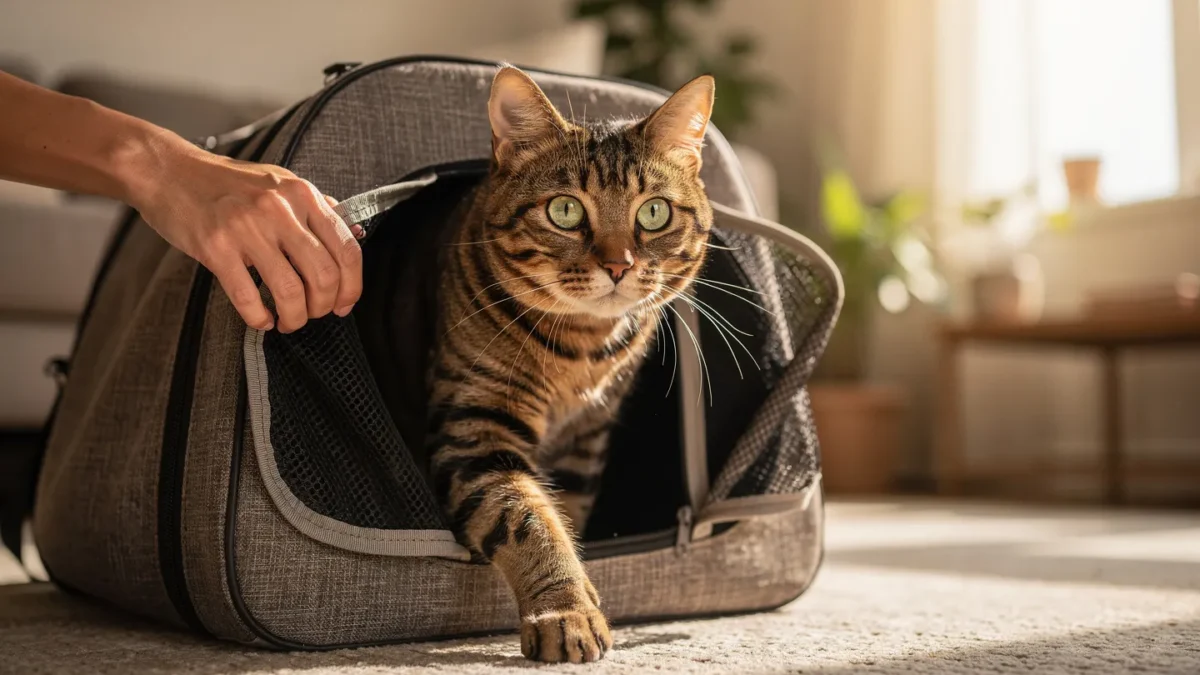
The first time I traveled with my cat, I thought any carrier would do the job.
I grabbed a cheap soft-sided bag from a pet store, tossed in a blanket, and assumed she’d be fine. She wasn’t. Twenty minutes into the drive, she had pushed the zipper open halfway, was clawing at the mesh, and making a sound I’d never heard before — somewhere between a cry and a growl.
That trip taught me something I wish I’d known earlier: finding the best cat carriers isn’t just about picking a bag; it’s about choosing your cat’s entire world during travel. Get it wrong, and you’re not just dealing with a stressed cat — you’re dealing with a safety risk.
I’ve tested and researched carriers extensively since then, and this guide is everything I wish existed back on that first terrible drive.
A quick note: This article is based on personal experience, hands-on research, and trusted sources including ASPCA and veterinary guidelines. It’s meant for informational purposes only and isn’t a substitute for professional veterinary advice — especially if your cat has health conditions or travel anxiety.
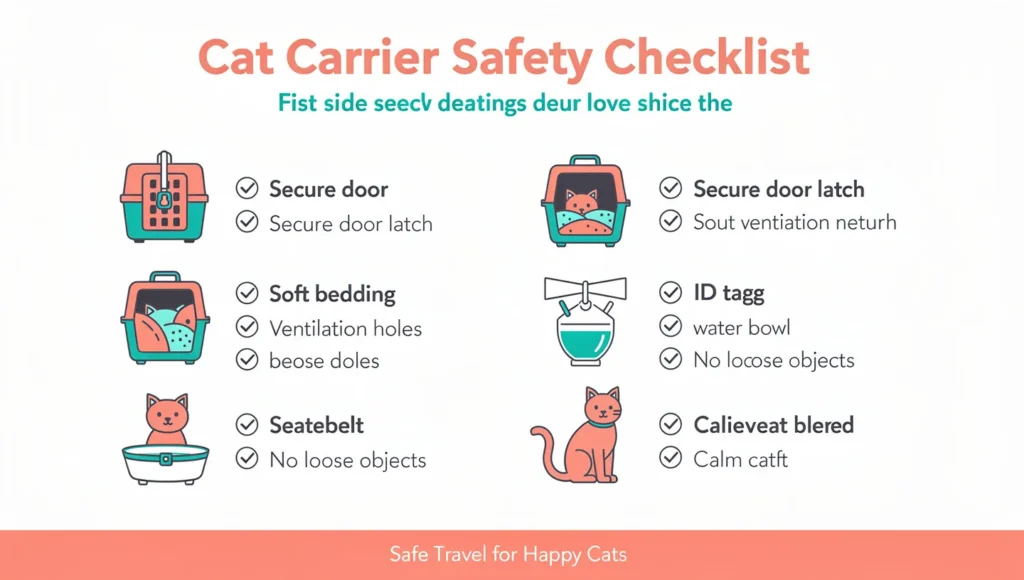
Table of Contents
- The 11 Best Cat Carriers of 2026 — Quick Comparison
- How to Choose the Right Cat Carrier (Before You Buy Anything)
- Size & Weight: The Rule Most Owners Get Wrong
- Airline Travel vs. Car Travel — What Actually Changes
- Ventilation, Latches & Material — What Actually Matters
- Signs Your Cat Will (or Won’t) Tolerate a Carrier
- The 11 Best Cat Carriers of 2026 — Reviewed & Ranked
- 🏆 Best Overall Cat Carrier
- ✈️ Best Airline-Approved Cat Carriers
- 🐱 Best Cat Carriers for Large Cats
- 💰 Best Budget Cat Carriers
- 🐾 Best for Two Cats
- 🚗 Best for Road Trips
- 🏠 Best Hard-Sided Carrier
- How to Get Your Cat Comfortable With a Carrier in 7 Days
- Still Have Questions? Here’s What Most Cat Owners Ask First
- Can I leave my cat in a carrier overnight?
- What size carrier do I need for a 15 lb cat?
- Soft-sided or hard-sided — which is better?
- How do I clean a cat carrier after an accident?
- Do cats need water during travel?
- One Last Thing Before You Buy
The 11 Best Cat Carriers of 2026 — Quick Comparison
Not everyone has time to read everything. Here’s a fast breakdown of the top picks in each category:
| Category | Top Pick | Best For |
|---|---|---|
| 🏆 Best Overall | Sleepypod Air | All-around safety & comfort |
| ✈️ Best Airline-Approved | Sherpa Original Deluxe | Under-seat fit, major airlines |
| 🐱 Best for Large Cats | Petluv “Happy Pet” | Cats 20+ lbs |
| 💰 Best Budget Pick | AmazonBasics Soft Carrier | Casual car trips |
| 🐾 Best for Two Cats | Petsfit Expandable | Two small-to-medium cats |
| 🚗 Best for Road Trips | Sleepypod Mobile Pet Bed | Crash-tested, seatbelt-ready |
How I chose these: I looked at ventilation design, latch security, airline compliance (IATA standards), real user feedback, and — most importantly — whether cats actually tolerate them without losing their minds.

How to Choose the Right Cat Carrier (Before You Buy Anything)
Most people skip this part. They see a carrier that looks nice, check the price, and click “add to cart.” Then they wonder why their cat refuses to go near it.
Here’s the thing — choosing the best cat carrier for travel isn’t about aesthetics. It’s about matching the carrier to your cat’s size, your travel type, and your cat’s personality. Get those three right, and everything else falls into place.
Size & Weight: The Rule Most Owners Get Wrong
Your cat should be able to stand up, turn around, and lie down comfortably inside the carrier. That’s the baseline, according to ASPCA guidelines.
But here’s what most guides don’t tell you: bigger isn’t always better.
A carrier that’s too large actually increases anxiety during travel. Cats feel more secure in snug spaces — it mimics the feeling of hiding in a small den. If your cat slides around every time you turn a corner, she’ll be stressed the entire trip.
Quick sizing guide:
- Measure your cat from nose to tail base
- Add 4–6 inches to that length
- That’s your minimum carrier length
For weight, most standard carriers handle cats up to 15 lbs. If your cat is heavier — and plenty of domestic cats are — you’ll need a carrier specifically rated for larger builds. I’ll cover those separately below.
Airline Travel vs. Car Travel — What Actually Changes
This is where things change depending on where you’re going.
For airplane travel, the carrier has to fit under the seat in front of you (typically 18″ x 11″ x 11″, but this varies by airline). It also needs to be soft-sided, have proper ventilation on at least three sides, and meet IATA live animal regulations. Always check your specific airline’s pet policy before buying — United, Delta, and Turkish Airlines each have slightly different requirements.
For car travel, you have more flexibility on size, but security becomes the priority. A carrier that isn’t secured to the seat becomes a projectile in sudden braking. Look for carriers with a seatbelt loop or strap system.
The Center for Pet Safety (CPS) has done crash testing on pet products — it’s worth checking their findings if you’re a frequent road tripper.
Personally, I wouldn’t use a soft backpack carrier for anything longer than a 15-minute drive. They look cute, but the structural support just isn’t there.
Ventilation, Latches & Material — What Actually Matters
Ventilation: Look for mesh panels on at least two sides, ideally three. Your cat needs fresh airflow, especially during summer or in warm cars. Tiny mesh holes might look secure, but they restrict airflow more than you’d think.
Latches and zippers: This is non-negotiable. The zipper or latch is the single most important safety feature on any soft carrier. Double zippers with locking clips are ideal. If a carrier has only one thin zipper with no backup closure — skip it. I learned this the hard way.
Material: Hard-sided carriers are more durable and easier to clean, but heavier. Soft-sided are lighter and airline-friendly, but need more structural integrity checks. For most everyday use, a quality soft carrier with a rigid bottom panel is the sweet spot.
Signs Your Cat Will (or Won’t) Tolerate a Carrier
Honestly, this matters more than any spec on the product page.
Some cats walk into carriers without a second thought. Others treat the carrier like it’s a threat to their existence. Before you buy, think about your cat’s personality:
- Anxious or skittish cats do better in enclosed, top-loading hard carriers —
less visual stimulation, more den-like security - Curious or confident cats often tolerate mesh-window soft carriers well —
they like to see what’s happening - Large or strong cats need reinforced latches and a rigid frame — a
determined 18-lb cat will defeat a flimsy zipper every single time
If your cat already shows signs of stress during car rides or vet visits, the carrier choice becomes even more critical. Understanding your cat’s body language before and during travel can tell you a lot about how she’s actually feeling.
The 11 Best Cat Carriers of 2026 — Reviewed & Ranked
Before I get into the reviews, a quick note on how I evaluated these: I looked at real-world usability, not just specs. Things like how easy the carrier is to clean after an “accident,” whether the zipper still works after six months of use, and — most importantly — whether cats actually calm down inside them or spend the whole trip trying to escape.
🏆 Best Overall Cat Carrier
1. Sleepypod Air
If I had to pick one carrier for someone who travels regularly with their cat, this would be it. No hesitation.
The Sleepypod Air was designed with input from veterinary behaviorists, and you can feel that in how it’s built. The interior is padded and enclosed enough to feel den-like, but the ventilation mesh wraps almost the entire top — so your cat gets airflow without feeling exposed.
What makes it stand out:
- Fits under most airline seats (17″ x 10.5″ x 10.5″)
- Crash-tested and seatbelt-compatible for car travel
- Interior fleece bed is removable and machine-washable
- Tuck-away straps convert it from a tote to a backpack
The honest downside: It’s expensive. Around $160–$180 depending on where
you buy it. For some people, that’s a dealbreaker. But if you travel with your cat more than a few times a year, it pays for itself in durability alone.
Best for: Frequent travelers who want one carrier that does everything well.
✈️ Best Airline-Approved Cat Carriers
2. Sherpa Original Deluxe
This is the carrier I see most often in airport terminals, and for good reason. It’s been around for years, it’s approved by most major US airlines including
United and Delta, and it has a spring-wire frame that keeps its shape even when you’re cramming it under a tight seat.
The mesh windows on three sides give solid ventilation, and the top and side entry options make loading a reluctant cat significantly less of a wrestling match.
What I like: The “airline guarantee” program — if your airline rejects it, Sherpa will refund you. That’s a level of confidence most brands don’t offer.
What I don’t love: The zipper quality on some units has been inconsistent. Check it thoroughly when it arrives.
Best for: Domestic US flights, cats up to 16 lbs.
3. Petsfit Comfort Cats Carrier
A solid runner-up for airline travel, especially if you’re flying internationally. The dimensions are slightly more flexible, and the padded shoulder strap makes long airport walks much less exhausting.
It won’t win any design awards, but it does exactly what it needs to do — keep your cat secure, ventilated, and within airline size limits.
Best for: Budget-conscious flyers who still want airline compliance.
🐱 Best Cat Carriers for Large Cats
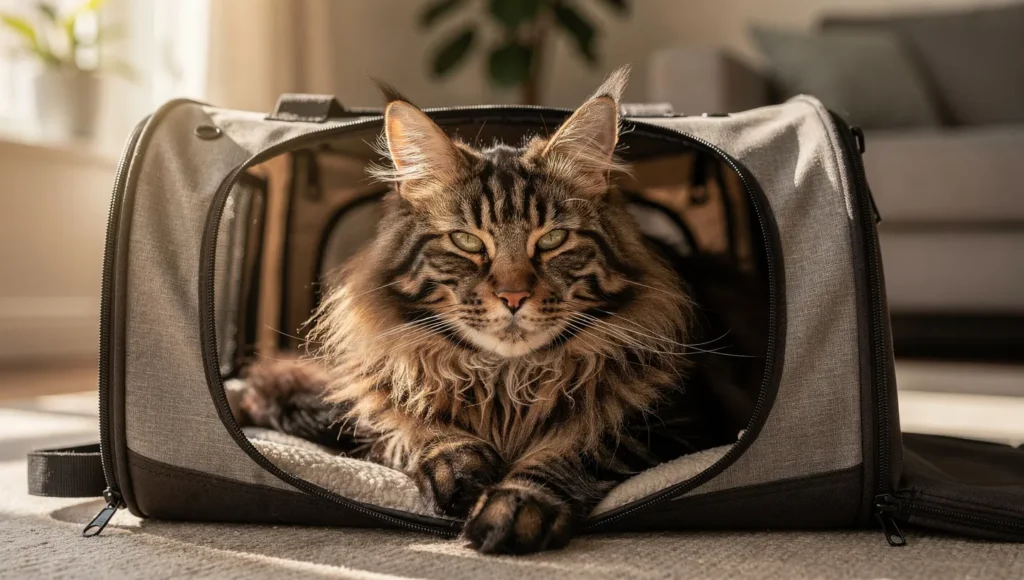
This is the section most guides ignore, but finding the best cat carrier for large cats is actually a top priority for Maine Coon and Ragdoll owners. And it’s a real problem, because a significant number of domestic cats — especially Maine Coons, Ragdolls, and just well-fed domestic shorthairs — are simply too big for standard carriers.
Squeezing a large cat into a carrier that’s too small isn’t just uncomfortable. It’s a genuine welfare issue. A stressed, cramped cat is more likely to overheat, panic, and injure itself trying to get out.
4. Petluv “Happy Pet” Premium Carrier
Built specifically for cats in the 15–25 lb range. The internal dimensions are genuinely roomy — 20″ x 12″ x 12″ — and the frame is reinforced to handle the extra weight without sagging.
The expandable side panel is a nice touch. When you’re at the vet or on a long road trip, you can unzip it to give your cat a bit more room to stretch without fully opening the carrier.
What stands out: The locking zipper system. Three separate closures. A determined large cat is not getting through that.
Best for: Cats 15–25 lbs, road trips, vet visits.
If you have a Maine Coon or a Ragdoll, this is honestly the carrier I’d point you toward first.
5. SportPet Designs Foldable Travel Cat Carrier
A practical pick for large cats who also need airline travel. It’s TSA-friendly, folds flat for storage, and the top-loading entry makes getting a big, reluctant cat inside dramatically easier than front-loading designs.
The ventilation isn’t quite as generous as the Petluv, but it’s adequate for most trips under two hours.
Best for: Large cats who fly occasionally, owners with limited storage space.
💰 Best Budget Cat Carriers
6. AmazonBasics Soft-Sided Carrier
I know, I know — “AmazonBasics” doesn’t exactly scream premium. But for casual car trips to the vet or short local travel, this gets the job done.
Mesh on two sides, a removable fleece pad, and a basic but functional zipper. It won’t last five years with heavy use, but for occasional trips with a calm cat, it’s perfectly adequate.
Honestly, if you’re just starting out and not sure how much you’ll travel with your cat, this is a reasonable place to begin before investing in something more substantial.
Best for: New cat owners, vet runs, cats under 12 lbs.
7. Prefer Pets Travel Carrier
Another solid budget option with slightly better build quality than the AmazonBasics. The ventilation mesh is larger, which cats seem to appreciate — more airflow means less overheating on warm days.
Best for: Budget-conscious owners who want slightly more durability.
🐾 Best for Two Cats
8. Petsfit Expandable Two-Cat Carrier
Traveling with two cats is a whole different challenge. Some cats travel better together (the familiar smell is reassuring), while others stress each other out more. Before you commit to a shared carrier, make sure your cats actually get along well at home — a shared carrier is not the place to test a shaky relationship.
This carrier has a removable divider, which is genuinely useful. You can keep them separated if needed, or remove it entirely if they prefer to curl up together.
Weight limit: Up to 22 lbs total. So two average-sized cats (around 10 lbs each) fit comfortably.
Best for: Bonded cat pairs, short-to-medium trips.
🚗 Best for Road Trips
9. Sleepypod Mobile Pet Bed
This is the only carrier on this list that has been independently crash-tested by the Center for Pet Safety. That matters more than most people realize — in a sudden stop or collision, an unsecured carrier becomes a dangerous projectile.
It attaches directly to your car’s seatbelt system, absorbs impact, and keeps your cat contained even in worst-case scenarios. It doubles as a pet bed at home, which my cat figured out immediately and claimed as her permanent napping spot.
The downside: it’s not airline-approved, so it’s specifically a road trip carrier.
Best for: Frequent road trippers, safety-conscious owners.
10. Diggs Passenger Bird & Small Animal Carrier
Originally designed for small dogs but works beautifully for cats. The aerospace-grade aluminum frame is impressively sturdy, and the ventilation is excellent. It’s also one of the cleaner-looking carriers on the market if aesthetics matter to you.
Best for: Owners who want premium build quality for long road trips.
🏠 Best Hard-Sided Carrier
11. Petmate Two-Door Top-Load Kennel
Sometimes simple is best. Hard-sided carriers are easier to sanitize (important if your cat has had any digestive issues during travel), more resistant to crushing in overhead storage, and generally more durable over time.
The two-door design — front and top — is a game-changer for vet visits. Most cats handle top-loading much better than being pushed through a front door. Vets appreciate it too.
What it lacks: It’s heavier and bulkier than soft carriers, and it won’t fit under an airline seat.
Best for: Vet visits, cats who need maximum security, easy cleaning.
How to Get Your Cat Comfortable With a Carrier in 7 Days
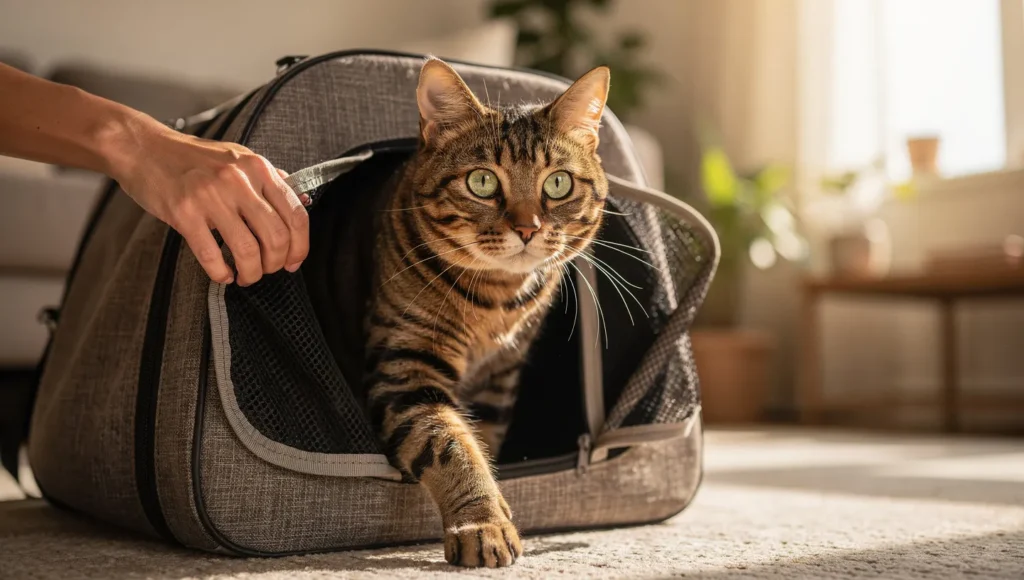
Even the best carrier for cats can feel like a trap if your pet isn’t trained. Most cats don’t hate carriers — they hate the surprise of them. The fix is simpler than you think.
I did this with my second cat, Miso, after the disaster with my first. Seven days, no force, no drama. By day six she was napping in it voluntarily.
The 7-Day Protocol:
- Day 1–2: Place the carrier in a room your cat already likes. Leave the
door open. Don’t interact with it — just let it exist in her space. - Day 3–4: Put something familiar inside — a worn t-shirt, her favorite
blanket. Add a treat near the entrance. Let her investigate on her own terms. - Day 5: Start dropping treats inside the carrier. Don’t close the door.
Just reward any curiosity. - Day 6: Close the door for 30 seconds after she walks in. Open it.
Treat. Repeat. - Day 7: Short practice run — 5 minutes in the car, engine on. That’s it.
A few drops of Feliway spray on the interior bedding about 30 minutes before travel makes a noticeable difference for anxious cats. It’s not magic, but it takes the edge off.
If your cat still shows signs of serious travel anxiety after this process, it’s worth reading through this guide on cat separation anxiety — some of the same desensitization principles apply. For the full travel
preparation checklist, our traveling with a cat guide covers everything from documentation to airport logistics.
Still Have Questions? Here’s What Most Cat Owners Ask First
Can I leave my cat in a carrier overnight?
No. Carriers are for travel, not extended confinement. A few hours is fine — overnight is not appropriate unless there’s a genuine emergency and no alternative.
What size carrier do I need for a 15 lb cat?
Look for interior dimensions of at least 19″ x 12″ x 12″. Anything smaller and a 15 lb cat won’t be able to turn around comfortably.
Soft-sided or hard-sided — which is better?
Depends on your use case. Soft = lighter, airline-friendly, easier to store.
Hard = more durable, easier to clean, better for anxious cats who need solid walls. For most people, a quality soft carrier with a rigid bottom is the practical middle ground.
How do I clean a cat carrier after an accident?
Remove all bedding first. Wipe the interior with a pet-safe enzymatic cleaner — regular soap won’t eliminate the odor fully, and residual smell can increase anxiety on the next trip. Air dry completely before the next use.
Do cats need water during travel?
For trips under 4 hours, most healthy cats don’t need water en route — they typically won’t drink when stressed anyway. For longer trips, offer water during stops. A collapsible silicone bowl works well for this.
One Last Thing Before You Buy
Investing in the best cat carrier won’t eliminate all travel stress, but it’s the most important step you can take for your cat’s safety.
Start with your cat’s size and your most common travel type. If you fly regularly, the Sherpa Original Deluxe is hard to beat for the price. If safety on road trips is the priority, the Sleepypod Mobile is worth every penny. And if you have a large cat who’s been crammed into undersized carriers for years — the Petluv is genuinely life-changing for both of you.
Do the 7-day training. It takes ten minutes a day and it makes every single trip easier. That’s the part most people skip, and it’s the part that matters most.


WOW just what I was looking for. Came here by searching for
amanah ikhtiar malaysia
Thanks for stopping by, Anderson! Glad you found the article — hope it helped a little, even if you landed here unexpectedly