
British Shorthair care is a rewarding journey that begins the moment you fall in love with those iconic round cheeks and that dense, plush “teddy bear” fur. Known for their calm demeanor and sturdy build, these cats are the quintessential family companions, but keeping them thriving requires more than just occasional head scratches.
Whether you are a first-time owner or an experienced feline lover, understanding the specific needs of this blue-blooded breed is the key to a long, happy life together.
When we talk about British Shorthair care, we aren’t just discussing food and water; we are diving into a lifestyle that respects their independent nature while supporting their unique physical structure.
This breed is famously low-maintenance, yet they have specific tendencies—like a predisposition to weight gain and a thick coat that needs specialized attention—that every responsible owner must master to ensure their pet stays in peak condition.
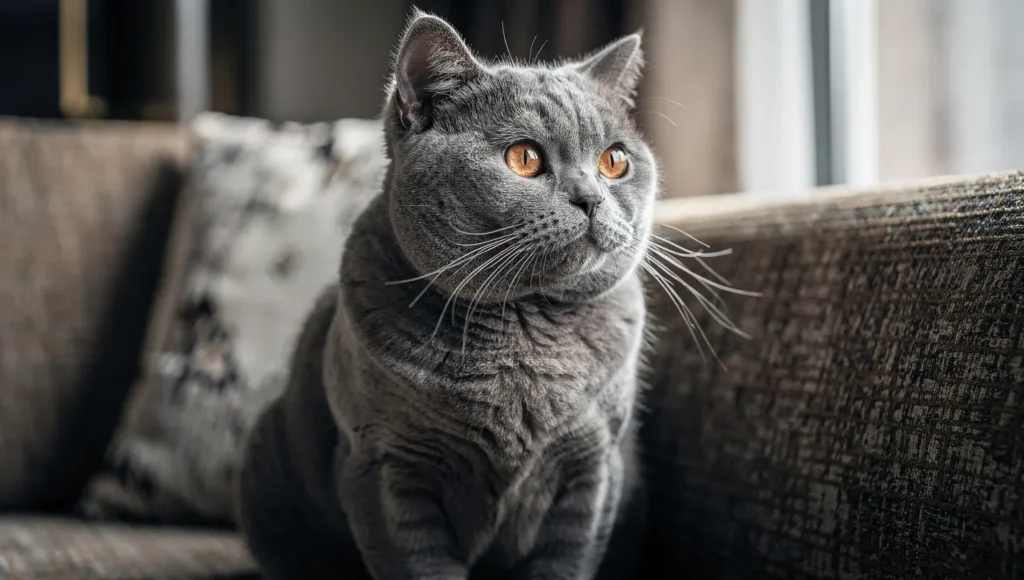
Table of Contents
- 📌 Quick Summary: British Shorthair Essentials
- 🐈 Understanding the British Shorthair Temperament: The “Gentle Aristocrat”
- The “No-Carry” Rule
- Social Interaction and Family Life
- ✂️ British Shorthair Care and Grooming: Managing the Dense Plush Coat
- Essential Grooming Tools
- ⚠️ The “Crisp” Factor
- 🥗 Nutrition and Diet: Preventing Weight Gain in British Shorthairs
- Smart Weight Management Tips
- ⚖️ Weight Watchers for Cats
- The Importance of Hydration
- 🏥 Common British Shorthair Health Issues and Preventive Care
- Health Monitoring Summary
- 💡 Expert Tip: Watch the Behavior
- 🏠 Environment and Enrichment: Keeping Your British Shorthair Active & Happy
- Fighting the Laziness: Interactive Play
- The Importance of Vertical Space
- 💡 Expert Tip: Toy Rotation
- ⏳ British Shorthair Lifespan: How to Ensure a Long, Healthy Life
- The Power of Annual Wellness Exams
- Dental Hygiene: The Secret to a Longer Life
- ⭐ Expert Tip: The Weight-Lifespan Link
- Frequently Asked Questions About British Shorthair Care
- Are British Shorthair cats hard to take care of?
- How often should I groom a British Shorthair cat?
- Can British Shorthair cats stay alone at home?
- What are the disadvantages of British Shorthair cats?
- How often should I bathe a British Shorthair cat?
- What is the best diet for a British Shorthair cat?
- Do British Shorthair cats shed a lot?
- 💙 The Joy of Owning a British Shorthair
📌 Quick Summary: British Shorthair Essentials
| Lifespan | 12–20 years (with proper British Shorthair care) |
| Temperament | Calm, independent, loyal, and easy-going. |
| Grooming | Moderate (Weekly brushing is essential). |
| Activity Level | Low to Moderate (Prone to laziness in adulthood). |
| Best For | Families, apartment living, and busy professionals. |
Note: The information provided is for educational purposes. For medical advice or diagnosis, always consult a qualified veterinary professional.
🐈 Understanding the British Shorthair Temperament: The “Gentle Aristocrat”
One of the most critical aspects of British Shorthair care is respecting their unique personality. Unlike some breeds that demand constant attention or follow you like a shadow, the British Shorthair is the “introvert” of the cat world. They are dignified, quiet, and possess a certain British stoicism that makes them incredibly easy to live with, especially for busy individuals.
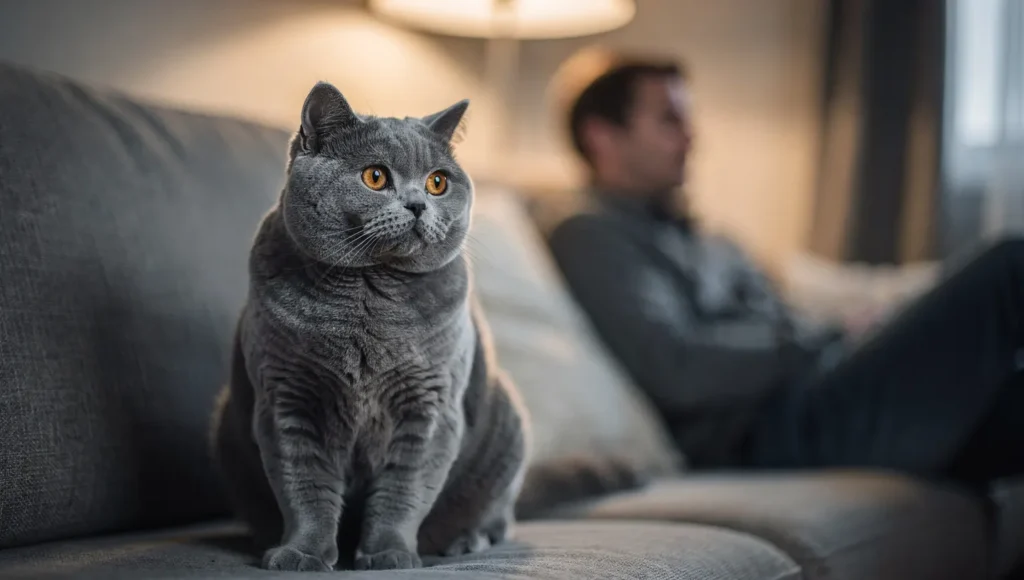
They are affectionate, but on their own terms. You will often find your Brit sitting in the same room as you, watching with those large, soulful eyes, but they aren’t necessarily “lap cats.” Understanding this distinction is vital for successful British Shorthair care, as it prevents owners from feeling “rejected” when their cat prefers the floor to their lap.
The “No-Carry” Rule
If there is one thing experts agree on regarding the British Shorthair temperament, it is their dislike of being picked up or carried. They prefer to keep all four paws firmly on the ground. Instead of force-cuddling, show your love through gentle head scratches—they have a massive “love zone” around their thick cheeks and chin.
Social Interaction and Family Life
Despite their independent streak, these cats are remarkably social in a low-key way. Here is how they interact with their environment:
- With Children: They are patient and tolerant, making them excellent family pets. However, children should be taught to respect their space.
- With Other Pets: Their calm nature makes them one of the best breeds for multi-pet households. They rarely start conflicts.
- Internal Link Opportunity: If you are planning to add a second cat to your home, check out our guide on How to Introduce Two Cats to ensure a smooth transition.
💡 Expert Tip: Don’t mistake their quietness for boredom. While they won’t meow for attention, they express their bond by “shadowing” you from room to room. If your Brit is in the same room as you, they are happy!
✂️ British Shorthair Care and Grooming: Managing the Dense Plush Coat
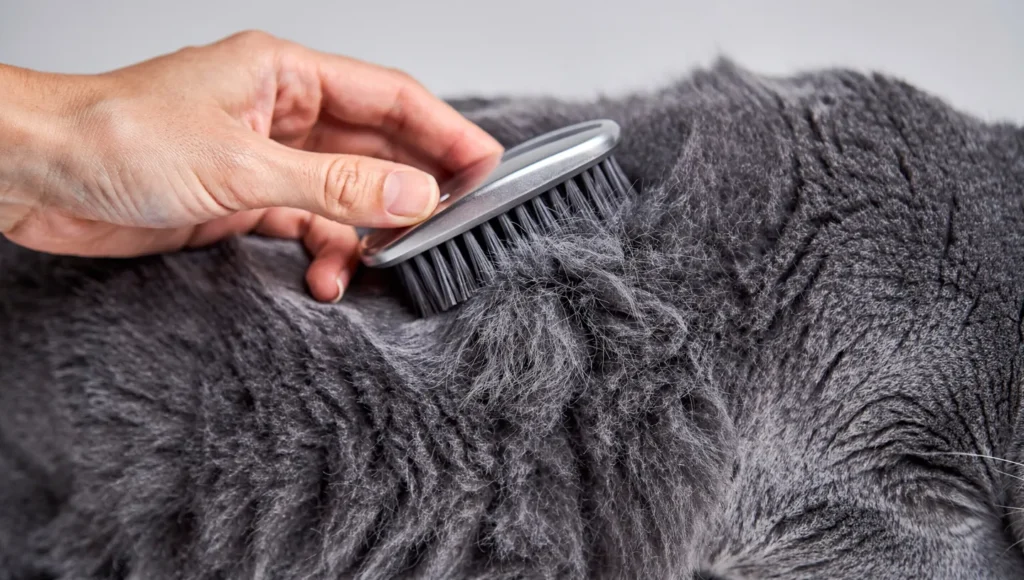
There is a common myth that because they are “shorthaired,” these cats require zero maintenance. However, professional British Shorthair care involves managing a coat that is incredibly dense and plush, often described as having a “crisp” texture. Unlike other breeds, their fur doesn’t lay flat; it stands up, which means loose hair can easily get trapped close to the skin, leading to painful mats if ignored.
To maintain that iconic teddy-bear look, you should establish a brushing routine early on. During most of the year, a thorough weekly session is enough. However, during shedding seasons (spring and autumn), British Shorthair care demands daily brushing to handle the massive amount of undercoat they lose. If you don’t stay ahead of it, your cat will likely suffer from frequent hairballs.
Essential Grooming Tools
Because their coat is so thick, not every brush will work. Here is what you need for effective British Shorthair care:
- Slicker Brush: Best for reaching the deep undercoat without scratching the skin.
- Stainless Steel Comb: Perfect for checking for hidden knots behind the ears and under the armpits.
- Rubber Grooming Mitt: Great for removing surface hair and giving your cat a relaxing massage.
If you are unsure about the best techniques to keep your feline’s fur in top shape without causing them anxiety, read our comprehensive guide on How to Brush Your Cat for a stress-free experience.
⚠️ The “Crisp” Factor
According to the Governing Council of the Cat Fancy (GCCF), the hallmark of this breed is the “crisp” texture of the coat. Over-bathing can actually strip the natural oils and soften this texture. Unless your cat gets into something messy, brushing is usually all the “bath” they need!
🥗 Nutrition and Diet: Preventing Weight Gain in British Shorthairs
A major pillar of effective British Shorthair care is nutritional management. These cats are the “foodies” of the feline world; they have a hearty appetite and a slow metabolism, especially as they reach adulthood. Because they are not as active as more energetic breeds like the Bengal, they can easily cross the line from “cobby and muscular” to “overweight” if their calorie intake isn’t strictly monitored.
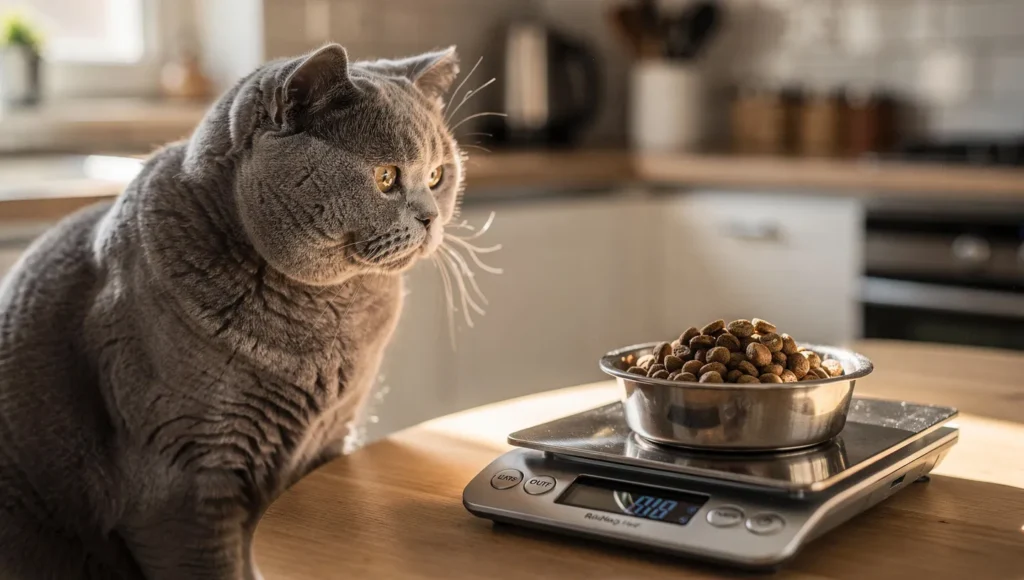
To support their large frame and heavy bone structure, they require a diet rich in high-quality animal proteins. However, the biggest challenge in British Shorthair care is portion control. Free-feeding (leaving a full bowl out all day) is often a mistake with this breed, as they will graze out of boredom rather than hunger.
Smart Weight Management Tips
If you want to maintain your cat’s health and prevent obesity-related issues, follow these specialized British Shorthair care feeding strategies:
- Scheduled Meals: Feed two to three small, measured meals a day instead of one large portion.
- High Protein, Low Carb: Focus on foods where meat is the first ingredient to maintain muscle mass without adding excess fat.
- Use Puzzle Feeders: Since Brits can be lazy, puzzle feeders force them to work for their food, providing both mental and physical stimulation.
⚖️ Weight Watchers for Cats
Monitoring your cat’s silhouette is essential. You should be able to feel their ribs without a thick layer of fat. If your fluffy friend is starting to look more like a “round ball” than a sturdy cat, our Cat Weight Loss Guide provides a step-by-step plan to get them back to a healthy weight without stress.
The Importance of Hydration
Like many pedigree breeds, ensuring they drink enough water is a vital part of British Shorthair care to protect their urinary tract and kidneys. Consider a mix of wet and dry food, as wet food provides much-needed hydration that mirrors their natural diet.
🏥 Common British Shorthair Health Issues and Preventive Care
While the Brit is a robust and “sturdy” breed, proactive British Shorthair care requires an understanding of their genetic predispositions. Being aware of these potential issues doesn’t mean your cat will get them, but it allows you to catch early warning signs through regular screening. A well-informed owner is the best defense against long-term health complications.
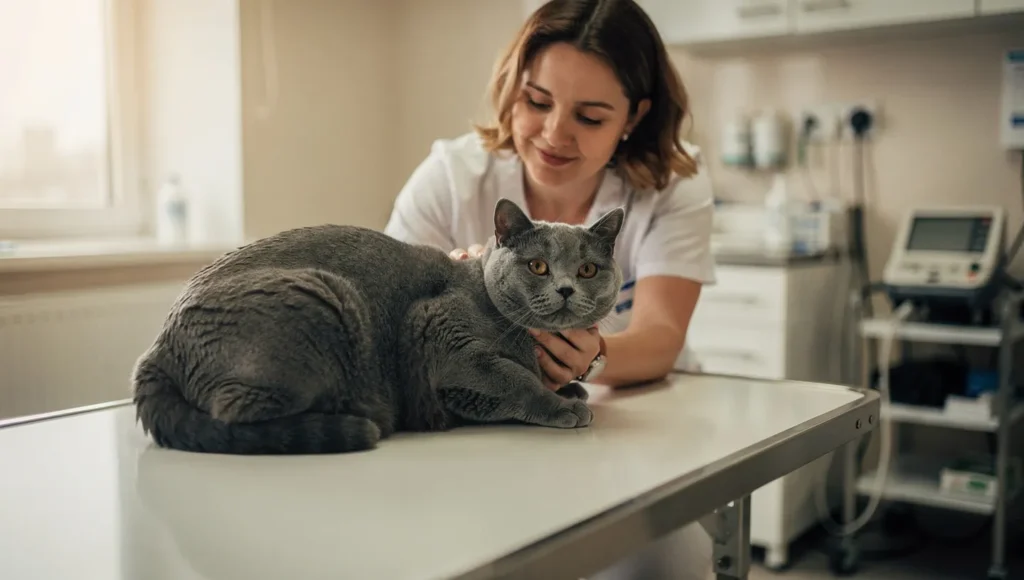
The two most significant genetic concerns in this breed are Hypertrophic Cardiomyopathy (HCM) and Polycystic Kidney Disease (PKD). Incorporating specialized screenings into your annual veterinary visits is a hallmark of responsible British Shorthair care. When diagnosed early, many of these conditions can be managed effectively to maintain a high quality of life.
Health Monitoring Summary
To help you stay on top of your feline’s health, use this quick reference table for common British Shorthair care priorities:
| Condition | Early Signs to Watch | Preventive Action |
|---|---|---|
| HCM (Heart) | Lethargy, labored breathing. | Annual cardiac ultrasounds. |
| PKD (Kidneys) | Increased thirst, frequent urination. | Genetic DNA testing & ultrasounds. |
| Obesity | Loss of visible waistline. | Strict portion control and play. |
It is worth noting that reputable breeders now screen for PKD, significantly reducing its prevalence. According to the International Cat Care (iCatCare), DNA testing has become a vital tool in eradicating this kidney issue in British Shorthairs.
💡 Expert Tip: Watch the Behavior
Because Brits are so stoic and calm, they often hide pain or discomfort very well. A slight change in their sleeping position or a sudden lack of interest in their favorite treat can be a subtle cry for help. For a deeper dive into these signals, read our guide on How to Tell if Your Cat is Sick.
🏠 Environment and Enrichment: Keeping Your British Shorthair Active & Happy
Creating an engaging environment is a cornerstone of proactive British Shorthair care. While these cats are famous for being “low-energy” and spending hours napping in sunbeams, they still possess a natural hunting instinct that needs a healthy outlet. Without mental and physical stimulation, a Brit can become overly sedentary, leading to joint issues and weight gain.
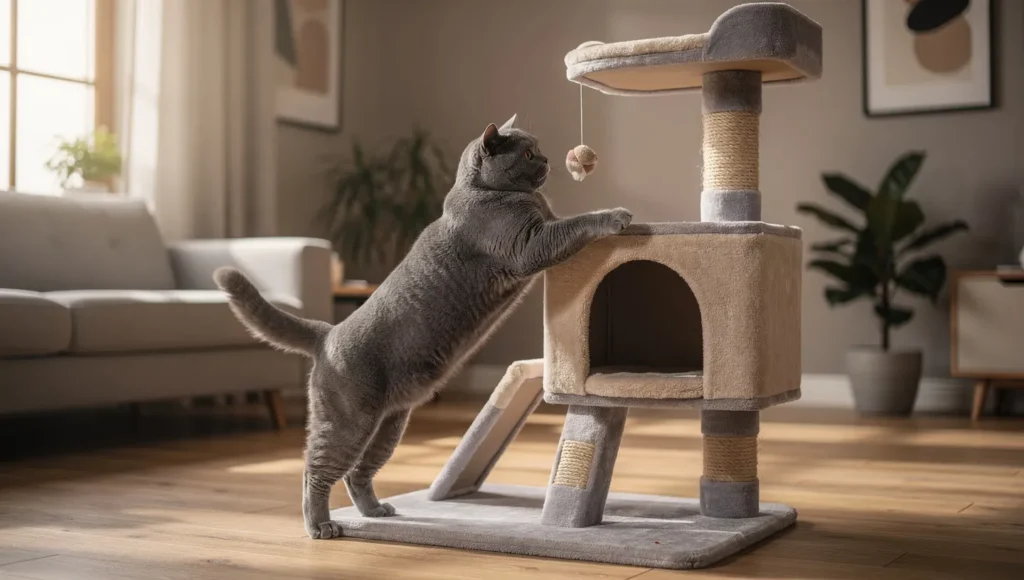
To keep them moving, you need to “catify” your home in a way that encourages climbing and exploring. Even though they aren’t as high-flying as some other breeds, providing vertical spaces is an essential part of British Shorthair care. It gives them a sense of security and a vantage point to observe their “kingdom” without being disturbed.
Fighting the Laziness: Interactive Play
Since they won’t always initiate play themselves, you have to be the catalyst. Effective British Shorthair care involves at least two 10-15 minute play sessions daily. Focus on toys that mimic prey movement, such as:
- Wand Toys: Perfect for encouraging jumping and pouncing.
- Catnip Kickers: Great for wrestling and satisfying their “bunny kick” instinct.
- Food Puzzles: As mentioned in the nutrition section, making them “hunt” for treats is excellent mental exercise.
The Importance of Vertical Space
Invest in furniture that can support their heavy weight. A flimsy cat tree won’t cut it for this muscular breed. High-quality, sturdy structures are vital for British Shorthair care as they provide a safe place for scratching and stretching. If you’re looking for the best options this year, our guide on the 10 Best Cat Trees in 2026 covers the sturdiest picks for heavy breeds.
💡 Expert Tip: Toy Rotation
British Shorthairs are highly intelligent and can get bored with the same “prey” every day. To keep them interested, rotate their toys weekly. Keep only 3-4 toys out at a time and hide the rest. When you reintroduce a “hidden” toy, it feels like a brand-new catch to them!
⏳ British Shorthair Lifespan: How to Ensure a Long, Healthy Life
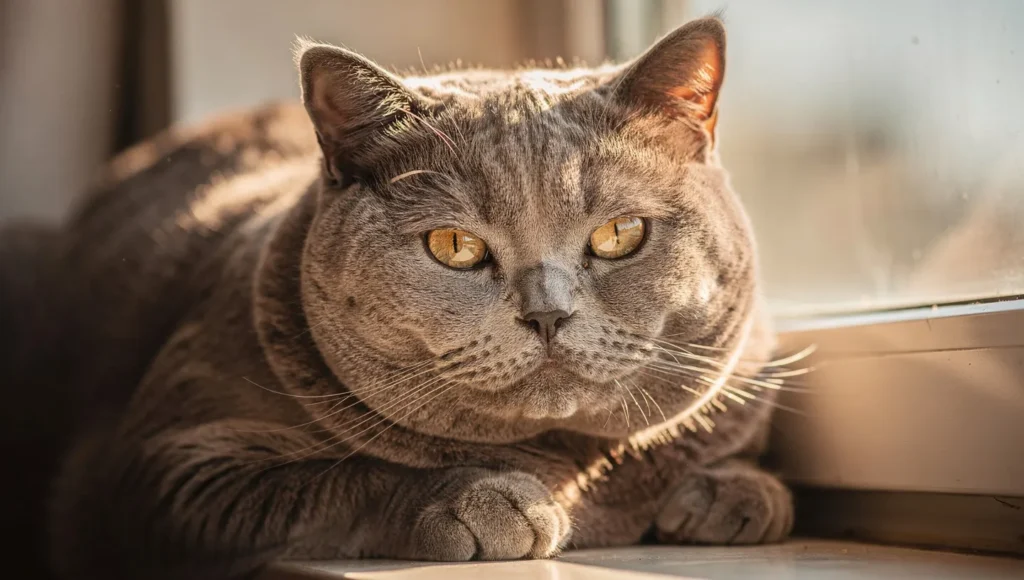
The average British Shorthair lifespan typically ranges from 12 to 20 years, making them one of the longer-living pedigree breeds. However, reaching those golden years in good health is directly tied to the quality of British Shorthair care provided throughout their life. It is not just about genetics; it is about the daily choices you make regarding their environment and medical upkeep.
To maximize their years by your side, a proactive approach to aging is required. Since these cats are masters at hiding discomfort, waiting for visible symptoms is often too late. Consistent, high-quality British Shorthair care means being a “detective” for your cat’s health, especially as they cross the age of seven and enter their senior years.
The Power of Annual Wellness Exams
Routine veterinary visits are the backbone of longevity. For effective British Shorthair care, annual checkups should include comprehensive blood work and urinalysis. These tests can catch the early stages of kidney issues or thyroid imbalances long before they become life-threatening, allowing for simple dietary adjustments instead of intensive medical treatments.
Dental Hygiene: The Secret to a Longer Life
One of the most overlooked aspects of British Shorthair care is oral health. Bacteria from dental plaque can enter the bloodstream and cause damage to the heart and kidneys—the two most vulnerable organs in this breed. Keeping their teeth clean is quite literally a life-saving habit.
- Daily Brushing: The gold standard for preventing periodontal disease.
- Dental Treats: A helpful supplement, though not a replacement for brushing.
- Professional Cleaning: Necessary when tartar buildup becomes significant.
If you find the idea of cleaning your cat’s teeth daunting, you are not alone. Our Cat Dental Care Guide provides practical, expert-approved techniques to maintain fresh breath and a healthier life for your feline friend.
⭐ Expert Tip: The Weight-Lifespan Link
Studies consistently show that cats maintained at a lean body weight live significantly longer than their overweight counterparts. In the world of British Shorthair care, “love” is better expressed through an extra play session than an extra treat. Keeping them slim is the kindest thing you can do for their long-term health.
Frequently Asked Questions About British Shorthair Care
Are British Shorthair cats hard to take care of?
No, British Shorthair cats are generally considered low-maintenance pets compared to many other breeds.
Their short, dense coat requires only weekly brushing, and their calm temperament makes them easy to manage indoors. However, owners should still provide a balanced diet, regular vet checkups, and daily playtime to keep them healthy and mentally stimulated.
How often should I groom a British Shorthair cat?
British Shorthair cats should be brushed once or twice per week.
Their plush coat can shed moderately, so brushing helps remove loose fur and reduces hairballs. During seasonal shedding periods, grooming 2–3 times per week may be beneficial.
Can British Shorthair cats stay alone at home?
Yes, British Shorthair cats are known for being independent and calm, which means they tolerate being alone better than many other breeds.
However, they still need interaction and mental stimulation, so providing toys, scratching posts, or interactive feeders can help prevent boredom.
What are the disadvantages of British Shorthair cats?
While British Shorthair cats are wonderful companions, they do have a few potential downsides:
They can become overweight easily if overfed.
They are less active than many other cat breeds.
They may appear distant or reserved compared to highly affectionate cats.
Proper diet and regular play can easily reduce these issues.
How often should I bathe a British Shorthair cat?
British Shorthair cats usually do not require frequent bathing because they groom themselves very well.
Most owners only bathe them every few months or when necessary, such as when their coat becomes dirty or oily.
What is the best diet for a British Shorthair cat?
A healthy diet for a British Shorthair should include:
High-quality animal protein
Moderate fat levels
Limited carbohydrates
Because this breed tends to gain weight easily, portion control and scheduled feeding are highly recommended.
Do British Shorthair cats shed a lot?
British Shorthair cats shed moderately throughout the year, with heavier shedding during seasonal changes.
Regular brushing helps remove loose hair and keeps their coat soft and healthy.
💙 The Joy of Owning a British Shorthair
Embarking on the journey of British Shorthair care is one of the most fulfilling experiences a cat lover can have. These “gentle aristocrats” bring a sense of peace and steady companionship to any home. While they may not be the type to perform tricks or leap into your arms, their quiet loyalty and the soft vibration of their purr against your side are worth every bit of effort you put into their well-being.
By focusing on proper nutrition, respecting their independent temperament, and staying ahead of their unique health needs, you aren’t just a pet owner—you are a guardian of their happiness. Remember that the best British Shorthair care is built on a foundation of patience and observation. Your reward will be a healthy, plush companion who will stand (or rather, sit regally) by your side for nearly two decades.
If you have just welcomed one of these teddy bears into your life, enjoy every moment. Their sturdy presence and calm spirit truly make a house feel like a home.