
How to switch cat food is a phrase that, for many owners, starts with a healthy goal and ends with a midnight cleaning session. I’ve spent over a decade helping feline parents navigate this transition, and I’ve seen it all—from the “hunger strikes” that make you feel like a villain to the sudden digestive upsets that leave you scrubbing the carpet at 2 AM.
I know that specific feeling of guilt. You’ve spent $60 on the “highest-rated” premium kibble, yet your cat treats the bowl like it’s filled with lava.
In my 10 years of experience, I’ve learned that a successful food transition isn’t just about nutrition; it’s about outsmarting a cat’s biological “safety check.” If you rush the process, you’re not just fighting a sensitive stomach—you’re fighting 10,000 years of evolution. Let’s make sure your cat actually enjoys the change without the drama.
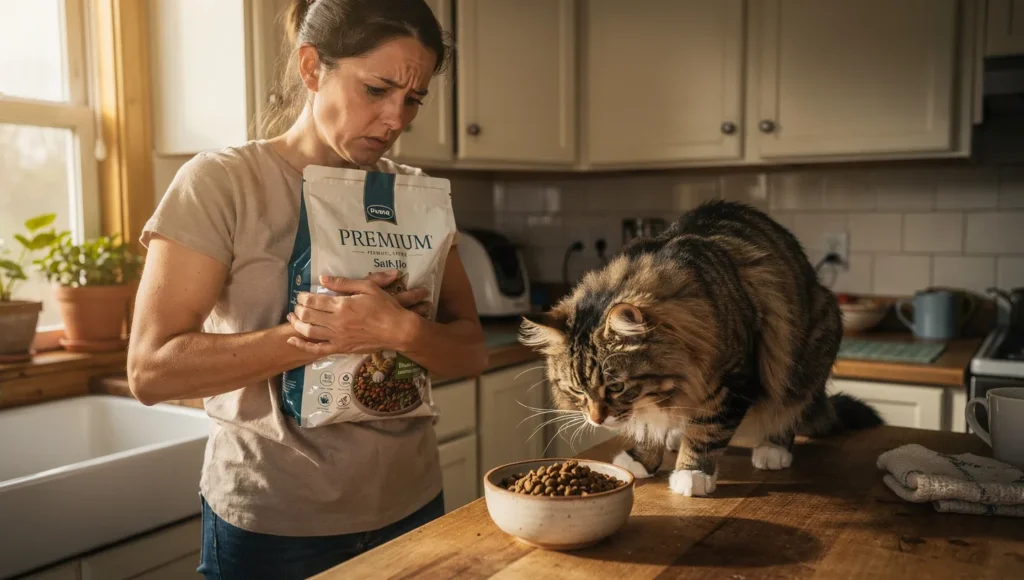
Table of Contents
- ⚠️ Why Changing Cat Food Can Be Risky (If Done Wrong)
- 🧬 The Science of “Gut Shock”
- 🦁 Understanding Food Neophobia
- ⏳ The Golden Rule: How Long Does It Take to Switch Cat Food?
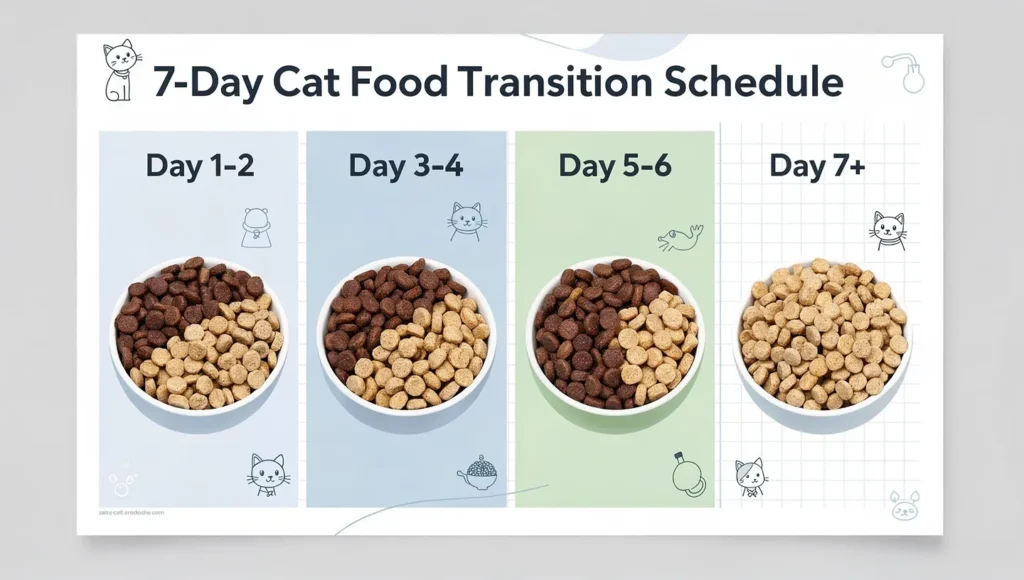
- 🗓️ The 7-Day Cat Food Transition Schedule (Printable Chart)
- Days 1–2: The Scent Introduction
- Days 3–4: The 50/50 Threshold
- Days 5–7: Reaching the Finish Line
- 🤢 What If My Cat Vomits or Has Diarrhea?
- Mild Symptoms (Normal Adjustment)
- Red Flags (Stop and Call the Vet)
- 🧠 My Cat Refuses the New Food – Behavioral Fixes
- The “Scent Transfer” Trick
- Use the “Hunting Instinct”
- The “Topper” Technique
- 🍼 Can Kittens Eat Adult Cat Food?
- 🔄 Is It Okay to Switch Cat Food Brands Often?
- ✅ Expert Checklist Before You Start the Switch
- Final Thoughts: The Secret is Observation
⚠️ Why Changing Cat Food Can Be Risky (If Done Wrong)
Many owners think they can just swap bowls overnight. In my experience, that’s the fastest way to trigger an unnecessary vet visit. A cat’s digestive tract isn’t like ours; it is a finely tuned machine that thrives on predictability.
When we talk about how to switch cat food, we aren’t just talking about taste—we are talking about biological safety.
🧬 The Science of “Gut Shock”
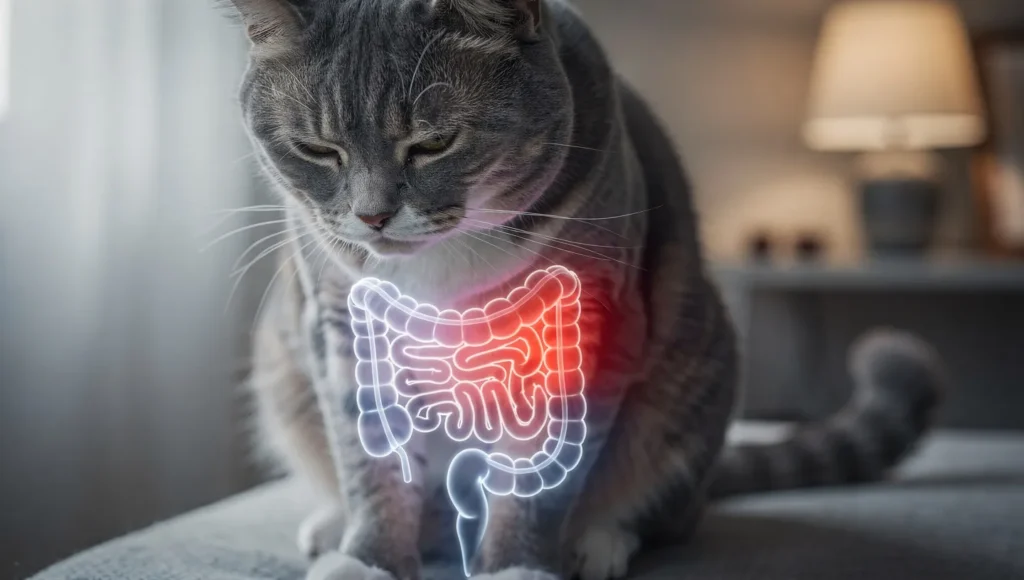
According to experts at PetMD, sudden dietary changes are one of the most common triggers for acute gastroenteritis in domestic cats. This happens because your cat’s gut microbiome is highly specialized to their current diet, and a sudden swap acts like a “system crash” for these sensitive microbes.
- Microbial Chaos: When new proteins or fats arrive without warning, the gut can’t adapt fast enough, leading to inflammation.
- The Stress-Digestion Loop: A cat who feels nauseous from new food becomes stressed. Stress releases cortisol, which further slows down digestion, creating a vicious cycle of digestive upset and vomiting.
🦁 Understanding Food Neophobia
I’ve found that many people mistake “pickiness” for “protection.” Cats suffer from food neophobia—an evolutionary trait that makes them suspicious of new smells. In the wild, trying a “new menu item” could mean poisoning.
Expert Tip: I often see owners mistake a “hunger strike” for a cat being stubborn. In reality, your cat’s brain is likely signaling that this new smell isn’t “safe” yet. Never try to starve a cat into eating new food; this can lead to serious liver issues (Hepatic Lipidosis).
Common Risks of a Failed Transition:
- Persistent Diarrhea: Leading to dehydration and litter box aversion.
- Food Aversion: Your cat may permanently refuse a high-quality brand because they associate the smell with feeling sick.
- Lethargy: Because they aren’t absorbing the nutrients they need during the “gut war.”
⏳ The Golden Rule: How Long Does It Take to Switch Cat Food?
In my experience, the “Golden Rule” for a safe transition is 7 to 10 days. While you might be tempted to rush because the new bag smells better or costs more, your cat’s digestive enzymes need time to “recalibrate.”
I’ve found that younger kittens usually adapt faster, while senior cats or those with sensitive stomachs may require a “slow-burn” transition of 14 days. If you’ve ever wondered how to switch cat food for a cat with chronic issues, the answer is always: patience over speed.
🗓️ The 7-Day Cat Food Transition Schedule (Printable Chart)
This is the exact protocol I recommend to my clients. It balances the old familiar flavors with the new nutritional profile to keep the gut calm.
| Phase | Duration | Old Food | New Food | Goal |
|---|---|---|---|---|
| Intro | Days 1–2 | 75% | 25% | Scent Acceptance |
| Middle | Days 3–4 | 50% | 50% | Digestive Balancing |
| Closing | Days 5–6 | 25% | 75% | Dominant Nutrition |
| Final | Day 7+ | 0% | 100% | Full Success |
Days 1–2: The Scent Introduction
During the first 48 hours, we are mostly testing for “refusal.” Most cats won’t even notice the 25% addition of new food if it’s mixed well. This is the best time to monitor for early signs of vomiting or nausea.
Days 3–4: The 50/50 Threshold
This is usually the “make or break” period. If your cat’s stool remains firm at a 50/50 mix, you are on the right track. If things get a bit soft, don’t panic—just stay at this ratio for an extra day.
Expert Tip: I always suggest using a digital kitchen scale or a specific measuring cup. “Eyeballing” the portions is the leading cause of accidental overfeeding during a transition, which can lead to diarrhea regardless of the food quality.
Days 5–7: Reaching the Finish Line
By now, the new food should be the star of the show. If you are switching from dry to wet food, you might notice your cat drinking less water—this is normal, as they are getting more hydration from their bowl!
🤢 What If My Cat Vomits or Has Diarrhea?
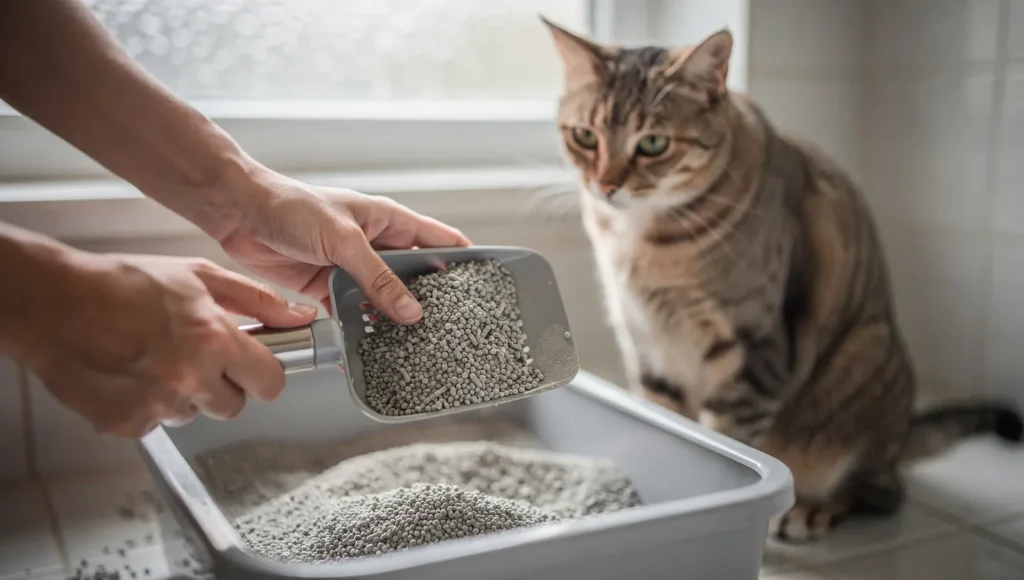
One of the most frequent questions I get is: “I followed the 7-day plan, but my cat threw up on day 3. Should I stop?” In my decade of experience, the answer is rarely a total “stop.” Usually, it’s a signal to “pause and recalibrate.” If you see cat vomiting after changing food, your cat’s gut is simply saying, “I’m not ready for this percentage yet.”
Mild Symptoms (Normal Adjustment)
It is common to see slightly softer stool or a single episode of vomiting. If this happens:
- The “One Step Back” Rule: If you were at 50/50, go back to 75% old and 25% new food for another two days.
- Probiotic Support: Adding a vet-approved feline probiotic can help the microbiome stabilize faster during cat diarrhea from new food.
Red Flags (Stop and Call the Vet)
Don’t ignore these “emergency” signals:
- Persistent Vomiting: More than twice in 24 hours.
- Bloody Stool: Any sign of blood in the litter box.
- Complete Anorexia: If your cat refuses to eat anything (even the old food) for more than 24 hours.
Expert Tip: A common mistake I see is owners jumping between three different brands in one week trying to “find what works.” This “rotational chaos” actually makes the inflammation worse. Pick one high-quality brand and stick to the slow transition.
🧠 My Cat Refuses the New Food – Behavioral Fixes
If your cat refuses new food, they aren’t being “divas.” They are experiencing a biological fear of the unknown. Here is how I use feline psychology to break the “hunger strike” without the stress.
The “Scent Transfer” Trick
Cats rely 90% on smell. If the new food smells alien, it’s not food to them.
- The Solution: Rub a few pieces of the old kibble against the new ones in a sealed bag overnight. This transfers the “safe” scent to the new food, making it more acceptable.
Use the “Hunting Instinct”
I’ve found that a “bored” cat is a “picky” cat. If you trigger their predatory drive using interactive cat toys for 10 minutes before feeding, their metabolic need to eat will often override their suspicion of the new smell.
The “Topper” Technique
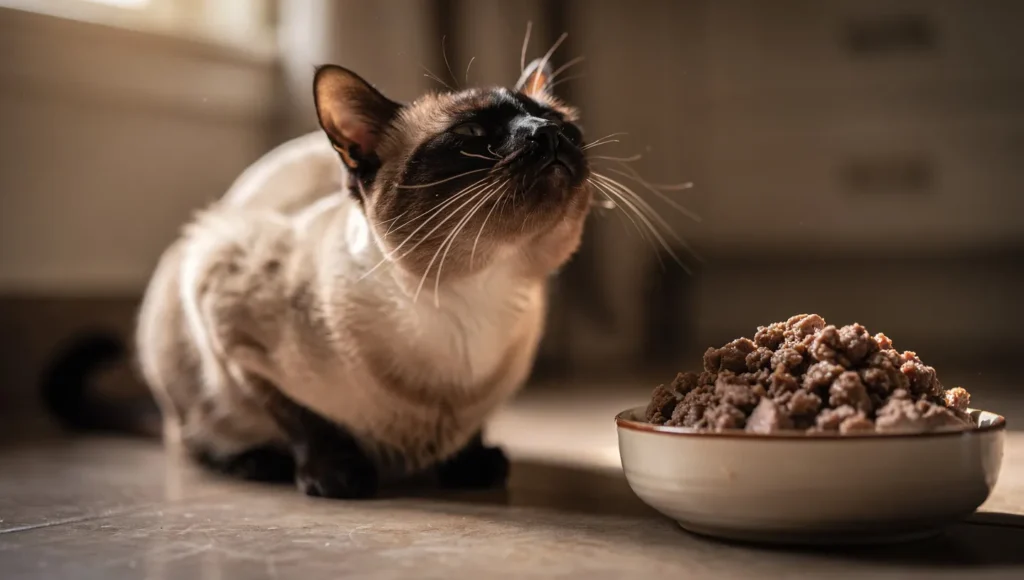
Sometimes, a bridge is needed. Adding a tiny bit of nutritional yeast or a sprinkle of freeze-dried chicken on top of the new mix can act as a “flavor anchor.”
Summary of Behavioral Fixes:
- Don’t leave food out all day: “Free feeding” reduces the excitement for the new meal.
- Warm it up: If using wet food, warming it to body temperature (about 100°F) enhances the aroma, mimicking “fresh prey.”
- Watch the body language: If you see your cat sniffing and then scratching the floor around the bowl, they are trying to “bury” it. This is a clear sign of cat body language indicating strong dislike or fear.
🍼 Can Kittens Eat Adult Cat Food?
In my years of consulting with new owners, I’ve noticed a lot of confusion around this. While the mechanics of how to switch cat food remain the same, the nutritional stakes are much higher for kittens.
Kittens are in a “rapid growth” phase and require significantly more protein, fat, and minerals like calcium than adults. Feeding them adult food too early can lead to developmental issues.
- The Rule: Transition from kitten food to adult food only after they reach 12 months (or up to 24 months for large breeds like Maine Coons).
- The Switch: Follow the same 7-day schedule, but ensure the new adult food is high-quality and vet-approved. For more details on raising a young feline, check out our complete kitten care guide.
🔄 Is It Okay to Switch Cat Food Brands Often?
A common mistake I see owners make is treating their cat’s bowl like a “tasting menu.” While humans love variety, cats crave consistency.
Switching brands every month (even if you follow a transition plan) can actually lead to a “sensitive stomach” profile. Constant changes keep the gut microbiome in a state of flux, which can eventually lead to chronic inflammatory issues.
- My Advice: Find one or two high-quality recipes that your cat loves and stick to them. If you want to provide variety, stick within the same brand and product line to keep the base ingredients consistent.
✅ Expert Checklist Before You Start the Switch
Before you open that new bag, run through this checklist to ensure a 100% success rate:
- 10-Day Supply: Do you have enough of the old food to last through a slowed-down transition?
- Label Audit: Have you checked the cat food labels to ensure the new food doesn’t contain ingredients your cat is sensitive to?
- The Stool Baseline: Is your cat’s poop currently normal? Never start a switch if they already have diarrhea.
- Baseline Weight: Weigh your cat before starting so you can monitor if they are losing weight due to food refusal.
Final Thoughts: The Secret is Observation
Successfully learning how to switch cat food is 10% strategy and 90% observation. Your cat will tell you everything you need to know through their energy levels, their coat quality, and—yes—the contents of their litter box.
What’s the biggest challenge you’ve faced when switching your cat’s diet? Is it the pickiness or the tummy troubles? Drop a comment below and let’s troubleshoot your cat’s menu together!