
It started on a Tuesday, and it taught me everything I never wanted to know about cat fever symptoms.
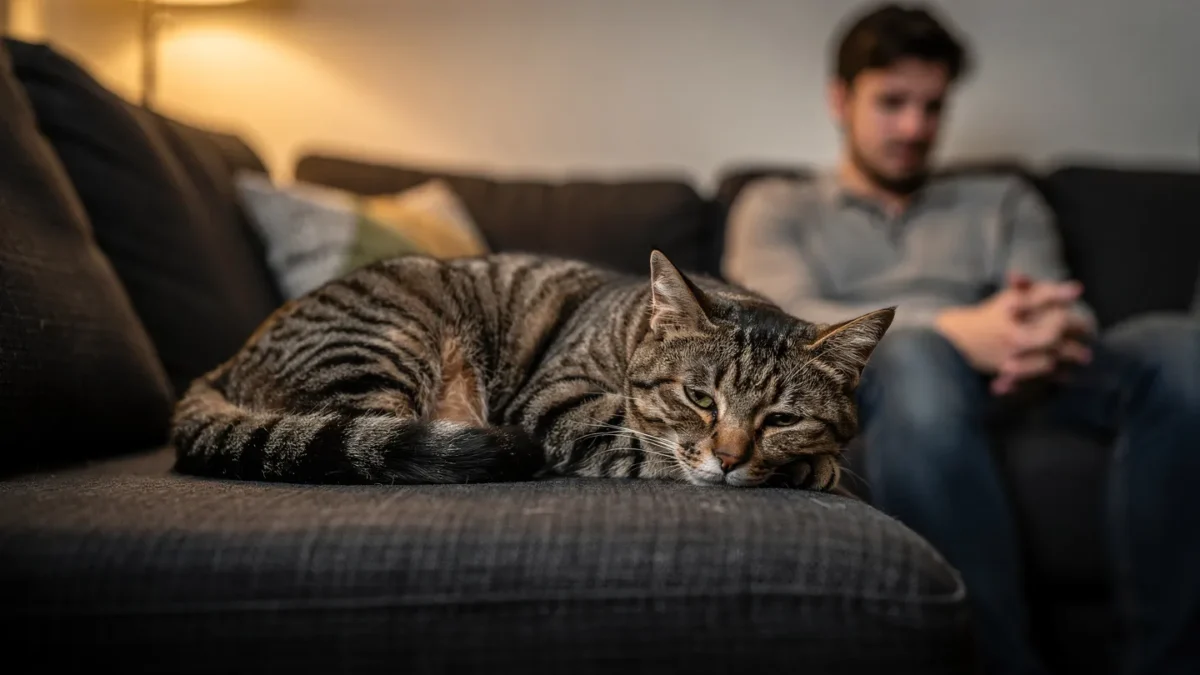
Biscuit — my usually dramatic, “feed-me-or-I-will-haunt-you” tabby — was just… lying there. No greeting at the door. No knocking things off the counter for sport. Just a warm, limp little loaf on the couch who couldn’t care less that I’d just opened a fresh can of his favorite food.
I did what any reasonable cat parent does: I texted the group chat.
Marcus responded in approximately four seconds. “Dude, cats are naturally warm. He was probably just sleeping next to the toaster again.” (For context: yes, Biscuit has a toaster obsession. No, we don’t talk about it.)
Sofia’s reply was more of a warning than advice: “Do NOT Google his symptoms. I made that mistake with my dog once and convinced myself he had three rare diseases and a parasite from 1987.”
And then there was Dave. Sweet, well-meaning, absolutely unhinged Dave, who suggested I check Biscuit’s temperature rectally — to which I physically shuddered and decided I needed a better source of information.
That better source, as always, was Dr. Samer — the only person I trusted to help me figure out whether Biscuit was actually showing cat fever symptoms or just having a lazy day.
Quick heads-up before we dive in: everything here is based on my personal experience with Biscuit and research from trusted veterinary sources. It’s meant to help you recognize the signs and know when to act — but it’s not a substitute for an actual vet visit. When in doubt, call your vet. Always.
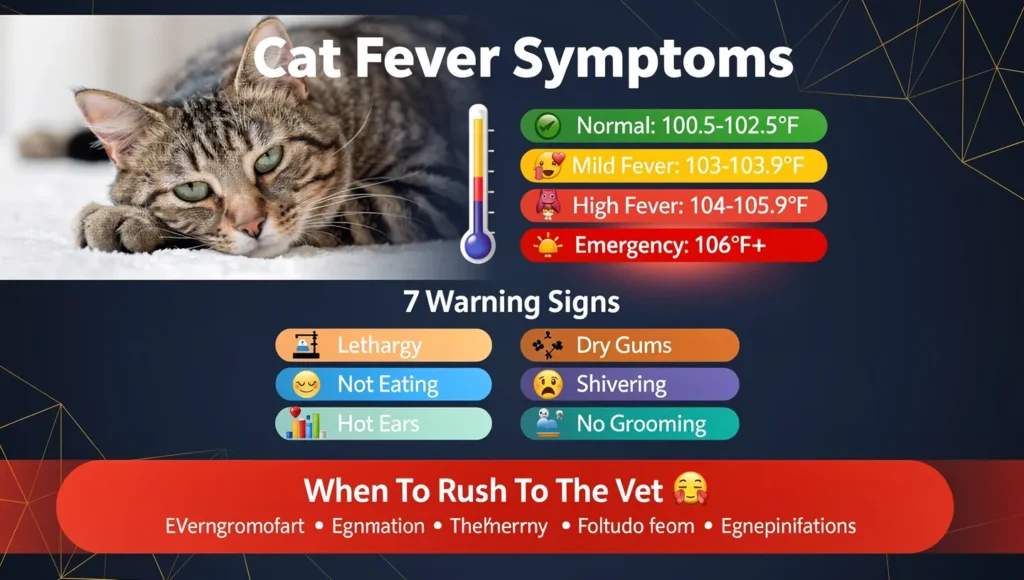
Table of Contents
- What’s a Normal Cat Temperature, Anyway?
- Cat Fever Symptoms You Can Spot at Home (Even Without a Thermometer)
- 7 Real Signs Your Cat Might Have a Fever
- The Right Way to Take Your Cat’s Temperature (Yes, Dave Was Right — But Also Wrong)
- What Actually Causes Fever in Cats?
- What You Can (and Absolutely Cannot) Do at Home
- When to Call the Vet — No Guessing, No Waiting
- Stuff People Actually Ask Me About Cat Fever
- Can cats recover from fever on their own?
- How long does cat fever usually last?
- Is a warm, dry nose actually a sign of fever?
- My cat has a fever and isn’t eating — is that dangerous?
- Can I give my cat Tylenol or Aspirin for fever?
- What about fever in kittens specifically?
- One Last Thing — From Me, Biscuit, and Dr. Samer
What’s a Normal Cat Temperature, Anyway?
Most people have no idea what a healthy cat temperature looks like — and honestly, I didn’t either until Dr. Samer walked me through it.
A normal cat body temperature falls between 100.5°F and 102.5°F (38°C–39.2°C). Anything above 103°F is considered a fever. Once you hit 104°F, things get serious. And 106°F or higher? That’s a medical emergency — organ damage can happen fast at that point, according to the American Veterinary Medical Association (AVMA).
Here’s a quick breakdown:
| Temperature | What It Means | What To Do |
|---|---|---|
| 100.5°F – 102.5°F | ✅ Normal | Nothing — all good |
| 103°F – 103.9°F | 🟡 Mild Fever | Monitor closely for 24 hours |
| 104°F – 105.9°F | 🔴 High Fever | Vet visit today |
| 106°F+ | 🚨 Emergency | Go now. Don’t wait. |
Print that table. Screenshot it. Tattoo it somewhere. It will save you from a 2 AM panic spiral.
Cat Fever Symptoms You Can Spot at Home (Even Without a Thermometer)
Here’s the thing most people get wrong — and honestly, I was one of them.
I used to touch Biscuit’s nose to check if he was sick. Dry nose = sick, right?
Wrong. Completely wrong. Dr. Samer almost dropped his coffee when I told him this.
“Luca,” he said, in the calm-but-tired voice he reserves specifically for my questions, “a dry nose tells you nothing reliable about a cat’s temperature. Stop touching the nose. It’s not a thermometer.”
So if the nose isn’t the answer, what actually is?
7 Real Signs Your Cat Might Have a Fever
These are the real cat fever symptoms that matter — the ones vets actually look for, and the ones I now know by heart after the Great Biscuit Incident of last spring.
1. Sudden Lethargy
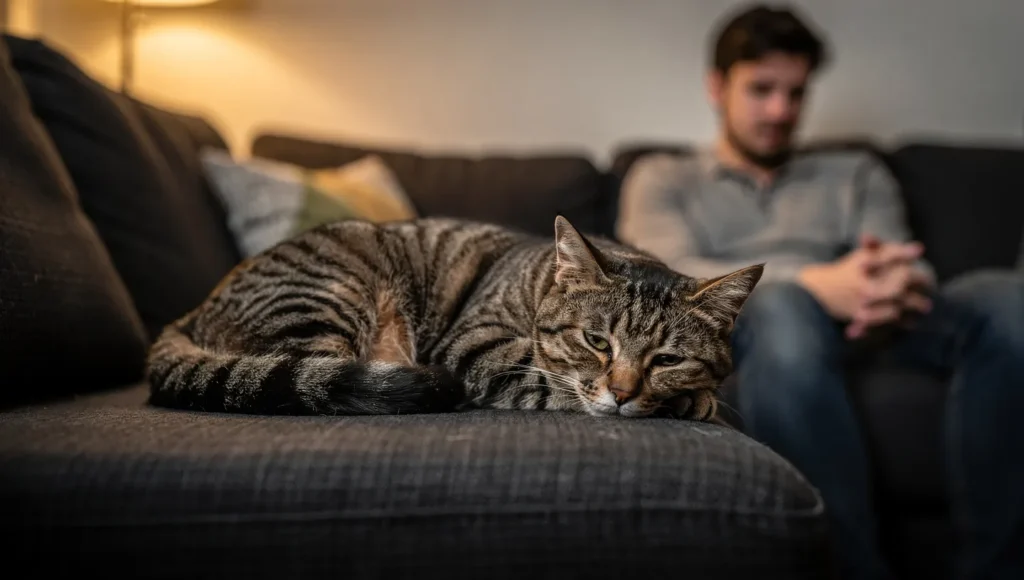
Not “cute sleepy” — more like “I have no will to exist” energy. Biscuit went from knocking my coffee off the table every morning to not even lifting his head when I walked in. That was the first real sign something was off.
2. Loss of Appetite
When a cat who normally acts like he’s one hour away from starvation suddenly ignores a full bowl? Pay attention. If your cat stops eating suddenly, it’s almost always your first real signal that something’s wrong — fever or otherwise.
3. Warm or Hot Ears
If you notice your cat’s ears look dirty or they are scratching them alongside being warm, check out our guide on cleaning cat ears to rule out ear mites. This one is actually useful, unlike the nose myth. Ears that feel noticeably hotter than usual — especially combined with other symptoms — can be a sign of elevated temperature. Not a diagnosis, but a clue worth noting.
4. Shivering or Trembling
This one surprised me. I assumed fever = hot cat. But cats can shiver because of fever, the same way we do. If Biscuit was trembling even wrapped in a blanket, that was a red flag I almost missed.
5. Rapid or Labored Breathing
Normal cats breathe slowly and quietly. If your cat is breathing faster than usual, or you can actually hear the breath, that’s worth taking seriously — especially if it’s paired with any other symptom on this list. It can sometimes point toward a respiratory infection that needs attention quickly.
6. Dry or Pale Gums
Healthy cat gums are pink and moist. Pale, tacky, or dry gums are a dehydration and fever warning sign rolled into one. Gently press on the gum — color should return within 2 seconds. If it doesn’t, that’s a vet call.
7. Grooming Stops Completely
Cats are meticulous groomers. When they stop, it usually means they feel genuinely terrible. Biscuit’s coat looked dull and slightly ruffled — he just didn’t have the energy for his usual routine. According to PetMD, this is one of the most reliable behavioral signs that something is medically wrong.
Most people get this wrong: they wait until their cat shows all of these signs before acting. You don’t need the full checklist. Two or three of these together — especially lethargy plus not eating plus warm ears — is enough reason to pay close attention and move to the next step.
The Right Way to Take Your Cat’s Temperature (Yes, Dave Was Right — But Also Wrong)
Okay. Let’s talk about the thermometer situation.
Dave wasn’t entirely wrong. The only truly accurate way to check a cat’s temperature at home is rectally. I know. I made the same face you’re making right now. But here’s the thing — when Biscuit was sick and I needed real numbers, not guesses, this was the only method that actually worked.
Dr. Samer walked me through it over the phone at 10 PM on a Wednesday like the absolute legend he is.
Here’s what he told me:
What you’ll need:
- A digital rectal thermometer (not the one from your medicine cabinet — get a dedicated pet thermometer)
- Petroleum jelly or a water-based lubricant
- A second pair of hands if possible
- Treats. Many treats. For after.
The steps:
- Wrap your cat gently in a towel — this is called the “burrito method” and it genuinely works
- Apply a small amount of lubricant to the thermometer tip
- Gently insert about one inch into the rectum
- Hold still for about 60 seconds or until the thermometer beeps
- Read the number, note the time, and give your cat approximately one thousand treats
Honestly? Biscuit forgave me in about four minutes. Cats are remarkably practical about these things.
What NOT to do:
- ❌ Don’t use an ear thermometer designed for humans — they’re not calibrated for cats and will give you completely useless readings
- ❌ Don’t use the forehead strip thermometers — same problem
- ❌ Don’t rely on touching the nose, the ears, or the forehead with your hand — these are feelings, not data
- ❌ And please, for the love of everything, do not use the kitchen thermometer. Dave suggested this too. We’ve all moved on.
If you genuinely can’t manage the rectal method alone — and no judgment, it’s a two-person job with a stressed cat — just go to the vet. They’ll have a temperature reading in under two minutes and your cat will forgive you faster than you think.
What Actually Causes Fever in Cats?
This is where it gets a little more serious — and where Dr. Samer really earned his “friend of the year” title by explaining everything without making me feel like I’d been ignoring Biscuit’s health for years.
Cat fever symptoms are almost always your body’s way of signaling that something else is going on underneath. The body raises its temperature as a defense mechanism — it’s actually the immune system doing its job. The question is: what is it fighting?
The most common causes:
Bacterial or viral infections
This is the big one. Upper respiratory infections are incredibly common in cats — you’d be surprised how quickly they can go from “slightly sneezy” to “full fever territory.” If your cat has been sneezing, has watery eyes, or is breathing oddly alongside the fever, a respiratory infection is high on the list.
Urinary tract infections
Especially in male cats, a UTI can escalate fast. If your cat is visiting the litter box frequently, straining, or crying out — alongside a fever — don’t wait. The signs of UTI in cats can be subtle at first, and a blocked bladder is a genuine emergency.
Inflammation or immune response
Sometimes the body’s immune system overreacts — to an injury, a wound, even a bug bite that got infected. Biscuit once had a small scratch on his leg that got mildly infected, and his temperature went up to 103.2°F. I never would have connected the two without Dr. Samer pointing it out.
Toxic exposure
This one is scarier, but worth knowing. Certain plants, foods, and household chemicals can cause fever as part of a toxic reaction. The ASPCA Animal Poison Control Center has a full list of toxic substances — it’s worth bookmarking. If you suspect poisoning, this isn’t a “watch and wait” situation.
Post-vaccination fever
Here’s some good news: a mild fever (103°F or slightly below) within 24–48 hours of a vaccination is actually normal and expected. It means the immune system is responding. It usually resolves on its own. Just monitor, keep your cat comfortable, and make sure they’re drinking.
This is where things change from “general concern” to “I need a plan” — and the plan depends entirely on the number on that thermometer.
What You Can (and Absolutely Cannot) Do at Home
Let me be very clear about one thing before anything else:
Do not give your cat Tylenol, Aspirin, Ibuprofen, or any human pain reliever.
Not a small dose. Not “just a little.” Not “it worked for my dog once.”
Acetaminophen (Tylenol) is fatal to cats. Even a tiny amount can cause liver failure and death. This is not a scare tactic — it’s a documented, well-established fact that costs cats their lives every year because well-meaning owners tried to help.
Now — here’s what you can do while you’re monitoring or waiting for a vet appointment:
Keep them hydrated
This is the most important thing. A feverish cat can become dehydrated surprisingly fast, and dehydration makes everything worse. Encourage drinking — try a water fountain, a shallow bowl, even a dripping faucet if that’s what works. For cats who absolutely refuse water when sick, warm bone broth (unsalted, no onion or garlic) can be a lifesaver for keeping fluids up.
If you want a deeper look at keeping your cat properly hydrated during illness, the cat hydration guide covers everything from testing for dehydration at home to the best ways to get a stubborn cat to drink.
Cool them gently — not aggressively
A cool, damp cloth on the paw pads and ears can help bring mild fever down slightly. Not ice. Not cold water. Just cool and damp. Think “comfortable” not “cold shock.”
Keep them in a quiet, comfortable space
Biscuit spent his recovery in the bedroom with the curtains half-drawn. No loud noises, no other pets bothering him, water bowl right next to his bed. Sometimes the kindest thing you can do is just reduce stimulation and let them rest.
Offer easy-to-eat food
A sick cat with zero appetite won’t eat kibble. Warm, soft wet food — warmed slightly to bring out the smell — is much more likely to get a response. Even a few licks is better than nothing.
Monitor and document
If you’re tracking cat fever symptoms at home, check the temperature every 4–6 hours if possible. Write it down with the time. This information is genuinely useful when you call or visit the vet — it tells them whether the fever is climbing, holding, or coming down.
When to Call the Vet — No Guessing, No Waiting
This is the part Dr. Samer made me promise to include. Because the number of times he’s gotten a call from me saying “I waited three days and now Biscuit is worse” is a number we don’t need to revisit.
Here’s the honest framework:
Call your vet today if:
- Temperature is 104°F or above
- Your cat hasn’t eaten in more than 24 hours
- They’re hiding and not coming out — cats who hide when sick are often much sicker than they appear
- They’re not drinking at all
- Breathing seems faster or harder than normal
- Gums are pale, white, or tacky/dry
Go to an emergency vet immediately if:
- Temperature hits 106°F or above
- Your cat is having tremors or seizures
- They’re completely unresponsive or barely reacting to you
- They haven’t urinated in over 12 hours
- You suspect they’ve ingested something toxic
- You have a kitten under 6 months — kittens dehydrate and crash fast, and mild fevers in kittens are never “wait and see” situations
The 24-hour rule for mild fevers (103°F–103.9°F):
If the fever is mild and your cat is still drinking some water, still somewhat responsive, and you’re not seeing any of the red flags above — you can monitor closely for up to 24 hours. But closely means checking every few hours, not checking once and going to sleep. If it hasn’t improved or gets worse at any point, make the call.
Honestly? I’ve learned that calling the vet “too early” has never once hurt Biscuit. Calling too late almost did.
Stuff People Actually Ask Me About Cat Fever
Can cats recover from fever on their own?
Sometimes, yes — if the underlying cause is mild and their immune system handles it. But “monitoring at home” is very different from “ignoring it and hoping.” Any fever above 104°F, or a mild fever that hasn’t improved within 24 hours, needs veterinary attention.
How long does cat fever usually last?
For a mild fever from something like a minor infection or post-vaccination response, 24–48 hours is typical. Anything lasting longer than that — or spiking higher — means the body isn’t winning on its own and needs help.
Is a warm, dry nose actually a sign of fever?
No. I cannot stress this enough. Dr. Samer has corrected me on this exactly twice. A dry nose can happen because your cat was sleeping near a heat vent, or just because. It tells you nothing reliable about temperature. The only way to know is a thermometer.
My cat has a fever and isn’t eating — is that dangerous?
Yes, it can be. Cats who stop eating, even for 24–48 hours, can develop a serious liver condition called hepatic lipidosis. If your cat won’t eat alongside a fever, that moves the timeline up — call your vet sooner rather than later.
Can I give my cat Tylenol or Aspirin for fever?
No. Please no. See above. Both are toxic to cats. There is no safe human fever reducer for cats — this is a vet-only call.
What about fever in kittens specifically?
Treat kitten fevers as urgent every single time. Young cats have much less reserve — they can go from “mild fever” to “serious trouble” in a matter of hours. Don’t apply the 24-hour monitoring window to kittens. Call your vet the same day.
One Last Thing — From Me, Biscuit, and Dr. Samer
Biscuit recovered fully, by the way. It turned out to be a mild bacterial infection — probably from a scratch we never even noticed. A course of antibiotics, four days of being aggressively pampered, and one very patient veterinarian later, he was back to knocking my water glass off the nightstand at 3 AM like nothing ever happened.
I want to say a genuine thank you to Marcus, Sofia, and Dave — who, despite the chaos, were there in the group chat within seconds and somehow made a scary Tuesday feel less awful. Even Dave’s thermometer suggestion, in its own deranged way, came from a place of caring.
And Dr. Samer — my friend, my cat’s unofficial guardian angel, the man who answers panicked voice messages at 10 PM without complaint — I owe you more than I can say. Without you, I genuinely might have tried to treat a bacterial infection with warm broth and positive thinking.
To everyone in the Felina Care Hub family: if you’ve dealt with cat fever symptoms or been through something like this with your cat, I really want to hear about it. The comments are open, and I read every single one. Your stories — the scary ones, the funny ones, the “my friend Dave also said something unhinged” ones — they matter. Because none of us should have to figure this out alone.
Biscuit sends his regards. And probably your cat’s food, if given the chance.
If you’re worried your cat might be showing early signs of illness beyond fever, this guide on how to tell if your cat is sick covers the broader picture — it’s one of the most useful things to read when your gut is telling you something’s off.