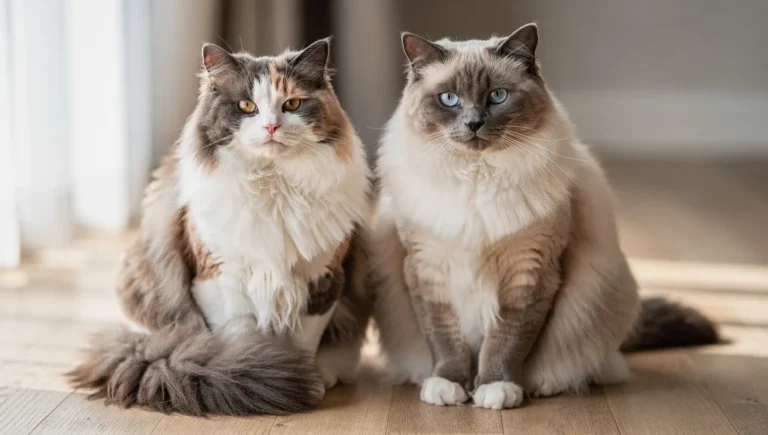

You’ve seen those adorable videos of Munchkin cats waddling across the room with their impossibly short legs, and your heart melted. But then the doubts crept in: “Are they in pain? Will they suffer? Am I being cruel by wanting one?” I get it. As someone who’s worked with cat owners for over a decade, I’ve heard these exact fears more times than I can count. The truth? Munchkin cat care isn’t about managing a disabled animal—it’s about understanding a unique breed with specific needs, just like Persians need daily grooming or Bengals need mental stimulation.
This guide cuts through the noise. No fluff, no judgment—just vet-backed facts, real owner experiences, and a clear roadmap to help you decide if a Munchkin cat is right for your home. Whether you already have one or you’re still on the fence, you’ll walk away knowing exactly how to give these charming, low-riding felines the best life possible.
Table of Contents
- 📦 Quick Summary
- 🐾 Are Munchkin Cats Hard to Take Care Of?
- The Truth About Daily Care vs Regular Cats
- What Makes Munchkin Cat Care Unique
- ⚕️ Are Munchkin Cats in Pain? (The Vet-Backed Answer You Need)
- Genetic Facts vs Internet Myths
- Lordosis and Pectus Excavatum: What Every Owner Must Know
- 🏥 Common Munchkin Cat Health Problems (And How to Prevent Them)
- Spine and Joint Issues: Early Warning Signs
- Weight Management: Why It’s Critical for Short Legs
- Preventive Care Checklist (Beyond the Basics)
- 🏠 How to Care for a Munchkin Cat at Home (Daily Routine Guide)
- Feeding & Nutrition Tips for Short-Legged Breeds
- Grooming & Hygiene: Reaching the Hard Spots
- Exercise Without Overstress: Safe Play Ideas
- 🪜 Can Munchkin Cats Jump or Climb Safely?
- Home Modifications That Prevent Injury
- 🎭 Munchkin Cat Behavior & Personality
- Temperament: Affectionate, Playful & Social
- Family, Kids & Other Pets: Compatibility Guide
- ⚖️ Pros and Cons of Munchkin Cats (Honest Review from Real Owners)
- 🤔 Is a Munchkin Cat Right for You?
- Decision Checklist for Future Owners
- Ethical Breeding vs Adoption: What You Should Know
- ❓ FAQs About Munchkin Cat Care
- 💬 Final Thoughts: Love Them Right or Don’t Get One
📦 Quick Summary
| Aspect | Details |
|---|---|
| Care Level | Moderate (similar to regular cats, with minor home adjustments) |
| Main Health Concerns | Lordosis, pectus excavatum, weight management, joint monitoring |
| Best For | Families, apartments, owners who can provide low-access furniture |
| Daily Needs | Balanced diet, gentle play, regular vet checkups, modified vertical spaces |
Wondering if these short legs come with a hidden cost? Let’s talk about the reality of daily life with a Munchkin.
🐾 Are Munchkin Cats Hard to Take Care Of?
Here’s the question I hear most from nervous first-time Munchkin parents: “Am I signing up for a high-maintenance nightmare?” Short answer? No. Long answer? Munchkin cat care sits comfortably in the “moderate” zone—think somewhere between the low-effort lifestyle of a British Shorthair and the grooming marathon of a Persian.
The real difference isn’t difficulty—it’s awareness. You’re not dealing with a fragile, handicapped animal. You’re living with a cat whose body proportions require thoughtful adjustments to your home setup. Once you understand what those adjustments are (and trust me, they’re simpler than you think), daily life flows just like it would with any other feline companion.
The Truth About Daily Care vs Regular Cats
Let’s kill the myth right now: Munchkin cats eat the same food, use the same litter boxes, and demand the same midnight zoomies as their long-legged cousins. The core routine? Identical. What changes are the small environmental tweaks that prevent unnecessary strain on their shorter limbs.
Here’s the honest breakdown:
✅ What Stays the Same:
- Feeding schedule: Two meals per day, high-protein diet (just like any obligate carnivore)
- Litter box habits: They dig, bury, and occasionally miss the edge—standard cat behavior
- Affection needs: Munchkins are famously social and crave interaction (some owners say they’re even more people-oriented than typical cats)
- Grooming frequency: Depends on coat type—shorthairs need weekly brushing, longhairs need 3-4 sessions per week (same as any other cat breed)
🔧 What Needs Adjustment:
- Vertical access: Swap towering cat trees for low, multi-level platforms (more on safe cat furniture options here)
- Litter box entry: Use boxes with lower sides (3-4 inches max) to prevent joint stress when climbing in
- Weight monitoring: Extra pounds hit harder on short legs—monthly weigh-ins are your friend
- Stair supervision: They can do stairs, but ramps reduce long-term wear on joints
What Makes Munchkin Cat Care Unique
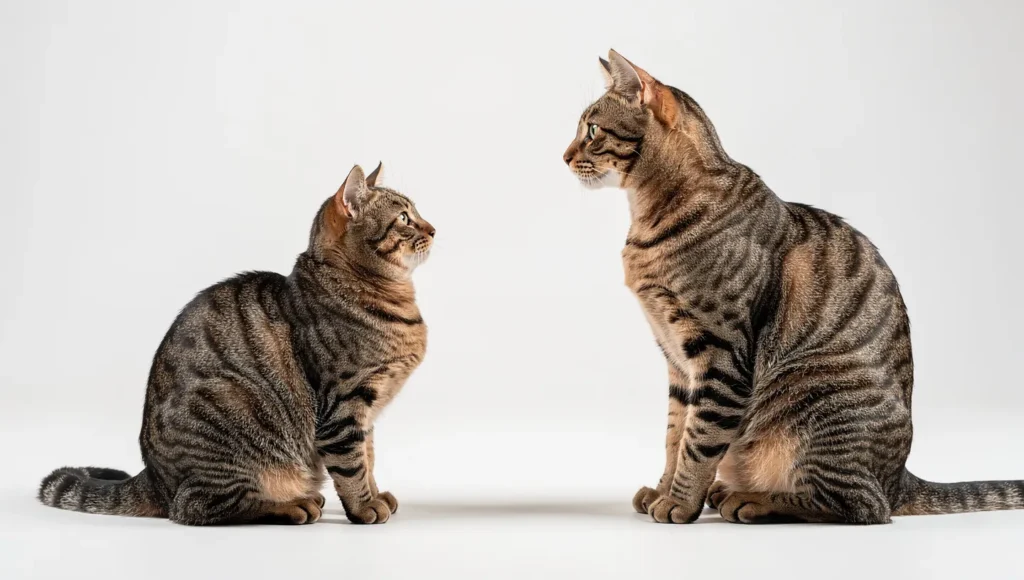
The uniqueness isn’t in what you do—it’s in how you think. According to the TICA breed standard, Munchkins are defined by their shortened long bones, but their spine length remains normal. This means they move differently, but they’re not structurally compromised when bred responsibly.
What I’ve learned from years of working with Munchkin owners is this: the cats don’t know they’re different. They’ll still try to leap onto kitchen counters (and sometimes succeed). They’ll chase laser pointers with the same manic energy. The trick is creating an environment where their confidence doesn’t outpace their physical limits.
📋 Quick Reality Check:
| Care Aspect | Regular Cat | Munchkin Cat |
|---|---|---|
| Daily grooming | 5-10 minutes | 5-10 minutes (coat-dependent) |
| Exercise needs | 20-30 min play | 20-30 min play (gentler vertical activities) |
| Vet visit frequency | Annual | Annual + bi-annual joint checks (preventive) |
| Home modifications | None required | Low-entry litter box, pet stairs/ramps |
| Lifespan | 12-18 years | 12-15 years (with responsible breeding) |
The bottom line? If you can handle a regular cat, you can handle a Munchkin. The “extra” work is mostly upfront (setting up the home correctly) and occasional (vet monitoring). Day-to-day? They’re just cats who happen to be closer to the ground when they judge you for being late with breakfast.
⚕️ Are Munchkin Cats in Pain? (The Vet-Backed Answer You Need)
Let me address the elephant in the room—or rather, the cat on the short legs. If you’ve Googled “Munchkin cat” even once, you’ve probably stumbled across heated debates, accusatory comments, and dire warnings about “suffering” and “cruel breeding.” I won’t sugarcoat this: the concern is valid, but the blanket condemnation is not.
Here’s what the veterinary science actually tells us: Short legs alone do not equal chronic pain. The gene responsible for the Munchkin’s dwarfism (a naturally occurring mutation called achondroplasia) affects bone length, not spinal structure or neurological function. When bred responsibly—meaning health-tested parents with no history of severe skeletal deformities—Munchkins live active, comfortable lives. The problems arise when breeders prioritize “cuteness” over welfare, doubling down on extreme traits through unethical pairings.
Genetic Facts vs Internet Myths
Let’s separate fear from fact. According to research published by the American Veterinary Medical Association (AVMA), the achondroplasia gene in Munchkins is autosomal dominant. This means only one parent needs to carry it for offspring to inherit short legs. Ethical breeders never breed two Munchkins together—doing so increases the risk of lethal genetic outcomes.
🔬 Myth vs Fact Box:
| Myth | Fact |
|---|---|
| “All Munchkins are in constant pain.” | Pain is not inherent to the breed. Issues arise from poor breeding practices, not the short-legged gene itself. |
| “They can’t jump or play normally.” | Munchkins jump lower heights but remain active, playful, and agile. They adapt their movement style naturally. |
| “Their spines are compressed and deformed.” | Spine length is normal. The legs are shortened, but the vertebral column develops typically in healthy lines. |
| “They’re just disabled cats bred for looks.” | The mutation occurred spontaneously in the 1940s. Responsible breeding focuses on mobility and quality of life, not extremes. |
The real risk isn’t the breed—it’s the breeder. A reputable breeder screens for lordosis (excessive spinal curvature) and pectus excavatum (sunken chest), two conditions that can occur in Munchkins but are not guaranteed. In fact, many Munchkins live their entire lives without these issues.
Lordosis and Pectus Excavatum: What Every Owner Must Know
These are the two medical terms that send prospective owners into panic mode. Let me break them down in plain language.
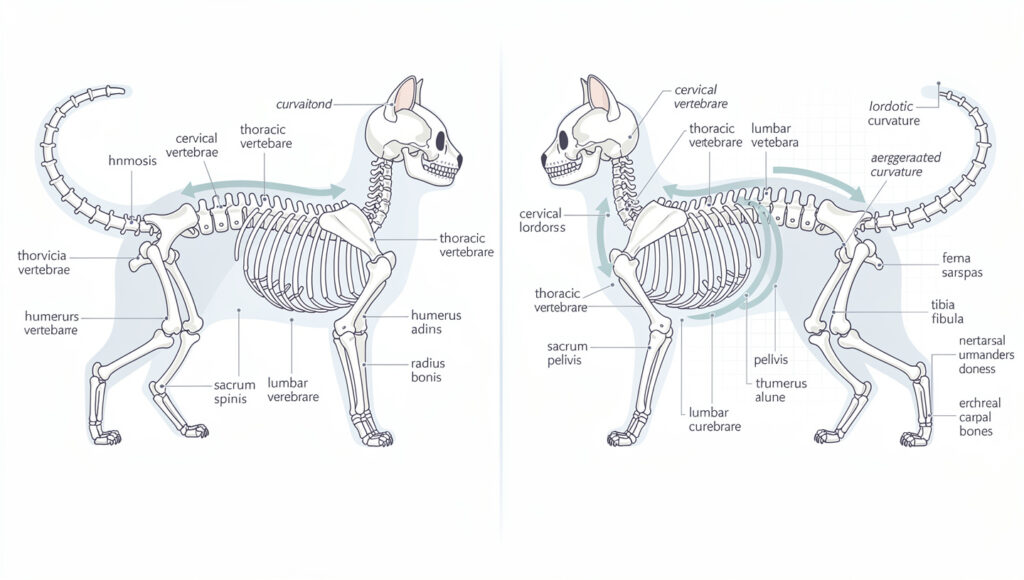
🩺 Lordosis (Swayback):
This is an excessive inward curve of the spine, usually in the lower back. In severe cases, it compresses internal organs (heart, lungs) and causes pain or breathing issues. Key point: Lordosis is rare in well-bred Munchkins and is often linked to breeding two Munchkins together (which ethical breeders avoid). It’s also seen in other breeds and mixed cats—it’s not unique to short legs.
Early warning signs:
- Difficulty breathing (rapid, shallow breaths)
- Reluctance to jump or play
- Hunched posture even when relaxed
- Lethargy or decreased appetite
🩺 Pectus Excavatum (Funnel Chest):
This is a congenital deformity where the sternum (breastbone) is sunken inward, creating a “dented” chest. Mild cases cause no symptoms. Severe cases can restrict heart and lung space, leading to exercise intolerance.
What it looks like:
- A visible indentation in the chest when viewed from the side
- Increased effort during play or exercise
- Coughing or wheezing (in advanced cases)
🛡️ Prevention & Management:
You can’t “fix” genetic conditions at home, but you can catch them early. If you’re adopting a Munchkin kitten, ask the breeder for:
- Health clearances from both parents (X-rays showing normal spine and chest structure)
- A contract that guarantees a refund or vet cost coverage if genetic issues appear within the first year
- References from previous buyers (real people, real experiences)
Once you bring your cat home, pain in cats is notoriously hard to detect. They’re masters at hiding discomfort. This is why I always tell Munchkin owners to become obsessive students of their cat’s baseline behavior. Any deviation—sleeping more, eating less, avoiding stairs they used to climb—deserves a vet visit. For a deeper dive into recognizing subtle health changes, read our guide on how to tell if your cat is sick.
💡 Expert Tip Box:
From My Experience:
I’ve worked with Munchkin owners whose cats lived to 14+ years without a single mobility issue. The common thread? They all sourced their cats from breeders who prioritized health testing over Instagram aesthetics. If a breeder can’t produce veterinary records for the parents, walk away. No exceptions.
The Uncomfortable Truth:
Should Munchkins exist as a breed? That’s a moral question I can’t answer for you. What I can tell you is this: if you choose to bring a Munchkin into your life, do it through adoption or a rigorously vetted breeder. Avoid backyard breeders, pet stores, and anyone selling “teacup” or “micro” Munchkins (these are red flags for extreme, unhealthy breeding).
The cats already exist. The question isn’t whether they should—it’s whether you can provide a life where they thrive, not just survive.
🏥 Common Munchkin Cat Health Problems (And How to Prevent Them)
Now that we’ve cleared the air about pain and genetics, let’s talk about the health issues you can control. Because here’s the hard truth: the biggest threat to your Munchkin’s quality of life isn’t their short legs—it’s the extra weight you let them carry on those legs.
I’ve seen too many well-meaning owners treat their Munchkins like permanent kittens, overfeeding them because “they’re so small and cute.” But those extra pounds don’t just sit there harmlessly. On a cat with shortened limbs, obesity accelerates joint wear, strains the spine, and cuts years off their lifespan. The good news? Almost every health problem on this list is preventable with the right care strategy.
Spine and Joint Issues: Early Warning Signs
Let’s start with what keeps Munchkin owners up at night: mobility problems. Yes, arthritis and joint degeneration can occur in this breed—but they’re not inevitable. What matters is catching early signs before they become chronic issues.
🚨 Red Flags You Shouldn’t Ignore:
- Limping or favoring one leg: This isn’t a “cute waddle.” If your cat suddenly avoids putting weight on a limb, it’s vet time.
- Stiffness after rest: Healthy Munchkins bounce back quickly after naps. If yours takes 5+ minutes to “warm up” before moving normally, joint inflammation might be brewing.
- Reluctance to jump down (even from low heights): Cats naturally protect painful joints by avoiding impact. Notice if they start taking the long way down instead of hopping off the couch.
- Excessive licking of joints: This is a classic pain behavior. Check hips, knees, and elbows for over-groomed bald spots.
- Personality changes: A suddenly grumpy or withdrawn cat isn’t being “moody”—pain alters behavior. For more on behavioral changes as health indicators, check our guide on reading cat body language.
📋 Preventive Care Checklist:
✅ Bi-annual vet exams (not just annual): Ask your vet to palpate joints and spine during every visit
✅ Home mobility tests: Once a month, observe how easily your cat navigates stairs, jumps onto furniture, and grooms hard-to-reach spots
✅ Joint supplements (if recommended): Glucosamine and omega-3s can support cartilage health, especially in cats over age 7
✅ Non-slip surfaces: Hardwood and tile floors force cats to overcompensate with their muscles. Add rugs or yoga mats in high-traffic areas
Weight Management: Why It’s Critical for Short Legs
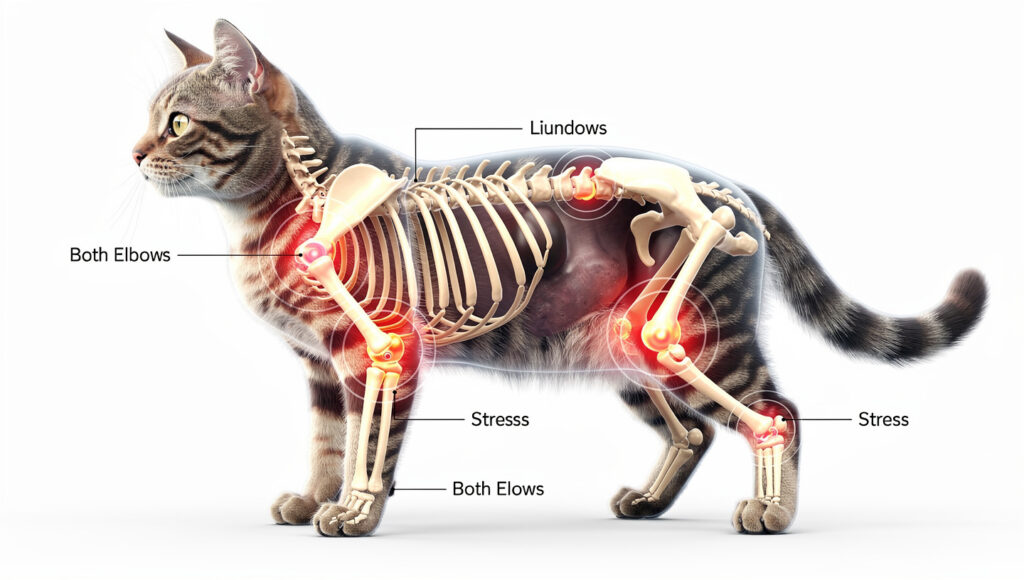
Here’s the math that every Munchkin owner needs tattooed on their brain: Each extra pound on a cat equals 10-15 pounds on a human. Now imagine carrying a 15-pound backpack everywhere you go, but your legs are 3 inches shorter than they should be. That’s what obesity does to a Munchkin.
According to veterinary guidelines, most adult Munchkins should weigh between 6-9 pounds (males slightly heavier). Anything above that range? You’re not just dealing with “a chubby cat”—you’re setting up a cascade of health problems:
- Joint stress: Excess weight compresses cartilage and accelerates arthritis
- Diabetes risk: Obesity is the #1 preventable cause of feline diabetes
- Hepatic lipidosis: A life-threatening liver condition triggered by rapid weight gain
- Reduced lifespan: Overweight cats live 2-3 years less than lean cats
🎯 Weight Management Strategy:
1. Know Your Cat’s Ideal Weight:
At your next vet visit, ask: “What’s my cat’s target weight range?” Write it down. Weigh monthly at home using a baby scale.
2. Measure Food (Don’t Eyeball It):
Use a measuring cup or kitchen scale. Most Munchkins need 180-220 calories per day (adjust for activity level). Free-feeding is your enemy here.
3. Prioritize Protein, Limit Carbs:
Munchkins are obligate carnivores. Look for foods where the first ingredient is named meat (chicken, turkey, salmon—not “poultry by-products”). Aim for at least 40% protein, less than 10% carbs.
4. Wet Food Over Dry:
Moisture content matters. Wet food keeps cats hydrated and naturally controls portions. If you must use dry kibble, mix it with water or low-sodium broth.
Need a full roadmap for safe weight loss? Our cat weight loss guide breaks down calorie calculations, portion schedules, and how to handle a cat who screams for food at 3 AM.
📊 Ideal Body Condition Chart:
| Body Condition | What You See/Feel | Action Needed |
|---|---|---|
| Underweight | Ribs, spine, and hip bones prominently visible; no fat layer | Increase calories by 10-15%; rule out illness with vet |
| Ideal | Ribs easily felt with light pressure; visible waist when viewed from above; slight abdominal tuck | Maintain current diet and exercise routine |
| Overweight | Ribs difficult to feel; no waist definition; sagging belly pouch | Reduce calories by 10%; increase interactive play to 30 min/day |
| Obese | Ribs not palpable; heavy fat deposits on chest and belly; waddling gait | Immediate vet intervention required—crash diets are dangerous in cats |
Preventive Care Checklist (Beyond the Basics)
Let’s go beyond the obvious “feed them right, keep them moving” advice. Here’s what separates a Munchkin who lives to 12 from one who thrives past 15:
✅ Dental Health Monitoring:
Short legs don’t affect teeth, but dental disease does affect overall health. Brush teeth 2-3x per week or use dental treats. Annual cleanings prevent infections that stress the immune system. (More on this in our cat dental care guide.)
✅ Hydration Strategy:
Cats with mobility issues sometimes avoid water bowls if they’re in inconvenient spots. Place multiple shallow bowls throughout the house. Consider a fountain—moving water encourages drinking.
✅ Litter Box Accessibility:
As Munchkins age, high-sided boxes become painful to enter. Switch to low-entry or top-entry boxes with ramps before arthritis sets in.
✅ Mental Stimulation (Yes, This Counts as Health):
Boredom leads to inactivity, which leads to weight gain. Rotate toys weekly. Use puzzle feeders. Train your cat to fetch (yes, it’s possible). A mentally engaged cat is a physically active cat.
💡 Expert Tip Box:
From My Experience:
I once worked with a Munchkin owner whose 8-year-old cat suddenly stopped using the stairs. The vet found early-stage arthritis—not severe, but progressing. We didn’t panic. We added joint supplements, installed pet ramps, and cut 20 calories per day from her diet. Six months later, the cat was back to her old self. Early intervention works, but only if you’re paying attention.
The Bottom Line:
Munchkin health problems aren’t mysterious or untreatable. They’re predictable, manageable, and largely preventable. Your job isn’t to wrap your cat in bubble wrap—it’s to be observant, proactive, and willing to adjust your home and habits to match their needs. Do that, and you’re not just extending their lifespan—you’re protecting their quality of life.
🏠 How to Care for a Munchkin Cat at Home (Daily Routine Guide)
Here’s where theory meets reality. You’ve learned about health risks and prevention strategies—now let’s talk about what your actual day looks like when you share your home with a Munchkin. Spoiler alert: it’s not that different from caring for any other cat, but the small tweaks you make will determine whether your cat merely survives or genuinely thrives.
I always tell new Munchkin owners: think horizontal, not vertical. Your cat’s world should be accessible without requiring Olympic-level jumps or spine-twisting acrobatics. Once you internalize that mindset, daily care becomes second nature.
Feeding & Nutrition Tips for Short-Legged Breeds
Let’s start with the most important ritual of your cat’s day: mealtime. Munchkins need the same high-protein, low-carb diet as any obligate carnivore, but how you present that food matters more than you’d think.
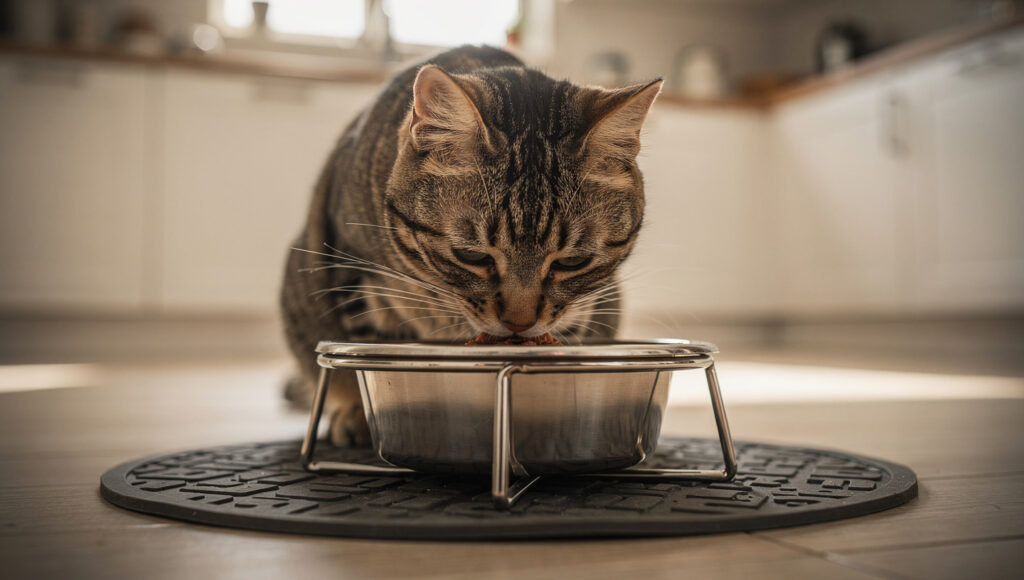
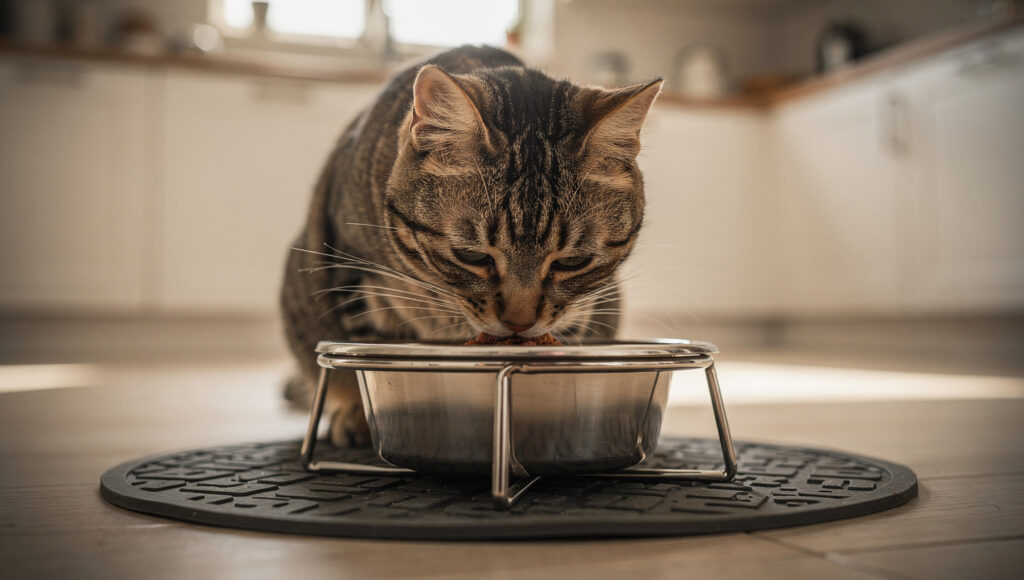
🍽️ The Elevated Bowl Strategy:
Here’s a problem most people overlook: when a Munchkin eats from a floor-level bowl, their already-short neck has to crane downward at an awkward angle. Do this twice a day for years, and you’re adding unnecessary strain on the cervical spine and shoulders.
Solution: Use a shallow, elevated feeding station (3-5 inches off the ground). This allows your cat to eat in a more neutral head position, reducing stress on the neck and making swallowing easier. Bonus: it can also help prevent whisker fatigue (yes, that’s a real thing).
What to look for in bowls:
- Wide and shallow: Munchkins have normal-sized whiskers but shorter reach—deep bowls frustrate them
- Non-slip base: Prevents the bowl from sliding across the floor as they eat
- Stainless steel or ceramic: Plastic can harbor bacteria and cause chin acne
⏰ Feeding Schedule (Sample Routine):
Morning (7:00 AM):
- Serve 1/2 of daily food portion (wet food preferred for hydration)
- Place fresh water in 2-3 locations around the house
- Monitor eating speed—if your cat inhales food in under 2 minutes, consider a slow-feeder bowl
Evening (6:00 PM):
- Serve remaining food portion
- Refresh water bowls
- Offer a small high-protein treat (freeze-dried chicken or salmon) after interactive play
📌 What About Food Type?
The debate between wet vs dry food applies to Munchkins just like any cat, but there’s one critical factor: weight control. Wet food naturally limits calories through moisture content and keeps cats fuller longer. If you must use kibble, choose grain-free formulas with at least 40% protein.
For a deep dive into feline nutrition basics and how to read ingredient labels, check out our comprehensive guide to the best cat diet.
🚫 Foods to Absolutely Avoid:
Even though Munchkins aren’t more sensitive than other cats, their shorter stature means less body mass to process toxins. Never feed:
- Onions, garlic, chives (destroys red blood cells)
- Grapes and raisins (kidney damage)
- Xylitol (found in sugar-free products—causes liver failure)
- Raw dough (expands in stomach, can cause alcohol poisoning)
Grooming & Hygiene: Reaching the Hard Spots
Grooming a Munchkin isn’t harder than grooming any other cat—it’s just different. Their short legs mean certain areas become blind spots they can’t reach effectively during self-grooming. Your job is to fill those gaps.
🪮 Brushing Routine by Coat Type:
Shorthair Munchkins:
- Frequency: Once per week (more during spring/fall shedding seasons)
- Tools: Soft bristle brush or rubber grooming mitt
- Focus zones: Lower back, base of tail, and behind the ears
Longhair Munchkins:
- Frequency: 3-4 times per week (daily during shedding)
- Tools: Stainless steel comb (for mats) + slicker brush (for topcoat)
- Focus zones: Armpits, belly, and “pants” area on hind legs
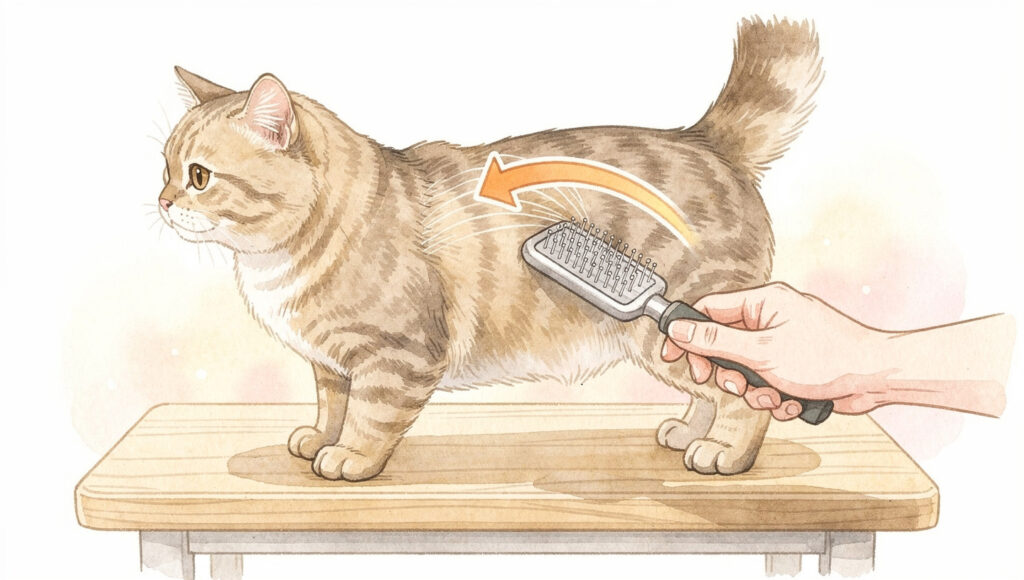
🎯 The Lower Back Problem:
Because Munchkins can’t arch their backs as extremely as long-legged cats, the area above their hips becomes a grooming dead zone. This is where mats form first in longhaired varieties. During brushing sessions, spend extra time here—lift the tail gently and brush in the direction of hair growth.
Pro tip: If your cat squirms during belly brushing (most do), try brushing while they’re relaxed after a meal or during a sun-nap. Never force it—multiple short sessions beat one wrestling match.
For a full breakdown of brushing techniques, mat removal, and how to make grooming stress-free, read our complete cat brushing guide.
🛁 Bathing (Only When Necessary):
Munchkins don’t need regular baths unless they’re longhaired and prone to greasiness. If you must bathe:
- Use a non-slip mat in the sink or tub
- Keep water lukewarm (not hot)
- Support their chest and hindquarters—never let them dangle
- Dry thoroughly with a towel (avoid blow dryers unless they’re trained to tolerate them)
✂️ Nail Trimming:
Short legs don’t affect nail growth, but they do affect how much your cat naturally wears them down. Indoor Munchkins need trims every 3-4 weeks. Focus on just the sharp tip—never cut into the pink quick.
Exercise Without Overstress: Safe Play Ideas
This is where most people get it wrong. They either bubble-wrap their Munchkin (“No jumping! No running! No fun!”) or they let them free-range like a Bengal. The truth lives in the middle: Munchkins need exercise, but they need smart exercise.
🎾 Play Principles for Short-Legged Cats:
✅ What Works:
- Horizontal chase games: Drag toys, robotic mice, laser pointers (always end with a tangible “catch”)
- Low-level climbing: Cat trees under 3 feet tall with wide platforms
- Puzzle feeders: Mental stimulation counts as exercise
- Tunnel systems: Perfect for their build—encourages running without jumping
❌ What to Avoid:
- High-jump games: Don’t encourage leaps onto counters or tall furniture
- Rough play with large dogs: Size mismatch increases injury risk
- Marathon fetch sessions: 10-15 minutes is plenty—watch for panting or excessive resting
⏱️ Daily Exercise Target:
Aim for 20-30 minutes of active play per day, split into 2-3 sessions. Think short bursts of intensity (like a sprint) rather than sustained marathons. Munchkins tire faster than you’d expect because their muscles work harder to move their body.
🧩 Mental Enrichment Ideas:
Physical exercise alone isn’t enough. A bored Munchkin is a destructive (or lethargic) Munchkin. Try:
- Rotating toy bins: Store half their toys away and swap weekly—”new” toys feel exciting
- Window perches at ground level: Let them watch “cat TV” (birds, squirrels) without climbing
- Hide and seek with treats: Scatter kibble around the house to trigger foraging instincts
- Clicker training: Yes, you can train a cat—and Munchkins are surprisingly food-motivated
💡 Expert Tip Box:
From My Experience:
One of the best investments I’ve seen Munchkin owners make is a low, wide cat tree (under 30 inches tall) placed next to a window. The cat gets vertical space to survey their kingdom and easy access without risky jumps. Pair it with a heated pad in winter, and you’ve created their new favorite spot. For more options, explore our 2026 guide to cat trees and perches.
📋 Quick Daily Checklist (Print This):
Morning:
☐ Fresh water in 2+ locations
☐ Serve breakfast in elevated bowl
☐ 10-minute play session (feather wand or laser)
☐ Quick visual health check (eyes, ears, gait)
Evening:
☐ Serve dinner
☐ 15-minute interactive play
☐ Brush (if longhair) or quick pet-down (if shorthair)
☐ Scoop litter box
Weekly:
☐ Deep clean water bowls
☐ Trim nails (if needed)
☐ Check for mats or skin issues during grooming
☐ Rotate toys
The Real Talk:
Daily Munchkin care isn’t about doing more—it’s about doing things slightly differently. Lower the bowls. Add ramps. Watch their back during play. These aren’t burdens; they’re tweaks. And in return, you get a cat who’s comfortable, confident, and convinced that their short legs are a feature, not a bug.
🪜 Can Munchkin Cats Jump or Climb Safely?
Yes, they can—but not like Spider-Man. Munchkins jump about half the height of a regular cat (think 2-3 feet max instead of 5-6 feet). They compensate by being incredibly clever: they’ll use furniture as stepping stones, take running starts, or just give you the “carry me” stare.
The Real Question: Should You Let Them?
Occasional jumping won’t break them, but chronic high-impact landings accelerate joint wear. Your job is to make their world accessible without turning your home into a padded cell.
Home Modifications That Prevent Injury
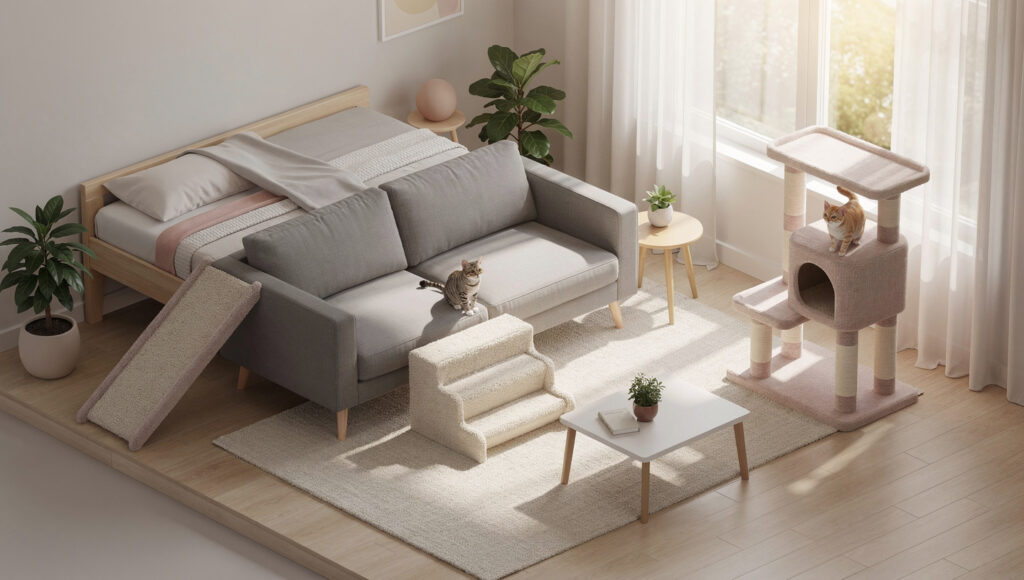
✅ Smart Adjustments:
- Pet stairs or ramps: Place next to beds, couches, window perches (carpeted for traction)
- Low-entry litter boxes: 3-4 inch sides max—they’ll thank you when arthritis hits at age 10
- Staggered furniture: Create a “staircase” effect using ottomans, shelves, side tables
- Non-slip rugs: Hardwood floors = slip hazards = overcompensation injuries
❌ Don’t Bother With:
- Tall cat trees: Anything over 4 feet is wasted money—they won’t use the top levels
- Smooth ramps: Cats need texture to grip; add carpet strips or rubber matting
💡 Real Talk:
I’ve seen Munchkins leap onto kitchen counters when motivated by tuna. The goal isn’t to prevent all jumping—it’s to reduce unnecessary jumping. For safer vertical options, check out cat trees designed for stability and low-height access.
🎭 Munchkin Cat Behavior & Personality
If I had to describe Munchkins in three words: playful, social, fearless. They’re the golden retrievers of the cat world—outgoing, affectionate, and blissfully unaware that they’re built differently.
Temperament: Affectionate, Playful & Social
What Makes Them Unique:
- Dog-like loyalty: They follow you room-to-room and greet you at the door
- Kitten energy for life: Most stay playful well into their senior years
- Vocal but not annoying: They chirp and trill more than they meow
- Collector mentality: Expect to find hoards of stolen socks, hair ties, and pens under the couch
Energy Level: Moderate to high. They’re not Bengal-level manic, but they’re not couch potatoes either. Daily play is non-negotiable.
Family, Kids & Other Pets: Compatibility Guide
✅ Great For:
- Families with children (gentle, patient, tolerant of handling)
- Multi-pet homes (get along with dogs and other cats)
- Apartment living (adapt well to smaller spaces)
- First-time cat owners (easygoing temperament)
⚠️ Consider Carefully If:
- You’re gone 10+ hours daily (they hate being alone)
- You have very large or rambunctious dogs (size mismatch = injury risk)
- You want an aloof, independent cat (Munchkins are Velcro cats)
Pro Tip: Their sociability makes them vulnerable to stress when ignored. If you work long hours, consider adopting two Munchkins so they entertain each other. For more on managing multi-cat dynamics, see our guide on introducing cats to each other.
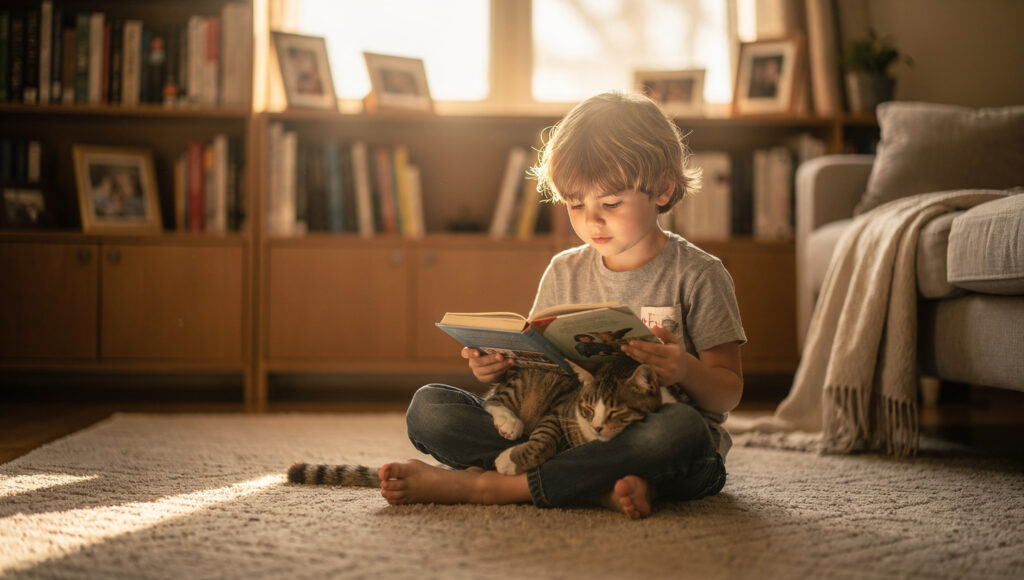
⚖️ Pros and Cons of Munchkin Cats (Honest Review from Real Owners)
Let’s cut the fluff. Here’s what actual Munchkin owners consistently report:
| Pros ✅ | Cons ❌ |
|---|---|
| Incredibly affectionate and people-oriented | Need more environmental modifications than regular cats |
| Adaptable to small spaces (great for apartments) | Potential for genetic health issues if poorly bred |
| Generally healthy with responsible breeding | Can’t access high places without help |
| Playful and entertaining—never boring | Expensive to acquire from ethical breeders ($1,000-$2,500) |
| Good with kids and other pets | Prone to weight gain if overfed |
| Lower grooming needs than Persians or Maine Coons | May require more frequent vet checkups (joint monitoring) |
The Verdict:
Munchkins aren’t for everyone, but they’re perfect for the right owner—someone who prioritizes animal welfare, is willing to adapt their home, and wants a cat that acts more like a companion than a roommate.
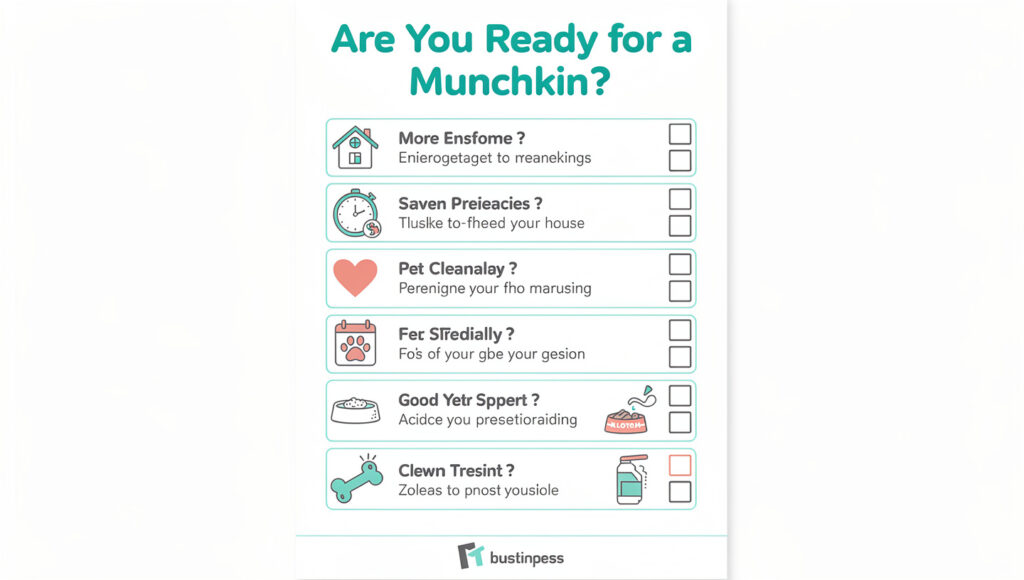
🤔 Is a Munchkin Cat Right for You?
Before you fall in love with those stubby legs, ask yourself these questions honestly.
Decision Checklist for Future Owners
✅ You’re Ready If:
- You can afford $500-$1,000/year in vet care (routine + preventive)
- You’re home enough to provide daily interaction and play
- You’re willing to modify your home (ramps, low furniture, accessible litter boxes)
- You understand the ethical concerns and commit to adoption or responsible breeding only
- You want a social, affectionate cat who craves attention
❌ Reconsider If:
- You want a low-maintenance, independent cat
- You travel frequently and can’t arrange pet care
- You’re not prepared for potential health expenses (joint issues, genetic conditions)
- You’re attracted purely to aesthetics without considering welfare
Ethical Breeding vs Adoption: What You Should Know
If Buying from a Breeder:
- Demand health clearances (spine X-rays, genetic testing) for both parents
- Never buy from breeders who breed two Munchkins together (increases lethal gene risk)
- Avoid anyone advertising “teacup” or “micro” Munchkins (red flag for unethical practices)
- Ask for references from previous buyers
- Visit in person—see where kittens are raised
Better Option: Adopt.
Munchkins end up in shelters and breed-specific rescues more often than you’d think. Check Petfinder or reach out to organizations like Special Needs Cat Rescue.
🛡️ Trust Signal:
This guide doesn’t endorse breeding for profit. If you choose to buy, do it through a breeder who prioritizes health over appearance. If you can adopt, even better—you’re giving a cat a second chance.
❓ FAQs About Munchkin Cat Care
Q: Are Munchkin cats high maintenance?
A: No, but they’re differently maintained. Daily care is the same as any cat, but you’ll need to modify your home (ramps, low furniture) and monitor weight closely.
Q: Do Munchkin cats have shorter lifespans?
A: Not inherently. Well-bred Munchkins live 12-15 years on average—comparable to most domestic cats. Poor breeding shortens lifespan significantly.
Q: Can Munchkin cats use regular cat furniture?
A: They can use some regular furniture, but tall cat trees (5+ feet) are impractical. Stick to low, wide platforms under 3 feet.
Q: What is the average cost of Munchkin cat care?
A: Expect $800-$1,200/year: $300-$500 (food), $200-$400 (routine vet), $100-$200 (supplies), plus emergency funds for unexpected health issues.
Q: Are Munchkin cats good for apartments?
A: Yes! They adapt well to smaller spaces and don’t need tall vertical territory. Just ensure they get daily interactive play.
💬 Final Thoughts: Love Them Right or Don’t Get One
Here’s what I want you to remember: Munchkin cats aren’t tragic victims or designer accessories—they’re animals who deserve informed, committed owners. Their short legs don’t define their quality of life; your care decisions do.
If you’re drawn to this breed, do it for the right reasons. Not because they look cute in Instagram photos, but because you’re genuinely prepared to meet their needs. Make the home modifications. Monitor their weight obsessively. Choose ethical sources. Be the owner they deserve.
And if, after reading all this, you’re still not sure? That’s okay. The fact that you’re asking questions means you’re already thinking like a responsible pet parent. Take your time. Research more. And when you’re ready—whether it’s a Munchkin or another breed entirely—you’ll make the right choice.
Want more feline care guides? Explore our library of breed-specific care articles, nutrition deep-dives, and behavioral troubleshooting tips. Because every cat—short-legged or not—deserves an owner who shows up fully informed.